How to Sharpen TIG Tungsten
Precise tungsten grinding ensures stable arc initiation and clean weld beads. Follow these standardized workshop preparation procedures.

Always grind tungsten parallel to the length of the electrode to prevent arc wander. Use dedicated diamond wheels and wear proper respiratory protection during grinding.
Ready to compare models? Start with our Best Welder: Top Home Shop & Jobsite Picks Tested.
Practical Quick-Reference Table
| Scenario / Metric | Recommended Target | Why It Matters |
|---|---|---|
| Electrode Extension | 2 to 2.5 times diameter | Maintains gas shielding efficiency |
| Grinding Wheel Material | Diamond abrasive wheel | Prevents contamination of refractory metal |
| Grinding Direction | Parallel to axis | Ensures straight, focused arc path |
| Included Angle (AC Welding) | 60 to 90 degrees | Balances arc stability and penetration |
| Included Angle (DCEN Steel) | 20 to 30 degrees | Provides deep, narrow weld penetration |
| Truncation Flat Width | 10% of electrode diameter | Prevents tungsten inclusion defects |
Understanding Electrode Metallurgy And Color Codes
TIG welding performance relies heavily on selecting the correct tungsten alloy. If you are comparing processes, consult our mig versus tig comparison guide before setting up your machine.
Common alloy types include lanthanated, ceriated, thoriated, and zirconated variants. Each color code designates a specific chemical composition that dictates recommended amperage ranges and optimal shielding gas compatibility.
Pure tungsten features a green color and suits alternating current aluminum applications. However, it melts easily at high temperatures and lacks the current-carrying capacity of alloyed alternatives.
Selecting the appropriate electrode diameter depends directly on your joint thickness and joint configuration. Undersized tungsten will overheat rapidly, while oversized variants struggle to maintain focused arc energy.
- Identify color codes before starting preparation routines.
- Match alloy chemistry to specific metal transfer modes.
- Store tungsten rods in clean, moisture-free storage tubes.
- Discard heavily oxidized or structurally compromised electrodes.
Alloy Selection Criteria
Choosing lanthanated electrodes provides versatile performance for both alternating current and direct current processes. They offer excellent arc starting without the radioactive concerns associated with older thoriated materials.
Ceriated tungsten works exceptionally well at low amperages on thin stainless steel tubing. They maintain a stable ball configuration and resist thermal shock during rapid pulsing cycles.
- Verify manufacturer alloy certifications.
- Avoid mixing different tungsten types in storage.
Selecting The Correct Dedicated Grinding Equipment
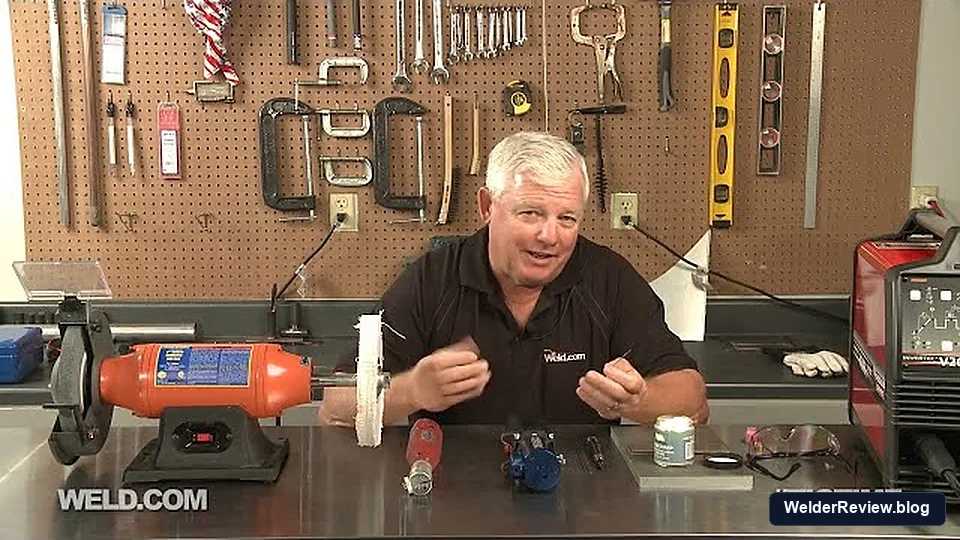
Grinding tungsten requires dedicated abrasive tooling to avoid cross-contamination from carbon steel or aluminum particles. Using a contaminated grinding wheel instantly introduces foreign impurities into the weld puddle.
Diamond wheels provide the cleanest finish and longest operational lifespan when sharpening refractory metals. Silicon carbide wheels wear down quickly and leave jagged surface grooves that disrupt gas flow.
Bench grinders equipped with fine-grit diamond discs offer standard workshop sharpening capabilities. When evaluating different joining methods, review our mig and tig difference guide for more process insights.
Enclosed tungsten grinders capture hazardous dust particles safely while ensuring precise, repeatable angle measurements. These specialized units use enclosed collets to center the electrode perfectly during rotation.
- Dedicate one specific wheel exclusively for tungsten preparation.
- Inspect diamond surfaces regularly for loading or glazing.
- Never use angle grinders meant for structural steel fabrication.
- Keep wheel guards securely fastened during machine operation.
Dust Extraction And Safety Controls
Refining tungsten generates fine metallic dust that poses severe respiratory risks if inhaled. Always operate local exhaust ventilation or wear an approved particulate respirator during manual bench grinding.
Enclosed sharpening systems incorporate internal vacuum filters to trap hazardous airborne particulates completely. This protects operators from heavy metal exposure within closed workshop environments.
- Wear safety glasses with side shields at all times.
- Clean grinding residue using approved vacuum methods.
Video Walkthrough: TFS: TIG Simple - Does it Matter How You Sharpen Tungsten?
Mastering Grinding Angles And Geometry Specifications
The chosen grind angle directly dictates your arc shape and thermal penetration profile. Use our welding amperage calculator to determine optimal settings for your specific material thickness and joint configuration.
Sharp taper angles measuring twenty to thirty degrees concentrate the electrical arc into a narrow column. This geometry delivers deep weld penetration required for heavy carbon steel and stainless steel joints.
Grinding marks must always run parallel from the base to the tip of the electrode. Radial scratches perpendicular to the length cause the arc to wander erratically across the workpiece surface.
Finishing the tip with a small flat truncation prevents premature melting and tungsten inclusions. Leaving a tiny flat equal to ten percent of your electrode diameter stabilizes arc ignition.
- Measure taper length as two to three times diameter.
- Maintain consistent grinding pressure to prevent surface gouging.
- Inspect finished tips under magnification for micro-fractures.
- Avoid rounding the tungsten tip unless welding aluminum.
Calculating Taper Length Ratios
Multiply your electrode diameter by the recommended multiplier to determine correct taper length. A three-minute electrode requires a grinding length between six and nine millimeters for optimal performance.
Incorrect taper ratios alter electrical resistance and cause the tungsten to split under high thermal loads. Consistency across all prepared electrodes ensures stable arc behavior throughout your project.
- Use caliper gauges to verify taper dimensions accurately.
- Discard electrodes that fall outside acceptable geometric tolerances.
Step-by-Step Manual Grinding Execution Techniques
Begin manual sharpening by securely holding the tungsten electrode between your thumb and index finger. Support your hand steadily against the adjustable tool rest of your bench grinder.
Gently contact the grinding wheel surface while rotating the tungsten continuously between your fingers. Continuous rotation ensures even material removal and maintains a symmetrical conical point geometry.
Avoid applying excessive downward pressure against the spinning diamond wheel surface. Heavy pressure generates extreme frictional heat that causes the tungsten crystal structure to fracture internally.
Guide the electrode downward so that abrasive scratches travel lengthwise toward the tip. Lift the tungsten away smoothly once the desired point and truncation flat are fully achieved.
- Rotate the electrode smoothly in one consistent direction.
- Keep fingers safely away from the rotating abrasive face.
- Cool overheated tungsten naturally rather than using water.
- Check tip symmetry visually before installing into the torch.
Handling Heat And Thermal Shock
Grinding creates high friction temperatures that can damage the molecular integrity of alloyed tungsten. Quenching hot electrodes in water causes immediate micro-cracking and subsequent arc instability during welding.
Allow newly sharpened tungsten rods to cool slowly in ambient air or metal racks. Proper cooling preserves the uniform distribution of rare-earth oxides throughout the core material.
- Use insulated pliers when handling recently ground tungsten.
- Discard electrodes that show signs of thermal cracking.
Preventing Contamination And Handling Hot Electrodes
Cleanliness during tungsten handling is paramount for achieving defect-free radiographic weld joints. Natural skin oils, workshop dirt, and machine coolants transfer easily onto the electrode surface.
Wipe newly ground tungsten rods with a clean lint-free cloth dampened with acetone. Removing residual dust and grease prevents porosity and carbon contamination in your finished welds.
Always store prepared electrodes inside protective plastic sleeves or dedicated storage racks. Unprotected tungsten collects airborne debris and workshop grime that fouls shielding gas envelopes.
Inspect your collet body and gas lens for internal soot or metallic spatter buildup. A contaminated torch setup will ruin a pristine tungsten electrode within seconds of arc initiation.
- Clean electrodes immediately before inserting into the torch.
- Never touch the sharpened tip with bare fingers.
- Replace worn collets that fail to grip uniformly.
- Maintain strict housekeeping protocols around your welding bench.
Torch Maintenance Protocols
Regularly disassemble your TIG torch to clean internal gas pathways and threaded components. Before tackling complex assemblies, read our mig versus tig versus stick overview for complete process comparisons.
Ensure the back cap O-rings remain lubricated and uncompromised to prevent air aspiration. Air leaks inside the torch head contaminate the tungsten and shielding gas blanket instantly.
- Inspect ceramic cups for internal cracking or spatter.
- Replace damaged insulator gaskets during routine service.
Advanced Orbital And Automatic Preparation Methods
High-purity industries often require automated tungsten grinders to ensure absolute geometric repeatability. Automated systems eliminate human error and produce identical electrode angles for critical code welding.
These specialized machines clamp the tungsten securely and feed it across a high-speed diamond wheel. Electronic controls regulate feed rates and grinding depths to achieve precise dimensional tolerances.
Orbital welding applications demand exceptional tungsten consistency to maintain arc voltage stability over long cycles. Automated preparation guarantees that every replacement electrode performs identically in the weld head.
Routine maintenance of automated grinders includes checking alignment rails and cleaning dust collection filters. Precision equipment requires clean operating conditions to maintain its factory calibration standards.
- Calibrate automatic feed mechanisms according to manual instructions.
- Use OEM replacement diamond wheels for optimal cutting precision.
- Monitor motor temperatures during high-volume production sharpening.
- Verify electrode length settings before initiating automated grinding cycles.
Calibration And Quality Assurance
Perform periodic optical checks on automatically ground electrodes using a comparator tool. Verifying angle consistency prevents unexpected arc deflection during automated welding sequences.
Maintain strict logs of wheel wear and replacement intervals within your fabrication facility. Proactive maintenance ensures uninterrupted production output and superior weld quality standards.
- Check dial indicators for mechanical accuracy.
- Recalibrate stop sensors following major wheel changes.
Troubleshooting Arc Instability And Tungsten Splitting
An unstable or wandering welding arc often indicates improper tungsten preparation technique. If your grinding marks run perpendicular to the electrode, the arc will jump unpredictably across the tip.
Splitting tungsten during arc initiation usually results from excessive amperage or thermal shock. Ensure your electrode diameter matches your current settings and features a proper truncation flat.
Contaminating the tungsten tip by accidentally touching the weld pool requires immediate regrinding. Continuing to weld with a contaminated electrode introduces severe inclusions and weld porosity.
Frayed or split tips can also stem from using worn-out grinding wheels that crush the material. Replace dulled diamond wheels promptly to restore clean cutting action and prevent structural failure.
- Regrind immediately whenever the tungsten touches filler metal.
- Check shielding gas flow rates if tungsten oxidizes quickly.
- Verify high-frequency arc starter settings on your power source.
- Ensure proper torch polarity for direct current applications.
Correcting Mid-Weld Failures
When a tungsten splits during a critical weld, stop immediately to extract the debris. Leaving tungsten fragments inside the joint creates unacceptable discontinuities that fail inspection.
Clean the contaminated weld crater thoroughly using a carbide burr before restarting your arc. Feather the existing weld bead edge to ensure complete fusion upon arc reinitiation.
- Inspect weld stop points for embedded tungsten particles.
- Grind out defective areas completely prior to repair.
Frequently Asked Questions
Why must I grind tungsten parallel to the electrode axis?
Grinding parallel ensures smooth electrical current flow straight to the tip. Perpendicular scratch marks force the arc to wander erratically across the workpiece.
Can I use a standard shop grinder for sharpening my TIG tungsten?
Standard grinders contaminated with carbon steel will ruin your tungsten. Always use a dedicated diamond wheel reserved exclusively for refractory metal preparation.
Should I leave a flat spot on the tip of the tungsten?
Yes, flat truncation equal to ten percent of the diameter prevents premature melting. This small flat stabilizes arc ignition and extends electrode lifespan.
What happens if I quench hot tungsten in water after grinding?
Quenching causes severe thermal shock and internal micro-fracturing. Allow your sharpened electrodes to cool naturally in ambient air to prevent splitting.
How do I choose the correct included angle for my project?
Steeper angles between sixty and ninety degrees suit alternating current aluminum welding. Narrower angles between twenty and thirty degrees provide deep penetration on steel.