MIG vs TIG Welding Systems: The Definitive Technical Comparison
Master the distinct operational mechanics separating GMAW and GTAW processes. Evaluate process control, material suitability, and workflow efficiency for your fabrication shop.

Choose MIG for rapid production speed and thicker carbon steel fabrication. Select TIG when ultimate weld puddle control, precision aesthetic finishes, and thin-gauge exotic alloy joining are strictly required.
Compare all top models in our Best Welder: Top Home Shop & Jobsite Picks Tested.
Side-by-Side Breakdown
| Criteria | Difference Between Mig And Tig | Standard Welder | Edge |
|---|---|---|---|
| Core Design / Build | Continuous wire feed mechanism with a consumable electrode gun. | Traditional multi-process architecture utilizing manual stick or wire inputs. | Difference Between Mig And Tig |
| Real-World Performance | Delivers high deposition rates on carbon and stainless steels. | Provides reliable heavy-duty structural joining under harsh field conditions. | Standard Welder |
| Ease of Setup & Use | Features simpler parameter balancing suited for rapid operator training. | Demands strict electrode angle management and precise amperage tuning. | Difference Between Mig And Tig |
| Durability & Reliability | Internal drive rolls require routine cleaning to prevent feeding slips. | Rugged industrial transformers withstand demanding jobsite environments easily. | Standard Welder |
| Efficiency / Operating Footprint | Optimizes shop throughput through continuous wire spool deployment. | Incurs frequent stop-and-start delays for manual electrode replacement. | Difference Between Mig And Tig |
| Maintenance Requirements | Requires frequent replacement of contact tips, nozzles, and liners. | Demands minimal upkeep focused primarily on cable and terminal inspections. | Standard Welder |
| Best Ideal Use Case | High-volume structural fabrication and automotive body panel assembly. | Outdoor construction, structural beam erection, and heavy maintenance work. | Difference Between Mig And Tig |
Process Mechanics and Arc Initiation
Understanding how an electrical arc forms is crucial for evaluating these systems. GMAW technology relies on a continuous consumable wire fed automatically through a welding gun.
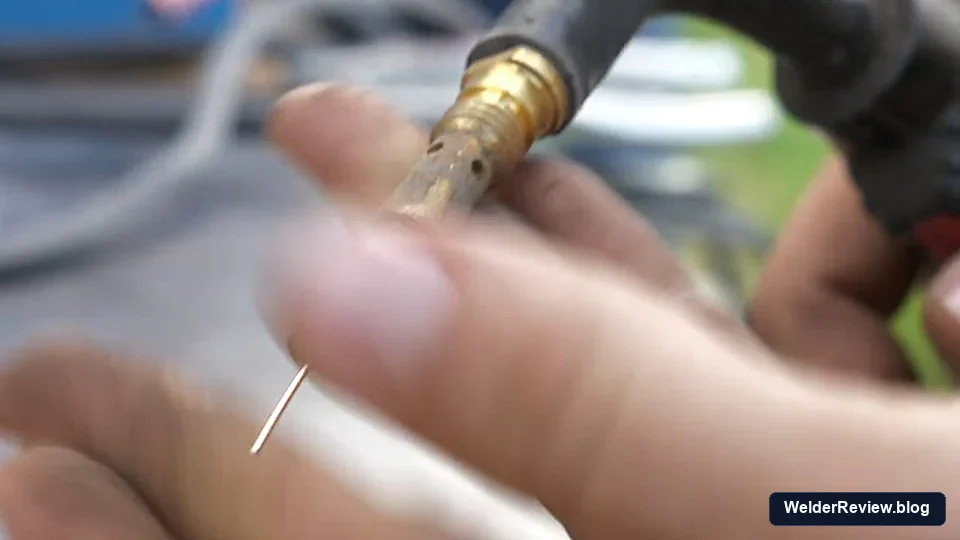
Conversely, GTAW systems utilize a non-consumable tungsten electrode to generate heat. The operator must manually introduce filler material into the distinct weld puddle during execution.
Choosing between these operational styles impacts your daily productivity. High-volume fabrication environments benefit immensely from automated wire feeding capabilities and reduced downtime cycles.
MIG welding relies on a continuously fed solid wire electrode that acts as both the filler metal and the current conductor. An automatic wire feeder maintains a constant preset arc length.
TIG welding utilizes a non-consumable tungsten electrode to establish the electric arc within an inert atmosphere. The welder manually feeds separate filler rods into the molten weld pool as required.
Arc initiation for MIG uses touch-start physics, while TIG setups often deploy high-frequency starters. Evaluating machines like our best mig tig plasma combo units helps prevent tungsten contamination on joints.
- Continuous wire feeding increases deposition efficiency.
- Non-consumable tungsten demands precise manual dexterity.
- Shielding gas protects the molten weld pool.
Consumable Versus Non-Consumable Electrodes
The choice of electrode fundamentally alters how operators handle the welding torch. Consumable wires melt directly into the joint to become the final weld reinforcement.
Non-consumable tungsten electrodes remain intact while establishing the arc. This separation allows superior control over heat input when joining delicate, thin-walled materials.
- Tungsten must be ground to a precise point.
- MIG wire diameters range from zero point zero three zero inches upwards.
Shielding Gas Selection and Gas Dynamics
Protecting the molten weld puddle from atmospheric contamination is essential. Both processes require inert or active shielding gases to prevent oxidation and porosity defects.
Standard applications often utilize economical carbon dioxide or argon-rich mixtures. Proper flow meter calibration ensures adequate gas coverage without creating turbulent air currents.
Gas mixing ratios dictate arc stability and penetration profiles. Correct blends also prevent issues detailed in our troubleshooting mig welder popping and sputtering guide when joining carbon steel.
TIG welding demands high-purity pure argon gas to shield reactive metals like aluminum and titanium from atmospheric contamination. Gas flow meters must be precisely calibrated to prevent turbulent boundary layer disruption.
- Argon and helium combinations alter arc voltage profiles.
- Flow rates must be adjusted for windy outdoor conditions.
- Gas lenses improve laminar flow for cleaner joints.
Gas Flow Optimization Techniques
Maintaining correct cubic feet per hour measurements prevents costly weld failures. Regulator calibration directly dictates shielding efficacy across extended fabrication shifts.
Operators must inspect hoses and fittings regularly to eliminate microscopic leaks. Detecting pressure drops early saves material costs and preserves structural integrity.
- Standard flow rates range from fifteen to twenty-five CFH.
- Dual-cylinder setups allow custom gas blending.
Power Sources and Electrical Profiles
Modern inverter technology has revolutionized how welding machines deliver electrical current. Constant voltage units dominate wire-feeding applications to maintain stable arc lengths automatically.
Constant current power sources regulate amperage output regardless of arc length variations. This profile prevents burn-through when managing manual welding techniques on thin plates.
MIG machines operate on constant voltage outputs. This electrical design self-corrects minor arc length changes, a feature heavily emphasized in any best beginner mig welders equipment overview.
TIG power sources require constant current topology. This electrical characteristic ensures that fluctuating arc gaps caused by hand movements do not drastically alter the actual amperage delivered to the puddle.
- Inverter designs reduce overall equipment weight.
- Duty cycle ratings dictate continuous operating limits.
- Voltage drop protection prevents internal circuit damage.
Amperage Control and Heat Affected Zones
Controlling thermal input dictates the final mechanical properties of your weldment. Precise heat management prevents excessive grain growth in the surrounding metal matrix.
Advanced pulse waveforms allow deeper penetration with reduced overall heat input. This capability proves invaluable when joining heat-sensitive aerospace and automotive alloys.
- Pulse frequencies control droplet transfer mechanics.
- Low heat input minimizes post-weld distortion.
Operational Ergonomics and Usability
Operator fatigue directly influences overall weld quality and workshop productivity. Ergonomic torch designs reduce wrist strain during long shifts involving repetitive joining tasks.
Simplified user interfaces allow junior fabricators to achieve acceptable results quickly. Clear digital displays help operators monitor voltage and wire speed parameters accurately.
MIG guns prioritize high duty cycles and simple trigger activation, making them accessible for beginners learning basic gun angle manipulation and travel speed synchronization across long joint configurations.
TIG torches demand ambidextrous coordination, requiring operators to simultaneously manage foot pedal amperage controls while executing precise filler rod additions with their opposite hand during complex assemblies.
- Lightweight torch cables improve range of motion.
- Foot pedal controls permit real-time amperage modulation.
- Digital presets accelerate job changeover times.
Torch Design and Cable Management
Proper cable routing prevents kinks that disrupt smooth wire delivery. Flexible rubber hoses enhance maneuverability inside tight structural assemblies and complex weldments.
Water-cooled torches are necessary for high-amperage applications to prevent overheating. Maintaining cooling fluid levels protects internal torch components from thermal breakdown.
- Coolant lines require periodic filtration checks.
- Heavy-duty power pins secure reliable electrical contact.
Material Compatibility and Thickness Limits
Selecting the correct process depends heavily on your specific base metals. Review options in our best tig welder for aluminum and stainless steel roundup to handle carbon steel and diverse alloys.
Thick structural plates require high deposition rates achievable through continuous wire processes. Thin sheet metal demands the refined arc control characteristic of non-consumable methods.
MIG excels on thick carbon steel and structural plates because spray transfer modes deliver high deposition rates. However, thin sheet metal risks burn-through without pulsed waveform control.
TIG dominates ultra-thin sheet metals, aerospace alloys, and exotic materials like inconel. It provides unmatched thermal input regulation via precise amperage adjustments suited for intricate fabrication tasks.
- Aluminum requires a spool gun or push-pull system.
- Stainless steel benefits from specialized gas mixtures.
- Cast iron demands preheating to prevent cracking.
Exotic Alloys and Thin-Gauge Metals
Joining titanium and inconel requires absolute shielding and pristine cleanliness. Contamination control is the primary factor determining success with high-performance alloys.
Thin sheet metal applications risk immediate burn-through under high-amperage conditions. Lower amperage capabilities prevent structural collapse on delicate fabrication projects.
- Stainless steel resists corrosion when welded properly.
- Titanium demands trailing shielding gas protection.
Maintenance Protocols and Longevity
Routine equipment upkeep ensures long-term reliability in demanding industrial workshops. Scheduled component inspections prevent unexpected failures during critical production schedules.
Drive rolls, contact tips, and liners experience steady mechanical wear over time. Replacing these inexpensive consumables maintains consistent wire feeding and arc stability.
MIG machines require regular inspections of the contact tip, liner, and drive rolls. Copper buildup inside the tip causes erratic wire feed performance and increased spatter generation.
TIG torches necessitate careful tungsten grinding protocols. Contaminated electrodes degrade arc focus instantly, meaning operators must perform frequent tungsten prep using dedicated grinding wheels to maintain quality.
- Compressed air clears dust from internal circuit boards.
- Drive roll tension must be adjusted to prevent crushing.
- Torch collets require periodic cleaning and replacement.
Preventative Maintenance Checklists
Establishing a rigorous maintenance routine maximizes your equipment investment. Regular electrical checks identify worn insulation before hazardous short circuits occur.
Lubricating moving mechanical parts reduces friction within wire drive assemblies. Keeping detailed service logs helps track component lifespans across multiple machine fleets.
- Inspect ground clamp connections for secure metal contact.
- Test shielding gas solenoid valves for proper sealing.
Frequently Asked Questions
What is the primary operational difference between these two welding processes?
MIG welding utilizes a continuous wire feed mechanism for high deposition rates. In contrast, TIG welding requires manual filler rod addition alongside a non-consumable tungsten electrode for precision control.
Can I use the same shielding gas for both welding methods?
Both processes frequently rely on pure argon or argon-based gas mixtures. However, MIG applications often incorporate carbon dioxide additives to stabilize the arc on carbon steel.
Which welding process is better suited for beginner fabricators?
MIG welding generally offers a shorter learning curve due to automated wire delivery. This setup allows new operators to focus on travel speed and gun angle.
How does metal thickness dictate process selection in a shop?
Thick structural plates benefit from the high deposition rates of wire-feeding systems. Conversely, thin-gauge sheet metals require the delicate heat input control characteristic of tungsten methods.
What routine maintenance keeps these welding machines operating reliably?
Regular upkeep involves cleaning drive rolls, replacing worn contact tips, and inspecting shielding gas lines. These simple habits prevent costly downtime and ensure consistent arc performance.