Mig vs Tig vs Stick: Engineering Comparison
Choosing the right welding process demands balancing speed, precision, and environmental conditions. Our technical guide breaks down these core industrial methods.

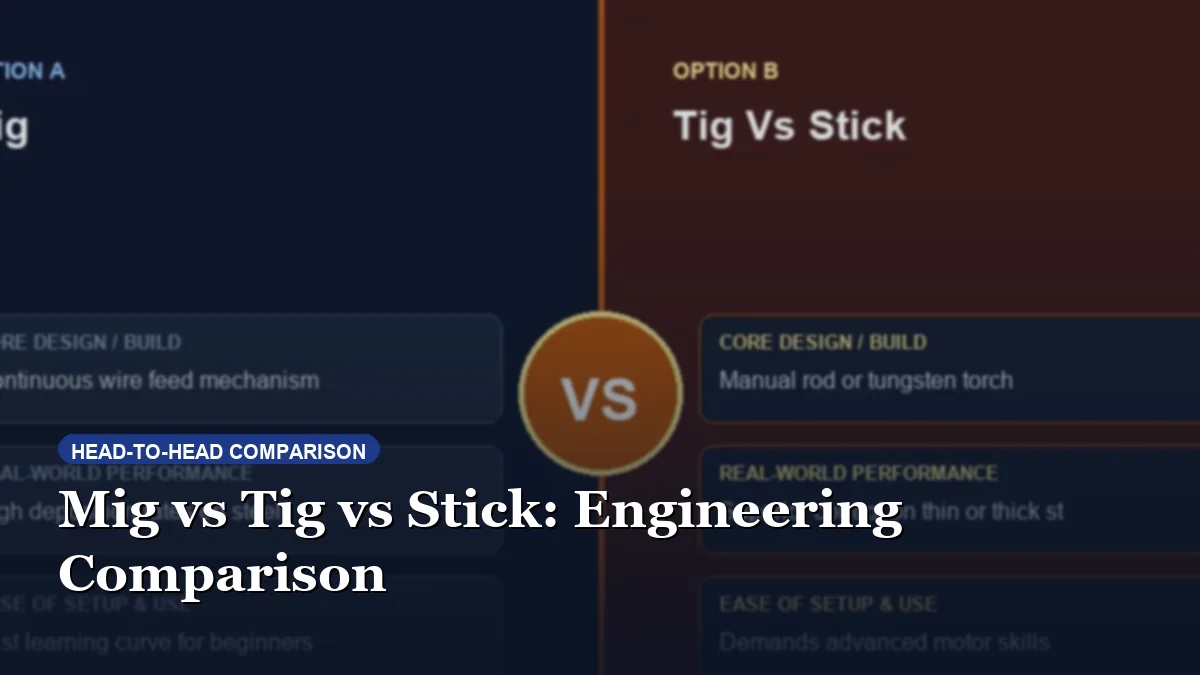
Choose MIG for high production speed on clean sheet metal. Select TIG or Stick for maximum joint integrity in heavy structural or precision applications.
Compare all top models in our Best Welder: Top Home Shop & Jobsite Picks Tested.
Side-by-Side Breakdown
| Criteria | Mig | Tig Vs Stick | Edge |
|---|---|---|---|
| Core Design / Build | Continuous wire feed mechanism | Manual rod or tungsten torch | MIG |
| Real-World Performance | High deposition rates on steel | Superior control on thin or thick stock | TIG vs Stick |
| Ease of Setup & Use | Fast learning curve for beginners | Demands advanced motor skills | MIG |
| Durability & Reliability | Good indoor shop performance | Exceptional field and dirty metal tolerance | TIG vs Stick |
| Efficiency / Operating Footprint | High duty cycle with shielding gas | Versatile power requirements | MIG |
| Maintenance Requirements | Regular liner and contact tip changes | Minimal torch or electrode holder upkeep | TIG vs Stick |
| Best Ideal Use Case | Automotive body panels and sheet fabrication | Pipelines and aerospace assemblies | TIG vs Stick |
Core Design And Engineering Differences
Metal inert gas equipment utilizes a motorized wire drive system to feed a continuous electrode into the weld pool. This mechanical setup directly influences how operators manage deposition rates and travel speeds.
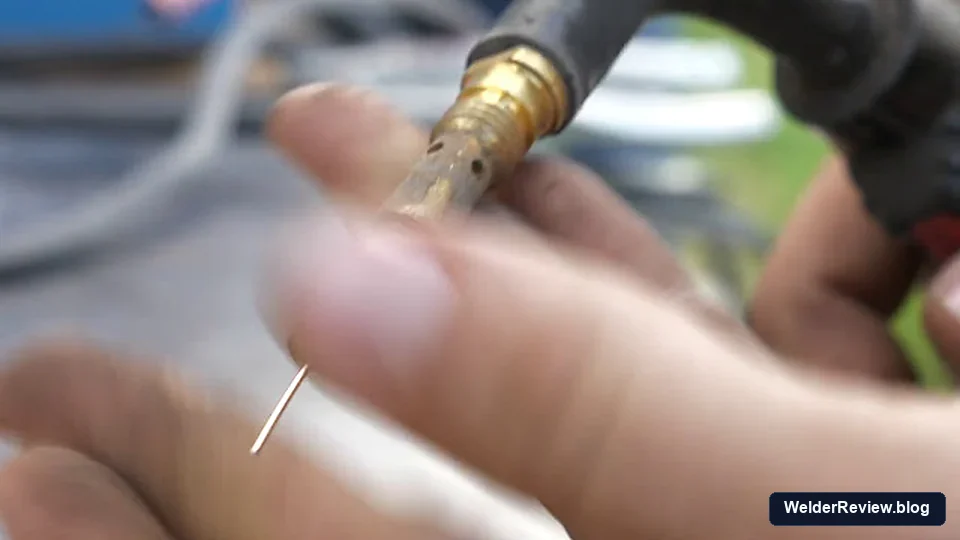
Conversely, tungsten inert gas and shielded metal arc configurations rely heavily on manual dexterity. Operators must feed filler rod by hand or manage consumable flux coated rods under strict amperage limits.
Understanding these foundational design variances helps mechanical engineers match power sources to specific production line requirements. Each architecture dictates distinct electrical duty cycles and thermal output profiles across joints.
Combining these processes is simple with options from our best mig tig plasma combo guide, allowing technicians to switch seamlessly between solid wire and tungsten inert gas modes on structural steel projects.
TIG machines employ a non-consumable tungsten electrode inside a specialized torch body, requiring manual filler rod addition while delivering precise thermal control for exceptionally thin aerospace components.
Stick welders rely on a constant current transformer or inverter architecture combined with a flux-coated consumable electrode, providing inherent voltage drops that maintain stable arcs outdoors.
- Motorized wire feeding systems versus manual electrode manipulation
- Continuous electrical contact versus intermittent consumable replacement
- Shielded gas delivery tubes integrated within distinct torch geometries
Power Source Architecture
Welding power sources must deliver stable voltage or constant current depending on the selected process. Modern inverter technology allows multi process machines to switch profiles safely.
Transformer based units offer heavy duty durability for industrial shops despite weighing significantly more than portable solid state alternatives.
- Constant voltage output curves for wire fed systems
- Constant current drooping characteristics for manual arcs
Real World Performance Comparison
Production environments require constant evaluation of deposition efficiency and operator fatigue levels. Wire fed systems minimize downtime by eliminating frequent electrode changes during long structural runs.
Field maintenance crews frequently favor manual arc processes due to wind resistance and rough handling. These traditional methods penetrate thick rust layers without extensive preliminary surface preparation.
Thermal input management remains a critical performance metric when joining thin alloy plates. Excessive heat distortion ruins expensive assemblies before final quality control inspections take place.
New fabricators often start by browsing our best beginner mig welders selection to find reliable machines that simplify carbon steel joint assembly without requiring excessive prep work or complex settings.
Achieving clean welds with TIG equipment demands immaculate surface preparation and tight joint tolerances, but the resulting weldment offers unmatched aesthetic quality and structural integrity.
Deploying stick electrodes across remote construction sites overcomes severe wind interference, though operators must constantly manage slag removal and potential electrode stub waste between passes.
- High deposition rates achieved via continuous wire feeding mechanisms
- Superior arc stability in windy outdoor job site conditions
- Deep root penetration capabilities on structural carbon steel plates
Travel Speed And Deposition
Operator travel speed directly impacts heat affected zone dimensions and overall bead profile geometry. Automated wire systems maintain consistent deposition rates across extended horizontal joints.
Manual techniques require exceptional hand eye coordination to regulate filler metal addition without causing cold lap defects or excessive reinforcement heights.
- Consistent filler addition rates during automated welding cycles
- Variable manual feed speeds dictated by joint fitup tolerances
Maintenance, Efficiency And Longevity
Preventative maintenance ensures consistent wire feeding and prevents erratic arc behavior during critical fabrication phases. Operators must inspect contact tips, drive rolls, and copper liners routinely.
Manual electrode holders and torch bodies demand minimal mechanical upkeep beyond removing spatter buildup. However, consumables like tungsten collets require frequent grinding to maintain proper arc focus.
Electrical efficiency varies between transformer and inverter based power supplies operating under heavy industrial loads. Modern units reduce idle power consumption while maximizing usable output amperage.
Routine MIG maintenance involves inspecting drive rolls for wear, cleaning steel liners with compressed air, and ensuring proper tension on the wire feed motor assembly.
Preserving TIG torch performance requires careful tungsten grinding using dedicated wheels to prevent contamination, alongside checking cooling water lines on high-amperage industrial water coolers.
Operators working on remote maintenance jobs can easily evaluate top value options using our best budget stick welder roundup, ensuring reliable performance on tough field repair tasks.
- Routine replacement of worn drive rolls and copper contact tips
- Periodic cleaning of gas diffuser nozzles to prevent turbulence
- Insulation resistance testing on heavy duty welding cables
Consumable Lifecycle Management
Managing consumable inventory prevents unexpected work stoppages on high volume production floors. Keeping spare liners, nozzles, and electrodes on hand ensures continuous operational readiness.
Proper storage of flux coated electrodes prevents moisture absorption that causes porosity and hydrogen cracking in high strength structural steel weldments.
- Sealed container storage for moisture sensitive flux electrodes
- Regular inspection of torch cooling water lines and pumps
Which Option Fits Your Setup
Selecting the ideal equipment package depends on available electrical supply, workspace ventilation, and material thicknesses. Fabrication shops handling diverse alloys benefit from versatile multi process welding systems.
Automotive restoration garages often prioritize clean wire fed setups for sheet metal body panels. Conversely, heavy pipeline contractors require rugged power sources capable of running cellulosic electrodes.
Facility managers must evaluate duty cycle ratings against peak production demands to prevent premature thermal overload shutdowns on the shop floor.
Choosing affordable hardware becomes easier when consulting our best budget mig welder guide, which highlights dependable machines that maximize shop floor productivity without exceeding equipment budgets.
Choosing a TIG system suits precision workshops working with aluminum alloys, titanium, and thin-wall stainless steel tubing where absolute arc control overrides deposition speed.
Investing in a stick welder provides unmatched versatility for field repair crews needing portable power sources capable of burning 7018 rods on structural steel.
- Primary input power availability including single or three phase lines
- Typical workpiece material thickness and joint configuration requirements
- Environmental exposure factors like wind, moisture, and restricted access
Shop Floor Integration
Integrating new welding machinery requires assessing existing ventilation hoods and shielding gas distribution pipelines. Proper layout design maximizes operator ergonomics and material handling efficiency.
Safety compliance protocols dictate adequate workspace separation between flammable materials and active high frequency arc welding stations.
- Dedicated shielding gas drop locations near assembly benches
- Ergonomic positioning arms for heavy welding cable management
Electrode Mechanics And Power Delivery
Understanding how electrical current transfers through various electrodes helps operators optimize arc stability. Wire fed systems use constant voltage to self regulate arc length automatically.
Manual processes demand precise operator control to maintain exact arc gaps without stubbing electrodes or losing arc initiation entirely.
Power source duty cycles dictate how long equipment can operate continuously before requiring a mandatory cooling period under maximum rated loads.
Constant voltage systems power MIG processes by automatically adjusting wire burn-off rates when stick-out distance fluctuates slightly during standard welding gun manipulation.
Constant current architectures govern TIG and stick methods, stabilizing output amperage despite arc length variations caused by steady hand tremors or joint irregularities.
High-frequency arc starting units integrated into modern TIG inverters eliminate tungsten contamination by initiating the arc without direct physical contact with the base metal.
- Self regulating arc voltage characteristics in wire fed setups
- Manual arc length control using constant current power sources
- Thermal overload protection circuits preventing transformer burnout
Voltage And Amperage Tuning
Fine tuning voltage parameters ensures smooth metal transfer without excessive spatter generation. Correct amperage settings guarantee adequate penetration profiles on thick structural steel plates.
Digital readout meters allow fabricators to record exact welding parameters for quality assurance documentation and repeatable procedure qualification records.
- Precise voltage adjustments controlling bead wetting action
- Amperage calibration verified using external shunt meters
Shielding Gas Dynamics And Environment
Shielding gas selection directly impacts weld puddle protection against atmospheric contamination. Argon and carbon dioxide mixtures alter arc characteristics and penetration depth significantly.
Outdoor fabrication sites often preclude using external shielding gases due to wind disruption. Self shielded flux cored wires or traditional stick electrodes resolve these environmental limitations.
Flow meter calibration ensures proper shielding coverage without wasting expensive shielding gas mixtures during extended structural assembly runs.
Shielding gas selection heavily dictates weld pool stability, with argon-carbon dioxide blends offering optimal arc characteristics for standard steel MIG transfer modes.
Pure argon gas serves as the universal choice for TIG welding, shielding reactive metals like aluminum and stainless steel from destructive atmospheric oxygen contamination.
Flux-coated rods eliminate external shielding gases in stick welding by generating a protective gaseous cloud and slag layer through thermal decomposition of the coating.
- Argon carbon dioxide blends optimizing carbon steel spray transfer
- Wind induced porosity risks managed by flux shielded alternatives
- Regulator flow rate adjustments preventing turbulent gas aspiration
Gas Flow Optimization
Maintaining proper gas flow rates prevents atmospheric oxygen and nitrogen from causing brittle weld defects. Flow meters should be calibrated periodically for maximum accuracy.
Drafty shop environments require higher flow rates or specialized wind screens to protect the reactive weld pool from premature cooling.
- Flow meter ball calibration checks before starting daily shifts
- Pyrex gas lens attachments improving tungsten shielding coverage
Joint Configuration And Material Limits
Joint design geometry dictates which welding process delivers optimal mechanical properties and fusion depth. Butt joints on thick plates require extensive bevel preparation for complete root penetration.
Fillet welds benefit from high deposition rates provided by continuous wire fed systems operating at elevated travel speeds. Thin sheet metal requires lower thermal input configurations.
Metallurgical compatibility between base metals and filler wires prevents cracking and ensures corrosion resistance in aggressive service environments.
Butt joints and lap joints on thick structural plates benefit greatly from deep-penetrating MIG processes utilizing multi-pass weld schedules and proper bevel angles.
Complex fillet joints and intricate corner welds on microscopic tubing demand the precise heat input control characteristic of high-end TIG welding configurations.
Structural repair welds on heavily rusted or painted surfaces rely on stick electrodes because flux components aggressively cut through surface impurities during fusion.
- V groove edge preparation requirements for thick structural plates
- Lap joint tolerances suitable for high speed wire deposition
- Root opening clearances preventing lack of fusion defects
Metallurgical Compatibility
Matching filler metal chemistry to base plate specifications guarantees optimal tensile strength values. Dissimilar metal welds demand specialized nickel alloy consumables to prevent stress cracking.
Post weld heat treatment procedures relieve residual stresses induced by rapid thermal expansion and contraction cycles across heavy welded joints.
- Alloy matching ensuring correct yield and tensile strengths
- Stress relieving thermal cycles reducing internal joint tensions
Frequently Asked Questions
Which process is best for beginners learning to weld?
MIG welding offers the easiest learning curve due to its automated wire feed system.
Can I weld outdoors without shielding gas wind protection?
Yes, stick welding and self-shielded flux-cored wire perform exceptionally well in windy field conditions.
What is the primary maintenance requirement for MIG machines?
Operators must regularly inspect and replace worn contact tips and drive roll assemblies to ensure smooth feeding.
Why do TIG welds require extensive surface preparation?
Any surface contaminants will instantly ruin the tungsten electrode and cause porosity in the puddle.
How do I choose the correct amperage for thick steel?
As a general rule, use roughly one ampere of output power per thousandth of an inch of material thickness.