How to Sharpen Tungsten for TIG Welding
Proper tungsten preparation ensures stable arc starts and precise weld bead geometry. Mastering grind angles and wheel composition prevents weld contamination.

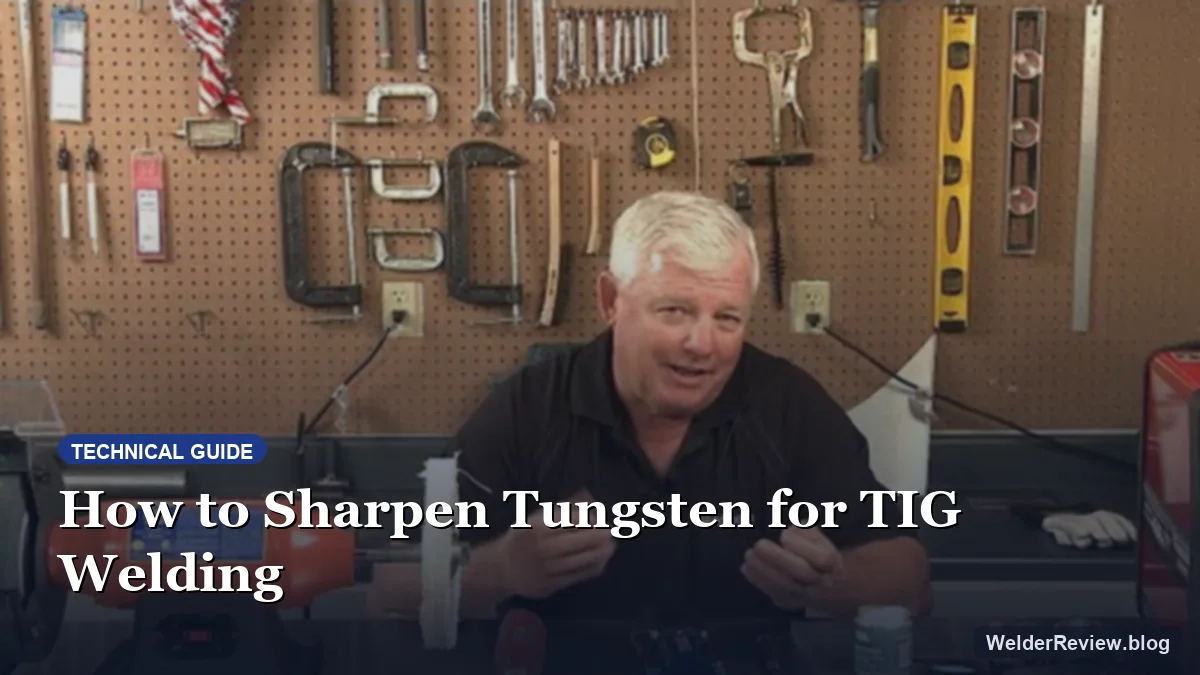
Grind your tungsten electrodes parallel to the axis using a dedicated, low-contamination diamond wheel. Maintain a taper length of 2 to 2.5 times the electrode diameter for optimal arc performance.
Ready to compare models? Start with our Best Welder: Top Home Shop & Jobsite Picks Tested.
Practical Quick-Reference Table
| Scenario / Metric | Recommended Target | Why It Matters |
|---|---|---|
| Low Amperage (<30A) | 15-30 degree taper angle | Concentrates the arc for micro welds |
| General Purpose (30-200A) | 30 degree taper angle | Balances arc stability and penetration |
| High Amperage (>200A) | 45-60 degree taper angle | Prevents tip melting under heavy thermal load |
| AC Aluminum Welding | Ball or slightly blunted tip | Prevents tungsten spitting and arc wander |
| DC Steel/Stainless | Sharp point with flat | Ensures directional arc focus and stability |
| Wheel Grit | 120-150 grit diamond | Leaves smooth surface without deep striations |
Understanding Tungsten Electrode Metallurgy and Alloy Selection
Selecting the correct tungsten alloy dictates arc stability, current-carrying capacity, and resistance to contamination. Pure tungsten suits low-frequency aluminum welding on traditional transformer machines.
Thoriated electrodes offer exceptional arc starts but present low-level radioactive hazards during grinding. Modern fabricators increasingly adopt lanthanated or ceriated alternatives for universal DC and AC performance.
Zirconiated tungsten resists contamination exceptionally well when working with high-purity aluminum alloys on alternating current. Matching the specific metal chemistry ensures consistent puddle behavior and superior weld integrity.
Electrode diameter must align precisely with your applied welding amperage to prevent tip deterioration. Reviewing our mig vs tig welding comparison helps clarify baseline equipment differences before diving into advanced fabrication.
- Match alloy type to base material specifications.
- Avoid radioactive thoriated variants when safe alternatives exist.
- Size electrode diameter strictly by working amperage requirements.
- Inspect raw stock for internal micro-fissures before grinding.
Decoding Color Code Standards
Standardized color bands stamped onto electrode ends identify their exact chemical composition instantly. Always verify the manufacturer band before mounting stock into your collet body.
Mixing up alloy types inside your torch assembly compromises weld shielding and puddle cleanliness. Keep your consumables sorted in dedicated storage containers to eliminate costly operational errors.
- Check color bands before every welding setup.
- Store mixed alloys in separate labeled bins.
Preparing Dedicated Grinding Equipment for Contamination Control
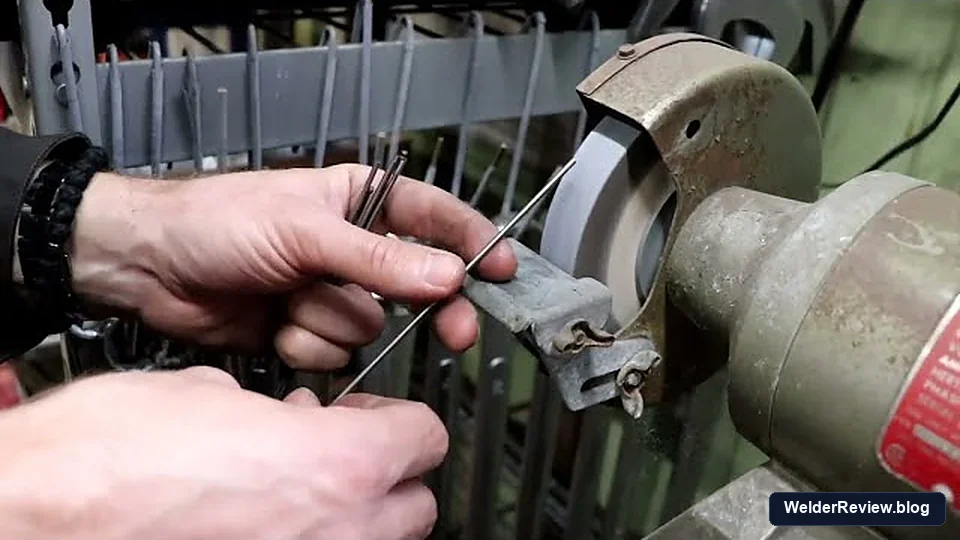
Never use a workshop bench grinder that has previously processed carbon steel. When pairing your prepared tungsten with the best cup for tig welding aluminum, clean gas coverage prevents surface contamination.
Invest in a dedicated, low-speed bench grinder equipped with a fine diamond wheel. Diamond abrasive wheels cut tungsten cleanly without fracturing the brittle crystalline structure near the apex.
Enclose your grinding station with local exhaust ventilation to capture fine metallic dust safely. Inhaling airborne tungsten or rare-earth oxide particles presents severe long-term respiratory health risks.
Adjust your tool rest securely to maintain a rigid, vibration-free surface during the sharpening procedure. Excessive chatter during contact will fracture the fragile tip and ruin your geometric setup.
- Dedicate grinding wheels exclusively to tungsten processing.
- Utilize fine diamond grit for smooth surface finishes.
- Install local extraction hoods to capture hazardous dust.
- Secure tool rests firmly to eliminate mechanical vibration.
Wheel Maintenance Protocols
Clean your diamond wheel periodically using an abrasive dressing stick to remove embedded metal buildup. A loaded wheel generates excessive friction and ruins the structural integrity of your tungsten.
Replace worn grinding wheels immediately once the abrasive matrix degrades or develops uneven grooves. Precision preparation requires a flat, true face across the entire width of the wheel.
- Dress wheels regularly to eliminate metal loading.
- Replace worn abrasive discs when grooves appear.
Video Walkthrough: 4 Easy Ways to Grind Tungsten for TIG Welding | TIG Time
Executing the Longitudinal Grind for Stable Arc Mechanics
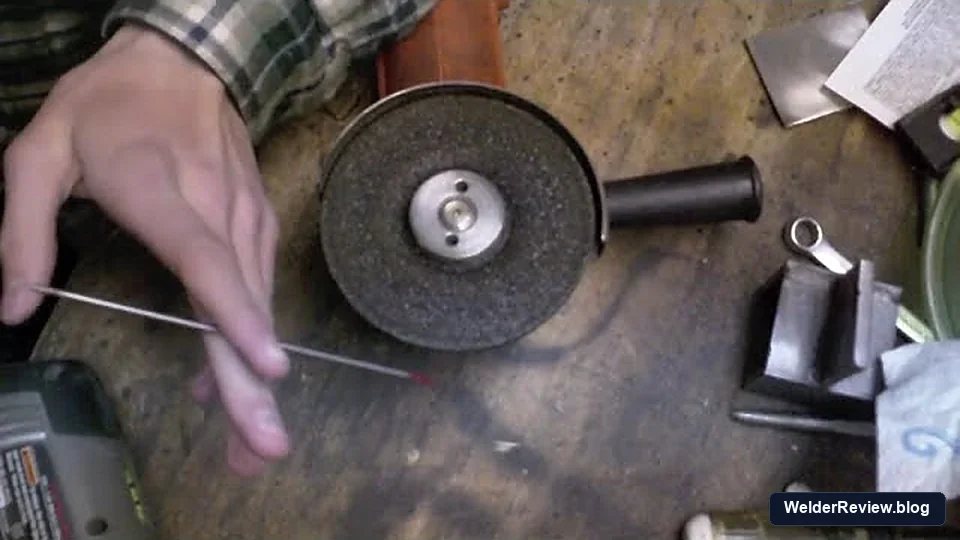
Position the tungsten electrode against the rotating wheel so that grinding marks run parallel to the length. Longitudinal grinding lines focus the electrical current straight toward the joint apex.
Radial scratches force the welding arc to jump erratically across microscopic peaks. Selecting the best tig welding machine for aluminum ensures stable high-frequency starts that complement your properly ground tungsten.
Rotate the tungsten smoothly between your thumb and index finger while applying light, consistent pressure. Avoid pressing too hard against the spinning wheel, which creates excessive heat and warps the rod.
Complete the sharpening stroke by drawing the electrode cleanly away from the spinning abrasive face. Never grind toward the blunt end, as this reverses striation patterns and introduces surface flaws.
- Grind strictly parallel to the electrode axis.
- Rotate the tungsten continuously during contact.
- Apply minimal downward pressure to prevent overheating.
- Pull the electrode cleanly away from the wheel.
Managing Heat Dissipation
Excessive frictional heat causes tungsten to oxidize rapidly and develop microscopic thermal stress fractures. Quench the electrode in clean water only after it cools slightly in ambient air.
Rapid thermal shock can crack high-alloy tungsten rods right down the center of the taper. Allow natural cooling periods between heavy grinding passes to preserve structural integrity.
- Monitor thermal buildup during extended grinding sessions.
- Avoid abrupt quenching on severely overheated stock.
Calculating Taper Lengths and Optimum Tip Flat Dimensions
The total length of your tapered section should measure roughly two to three times your electrode diameter. Proper taper ratios balance arc directional stability with thermal dissipation capacity.
Extremely long tapers concentrate too much heat at the delicate apex, causing premature melting and balling. Conversely, overly blunt tapers widen the arc cone and reduce weld penetration depth significantly.
Always finish your sharpened tungsten by creating a small flat spot across the very tip. Breaking the sharp point prevents tungsten particles from transferring directly into your molten weld pool.
Size the flat spot proportionally to your operating current. Using our welding amperage and thickness calculator helps determine correct settings so your tip distributes electron emission evenly without erratic arc wander.
- Maintain taper lengths at 2 to 3 times diameter.
- Avoid excessively long tapers that cause tip melting.
- Always blunt the final point with a small flat.
- Scale flat dimensions directly to your welding amperage.
Measuring Taper Angles Precisely
Utilize a mechanical tungsten gauge or angle template to verify your exact grinding geometry consistently. Visual inspection alone often misjudges the true included angle of the tapered tip.
Consistent angle replication ensures repeatable arc voltage characteristics across multi-pass production welding projects. Standardize your setup parameters to eliminate variables in your fabrication workflow.
- Use physical gauges to check angle accuracy.
- Maintain standard geometry across all torch setups.
Avoiding Common Preparation Errors and Tungsten Splitting
Hand-held rotary tools often produce uneven facets and inconsistent angles when sharpening tungsten electrodes manually. Secure your work using dedicated fixtures to guarantee uniform, symmetrical grinding geometries every time.
Contaminated grinding wheels transfer impurities directly into the soft tungsten matrix during material removal. Dress your abrasives frequently to maintain a clean cutting surface free of foreign metallic residues.
Tungsten splitting usually occurs when excessive downward force generates severe thermal stress during the grind. Lighten your touch and let the diamond abrasive perform the cutting work naturally.
Never attempt to salvage heavily contaminated tungsten without snapping off the ruined section first. Grinding through embedded impurities wastes time and ruins your wheel surface with foreign debris.
- Avoid unguided manual hand-grinding methods.
- Dress abrasive wheels to remove embedded debris.
- Prevent splitting by using light downward pressure.
- Snap off contaminated tips before reshaping stock.
Inspecting Tips Under Magnification
Use a jeweler loupe or magnifying glass to inspect your freshly ground tungsten before welding. Verifying the tip geometry catches micro-defects before they compromise your structural weld joint.
A flawless finish displays clean, uniform lines running parallel without any jagged edges or pits. Taking this extra verification step guarantees pristine arc stability from the very first strike.
- Inspect tip surfaces under optical magnification.
- Discard rods displaying surface pits or cracks.
Implementing Safe Workshop Practices and Fume Extraction
Tungsten grinding generates fine particulate dust that poses inhalation risks in enclosed workshop environments. Always wear an approved respiratory protection mask and utilize active local ventilation systems.
Thorium-alloyed electrodes emit low-level alpha radiation that accumulates inside lungs if dust is inhaled repeatedly. Practice good personal hygiene by washing your hands thoroughly after handling unground tungsten stock.
Wear safety glasses with side shields to protect your eyes from flying abrasive grit and sparks. Mechanical eye injuries occur easily when working close to high-speed bench grinding equipment.
Keep your grinding workspace clean, organized, and free from flammable materials or oil contamination. Good housekeeping prevents accidental slips, trips, and fires during routine daily equipment maintenance operations.
- Wear certified respiratory masks during all grinding tasks.
- Wash hands thoroughly after handling radioactive alloy variants.
- Utilize side-shield safety glasses for eye protection.
- Maintain a clean, organized, and hazard-free grinding station.
Proper Storage and Handling
Store your tungsten electrodes in labeled protective tubes to prevent breakage and surface oxidation. Keeping rods clean preserves their electrical conductivity and prevents troublesome arc ignition issues.
Handle sharpened electrodes carefully with clean gloves to avoid transferring body oils onto the tip. Oil residue burns instantly in the welding arc, causing porosity in your finished weld.
- Keep stock stored inside protective plastic containers.
- Handle clean tips wearing lint-free workshop gloves.
Frequently Asked Questions
Why must I grind tungsten parallel instead of radial?
Longitudinal grinding lines channel electrical current smoothly straight toward the joint apex for maximum arc stability. Radial scratches force the welding arc to jump erratically across micro-facets, causing unstable puddle behavior.
Can I use my standard workshop bench grinder for tungsten?
Standard shop grinders contain embedded steel and aluminum particles that instantly contaminate your tungsten electrode. You must dedicate a separate diamond wheel exclusively to tungsten sharpening to prevent weld inclusions.
What is the correct taper length for general welding?
Maintain a tapered section measuring roughly two to three times the overall diameter of your electrode. This specific geometric ratio optimizes arc concentration while effectively preventing premature tip melting under heavy heat.
Should I leave a flat spot on the tungsten tip?
Always blunt your sharpened point with a tiny flat surface to prevent tungsten drop-off during high-frequency starts. Creating a small flat stops microscopic metallic particles from transferring directly into your molten weld pool.
How do I prevent tungsten from splitting while grinding?
Lighten your downward pressure against the diamond wheel to eliminate excessive thermal stress during fabrication. Allowing natural cooling between aggressive passes stops high-alloy tungsten rods from cracking down the center of the taper.