Mig vs Tig Welding For Beginners: Practical Guide
Choosing between wire feed and torch techniques determines your early metal fabrication success. Understanding operational baselines prevents costly equipment errors.

Beginners seeking rapid output should choose MIG welding for its forgiving arc stability. Precision hobbyists preferring clean aesthetics will benefit from mastering TIG welding controls.
Compare all top models in our Best Welder: Top Home Shop & Jobsite Picks Tested.
Side-by-Side Breakdown
| Criteria | Mig | Tig Welding For Beginners | Edge |
|---|---|---|---|
| Core Design / Build | Motorized wire drive system with shielding gas. | Manual torch manipulation with foot pedal amperage. | Mig |
| Real-World Performance | High deposition rates for structural steel projects. | Exquisite bead control for thin gauge metals. | Tig Welding For Beginners |
| Ease of Setup & Use | Simplified voltage and wire speed parameters. | Complex coordination of torch, filler, and pedal. | Mig |
| Durability & Reliability | Robust internal drive rollers and heavy-duty guns. | Delicate tungsten electrodes and precise gas lenses. | Mig |
| Efficiency / Operating Footprint | Faster completion times on larger fabrication jobs. | Slower linear progression demanding meticulous focus. | Mig |
| Maintenance Requirements | Regular contact tip inspections and liner cleanings. | Frequent tungsten sharpening and torch upkeep. | Mig |
| Best Ideal Use Case | General automotive repair and thick steel fabrication. | Aerospace components, sculpture, and thin aluminum. | Tig Welding For Beginners |
Engineering Fundamentals and Design Architecture
Metal inert gas equipment utilizes a continuous wire feed mechanism that automatically supplies filler material to the weld joint. This automated delivery system significantly reduces the physical coordination demands placed upon operators.
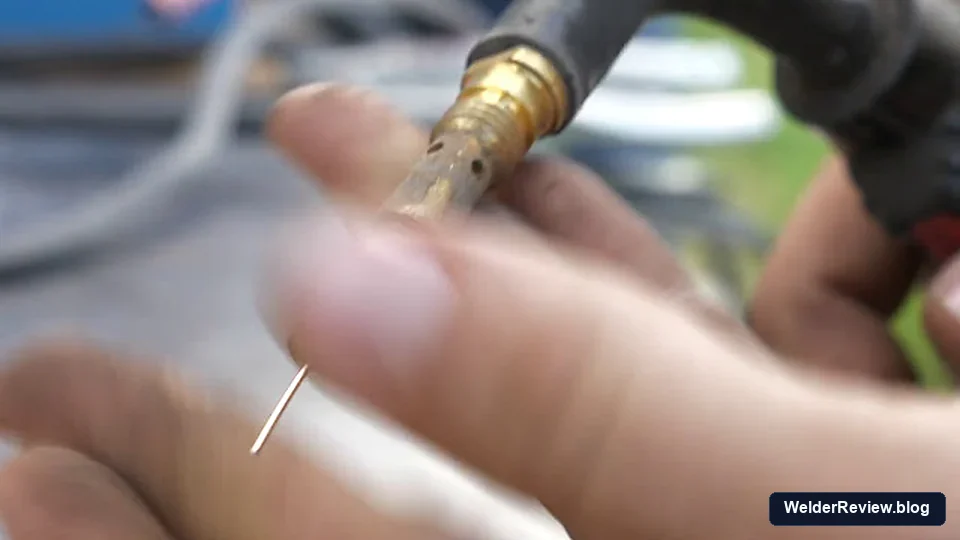
Tungsten inert gas systems require manual manipulation of a non-consumable electrode alongside a separate filler rod. Operators must synchronize both hands while managing a remote foot pedal to regulate current delivery accurately.
Understanding these foundational mechanical differences dictates how quickly a novice can produce sound structural joints. Equipment engineering directly influences the learning curve, operational footprint, and overall shop productivity metrics.
MIG welding utilizes a continuous solid wire fed through a motorized gun, often paired with products from our best welding rods for beginners roundup to simplify arc length control.
Conversely, TIG welding requires manual filler rod addition alongside a non-consumable tungsten electrode, demanding simultaneous two-handed coordination under constant current outputs to maintain precise thermal input parameters across delicate joints.
Understanding these foundational voltage-amperage relationships helps beginners evaluate electrical duty cycles, preventing premature transformer overheating when executing extended runs on thick structural steel or thin automotive sheet metal fabrication assemblies.
- MIG relies on self-adjusting electrical arc characteristics.
- TIG demands independent control of heat and filler material.
- Drive roller tension affects wire feeding consistency in MIG setups.
Power Sources and Current Delivery
Modern power sources for both processes utilize sophisticated inverter technology to stabilize output arcs. Constant voltage transformers dominate wire feed units, whereas constant current architectures govern precision torch operations.
Selecting appropriate amperage ranges prevents premature component degradation during extended fabrication sessions.
- Inverter units reduce total equipment weight significantly.
- Duty cycles dictate continuous operational time limits.
Operational Performance and Practical Execution
Executing clean welds requires mastering travel speed, gun angle, and stickout distances consistently. Wire feed processes forgive minor dimensional variations far better than intricate torch setups do.
Pulsed variations help manage heat input across sensitive alloys, reducing distortion risks. Novices must practice maintaining steady hand movements to ensure uniform penetration profiles across varied joint configurations.
Evaluating real-world deposition rates reveals why production shops prefer automated wire feeding for structural projects. Precision assembly work demands the absolute metallurgical control offered by manual non-consumable torch methods.
Practical execution using equipment from our best welding kit for beginners guide relies on maintaining a consistent contact tip-to-work distance for stable shielding gas coverage and minimal spatter generation.
TIG execution demands absolute torch angle precision and a tight arc gap, where a zero-point-zero-four-inch tungsten requires steady hand movement to prevent tungsten inclusion contamination within high-integrity aerospace or pressure vessel weld pools.
Beginners must practice travel speeds diligently, as excessive translation rates cause lack of fusion defects, while lingering too long risks burn-through on vulnerable joints requiring strict thermal management protocols.
- Travel angles influence shielding gas coverage effectiveness.
- Arc length variations alter voltage parameters dynamically.
- Heat affected zones dictate final structural integrity.
Shielding Gas Selection and Dynamics
Shielding gases protect molten weld pools from atmospheric contamination during the solidification phase. Argon and carbon dioxide mixtures provide optimal arc stability for steel fabrication tasks.
Pure argon is mandatory when joining aluminum alloys to prevent porous weld defects.
- Flow meters regulate cubic feet per hour delivery.
- Drafty environments disrupt gas shielding integrity rapidly.
Ergonomics, Usability, and Setup Complexity
Setting up a machine from our best welding machine for beginners guide involves selecting correct voltage taps and matching wire diameters using standard manufacturer parameter charts inside access doors.
Preparing a tungsten electrode requires careful grinding parallel to the longitudinal axis to ensure directional arc stability. Contaminated tungsten points scatter the arc, ruining precision joint aesthetics instantly.
Ergonomic torch designs reduce operator fatigue during lengthy fabrication projects in complex shop environments. Comfort directly correlates with consistent weld quality and reduced physical strain over time.
Setting up a MIG machine involves selecting correct wire diameter, matching drive rolls, and adjusting gas flow meters to twenty cubic feet per hour of argon-carbon dioxide shielding mix for optimal results.
TIG setup introduces higher complexity, requiring precise tungsten grinding on a dedicated wheel to a fifteen-degree taper, alongside meticulous post-flow timer adjustments to protect cooling tungsten from atmospheric oxidation.
Ergonomically, MIG guns offer comfortable pistol grips reducing hand fatigue, whereas TIG torches require pencil-grip dexterity and foot pedal actuation, challenging beginners to master simultaneous multi-limb operational synchronization.
- Parameter charts accelerate initial machine calibration steps.
- Dedicated tungsten grinders prevent abrasive wheel contamination.
- Balanced gun weights improve maneuverability in tight spaces.
Consumable Management and Upkeep
Consumables wear down predictably during normal operation, necessitating routine inspection and replacement protocols. Contact tips, nozzles, and gas lenses require periodic cleaning to prevent erratic arc behavior.
Keeping spare parts on hand minimizes frustrating downtime in active workshops.
- Spatter buildup clogs gas nozzles over time.
- Collet bodies secure tungsten electrodes inside torch heads.
Durability, Reliability, and Maintenance Protocols
Industrial fabrication equipment must withstand harsh workshop environments containing metal dust and moisture. Robust internal drive assemblies ensure reliable wire feeding across thousands of operational hours.
Torch assemblies experience high thermal loads, making liquid cooling systems necessary for heavy-duty applications. Regular preventative maintenance extends equipment lifespans and protects your initial financial investment securely.
Cleaning wire liners periodically prevents friction-induced birdnesting inside the drive motor compartment. Simple maintenance habits guarantee consistent performance every single time you power up the machine.
Routine maintenance for MIG units dictates regular inspection of contact tips and nozzle liners, clearing copper shavings to prevent wire feed binding during heavy industrial fabrication shifts.
TIG systems demand rigorous torch care, including checking water cooler fluid levels and inspecting power cables for fraying to maintain safe high-frequency arc starting performance without electrical leakage risks.
Following manufacturer lubrication schedules and storing consumables in dry environments drastically extends equipment lifespan, minimizing unexpected downtime while ensuring consistent arc stability across repeated operational cycles in professional workshops.
- Compressed air clears accumulated metallic dust safely.
- Drive roll grooves must match chosen wire diameters.
- O-ring inspections prevent costly shielding gas leaks.
Troubleshooting Common Operational Faults
Recognizing erratic arc symptoms helps operators diagnose feeding issues or electrical ground failures quickly. Porosity in solidified beads usually indicates inadequate gas flow or contaminated base metals.
Systematic diagnostic approaches resolve operational bottlenecks without requiring expensive professional service calls.
- Check ground clamp connections before adjusting machine parameters.
- Inspect contact tips for oval wear patterns regularly.
Efficiency, Operating Footprint, and Safety Standards
Maximizing shop efficiency involves balancing deposition rates against post-weld cleanup time requirements. Wire feed techniques generate minimal slag, whereas certain specialty applications demand extensive mechanical chipping.
Strict adherence to safety standards protects operators from ultraviolet radiation, toxic fumes, and electrical shock. Proper ventilation systems are mandatory when welding galvanized metals or coated structural steels.
Optimizing workspace layouts improves material flow and minimizes unnecessary handling during multi-step fabrication projects. Safety gear compliance remains non-negotiable regardless of the specific joining method selected.
Operating footprints differ significantly, with MIG setups requiring dedicated shielding gas cylinders and heavy-duty ground clamps, while complying with OSHA ventilation standards to manage hazardous welding fume generation effectively.
Following our tungsten sharpening preparation guide, TIG welding generates intense ultraviolet radiation, mandating strict adherence to ANSI Z49.1 safety codes regarding shade 10 or darker filter lenses and protective apparel.
Electrical efficiency in modern inverter-based machines reduces energy consumption, allowing operators to maximize duty cycles while maintaining compliance with local workshop electrical code requirements and fire safety regulations.
- Auto-darkening helmets safeguard eyes from harmful arc flashes.
- Leather welding jackets prevent severe thermal skin burns.
- Fume extractors remove hazardous particulate matter effectively.
Electrical Safety and Grounding Integrity
Maintaining proper grounding integrity prevents stray electrical currents from damaging sensitive internal control boards. Inspect power cords regularly for cuts, fraying, or exposed internal copper conductors.
Dry working environments reduce accidental shock risks during damp seasonal weather conditions.
- Dedicated circuit breakers prevent electrical overloads safely.
- Insulated electrode holders protect operators during use.
Materials Science and Application Suitability
Different metallic alloys respond uniquely to localized thermal inputs applied during fusion processes. Carbon steels accommodate rapid heating cycles exceptionally well, making them ideal for novice learners.
Aluminum alloys demand precise heat management to prevent warping or catastrophic structural collapse during assembly. Understanding metallurgy helps fabricators choose appropriate filler metals for demanding structural applications.
Matching the correct process to your specific material thickness ensures structurally sound welded assemblies every time. Comprehensive material knowledge separates professional fabricators from casual hobbyists and beginners.
MIG excels in high-speed carbon steel fabrication, utilizing argon-rich mixes to produce deep penetration profiles suitable for heavy structural frameworks and automotive repair applications requiring rapid deposition rates.
TIG dominates non-ferrous applications like aluminum and stainless steel, leveraging pure argon shielding to prevent oxidation and deliver visually immaculate bead appearances on thin-gauge architectural or aerospace components.
Metallurgical compatibility dictates shielding gas selection, as incorrect mixtures lead to porosity, cracking, or loss of corrosion resistance in specialized alloy weldments subjected to harsh operational environments.
- Stainless steel requires lower heat inputs to prevent carbide precipitation.
- Thick plate steel demands multi-pass welding techniques for penetration.
- Exotic alloys require specialized shielding gas mixtures strictly.
Joint Design and Edge Preparation
Proper edge preparation ensures adequate filler penetration through critical structural load-bearing cross sections. Beveling thick plates creates essential room for multi-pass reinforcement weld beads.
Removing mill scale and rust guarantees clean fusion zones free from inclusions.
- V-groove joints maximize penetration on thick plates.
- Root gaps allow full-depth fusion in butt joints.
Choosing the Ideal Process for Your Workshop
Selecting the right equipment depends on your project goals, available space, and skill level. Novices prioritizing rapid progress will find wire feed machines exceptionally rewarding for garage fabrication tasks.
Artists and precision specialists preferring absolute aesthetic control should invest time mastering torch manipulation skills. Evaluating your long-term fabrication ambitions ensures you purchase equipment that grows with you.
Balanced purchasing decisions prevent buyer remorse and set the stage for successful metalworking endeavors. WelderReview recommends aligning your equipment choice directly with your primary intended fabrication projects.
Selecting the right process depends on your primary project goals, balancing the rapid learning curve of MIG against the superior metallurgical control offered by TIG for specialized fabrication tasks.
Hobbyists working on thicker structural repairs find MIG economical and fast, whereas artisans crafting custom exhaust systems or intricate aluminum sculptures benefit immensely from the precision of TIG equipment.
Evaluate your workspace electrical capacity, budget for consumable gases, and long-term skill development objectives before committing to a specific machine architecture to ensure sustained productivity and manufacturing satisfaction.
- Assess available electrical service before purchasing heavy equipment.
- Consider typical material thicknesses you plan to fabricate.
- Factor consumable replacement costs into your ongoing budget.
Future-Proofing Your Equipment Investment
Investing in multi-process machines provides flexibility as your welding capabilities expand over time. Versatile power sources accommodate stick, wire feed, and torch operations within a single compact housing.
Adaptable equipment setups protect your workshop against changing project requirements and evolving technical challenges.
- Multi-process units save valuable floor space.
- Upgradable software packages enhance machine longevity.
Frequently Asked Questions
Which welding process is truly easier for absolute beginners to learn first?
Wire feed systems are generally considered easier because they automate filler delivery and maintain stable arc characteristics. This automation lets novices focus immediately on travel speed and gun angle consistency without hand fatigue.
Can I weld aluminum effectively using standard wire feed equipment without modifications?
Standard setups require a specialized spool gun or a Teflon liner conversion to feed soft aluminum wire reliably. Without these specific modifications, the soft wire will birdnest inside the drive mechanism instantly.
Why is shielding gas required for both of these popular metal joining methods?
Shielding gas displaces ambient atmospheric oxygen and nitrogen, preventing porous weld contamination during the molten phase. Without this protective blanket, structural welds become brittle and prone to catastrophic failure.
How often should I sharpen my tungsten electrode during precision torch fabrication?
You must regrind your tungsten electrode immediately whenever it touches the molten puddle or filler rod. A contaminated tip disperses the electrical arc, destroying precision control and clean bead aesthetics.
What electrical requirements do I need to prepare in my home workshop?
Most entry-level machines operate efficiently on dedicated twenty-amp household circuits running at one hundred twenty volts. Heavy industrial fabrication units demand dedicated two-hundred-forty-volt receptacles to deliver necessary operating amperage safely.