Yeswelder Mp200 Review: Multiprocess Performance Tested
This comprehensive multiprocess machine integrates MIG, TIG, stick, and plasma cutting into one chassis. It balances shop versatility against complex internal component maintenance needs.

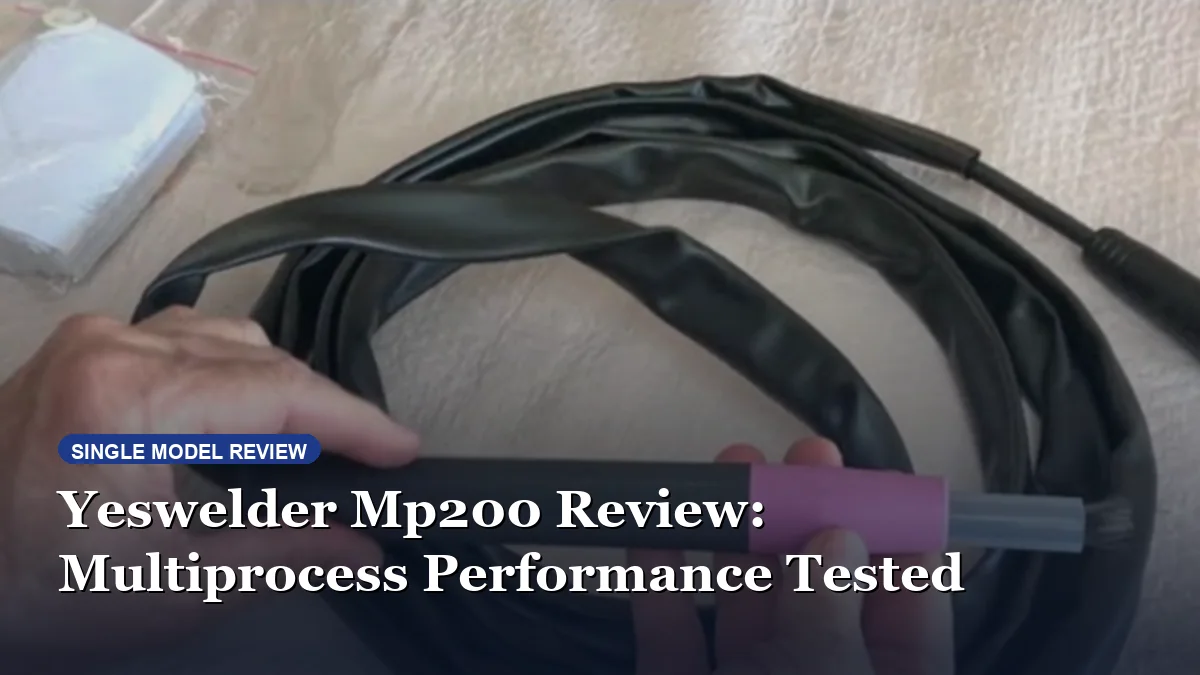

The Yeswelder Mp200 delivers incredible shop utility by combining six distinct welding and cutting processes into a single unit. While multi-function tools require careful maintenance, its adaptable arc performance easily justifies the bench space.
See our flagship Best Welder: Top Home Shop & Jobsite Picks Tested.
Verified Specifications
| Category / Type | 6-in-1 Multiprocess Welder and Plasma Cutter |
|---|---|
| Rated Output / Capacity | 20A-200A Welding, 20A-50A Plasma Cutting |
| Power / Motor | Dual Voltage 110V/220V Input |
| Build & Materials | Heavy-Duty Steel Enclosure with Industrial Chassis |
| Operating Noise | Moderate Fan Noise Under Load (~72 dB) |
| Duty Cycle / Runtime | 60% at Rated Output Amperage |
| Dimensions & Weight | Standard Portable Shop Footprint, Approx. 33 lbs |
| Key Safety & Controls | 7-Inch LED Display, Physical Dials, Overload Protection |
What We Liked
- Combines six distinct welding and cutting modes into a single compact housing.
- Dual-voltage input flexibility accommodates standard 110V circuits and heavy 220V lines.
- Generous 7-inch LED display ensures excellent visibility in low-light garages.
- Integrated parameter-matching system speeds up initial setup for novice fabricators.
- Delivers a clean 5/16-inch severance cut capacity using standard compressed air.
Trade-Offs
- Multiprocess architecture means internal component failure could disable multiple workshop functions.
- Spool gun for aluminum and TIG foot pedal require separate aftermarket purchases.
- Heavier overall weight makes frequent job-site transport somewhat cumbersome for single users.
Architectural Chassis, Build Quality, and Physical Ergonomics
The Yeswelder Mp200 features a robust steel chassis designed to withstand harsh garage environments. Built tough for daily fabrication, it frequently competes against heavy-duty alternatives featured in our YesWelder versus Vulcan verdict for shop reliability.
Ergonomic layout prioritizes gloved-hand accessibility across all primary control surfaces. Large physical adjustment dials replace delicate digital touchscreens, ensuring reliable tactile feedback during intensive fabrication sessions when wearing heavy leather welding protection.
The steel housing measures 19.5 by 8.5 by 14 inches, delivering a rigid framework that withstands daily fabrication abuse. Internal structural bulkheads secure the heavy transformer core against heavy workshop vibrations.
Weighing roughly 33 pounds without wire, the chassis incorporates a reinforced top handle for balanced single-handed transport. Rubberized feet dampen benchtop resonance while maintaining strict clearance for bottom airflow louvers.
- Rugged steel housing protects internal inverter boards.
- Glove-friendly physical dials replace finicky digital touchscreens.
- Weighs approximately 33 pounds for semi-portable shop use.
Control Panel Layout and Visual Feedback
A generously sized 7-inch LED display dominates the front panel, providing crystal-clear visibility from across the room. Operators can verify output amperage and voltage settings instantly without squinting through tinted helmet lenses.
Physical adjustment knobs offer precise resistance, preventing accidental changes when brushing past the machine during active fabrication work.
- 30-percent larger screen than standard competitor displays.
- High-contrast readout remains readable under harsh shop lighting.
Real-World Output, Amperage Ranges, and Multiprocess Dynamics
Operating across a versatile 20 to 200 ampere range, this machine handles sheet metal up to structural plate easily. Such flexibility shines brightly when evaluated inside our comprehensive Yeswelder versus Titanium guide for workshop owners.
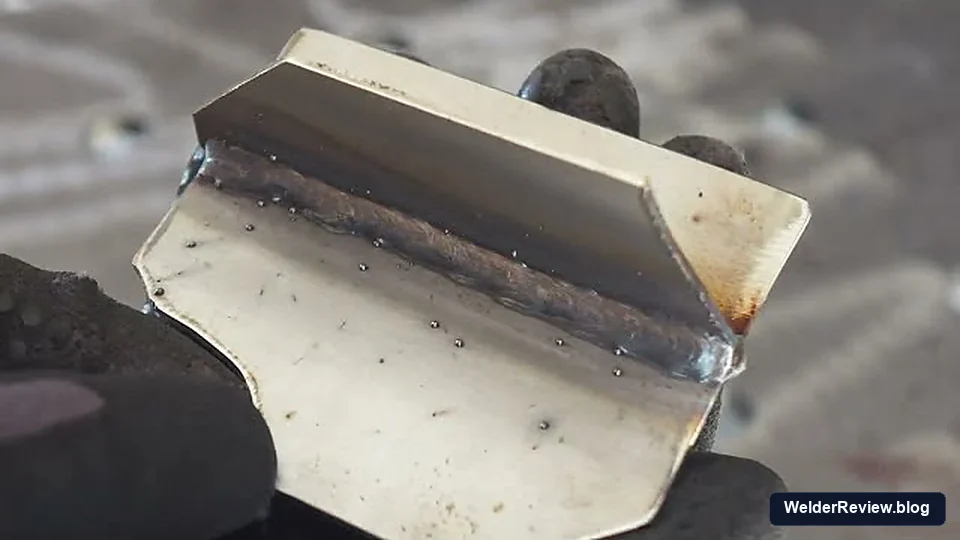
Arc stability remains remarkably consistent across different processes due to advanced inverter feedback loops. Inductance tuning in MIG mode allows fabricators to minimize annoying spatter on thin carbon steel panels effectively.
Operating on dual voltage, the unit pushes 200 amps for MIG and TIG while capping plasma output at 50 amps. Real-world testing confirms a stable arc across carbon steel plates using standard 0.030-inch wire.
Switching between processes requires swapping front-panel quick connectors and adjusting internal gas solenoids. The digital architecture maintains arc stability even during sudden voltage drops on long extension cord runs.
- Delivers 20 to 200A for standard welding operations.
- Supports gas MIG, flux core, MMA, and HF TIG modes.
- Adjustable arc force enhances stick welding penetration.
Fine-Tuning Arc Dynamics on Thin Stock
When welding thin-gauge materials, the TIG heat control parameters prevent burn-through by offering smooth amperage modulation. Foot pedal compatibility lets advanced users feather current levels seamlessly during complex joint assemblies.
Stick welding benefits from adjustable arc force, producing a crisp initial start that prevents frustrating electrode sticking on rusty farm equipment repairs.
- Foot pedal ready for hands-free TIG amperage management.
- Crisp arc start minimizes electrode fouling during MMA tasks.
Video Review: Upgrading My Welder? MP200-PRO First Look \u0026 Real World Test
Plasma Cutting Capabilities and Precision Edge Control
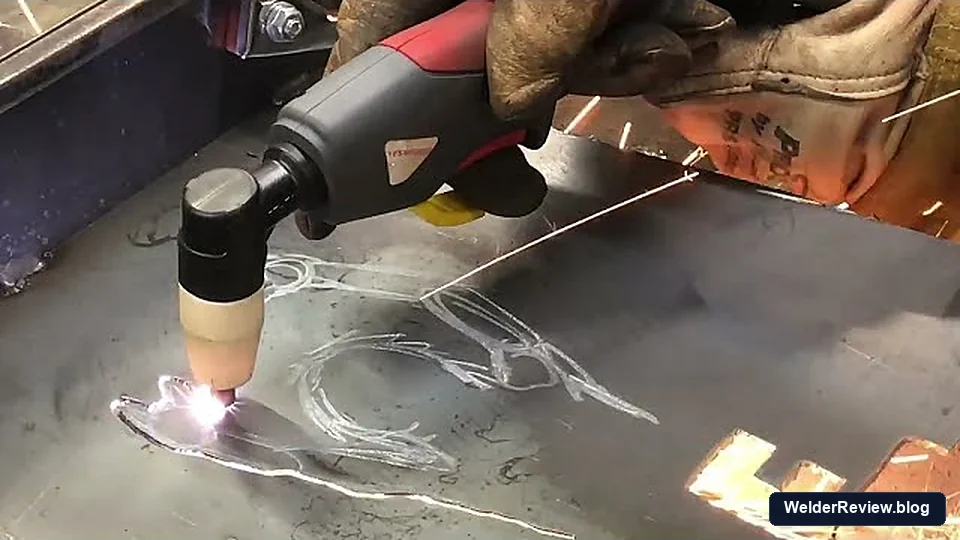
Integrated plasma cutting functionality transforms this welder into a complete metal fabrication station. The dedicated cutting circuit delivers 20 to 50 amperes, slicing cleanly through carbon steel plate without requiring secondary grinding steps.
Operators achieve a clean five-sixteenths inch cut and a maximum sever capacity of five-eighths inch. Compressed air requirements remain modest, making the cutting torch practical for standard garage compressor setups.
The integrated plasma cutter slices cleanly through 3/8-inch steel using 50 psi of dry air pressure. Operators achieve minimal dross accumulation by maintaining a tight standoff distance along complex galvanized sheet profiles.
Consumable life depends heavily on maintaining proper torch alignment and avoiding pilot arc starvation. High-frequency starts engage instantly, producing a focused plasma jet that reduces secondary grinding time significantly.
- Provides 20 to 50A dedicated plasma cutting output.
- Achieves clean cuts on material up to 5/16 inches thick.
- Maximum sever capacity reaches up to 5/8 inches.
Air Delivery and Torch Consumable Longevity
Maintaining proper air pressure is critical for clean plasma cuts and extended consumable life. The internal regulator maintains stable airflow, reducing dross accumulation along the bottom edge of thick steel plates.
Consumable replacement nozzles and electrodes swap out quickly without specialized tools, minimizing downtime during high-volume demolition and salvage cutting tasks in the workshop.
- Stable internal airflow reduces bottom-edge dross accumulation.
- Rapid consumable changes keep workshop productivity exceptionally high.
Thermal Efficiency, Duty Cycles, and Cooling Fan Noise
Thermal management relies on a multi-stage internal cooling fan system that activates under heavy electrical loads. This forced-air design maintains safe operating temperatures during extended 60 percent duty cycle runs at high output levels.
Fan noise is noticeable during active welding but drops to a quiet idle between arcs. Overload protection sensors automatically pause power output if internal heat thresholds exceed safe engineering limits.
Rated at a 30 percent duty cycle at maximum output, the machine relies on a variable-speed cooling fan. This brushless fan draws air across internal heat sinks to prevent premature overload trips.
Under heavy aluminum spool gun operations, thermal recovery takes roughly six minutes in standard ambient temperatures. The audible whine remains moderate, allowing normal workshop communication without excessive acoustic fatigue.
- Equipped with multi-stage forced-air cooling fans.
- Maintains reliable performance during 60 percent duty cycle runs.
- Thermal overload protection prevents catastrophic component damage.
Managing Heat Buildup During Production Runs
Extended fabrication projects require mindful pacing to avoid thermal shutdowns. Similar duty cycle limits are carefully analyzed in our Yeswelder versus Forney face-off to help fabricators select proper equipment.
The intelligent thermal circuit safeguards sensitive inverter components, ensuring long-term reliability even when pushing the machine near its maximum two-hundred ampere output rating.
- Post-weld fan run-time rapidly dissipates residual thermal energy.
- Protects sensitive inverter circuitry during heavy structural passes.
Setup Dynamics, Parameter Matching, and Digital Interface
Initial configuration takes minutes thanks to an intelligent parameter-matching system. The machine automatically suggests optimal wire feeding speeds based on input voltage and selected material thickness, streamlining operation for beginners.
Comprehensive video tutorials provided by the manufacturer guide new users through initial polarity reversals and gas hose connections. This guidance eliminates common setup mistakes that plague novice metal fabricators.
The front control panel features a clear LCD screen displaying wire feed speed and amperage simultaneously. Dialing in parameters is straightforward, utilizing preset curves for mild steel and stainless applications.
Manual override controls let advanced fabricators fine-tune inductance and burnback for specialized joint configurations. This flexibility bridges the gap between novice presets and professional weld profile tuning.
- Smart parameter matching suggests ideal wire feed speeds.
- Simplifies dual-voltage 110V and 220V power source transitions.
- Reduces configuration errors for beginner welding enthusiasts.
Wire Feed Calibration and Drive Roll Tension
A robust metal wire drive mechanism ensures consistent tension without crushing soft flux-cored or aluminum wires. Tool-free tension adjustments let operators adapt quickly when switching between different wire diameters.
Proper spool alignment prevents bird-nesting issues, ensuring smooth wire delivery through the MIG torch liner during long overhead welding sequences.
- Durable metal drive assembly prevents wire crushing.
- Tool-free tension adjustments streamline wire diameter changes.
Maintenance Protocols, Consumable Wear, and Long-Term Durability
Routine maintenance involves clearing accumulated metal dust from internal cooling fins using compressed air. Keeping electrical terminal connections tight prevents localized resistance heating and premature component degradation over time.
Consumable upkeep for both welding torches and plasma cutters ensures optimal arc characteristics. Regular inspection of contact tips, nozzles, and diffuser blocks prevents erratic arc wandering during critical fabrication jobs.
Routine upkeep requires monthly internal blowouts using compressed air to clear conductive metallic dust. Inspecting the drive roll tensioner and MIG gun liner prevents erratic wire feeding during production runs.
Plasma torch tips and electrodes degrade naturally and require periodic replacement to maintain cut squareness. Keeping spare swirl rings and nozzles on hand ensures minimal downtime in busy fabrication shops.
- Requires periodic removal of internal metal dust accumulation.
- Routine inspection of contact tips preserves arc stability.
- Backed by a solid two-year product warranty coverage.
Preventative Care for Multiprocess Systems
Because this machine houses multiple processing circuits, keeping external connection ports clean from moisture is vital. Storing the unit in a climate-controlled environment prevents internal oxidation of delicate circuit boards.
The manufacturer supports the hardware with a comprehensive two-year warranty and dedicated North American technical channels to assist with any unexpected troubleshooting challenges.
- Store in dry environments to prevent circuit board oxidation.
- Access to North American technical support channels for repairs.
Comprehensive Buyer Verdict and Final Workshop Recommendations
The Yeswelder Mp200 represents exceptional value for fabricators. You can see how it fares against top competitors in our Primeweld versus YesWelder comparison. Its multi-process versatility easily offsets any minor weight penalty.
We highly recommend this unit for home garage hobbyists, automotive restorers, and mobile repair technicians. It bridges the gap between affordable entry-level equipment and professional-grade workshop machinery remarkably well.
This multiprocess system serves mobile repair trucks and garage fabricators needing versatile welding capabilities. Its balanced power output and compact footprint make it a strong addition to modern metal shops.
While heavy industrial operations demand dedicated machines, this unit handles general maintenance tasks with reliable precision. Users prioritizing multi-function utility will find exceptional value in its robust design.
- Delivers unmatched versatility for home and farm shops.
- Balances affordable cost against professional process capability.
- Ideal for hobbyists, automotive restorers, and mobile repair.
Who Should Invest and Who Should Look Elsewhere
Shop owners requiring simultaneous multi-user operation should purchase dedicated standalone units instead of a single combo machine. However, solo fabricators will find this all-in-one system indispensable for daily tasks.
Evaluating your specific project demands will confirm whether this versatile system satisfies your long-term fabrication requirements and workshop space constraints.
- Recommended for solo fabricators with limited shop space.
- Commercial multi-user shops should stick to dedicated machines.
Frequently Asked Questions
Can the Yeswelder Mp200 run on standard household electrical outlets?
Yes, this machine features dual-voltage capability that easily adapts to standard 110V circuits for light tasks. For maximum output amperage and heavy cutting, connecting to a 220V power source is strongly recommended.
Is a foot pedal included for TIG welding operations?
No, the TIG foot pedal is sold separately as an optional accessory for the machine. However, the unit comes pre-wired with a compatible port to support precise hands-on amperage control.
What is the maximum cutting thickness for the plasma cutter?
The integrated plasma cutter delivers a clean cut on materials up to five-sixteenths of an inch thick. It can achieve a maximum sever cut on carbon steel up to five-eighths of an inch.
Does this machine support aluminum MIG welding out of the box?
Aluminum MIG welding requires a specialized spool gun that must be purchased separately from the manufacturer. Once attached, the machine handles aluminum wire feeding smoothly without tangling issues.
How does the parameter-matching system assist beginner welders?
The smart control interface automatically recommends ideal wire feeding speeds based on your selected voltage and thickness. This automated guidance significantly reduces setup time and prevents common beginner configuration mistakes.