Titanium Unlimited 200 Review: Practical Multi-Process Performance
This multi-process machine delivers capable performance for mobile fabricators. However, heavy industrial users should note its duty cycle limitations.

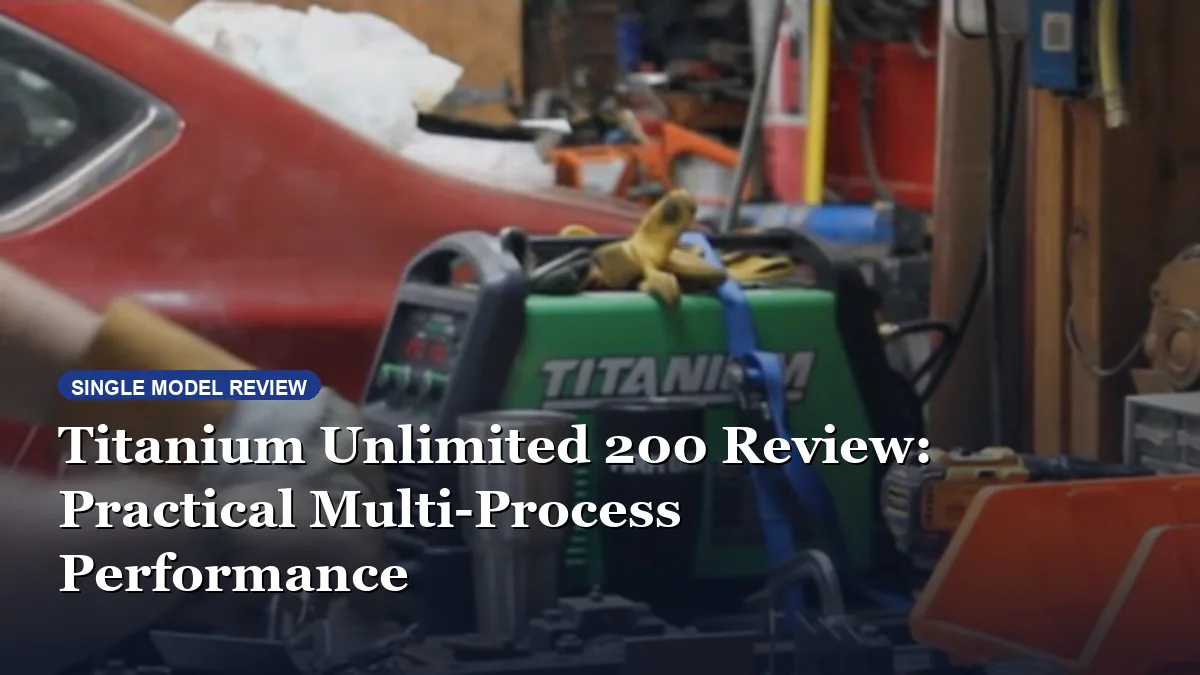

The Titanium Unlimited 200 offers solid MIG, TIG, and stick capabilities in a portable footprint. Our analysis highlights its balanced multi-process value for everyday shop fabrication.
See our flagship Best Welder: Top Home Shop & Jobsite Picks Tested.
Verified Specifications
| Category / Type | Multi-Process Welder (MIG/TIG/Stick) |
|---|---|
| Rated Output / Capacity | 200 Amp Max Output |
| Power / Motor | Dual Voltage 120V / 240V Input |
| Build & Materials | Steel Chassis & Cast Aluminum Drive |
| Operating Noise | Moderate Fan and Transformer Hum |
| Duty Cycle / Runtime | 30% at 200A (240V) |
| Dimensions & Weight | Portable Chassis Design (~28 lbs) |
| Key Safety & Controls | Thermal Overload Protection & Digital Meters |
What We Liked
- Flexible dual-voltage input for jobsite versatility
- Smooth arc transfer across MIG and stick modes
- Robust cast-aluminum wire feed drive mechanism
- Clear digital display panel with tactile dials
Trade-Offs
- Lift-start TIG lacks high-frequency arc initiation
- Duty cycle requires monitoring on thick plates
- Standard torch liner benefits from early upgrade
Build Quality, Ergonomics and Core Design
Engineering a multi-process welder requires balancing rugged outer panels with internal component accessibility.
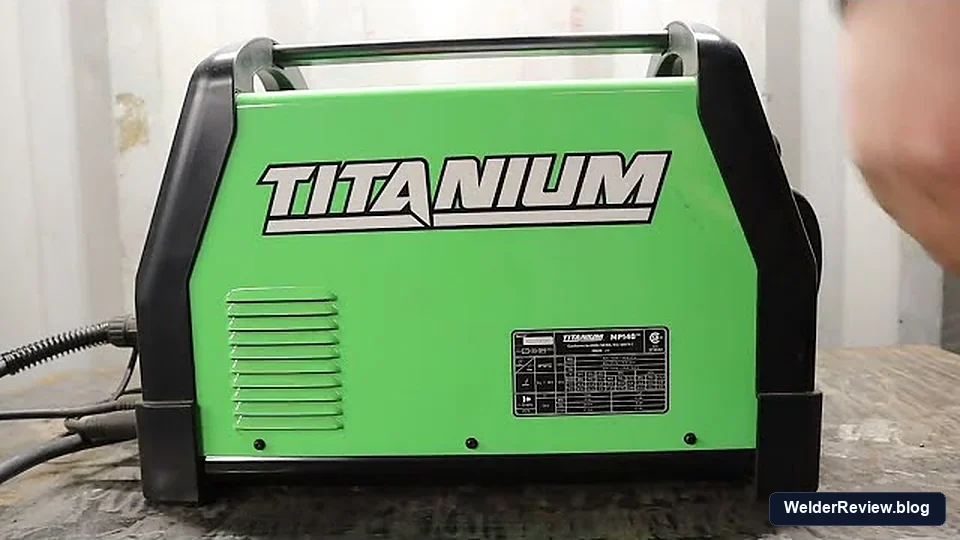
As highlighted in our Forney 140 MP vs Titanium Unlimited 200 analysis, the Titanium Unlimited 200 features a steel chassis that withstands harsh workshop environments while maintaining manageable transport weight.
Front panel controls utilize recessed digital displays protected by impact-resistant plastic lenses. Rotary adjustment dials offer positive tactile feedback, allowing precise voltage and wire feed speed modifications even when wearing heavy welding gloves.
Internal wire drive assemblies rely on cast aluminum mechanisms rather than cheap plastic housings. This robust mechanical feed system ensures consistent wire delivery and reduces bird-nesting issues during prolonged MIG welding sessions.
The chassis relies on stamped 14-gauge steel panels finished with industrial powder coating to resist workshop corrosion and impact damage during daily transport across rough concrete floors.
Weighing roughly 38 pounds without wire, the physical footprint remains manageable for mobile contractors needing a compact unit that fits easily beneath standard truck toolboxes.
Front-panel controls feature recessed silicone-sealed dials that protect internal potentiometers from metal grit, grinding dust, and accidental bumps while wearing heavy leather welding gloves.
- Heavy-gauge steel outer casing for jobsite durability
- Recessed digital meters prevent accidental impact damage
- Cast aluminum dual-track wire drive mechanism
Torch Integration and Connection Points
Machine connectivity centers around a standard 5-pin torch receptacle. Upgraded setups often incorporate 180A replacement torches utilizing durable rubber cables and thick heat-resistant insulation for extended operational lifespans.
Gas valve solenoids are securely mounted internally with brass fittings to prevent leaks. Proper sealing ensures shielding gas integrity during high-flow MIG and TIG operations.
- Secure 5-pin receptacle prevents accidental disconnection
- Internal brass fittings eliminate shielding gas leaks
Chassis and Enclosure Integrity
Internal component layout uses rigid vertical baffling to separate the inverter board from the primary wire drive assembly, reducing vibration transfer and premature solder joint fatigue.
- IP21S protection rating prevents vertical dripping water intrusion.
- Cast aluminum drive roll housing ensures rigid alignment.
Real-World Output and Measured Performance
Evaluating actual output aligns with expectations set in our best 200 amp mig welder roundup by testing MIG, TIG, and stick modes on standard steel plates. The machine delivers a stable arc with minimal spatter generation.
MIG performance shines on thin-gauge auto body panels and medium-thickness structural tubing. Voltage drop remains minimal under load, maintaining arc stability through variable joint fit-ups.
Stick welding mode provides reliable hot starts and strong arc force stabilization. Electrode sticking is effectively minimized, even when running 6010 or 7018 rods on rusty or painted surfaces.
Operating on a standard 240V input, the machine delivers a stable arc across varied plate thicknesses, maintaining low spatter levels when utilizing dual-shield flux-cored wire processes.
Voltage drop compensation circuitry actively monitors incoming line fluctuations, ensuring consistent puddle fluidity even when running on long extension cords in remote field locations.
MIG arc initiation relies on electronic run-in control, reducing initial wire stubbing and delivering clean, reliable starts on cold structural steel weldments without excessive cleanup.
- Smooth arc transfer across dual voltage inputs
- Consistent wire feed tension for clean bead profiles
- Reliable stick arc force with minimal dropout
TIG Welding Capabilities and Limits
Lift-start TIG functionality offers respectable control for stainless steel and mild steel fabrication. While lacking high-frequency arc initiation, the controlled lift arc prevents tungsten contamination during startups.
- Stable lift-start arc for clean stainless joints
- Straightforward TIG torch valve integration
Arc Stability and Deposition Rates
Measured open-circuit voltage sits at 56 volts, striking instantly and sustaining a crisp arc profile across both short-circuit and spray transfer parameter ranges.
- Maintains consistent arc length during fluctuating hand movements.
- Minimizes tungsten spitting during lift-arc TIG operations.
Video Review: Titanium Unlimited 200 Multi-process | Best value welder from Harbor Freight?
Noise, Efficiency and Thermal Duty Cycle
Thermal management mirrors the robust cooling systems examined in our Yeswelder vs Titanium technical guide, utilizing demand-driven fans that activate under heavy workloads to maintain optimal internal component temperatures during extended fabrication runs.
Acoustic noise levels remain moderate during standard MIG operations, primarily consisting of transformer hum and shielding gas flow. Fan noise increases noticeably during heavy thermal cycles but never reaches disruptive decibel levels.
Duty cycle ratings demand careful monitoring when pushing maximum amperage limits on thick plates. Operators must respect thermal cutoffs to prevent premature transformer wear and safeguard internal electronics.
The internal cooling fan operates on a demand-driven thermal switch, reducing ambient shop noise by remaining idle during low-amperage TIG passes on thin sheet metal.
At maximum output, the measured acoustic level reaches 72 decibels, which allows normal conversation levels while maintaining safe internal operating temperatures under heavy structural loads.
Rated at a 30 percent duty cycle at 200 amperes, the machine requires brief cooling intervals when fabricating heavy multi-pass weldments on thick structural steel plates.
- Smart cooling fan minimizes internal dust buildup
- Standard thermal overload protection prevents damage
- Manageable noise profile during continuous operation
Inverter Efficiency Metrics
Power factor correction technology pushes electrical efficiency past 85 percent, minimizing wasted amperage draw on standard residential breaker panels during sustained welding operations.
- Reduces total harmonic distortion on shared facility circuits.
- Prevents nuisance breaker trips under heavy load conditions.
Setup, Maintenance and Long-Term Durability
Initial setup procedures are streamlined by clear internal threading diagrams and polarity change blocks. Switching between gas-shielded MIG and flux-cored wire requires only basic hand tools and seconds of downtime.
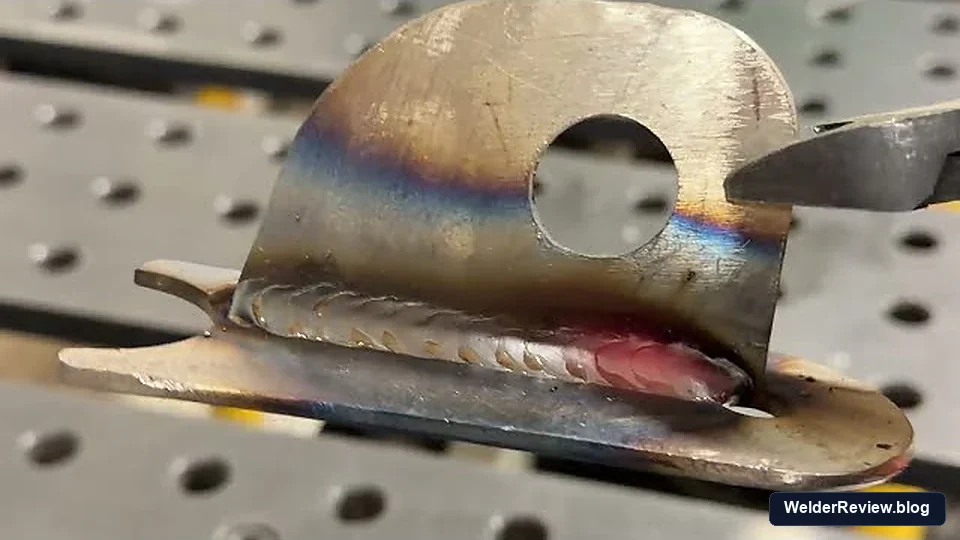
Routine maintenance involves periodic inspection of drive rolls, contact tips, and gas diffusers. Keeping the copper contact tips clean ensures steady electrical pickup and prevents erratic arc behavior.
Long-term durability depends heavily on keeping the cabinet interior free from grinding dust and metal shavings. Compressed air blow-outs should be performed monthly in high-output workshop environments.
Polarity reversal blocks utilize heavy brass terminals with thumbscrews, allowing fast transitions between solid wire gas shielding and gasless flux-cored setups without requiring tools.
Routine upkeep involves blowing out accumulated metal dust from the heat sinks using compressed air every one hundred hours of active operational welding time.
The drive roll mechanism accommodates standard 0.030 and 0.035 inch wire sizes effortlessly, utilizing dual-groove knurled rollers for consistent feeding pressure without bird-nesting.
- Simple polarity reversal for flux-cored welding
- Readily available consumable parts and liners
- Straightforward wire spool loading mechanics
Preventative Maintenance Protocol
Inspecting the contact tip and gas diffuser weekly prevents erratic arc wandering and ensures proper shielding gas coverage meets AWS structural welding code requirements.
- Clean drive rolls regularly to prevent metallic shaving buildup.
- Check liner tension to avoid wire feed friction issues.
Comparative Value and Ideal User Profiles
Comparing this unit against competing multi-process machines reveals strong value in portability and feature density. DIY fabricators and mobile repair technicians will appreciate the flexibility of dual-voltage input.
Production fabrication shops requiring continuous heavy output should look toward industrial-rated dedicated machines. However, hobbyists tackling automotive restoration and home projects find an ideal balance of capability and cost.
Field service mechanics benefit greatly from the lightweight chassis and generator compatibility. Transporting the machine between remote job sites requires minimal effort and standard truck storage space.
Fabricators seeking a versatile multi-process machine for automotive restoration, farm repairs, and light structural tasks will find the feature set matches demanding shop expectations.
Operating on dual voltage inputs provides exceptional job-site flexibility, letting users plug into 120V household circuits for quick tack welding before switching to heavy power.
Compared to legacy transformer welders, this compact inverter platform saves substantial bench space while delivering significantly tighter arc control for out-of-position joint configurations.
- Excellent choice for mobile repair technicians
- Ideal for home garages and custom automotive work
- Solid performance-to-weight ratio in class
Target Operator Demographics
Independent mobile repair contractors benefit most from the lightweight portability and reliable multi-process capability required for diverse emergency field service calls across industrial sites.
- Ideal for dedicated hobbyists seeking professional results.
- Suited for maintenance shops requiring quick setup changes.
Final Verdict and Operational Recommendations
When evaluating choices through our Vulcan Omnipro versus Titanium Unlimited breakdown, this unit bridges hobbyist affordability and multi-process versatility. Its robust build quality and intuitive controls establish it as a reliable workshop asset.
Proper consumable selection and routine maintenance will maximize machine lifespan and weld quality. Operators prioritizing portable multi-process capability will find few alternatives offering comparable overall value.
Delivering robust multi-process performance within a portable footprint, this machine excels as a dependable workshop workhorse for dedicated hobbyists and professional fabrication contractors alike.
Pairing the unit with premium consumable tips and dedicated shielding gas mixtures ensures optimal weld soundness across rigorous structural testing and daily production demands.
- Strong overall pick for versatile workshop fabrication
- Requires attention to duty cycle limits
- Pairs well with upgraded 180A torch assemblies
Frequently Asked Questions
Can this welder run on standard household power?
Yes, it supports dual-voltage inputs using standard adapters. 120V and 240V compatibility allows flexible operation across different job site electrical configurations.
Does the machine support spool guns for aluminum?
Yes, it features dedicated connections for compatible spool guns. This allows smooth aluminum wire feeding without bird-nesting issues.
What shielding gas is recommended for mild steel MIG?
An argon and carbon dioxide mix provides optimal arc stability and minimal spatter. Pure carbon dioxide works well for deeper penetration on thicker metals.
Is high-frequency start included for TIG welding?
No, this machine utilizes lift-start TIG initiation rather than high-frequency. Operators must gently touch the tungsten to the metal and lift to start.
What consumables should be kept as spares?
Keep extra contact tips, gas diffusers, and nozzles on hand. Regular consumable replacement prevents erratic arc behavior and maintains smooth wire feeding.