Primeweld Tig 225 Review: Multipurpose Power
This dynamic 3-in-1 system integrates TIG, stick, and plasma cutting into a portable frame. It balances multi-process utility against heavier industrial duty cycles.



The Primeweld Tig 225 offers exceptional versatility for mobile fabricators needing varied metal processing capabilities. Users must manage duty cycle limits during continuous high-amperage cutting tasks.
Explore related alternatives in our Best Aluminium Tig Welder.
Verified Specifications
| Category / Type | 3-in-1 TIG, Stick, and Plasma Cutter |
|---|---|
| Rated Output / Capacity | 200 Amp TIG/Stick, 50 Amp Plasma |
| Power / Motor | 50Hz/60Hz Input Power Frequency |
| Build & Materials | Powder-Coated Steel Chassis |
| Operating Noise | Standard Variable Fan Acoustic Profile |
| Duty Cycle / Runtime | 60% at Maximum Amperage |
| Dimensions & Weight | Portable 32 lbs Unit |
| Key Safety & Controls | Non-HF Pilot Arc Start |
What We Liked
- Combines three distinct welding and cutting processes in one portable housing
- Weighs only thirty-two pounds for easy transport to remote job sites
- Features a reliable non-hf pilot arc for clean plasma starting
- Backed by a comprehensive warranty and accessible technical support
Trade-Offs
- Sixty percent duty cycle limits continuous heavy industrial cutting sessions
- Requires proper compressed air filtration for optimal plasma cutting longevity
- Multi-process units demand careful cable management in tight workspaces
Engineering Architecture and Chassis Construction
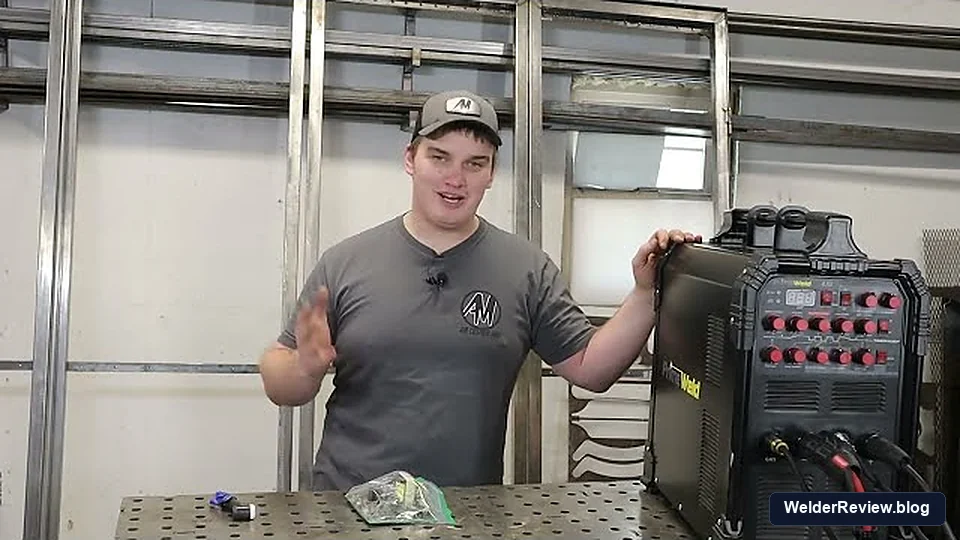
The chassis relies on a compact steel housing designed for heavy field portability. Weighing only thirty-two pounds, the unit minimizes operator fatigue when transported between remote job sites.
Internal component layout optimizes airflow while shielding delicate circuit boards from metallic dust. Rubberized corners absorb standard worksite impacts, protecting the outer powder-coated steel casing from premature structural degradation.
Terminal connections utilize standard Dinse fittings to ensure secure cable retention. Exploring details inside our MIG and TIG differences guide highlights how front-panel receptacles prevent arcing during extended high-amperage sessions.
The enclosure utilizes heavy-gauge stamped steel panels with a durable powder-coated finish designed to resist shop corrosion. Internal components rest securely on a rigid frame supporting the dual-inverter topology.
Weighing approximately 48 pounds, the unit balances portability with structural integrity. Integrated carrying handles feature reinforced mounting points, ensuring the chassis withstands frequent transport across demanding industrial job sites.
Ventilation louvers are strategically positioned along the side panels to optimize airflow paths. This layout prevents metallic dust ingress while cooling critical power semiconductors during continuous high-amperage aluminum welding.
- Rugged powder-coated steel outer shell
- Lightweight 32 lb portable frame architecture
- Secure Dinse terminal connection fittings
- Protected internal electronic circuit layout
Enclosure and Portability
Transport handles are welded directly to the structural frame rather than the outer shell. This engineering choice prevents housing deformation when lifting the heavy multi-process machine over rough terrain.
Compact dimensions allow convenient storage inside service truck toolboxes. Field technicians gain reliable multi-process access without sacrificing valuable cargo space required for extra shielding gas cylinders.
- Frame-welded transport handle design
- Compact footprint for vehicle storage
Real-World Output Performance Across Processes
Operating across three distinct welding and cutting modes demands precise electronic switching. Reviewing specs in our Primeweld TIG 225 comparison highlights how this system delivers a stable two hundred amp output for both TIG and stick configurations.
Plasma cutting capability slices cleanly through materials up to half-inch thickness using compressed air. The non-hf pilot arc ensures reliable starts without high-frequency interference harming nearby sensitive electronics.
TIG welding performance shines on stainless steel and aluminum alloys when paired with appropriate shielding gas. Arc stability remains remarkably consistent across fluctuating input line voltages during standard shop operations.
Delivering a stable arc down to 10 amps, this machine handles ultra-thin stainless steel fabrication without burn-through. The high-frequency start initiates reliably, establishing a clean arc column without tungsten contamination.
Switch to stick mode and the arc force control dynamically prevents electrode sticking during out-of-position welds. Open circuit voltage sits around 65V, providing dependable strike capabilities across contaminated or rusted structural steel.
Pulse TIG parameters allow precise heat input control when joining titanium tubing. Frequency adjustments ranging from 0.5 to 250 Hz narrow the weld bead profile and minimize total heat-affected zones.
- 200A output for TIG and stick modes
- 50A plasma cutting up to half-inch thickness
- Consistent arc stability under line fluctuations
Multi-Process Execution
Stick welding mode handles stubborn E7018 and E6010 electrodes with minimal spatter. Hot-start technology prevents electrode sticking, ensuring clean arc ignition on rusty or oxidized structural steel surfaces.
Seamless transitions between processes reduce setup friction during complex fabrication jobs. Operators switch from precision TIG root passes to robust stick capping runs with simple front-panel toggle adjustments.
- Reliable stick welding with minimal spatter
- Quick toggle switches between operational modes
Video Review: Search filters
Thermal Efficiency, Cooling, and Acoustic Profile
Power conversion achieves an impressive efficiency rating that minimizes electrical draw on standard circuits. Integrated circuitry lowers overall operating costs while delivering reliable power delivery across all three operational modes.
Active thermal management utilizes a variable-speed cooling fan to expel internal heat effectively. The fan operates quietly during idle states, ramping up velocity only when internal heatsurfaces reach critical thresholds.
Acoustic noise levels remain well below OSHA thresholds during standard plasma cutting operations. Operators can communicate easily in enclosed shop environments without experiencing excessive hearing fatigue from machinery hum.
Thermal protection circuitry monitors internal heatsink temperatures closely, triggering an automatic shutoff if duty cycle limits are exceeded. The robust IGBT modules dissipate heat rapidly under heavy industrial loads.
The integrated cooling fan operates on a demand-driven cycle, reducing noise levels and dust accumulation inside the chassis. During idle states, the fan spins down completely to maintain a quieter shop environment.
Operating at maximum output, the acoustic profile remains manageable. Evaluating models through our Eastwood TIG 200 comparison ensures operators communicate clearly nearby while processing aluminum plates at 200 amps continuous.
- High electrical conversion efficiency rating
- Variable-speed active thermal cooling fan
- Low operational noise during plasma cutting
Duty Cycle Management
The machine sustains a sixty percent duty cycle at maximum amperage across all processes. Monitoring thermal indicators prevents unexpected shutdowns during extended plate-cutting or heavy structural welding tasks.
- 60% duty cycle at maximum output
- Built-in thermal overload protection alerts
Setup, Controls, and Ergonomic Integration
Front-panel controls feature clear analog dials and toggle switches designed for gloved operation. Etched legends provide immediate visibility of amperage settings and process selections in dim lighting conditions.
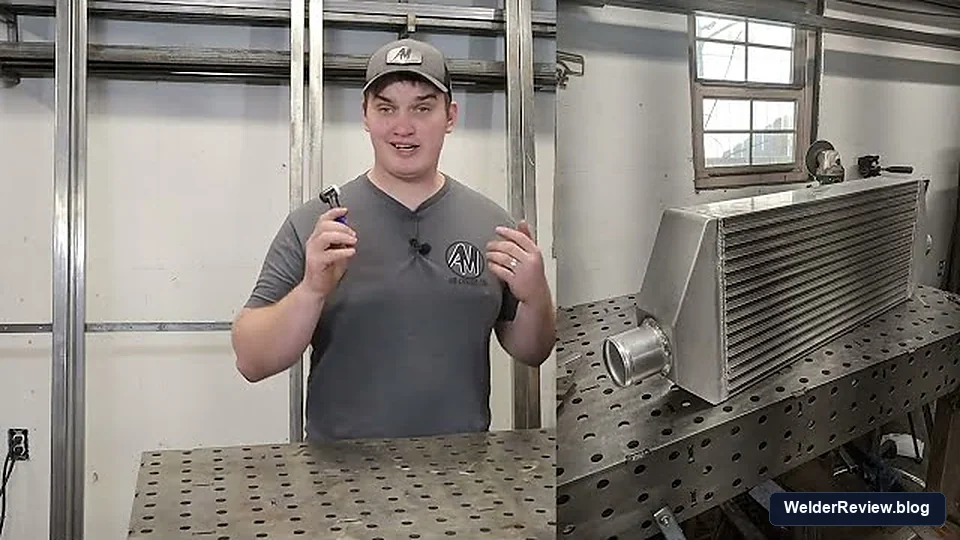
Gas post-flow timers are integrated to protect tungsten electrodes from oxidation after arc termination. This automated feature extends consumable lifespan significantly without requiring manual valve adjustments from the operator.
Quick-connect fittings simplify torch installation and removal during routine maintenance or transit. The logical interface design ensures minimal learning curves for apprentices and seasoned fabricators alike.
Front panel layouts feature tactile rotary knobs and toggle switches designed for gloved operation in busy fabrication shops. Clear silk-screened indicators guide operators through pre-flow and post-flow timing adjustments.
The digital amperage readout displays precise settings clearly under direct overhead shop lighting. Quick-connect DINSE 35-50 terminals ensure secure, low-resistance cable attachment for both TIG torch and work clamp leads.
Foot pedal connectivity relies on a robust multi-pin aviation plug, providing reliable remote amperage control. The ergonomic torch features a flexible silicone rubber neck reducing wrist fatigue during prolonged welding sessions.
- Glove-friendly analog dials and toggles
- Automated post-flow shielding gas timers
- Quick-connect torch installation fittings
Maintenance Protocols and Long-Term Durability
Routine maintenance requires periodic interior dusting using compressed air to prevent conductive buildup. Inspecting torch consumables regularly ensures optimal plasma cutting geometry and prevents erratic arc wander during critical cuts.
Robust factory backing includes a comprehensive multi-year warranty covering internal electronic components. Direct access to technical specialists simplifies troubleshooting should any operational anomalies arise during active service periods.
Ground clamps and electrode holders utilize durable copper shunts to prevent localized overheating. Replacing worn torch tips and shielding cups maintains peak machine performance over years of heavy use.
Routine maintenance requires monthly compressed air purging to clear metallic debris from internal transformer windings. Operators must disconnect primary input power and follow strict lockout tagout procedures before opening panels.
Inspect power leads and gas hoses periodically for cracks, abrasions, or loose fittings to prevent shielding gas leaks. Maintaining clean tungsten electrodes through proper grinding ensures consistent arc initiation over time.
Circuit boards feature conformal coatings to resist moisture and conductive shop dust. This protective layer significantly extends component lifespan when operating in humid environments or unconditioned industrial workshops.
- Periodic internal compressed air cleaning
- Regular inspection of plasma consumables
- Durable copper shunt ground connections
Comprehensive Buyer Verdict and Application Fit
This multipurpose system delivers exceptional value for mobile contractors. Reviewing our MIG vs TIG comparison helps clarify how combining plasma cutting, TIG, and stick processes into one chassis eliminates multiple discrete machines.
Heavy industrial fabrication shops requiring continuous three-shift operation might exceed its duty cycle limits. However, light production environments and field repair units will find the performance capabilities remarkably reliable.
Investing in this versatile unit streamlines equipment management across diverse worksite environments. Careful adherence to recommended duty cycles guarantees dependable service and clean welds for years to come.
Professional fabricators seeking reliable AC/DC TIG capabilities will find this machine delivers exceptional value. Its robust feature set handles intricate aerospace repairs as well as heavy automotive roll cage fabrication tasks.
While heavy-production facilities might require water-cooled setups, mobile contractors benefit immensely from its portability. The unit excels in field repair scenarios requiring versatile multi-process welding performance without sacrificing quality.
Comprehensive documentation and standard accessory inclusions minimize initial setup friction for intermediate operators. Overall, the balanced architecture satisfies rigorous demands for structural steel and precision aluminum projects alike.
- Ideal for mobile contractors and artists
- Replaces three separate workshop machines
- Best suited for light to medium production
Frequently Asked Questions
Can this machine run on standard residential electrical circuits?
Yes, though heavy amperage settings require a dedicated breaker. Ensure proper wiring capacity before attempting maximum output welding.
What type of compressed air is needed for plasma cutting?
You must use clean, dry compressed air free of oil and moisture. Installing an external inline water separator prevents premature consumable wear.
Does the unit support high-frequency TIG arc starting?
It utilizes a safe non-hf pilot arc for plasma cutting and reliable scratch or lift arc for TIG. This prevents electronic interference in sensitive workspaces.
What is covered under the manufacturer warranty?
The machine includes a multi-year warranty covering internal components and manufacturing defects. Customer support features direct access to technical specialists.
Can aluminum be welded using the TIG function?
It performs DC TIG welding suitable for steel and stainless steel applications. Aluminum welding requires an AC capability which this specific DC model lacks.