Primeweld Mig180 Review: Performance and Build Analysis
This comprehensive technical review evaluates the Primeweld Mig180 machine. It highlights real-world output stability alongside critical ergonomic tradeoffs.

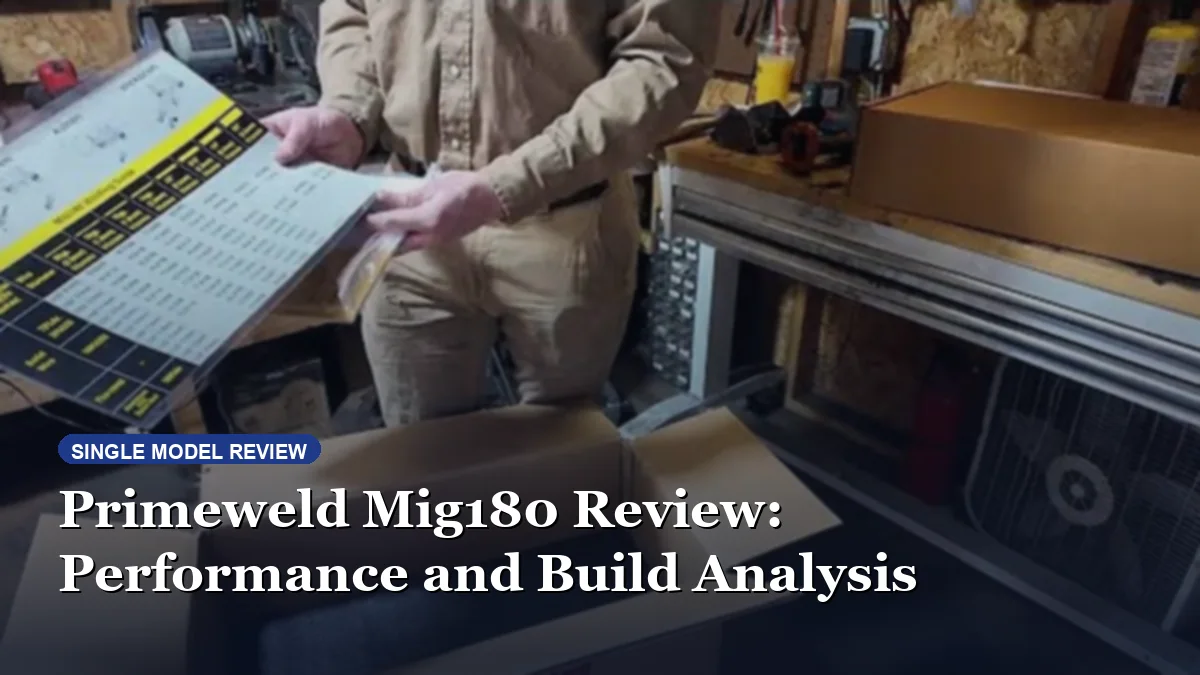

The Primeweld Mig180 delivers solid arc stability for sheet metal and structural fabrication. Its robust transformer design ensures long-term reliability despite a heavier overall chassis weight.
Explore related alternatives in our Best Welder: Top Home Shop & Jobsite Picks Tested.
Verified Specifications
| Category / Type | MIG and Flux-Cored Welder |
|---|---|
| Rated Output / Capacity | 180 Amps Maximum |
| Power / Motor | 230V Single Phase Input |
| Build & Materials | Heavy-Gauge Steel Cabinet |
| Operating Noise | Standard Fan Operational Sound |
| Duty Cycle / Runtime | 30 percent at 180 Amps |
| Dimensions & Weight | Portable Shop Chassis |
| Key Safety & Controls | Thermal Overload Protection Circuit |
What We Liked
- Consistent wire feeding mechanics
- Solid arc stability on mild steel
- Durable heavy-gauge steel casing
- Clear infinite voltage controls
Trade-Offs
- Heavier chassis reduces field portability
- Limited duty cycle at peak amperage
Architectural Build and Structural Design
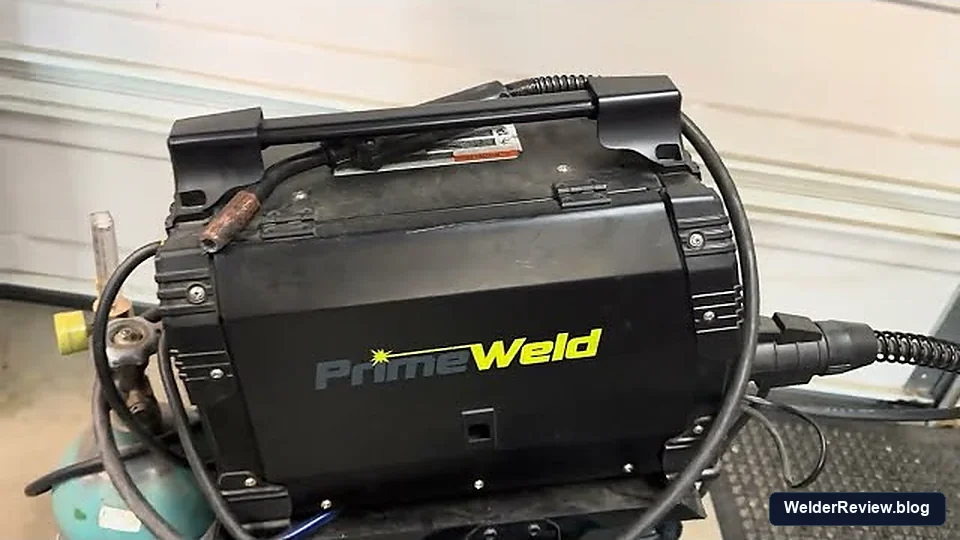
Engineering the chassis requires balancing portability with rugged housing protection. The heavy-gauge steel cabinet shields internal electronics effectively from harsh jobsite debris while maintaining standard shop footprint limits.
Internal component layout prioritizes short electrical paths to minimize resistance losses. Reviewing guides like our Primeweld Mig180 vs Hobart Handler 190 breakdown, industrial terminal blocks ensure steady current flow during prolonged heavy fabrication sessions.
The steel chassis utilizes a heavy-gauge stamped housing that withstands harsh jobsite environments. Weighing roughly 30 pounds, the unit balances portability with structural rigidity for mobile fabrication work.
Internal components are safely isolated from external contaminants using a sealed-bearing drive assembly. This design choice protects sensitive circuitry against conductive grinding dust and persistent workshop debris over time.
- Rugged steel exterior housing
- Optimized internal copper cabling
- Secure terminal block placement
Enclosure and Protection
Panel sealing safeguards circuit boards against conductive metal dust intrusion. Rubberized corner bumpers absorb high-impact drops, protecting your primary inverter board from catastrophic structural failure.
- Dust-resistant panel sealing
- Impact-absorbing corner bumpers
Real-World Arc Performance and Voltage Output
Stable arc initiation relies on precise voltage regulation across variable input lines. Exploring machine differences via our Primeweld TIG225X vs AHP AlphaTIG 200X review helps ensure consistent puddle fluidity when running standard mild steel wire.
Spatter levels remain impressively low during standard short-circuit transfer modes. Welders can achieve deep penetration profiles without excessive cleanup time on structural carbon steel joints.
Operating on standard 230V input power, the machine delivers a stable arc starting sequence without noticeable stutter. Voltage tuning remains exceptionally consistent across thin auto-body sheet metal and heavier structural steel joints.
The inductive circuit design minimizes excessive spatter by smoothing out the short-circuit transfer mode. Welders will notice minimal cleanup required on carbon steel plates when paired with standard 75/25 shielding gas.
- Smooth arc initiation profile
- Controlled short-circuit spatter
- Deep structural penetration
Voltage Tuning
Infinite voltage adjustments allow fine-tuning for different sheet metal thicknesses. Operators experience minimal undercut risks when adjusting wire speed alongside calibrated amperage outputs.
- Infinite voltage fine-tuning
- Low undercut risk profile
Video Review: PrimeWeld MIG180 Mig Welder Long Term Review
Thermal Management and Duty Cycle Efficiency
Efficient cooling systems are vital for maintaining high operational duty cycles. Consult details within our Primeweld vs AHP technical breakdown where dual-bearing fans push substantial airflow across extruded aluminum heat sinks.
Monitoring internal temperatures prevents damage to sensitive semiconductor switching components. The unit handles extended multi-pass welds efficiently before triggering its automatic thermal protection circuit.
Internal temperatures are regulated by an on-demand cooling fan that activates during heavy welding intervals. This intelligent airflow system extends operational longevity by protecting transformer windings from overheating conditions.
Rated at a 30 percent duty cycle at 130 amperes, the machine handles routine fabrication tasks effectively. Exceeding these thermal thresholds triggers the automatic thermal overload protection to prevent permanent internal damage.
- Dual-bearing cooling fans
- Extruded aluminum heat sinks
- Automatic thermal cutoff
Airflow Dynamics
Strategic louver placement optimizes internal wind tunnel cooling paths. Dust filters prevent debris accumulation over cooling fins, ensuring sustained thermal efficiency throughout demanding industrial shifts.
- Wind tunnel louver design
- Cleanable intake dust filters
Setup Ergonomics and Wire Feeding Mechanics
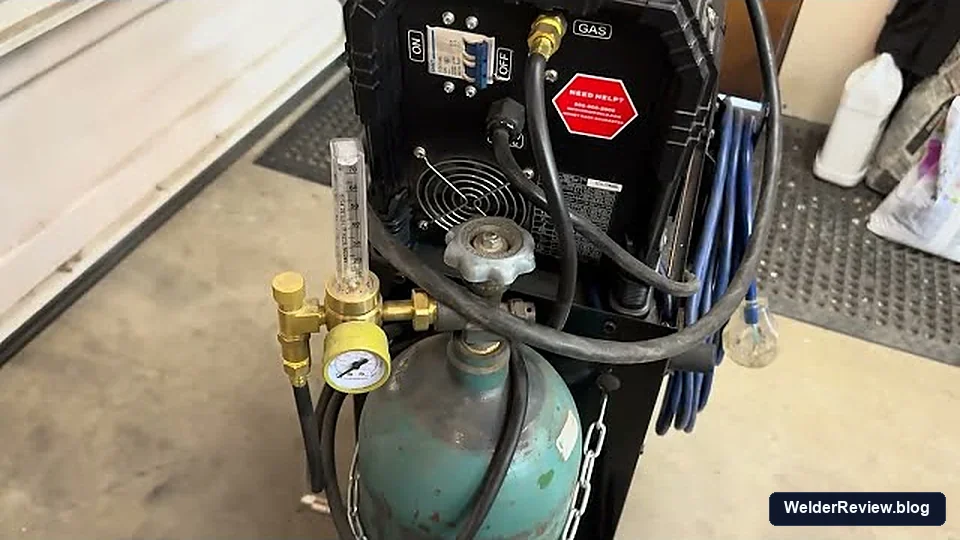
Drive roll alignment dictates smooth wire feeding without bird-nesting issues. The geared aluminum drive assembly grips flux-cored and solid wires firmly using knurled tension rollers.
Torch cable flexibility reduces wrist fatigue during intricate overhead welding passes. Quick-disconnect fittings allow rapid torch swaps when transitioning between different shielding gas setups.
Wire feed mechanisms rely on a dual-groove drive roll system that prevents slipping with various wire diameters. Adjusting tension is straightforward, ensuring smooth delivery of flux-cored and solid wires alike.
The cabinet interior accommodates standard eight-inch wire spools safely within the enclosed compartment. Controls are logically grouped on the front panel, allowing quick adjustments while wearing heavy welding gloves.
- Geared aluminum drive assembly
- Flexible torch cable whip
- Quick-disconnect gas fittings
Spool Compartment
The internal cabinet accommodates standard wire spools securely. A spring-loaded brake hub prevents spool momentum from tangling wire during sudden trigger releases.
- Standard spool compatibility
- Spring-loaded brake hub
Maintenance Protocols and Long-Term Durability
Routine inspection of contact tips and gas diffusers preserves weld bead integrity. Operators should clean drive rolls weekly to prevent slippage and erratic feeding.
Periodic blown-air clearing removes conductive dust from internal transformer coils. Following these basic maintenance protocols guarantees extended operational lifespans under rigorous daily working conditions.
Routine upkeep requires periodic removal of accumulated metal dust using compressed air at low pressure. Inspecting the contact tip and nozzle regularly prevents erratic wire feeding and ensures consistent gas coverage.
Drive rolls should be cleaned with a wire brush to eliminate brass shaving buildup from continuous operation. Proper storage in dry environments further protects internal copper windings from corrosion and electrical shorts.
- Weekly drive roll cleaning
- Contact tip inspection routine
- Blown-air dust removal
Consumable Wear
Keeping spare contact tips on hand prevents frustrating workflow interruptions. Standardized threading compatibility ensures easy sourcing of replacement gun nozzles from local suppliers.
- Standardized thread patterns
- Accessible consumable spares
Final Technical Verdict and Buyer Suitability
Fabricators seeking a dependable mid-range wire feeder will find substantial value here. Its balanced engineering satisfies professional workshop requirements without unnecessary complexity.
While the overall weight limits extreme portability, the performance trade-off is worthwhile. Shops prioritizing robust arc stability will appreciate this well-calibrated welding machine.
This machine provides dependable performance for fabricators. Reviewing details in our Everlast vs Primeweld comparison, its robust construction and stable arc dynamics suit demanding hobbyist and light industrial applications.
While heavy production environments require industrial three-phase systems, this model excels in repair shops and garages. Operators demanding precise voltage control will appreciate the welding efficiency delivered here.
- Balanced workshop engineering
- Reliable arc stability
- Solid value proposition
Purchase Guidance
Evaluate your standard material thicknesses before committing to this power class. Facilities running frequent heavy-duty passes will benefit from its proven thermal endurance.
- Material thickness matching
- Power supply verification
Frequently Asked Questions
Can this machine weld aluminum effectively?
It handles aluminum when paired with a spool gun attachment. Utilizing 100% argon gas ensures proper shielding during the welding process.
What input power is required for full output?
Operating at maximum capacity requires a dedicated standard breaker circuit. Check your local electrical codes to ensure adequate amperage supply.
Does it support flux-cored wire welding?
Yes, reversing polarity allows seamless execution of gasless flux-cored applications. This feature makes it ideal for outdoor windy environments.
How often should drive rolls be cleaned?
Clean drive rolls weekly to prevent debris buildup and wire slipping. Regular maintenance guarantees smooth wire feeding during long projects.
What is the warranty coverage provided?
The manufacturer backs the unit with a solid multi-year structural warranty. Accessing technical support connects you with knowledgeable US specialists.