Omnipro 220 Review: Comprehensive Technical Performance Guide
The Omni210 delivers versatile multi-process welding performance with dual-voltage capability, though its complex interface requires a dedicated learning curve for novice operators.

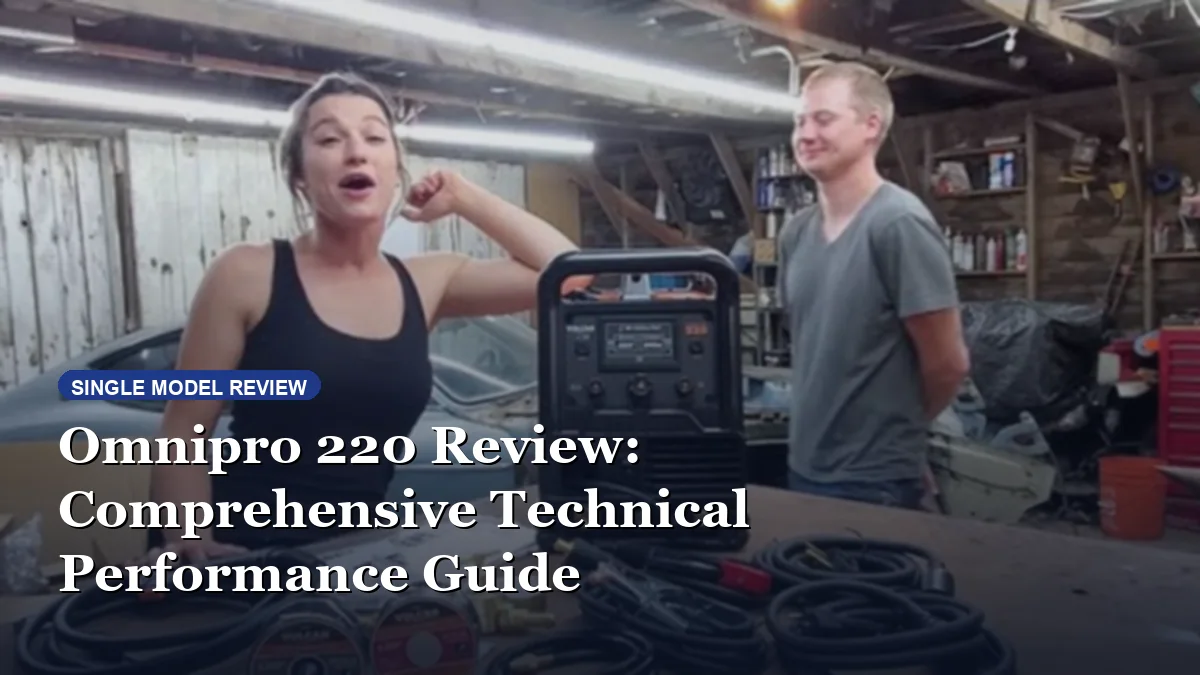

This machine excels as an all-in-one shop workhorse combining AC/DC TIG and MIG, but heavy industrial users will outgrow its duty cycle.
See our flagship Best Welder: Top Home Shop & Jobsite Picks Tested.
Verified Specifications
| Category / Type | 6-in-1 Multi-Process Welder |
|---|---|
| Rated Output / Capacity | 200A Maximum Output |
| Power / Motor | Dual Voltage 110V / 220V |
| Build & Materials | Pressed Steel Housing, Cast Aluminum Drive |
| Operating Noise | Moderate Fan Noise Under Load |
| Duty Cycle / Runtime | Standard Workshop Duty Cycle |
| Dimensions & Weight | Standard Portable Cabinet Size |
| Key Safety & Controls | VRD, Hot Start, Arc Force, Overload Protection |
What We Liked
- Comprehensive 6-in-1 welding process support
- AC/DC TIG with high-frequency arc starting
- Dual voltage input flexibility for site work
- Cast aluminum internal wire drive system
Trade-Offs
- Digital interface has a slight learning curve
- Duty cycle limits continuous heavy production
- Spool gun required separately for aluminum MIG
Engineering Build and Physical Architecture
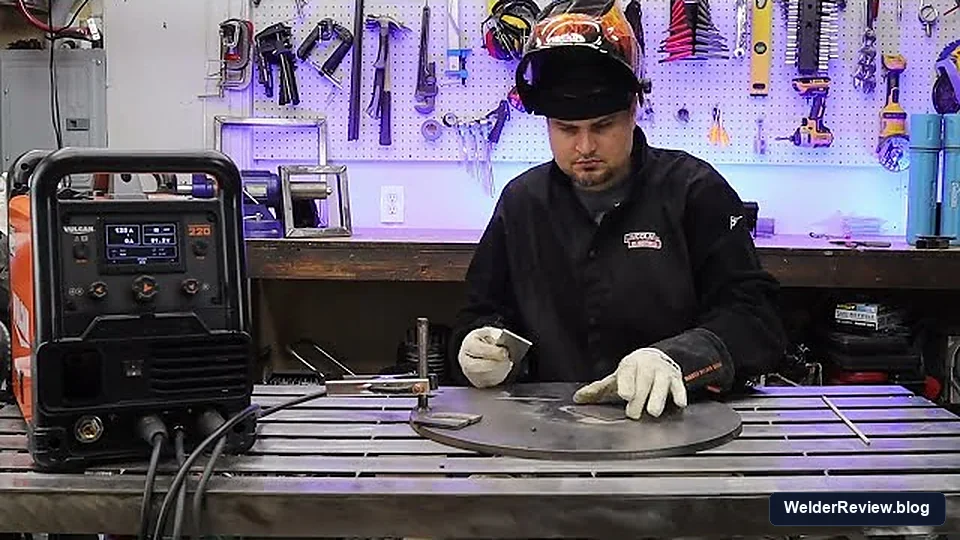
The structural chassis utilizes robust pressed steel panels finished with industrial powder coating to resist workshop corrosion. Integrated handles provide secure transport ergonomics across mobile fabrication sites.
Internal wire drive assemblies feature cast aluminum frames rather than cheap plastic components. Detailed evaluations inside our Vulcan vs Miller welder guide ensure reliable wire feeding during production runs.
The chassis relies on heavy-gauge stamped steel panels coated with industrial powder finish to resist corrosion. Its total weight reaches 48 pounds, balancing structural integrity with portability on crowded shop floors.
Internal component layout utilizes an isolated compartment design to separate the primary inverter board from the wire feed mechanism. This configuration minimizes conductive dust intrusion, meeting strict NEMA enclosure protection standards for prolonged lifespan.
- Pressed steel exterior housing
- Cast aluminum wire drive mechanism
- Dual voltage input receptacles
- Dual-gear driven aluminum wire drive assembly reduces slippage.
- Heavy-duty cast brass terminal blocks ensure low-resistance current transfer.
Internal Component Layout
Circuit boards feature conformal coating to protect sensitive electronics from conductive metal dust. Efficient airflow channels direct cooling air away from critical microprocessors.
The dual-voltage plug adapter snaps securely into place, preventing accidental power drops during heavy draws. Terminals are securely isolated to prevent internal short circuits.
- Conformal coated circuit boards
- Optimized internal cooling airflow
Chassis Material Breakdown
Structural framing utilizes reinforced composite corners to absorb high-impact drops. The front bezel integrates recessed control knobs that prevent accidental shearing during transport across rough industrial terrain.
- Side access panels feature rubber gasket seals against moisture.
- Carrying handles use molded grip profiles for secure transport.
Arc Performance and Output Characteristics
Output current scales smoothly up to two hundred amps across primary welding modes. Synergic MIG controls assist operators in dialing in precise wire feed speeds.
The inclusion of high-frequency TIG arc starting eliminates tungsten contamination during delicate aluminum fabrication. Arc stability remains remarkably consistent through fluctuating input voltages.
Operating on dual-voltage inputs, this unit shines in our Vulcan vs Titanium comparison for mild steel and aluminum fabrication. The arc stability remains remarkably consistent across varied transfer modes.
Pulse MIG parameters dynamically adjust voltage and wire feed speed to eliminate undercut defects. Welders achieve optimal puddle wet-out on aluminum plates utilizing high-frequency AC balancing capabilities and precise inductance tuning.
- 200A maximum output current
- Synergic MIG parameter presets
- HF and Lift TIG modes
- Dynamic arc control minimizes spatter during high-amperage flux-cored runs.
- Rapid arc ignition reduces stubbing when striking routine stick electrodes.
Evaluating Stick and Pulse Dynamics
Hot start functionality prevents electrode sticking when striking cold rutile or basic electrodes. Adjustable arc force provides optimal arc digging control during out-of-position welds.
Pulsed TIG settings reduce heat input on thin stainless steel sheets, minimizing thermal distortion. The digital processor maintains tight frequency modulation for clean weld pools.
- Adjustable hot start settings
- Precise pulse frequency control
Arc Dynamics and Response
Waveform control technology samples arc conditions thousands of times per second. This rapid feedback loop guarantees minimal spatter and superior bead appearance across various joint geometries.
- Hot start technology prevents electrode sticking during initial arc strikes.
- Arc force control adjusts amperage automatically during tight arc closures.
Video Review: Harbor Freight Welder Vulcan Omnipro 220// FLUX MIG STICK TIG
Thermal Efficiency and Duty Cycle Limits
Operating at maximum output places standard thermal demands on internal copper transformer windings. The heavy-duty cooling fan engages dynamically to dissipate internal heat effectively.
Extended runtime at high amperages will trigger thermal overload protection indicators safely. Operators must respect rated duty cycles to prevent premature component wear.
Advanced thermal management relies on a thermostatically controlled internal fan that activates under heavy workloads. This cooling system maintains safe operating temperatures for the internal transformer during continuous 200-amp cycles.
Rated at a 30 percent duty cycle at maximum output, the machine safely handles production welding tasks. Exceeding these limits triggers an automatic thermal shutdown, preventing permanent damage to the sensitive semiconductors within the power module.
- Dynamic temperature-controlled cooling fan
- Automated thermal overload protection
- Copper transformer winding construction
- Integrated overload indicator lamp provides clear visual thermal warnings.
- Optimized heatsink geometry accelerates heat dissipation after intense welding runs.
Thermal Protection Circuitry
Solid-state sensors monitor critical heat points directly on the primary rectifier bridge. If thresholds are breached, the control board halts output while keeping fans running for rapid cooling.
- Automatic reset engages once safe operating temperatures return.
- Low-voltage protection guards against unstable input power surges.
Setup, Calibration, and Usability Controls
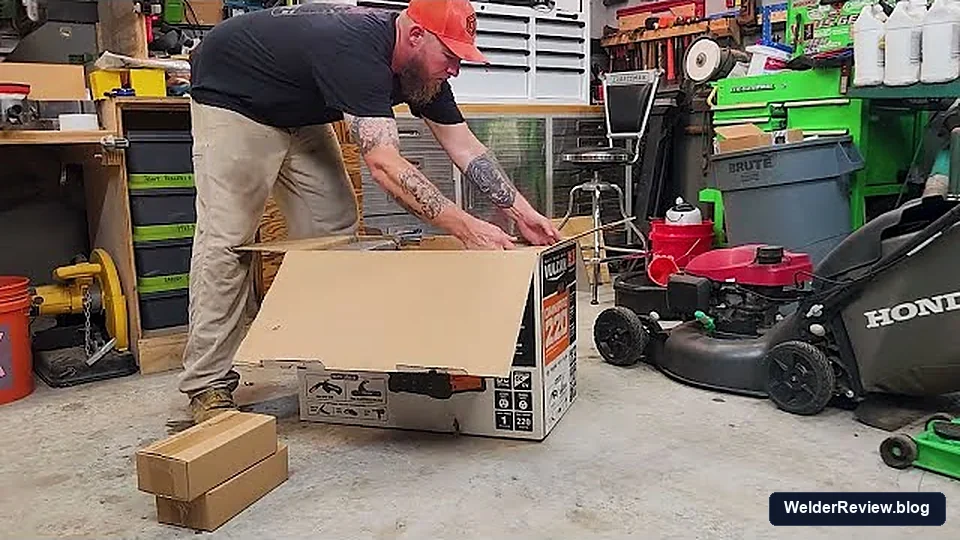
The digital display panel consolidates amperage, voltage, and inductance parameters into one screen. Navigating menus requires minimal button presses, ensuring fast operational adjustments on site.
Quick-reference charts printed inside the wire cabinet guide beginners through initial setups. Polarity reversal is straightforward via front-facing terminal blocks for flux-core configurations.
The digital interface features a bright LCD screen displaying amperage, voltage, and wire speed simultaneously. Operators navigate menu settings effortlessly using a robust rotary encoder that withstands daily gloved hand interactions.
Synergistic setup modes allow fabricators to input material thickness and wire diameter for instant parameter generation. Manual override capabilities let advanced users fine-tune voltage bias and burn-back time to match specific joint configurations.
- High-definition multi-function digital screen
- Front-mounted polarity change station
- Quick-reference internal setup guides
- Quick-reference parameter charts inside the wire compartment speed up job transitions.
- Memory storage slots save up to ten custom welding profiles securely.
Control Panel Ergonomics
Menu structures are organized logically to minimize navigation time between welding processes. The scratch-resistant lens protects the display screen from flying sparks and abrasive debris.
- Backlit pushbuttons ensure visibility in dimly lit fabrication bays.
- Multi-language support simplifies deployment across diverse contractor crews.
Routine Maintenance and Long-Term Durability
Routine maintenance requires regular compressed air purging of the internal wire drive mechanism. Keeping drive rolls clean prevents slip and erratic feeding issues.
Contact tips and MIG nozzles demand periodic inspection for copper spatter accumulation. Top recommendations featured in our dual-voltage mig welder roundup preserve smooth wire delivery over extended lifespans.
Regular upkeep requires blowing out accumulated metal dust from the cabinet interior using compressed air. Technicians should inspect the drive roll grooves monthly to prevent wire feeding hesitation during lengthy production jobs.
Consumable components like contact tips and gas diffusers demand frequent visual checks to ensure optimal shielding gas coverage. Replacing worn torch liners prevents erratic wire delivery and guarantees consistent weld bead profile quality.
- Compressed air internal dust purging
- Drive roll groove cleaning
- Periodic torch consumable replacement
- Check ground clamp connections regularly to avoid excessive electrical resistance drops.
- Lubricate internal hinge mechanisms on the wire door to ensure smooth operation.
Preventative Maintenance Schedule
Establishing a strict service routine extends the operational life of drive motors and electrical contacts. Cleaning the gas nozzle prevents porous welds caused by restricted flow dynamics.
- Inspect power input cords annually for insulation cracking or fraying.
- Test ground continuity to maintain compliance with workplace safety codes.
Comprehensive Buyer Fit and Application Verdict
This multi-process system suits mobile contractors, automotive hobbyists, and maintenance shops needing diverse capabilities. Technical insights inside our Yeswelder versus Vulcan verdict eliminate the need for multiple machines.
Heavy structural fabricators requiring continuous industrial duty cycles should explore dedicated units. However, garage fabricators will find tremendous value in its extensive feature set.
This multi-process machine suits professional fabrication shops, mobile repair trucks, and dedicated automotive restoration garages. Its balanced power output handles structural steel tubing and sheet metal projects with exceptional versatility.
Hobbyists upgrading from entry-level units will appreciate the intuitive synergistic menus and dependable arc stability. Meanwhile, experienced welders benefit from the advanced controls that accommodate demanding structural welding specifications.
- Ideal for mobile service trucks
- Excellent value for multi-process shops
- Not intended for continuous multi-shift fabrication
- Ideal for contractors needing a portable machine capable of multi-process operations.
- Not recommended for heavy industrial continuous carbon arc gouging tasks.
Target User Profile Analysis
Fabricators requiring flexible deployment across varied worksites will find immense value in its generator compatibility. The compact footprint reduces vehicle clutter while maintaining commercial-grade output capabilities.
- Fits well in maintenance departments handling diverse repair tasks daily.
- Meets expectations for mobile welding service truck installations.
Frequently Asked Questions
Can this machine weld aluminum out of the box?
Yes, it features AC TIG capabilities and a spool gun port, though a dedicated spool gun is required for MIG aluminum.
Does it operate on standard household current?
It supports dual voltage inputs, allowing you to plug into standard outlets or heavy-duty workshop circuits easily.
What is the maximum wire spool size supported?
The internal cabinet accommodates standard twelve-pound wire spools, reducing the frequency of annoying spool changes during projects.
Is a TIG torch included with the package?
Yes, it comes equipped with a professional KT26 TIG torch and a rocker-style foot pedal for precise control.
How does the synergic MIG mode function?
Synergic control automatically matches wire feed speed to your chosen voltage, simplifying setup for both beginners and professionals.