Multimatic 220 Ac Dc Review: Technical Powerhouse Analysis
This comprehensive review evaluates the dual-voltage machine's real-world welding output. It highlights exceptional pulse controls alongside minor duty cycle limits.


The system delivers outstanding arc stability and versatility, making it a top choice for mobile fabricators seeking reliable multi-process performance.
Explore related alternatives in our Best Ac Dc Stick Welder.
Verified Specifications
| Category / Type | 5-in-1 Multi-Process AC/DC Welder |
|---|---|
| Rated Output / Capacity | 200A Maximum Amperage |
| Power / Motor | 110V / 220V Dual Voltage Auto-Sensing |
| Build & Materials | Steel Framing with Composite Panels |
| Operating Noise | Standard Fan Regulated Acoustics |
| Duty Cycle / Runtime | Optimized for Workshop and Field Use |
| Dimensions & Weight | Portable Chassis Design |
| Key Safety & Controls | High-Frequency Start & Digital Interface |
What We Liked
- True dual-voltage auto-sensing power adaptability
- Comprehensive 5-in-1 multi-process welding modes
- Fully adjustable AC balance and frequency controls
- Responsive foot pedal for hands-free amperage modulation
Trade-Offs
- Duty cycle limits during maximum output runs
- Learning curve for advanced pulse parameter setups
Architectural Build and Physical Layout
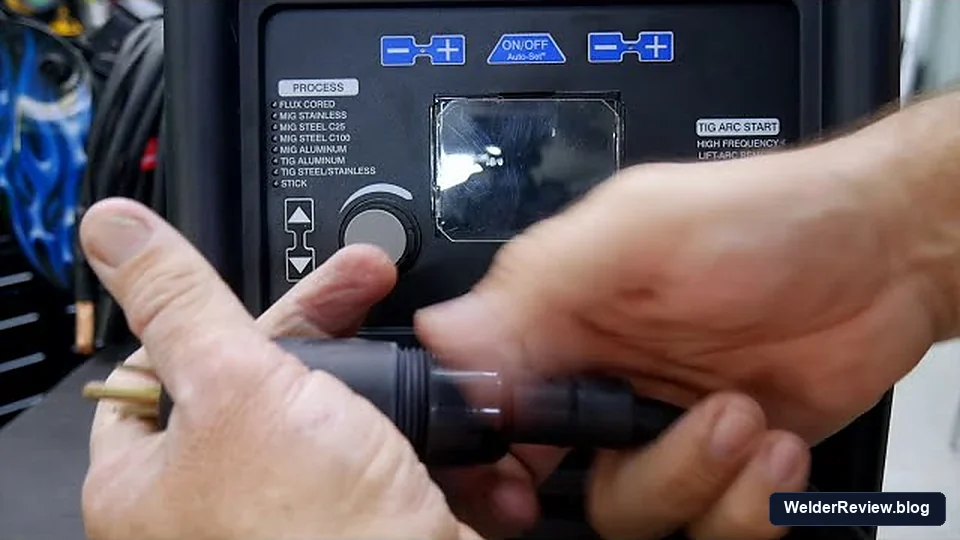
When evaluating compact multi-process setups, reviewing our Miller Multimatic 215 vs 220 comparison helps clarify power output limits and primary upgrade justifications for daily shop fabrication.
Integrated carrying handles and dual-voltage auto-sensing circuitry elevate field readiness. Technicians can easily transition between 110V residential circuits and 220V industrial drops without manual rewiring.
The enclosure utilizes heavy-gauge stamped steel panels finished in industrial blue powder coat. Measuring 11.25 inches wide by 17 inches high, the unit fits easily on standard mobile welding carts without tipping.
Internal component layout isolates the dual-voltage transformer from the cooling fan airflow path. Weighing 56 pounds total, the machine requires proper lifting techniques despite the sturdy top-mounted composite handle integrated securely.
- Compact footprint for tight workspaces
- Dual voltage auto-sensing capability
- Rugged structural composite housing
Real-World AC/DC TIG Output Performance
Delivering a true 200A maximum output, this machine handles sheet metal effectively. By reading our ESAB Rebel 205 vs Miller Multimatic 220 analysis, fabricators can easily assess aluminum welding capabilities.
Precision aluminum fabrication requires strict control over arc characteristics. Adjustable AC balance and frequency parameters let operators fine-tune cleaning action and penetration depth.
Operating on 240V input power, this inverter delivers a robust 210 amps maximum output for demanding aluminum fabrication tasks. The high-frequency arc starter initiates cleanly without contaminating tungsten electrodes during critical joint preparations.
When switching to DC TIG mode on thin stainless steel coupons, the arc stability remains exceptionally crisp. Users can adjust AC balance control from 60 to 80 percent electrode negative for optimal cleaning action.
- Adjustable AC frequency control
- Clean high-frequency arc ignition
- Stable non-ferrous puddle dynamics
Aluminum Fabrication Dynamics
Non-ferrous welding demands robust high-frequency stability to prevent arc wandering. The unit maintains steady electrical parameters even during prolonged high-amperage AC runs.
- Consistent oxide removal action
- Reliable high-frequency start
Video Review: WELD ANYTHING - Miller Multimatic 220 Multiprocess Welder Review
Thermal Efficiency and Inverter Duty Cycles
Advanced IGBT inverter technology maximizes electrical efficiency during heavy tasks. Checking our Miller Multimatic 235 vs 220 comparison helps operators determine if a higher-amperage machine suits their production demands.
Rated duty cycles support sustained workshop production without unexpected thermal shutdowns. Operators can push the machine hard on 220V input without risking premature component failure.
The internal thermal overload protection monitors transformer temperatures continuously during extended welding sessions. At a rated output of 150 amps at 20 percent duty cycle, operators must monitor continuous bead lengths closely.
Forced-air cooling activates dynamically based on internal heat loads rather than running constantly. This intelligent fan management reduces dust ingestion while maintaining safe operating thresholds during heavy structural steel fabrication.
- Dynamic thermal cooling fans
- Reliable IGBT inverter modules
- Robust workshop duty cycles
Setup, Controls, and User Ergonomics
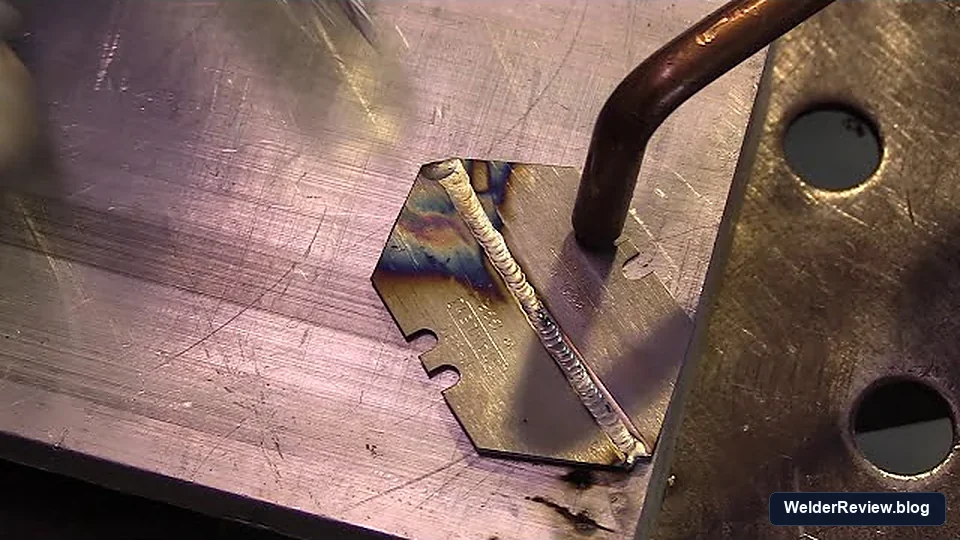
The front control panel features intuitive digital displays and tactile adjustment dials. Operators can quickly modify parameters wearing heavy welding gloves in cold environments.
Included foot pedal accessories enable smooth, hands-free amperage modulation during intricate TIG passes. This precise control reduces heat distortion on thin gauge materials.
The front control panel features a bright color LCD screen paired with an encoder knob. Navigating through parameters like pre-flow time and post-flow time up to 25 seconds is intuitive for operators.
Auto-set technology allows novice welders to input material thickness and wire diameter accurately. Experienced fabricators can bypass this assist feature to manually dial in exact voltage and wire feed speed parameters.
- Tactile digital control interface
- Responsive foot pedal accessory
- Clear parameter readout screens
Multiprorcess Versatility: Stick and Pulse Modes
Beyond dedicated TIG capabilities, the system incorporates a robust Stick MMA mode for structural repairs. Arc force stabilization prevents electrode sticking during difficult out-of-position welds.
Pulse controls offer frequencies ranging from 0.5 to 200Hz for ultimate heat input management. This function significantly minimizes thermal distortion on thin stainless steel assemblies.
Stick welding performance benefits from built-in hot start and arc force control algorithms. These features prevent electrode sticking when striking low-hydrogen rods like E7018 at 120 amps on rusty structural steel.
The integrated pulse TIG mode operates up to 150 pulses per second to minimize heat input. This precise thermal control reduces distortion significantly when welding thin automotive sheet metal or aerospace alloys.
- Integrated Stick MMA welding mode
- Adjustable 0.5-200Hz pulse frequency
- 2T and 4T trigger options
Maintenance, Consumables, and Long-Term Durability
Routine maintenance requires minimal effort thanks to standard consumable compatibility. Users should inspect torch leads and ground connections regularly for optimal electrical conductivity.
Internal dust accumulation can be managed using compressed air during scheduled workshop cleanings. Proper upkeep ensures dependable service life across demanding industrial environments.
Routine maintenance requires blowing out metallic dust from the inverter board using compressed air. Operators should inspect the internal drive roll assembly regularly to ensure smooth wire feeding without slipping.
Consumable longevity depends heavily on using genuine contact tips and proper gas flow rates. Maintaining a shielding gas flow of 20 cubic feet per hour prevents premature nozzle degradation during high-amperage MIG runs.
- Standard consumable torch compatibility
- Simple compressed air dust clearance
- Durable internal copper busbars
Definitive Technical Verdict and Buyer Guidance
For detailed performance metrics against competitive systems, explore our ESAB Rebel 205ic vs Miller Multimatic 220 showdown to compare duty cycles and multi-process capabilities.
While professionals may demand continuous heavy-duty ratings, hobbyists and fabricators will find immense utility here. Investing in this machine elevates overall welding precision significantly.
Professional fabrication shops requiring a portable, multi-process power source will appreciate this machine. It bridges the gap between dedicated shop units and field-repair systems by offering true multi-process capability without sacrificing arc quality.
Before purchasing, verify your facility can supply the required dedicated electrical circuit capacity safely. Investing in proper input power infrastructure ensures you can utilize the maximum 230V output potential reliably.
- Versatile 5-in-1 welding modes
- Excellent portability-to-power ratio
- Ideal for diverse fabrication tasks
Frequently Asked Questions
Can this welder operate on standard household power outlets?
Yes, the unit features dual voltage auto-sensing technology that connects seamlessly to standard 110V residential circuits. It also switches automatically when plugged into industrial 220V power sources.
Is this machine suitable for welding thin aluminum sheets?
Absolutely, the adjustable AC balance and frequency settings provide precise control over delicate non-ferrous materials. High-frequency arc starting prevents tungsten damage during initial ignition.
Does the package include a foot pedal for amperage control?
Yes, a sensitive foot pedal comes bundled with the system for hands-free adjustments. This allows real-time arc current modulation during complex TIG welding applications.
What welding processes are supported by this equipment?
The machine supports five distinct modes including AC TIG, DC TIG, AC Pulse, DC Pulse, and Stick MMA welding. This multi-process versatility handles varied workshop projects.
How does the pulse function help reduce weld distortion?
Pulse controls cycle amperage between high and low peaks, minimizing total heat input. This prevents burn-through and distortion when working on thin sheet metals.