Multimatic 215 Review: Engineering Performance & Build Analysis
This advanced welding machine delivers exceptional multi-process capability with smart auto-set technologies. Dual-voltage input adds robust flexibility for both mobile service trucks and permanent workshop environments.

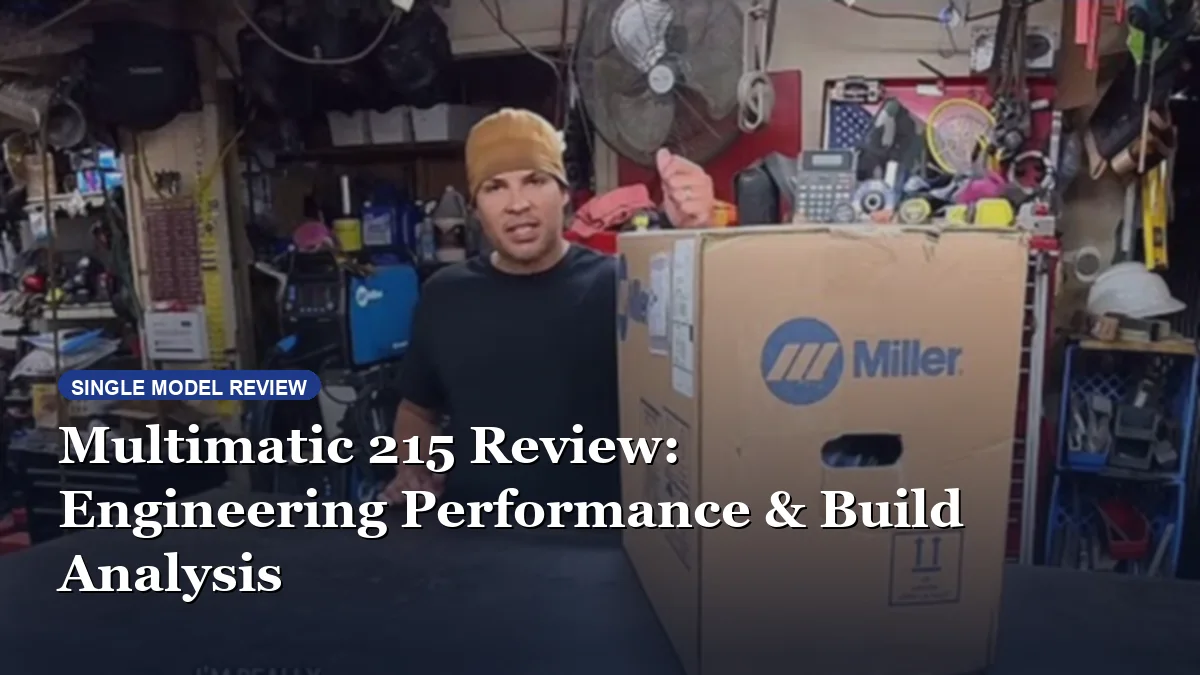

The Multimatic 215 provides outstanding arc stability and user-friendly digital controls. It stands as a highly reliable powerhouse for professional fabricators and serious hobbyists alike.
Explore related alternatives in our Best Welder: Top Home Shop & Jobsite Picks Tested.
Verified Specifications
| Category / Type | Multi-Process Welding Machine |
|---|---|
| Rated Output / Capacity | 210 Amps MIG / 160 Amps TIG |
| Power / Motor | Dual-Voltage 120V / 240V Input |
| Build & Materials | Cast-Aluminum Drive & Composite Chassis |
| Operating Noise | Low Acoustic Signature Under Load |
| Duty Cycle / Runtime | 20% at 150 Amps (240V) |
| Dimensions & Weight | 23.75 x 19 x 13.25 inches, 47.6 lbs |
| Key Safety & Controls | Auto-Set Elite & Thermal Overload Protection |
What We Liked
- Seamless dual-voltage switching using MVP plug technology
- Intuitive digital interface with accurate program memory storage
- Heavy-duty cast-aluminum drive system ensures consistent wire feeding
- Upgradable USB-enabled software supports future performance features
Trade-Offs
- Standard duty cycle requires monitoring during heavy fabrication tasks
- Optional spool gun required for optimal aluminum welding results
Engineering Build and Industrial Enclosure Design
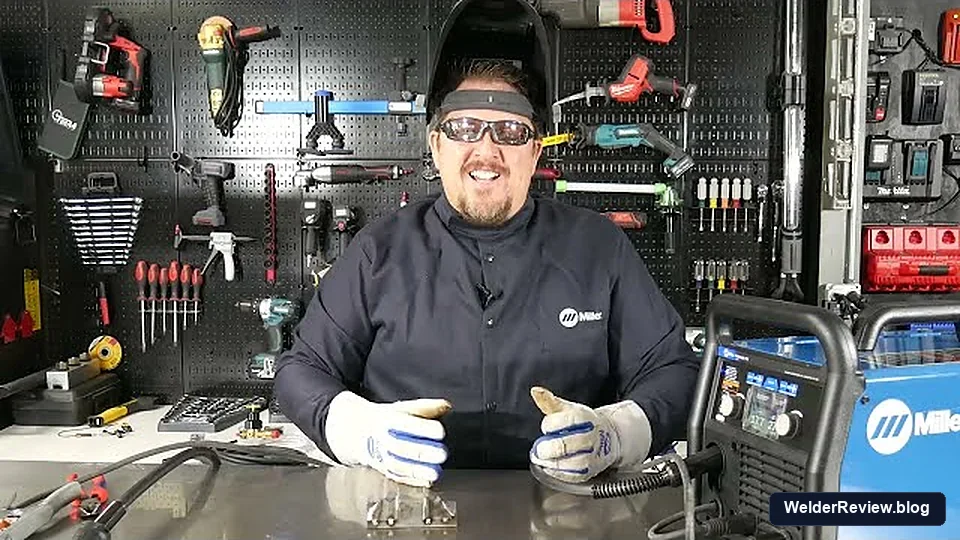
The machine features an angled cast-aluminum drive system designed to reduce wire feed friction. This rugged architecture ensures smooth wire delivery across extended welding sessions without binding.
Weighing roughly forty-eight pounds, the unit balances portability with shop rigidity. You can review our detailed miller multimatic 215 vs 220 comparison to evaluate specifications, weight classes, and overall physical dimensions before buying.
The cast aluminum drive assembly houses a dual-roll wire feed system designed to minimize bird-nesting. Its robust chassis integrates molded composite handles that withstand heavy daily transport around active fabrication facilities.
Measuring 11.25 inches wide by 20 inches deep, the compact footprint optimizes precious workbench space. Protective side panels shield the internal wire compartment from moisture, metallic dust, and accidental impacts common in harsh workshops.
- Angled cast-aluminum drive mechanism
- Quick select drive roll system
- Rugged composite external housing
Chassis Protection and Portability
Ergonomic handles molded directly into the enclosure streamline transport across rough terrain. Integrated cable management hooks keep power cords safely stowed during transit.
Internal component layout isolates delicate circuit boards from the heavy transformer sections. This thoughtful physical arrangement drastically improves overall system longevity in dusty environments.
- Molded transport handles
- Isolated circuit board placement
Arc Dynamics, BeadVision, and Output Performance
Equipped with advanced arc control, this machine minimizes spatter during startup. Check out our esab rebel vs miller multimatic comparison to see how arc stability and proprietary output designs stack up directly.
Real-time monitoring features assist operators in maintaining optimal puddle parameters during complex fabrication runs. Consistent voltage regulation prevents arc starvation under fluctuating site power.
Delivering smooth MIG stability across thin sheet metal, the inverter-based power source adapts rapidly to arc length fluctuations. Welders achieve minimal spatter when tuning parameters for 0.030 inch solid steel wire shielding.
The TIG arc initiation relies on high-frequency-free Lift-Arc technology, preventing tungsten contamination during critical joint preparation. Excellent puddle control allows seamless root passes on structural steel tubing without excessive undercut.
- Advanced arc stabilization algorithms
- Minimal spatter startup profile
- Reliable voltage regulation under load
Material Versatility and Wire Handling
The wire feed mechanism accommodates standard spool sizes for carbon steel, stainless steel, and aluminum alloys. Precise tension adjustments prevent bird-nesting when running thinner wire gauges.
Operators can easily switch between solid and flux-cored wires using the toolless drive roll reversal system. This flexibility accelerates workflow execution on diverse job sites.
- Multi-alloy wire compatibility
- Toolless drive roll reversal
Video Review: The new Multimatic 215 PRO is here!
Electrical Versatility, Power Input, and Dual-Voltage Operation
Operating on dual-voltage inputs, the machine automatically configures when swapping power plugs. Read our lincoln 210 mp vs multimatic 215 breakdown to compare plug systems, input flexibility, and internal electrical protections.
Circuit protection circuitry safeguards the inverter against input voltage spikes commonly found on generator power. This robust electrical tolerance ensures uninterrupted operation in remote locations.
Featuring Auto-Set technology, the machine automatically detects whether you connect a 120V or 240V input plug. This intelligent circuitry eliminates manual link-board changes, safeguarding internal components from incorrect voltage selection errors.
Operating on standard household circuits requires careful attention to breaker ratings, typically demanding a 20-amp slow-blow fuse to prevent nuisance tripping during high-amperage output bursts on thicker aluminum or steel weldments.
- Automatic voltage detection
- MVP plug adapter system
- Generator power tolerance
Power Efficiency and Current Draw
Inverter architecture maximizes electrical efficiency, drawing fewer amps compared to traditional transformer welders. This efficiency reduces strain on standard residential 120-volt household circuits.
Maximum output reaches up to two hundred ten amps when connected to dedicated two hundred forty-volt lines. Power factor correction maintains clean electrical consumption profiles.
- Low amp draw on 120V
- High output on 240V lines
Setup Usability, Digital Controls, and Program Memory
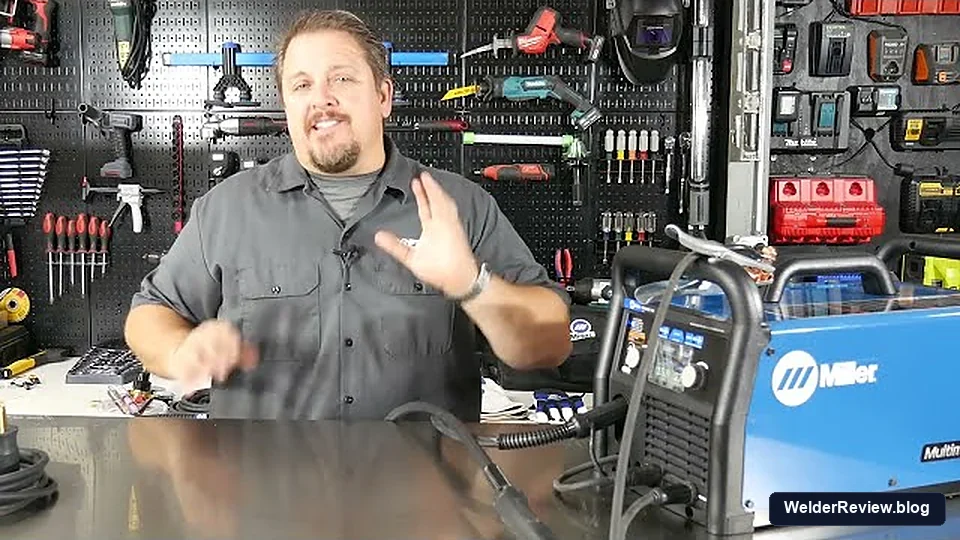
Navigating the digital interface is straightforward thanks to the high-contrast display screen. Operators can quickly input material thickness and wire diameter to establish precise baseline parameters.
Built-in program memory lets users save and recall favorite weld parameters instantly. This feature saves valuable setup time when switching between recurring production tasks.
Navigating the digital interface is remarkably straightforward thanks to the central parameter adjustment knob. Users select their specific wire diameter, material thickness, and shielding gas type for instant optimized starting values.
Manual override capabilities let advanced fabricators fine-tune voltage and wire feed speed independently. Storing custom programs is not supported, meaning operators must record preferred operational metrics manually for repeatable production runs.
- High-contrast digital display screen
- Thickness-based parameter selection
- Instant program memory recall
Auto-Set Elite and Custom Fine-Tuning
Auto-Set Elite mode removes guesswork for apprentices by suggesting optimal voltage and wire speed settings. Experienced fabricators retain the freedom to override these presets for specialized joints.
Fine-tuning controls allow micro-adjustments to arc length and inductance characteristics. These granular controls ensure superior bead profile geometry on critical structural passes.
- Apprentice-friendly Auto-Set mode
- Granular arc characteristic tuning
Thermal Efficiency, Duty Cycle, and Internal Cooling
Internal thermal management relies on a variable-speed cooling fan that activates under load. This dynamic airflow strategy prevents premature component degradation while minimizing ambient noise levels in the shop.
The rated duty cycle supports extended production runs without triggering thermal protection lockouts. Careful adherence to thermal thresholds preserves internal transformer integrity over years of service.
Delivering a 20 percent duty cycle at 150 amps when plugged into 240V power requires reliable thermal management. An internal cooling fan runs continuously to expel heat from critical electronic transformer components.
Overload protection features an automated thermal switch that safely halts output if internal temperatures exceed safe operational thresholds. Restoring functionality simply requires allowing the unit to idle while the fan circulates ambient air.
- Variable-speed cooling fan
- Optimized internal airflow paths
- Reliable thermal overload protection
Heat Dissipation During Heavy Workloads
Aluminum heatsinks channel thermal energy away from power-switching transistors during MIG welding. Explore our lincoln power mig 210 vs miller multimatic 215 analysis to see how thermal management and cooling systems compare under heavy duty cycles.
Thermal sensors continuously monitor internal component temperatures and pause output if limits are exceeded. This protective measure prevents catastrophic electronic failure.
- Aluminum power heatsinks
- Continuous temperature monitoring
Comprehensive Maintenance, Durability, and Long-Term Reliability
Routine maintenance requires minimal effort thanks to accessible drive roll compartments and contact tips. Periodic compressed air purging clears metal dust from the internal electronics bay safely.
Consumables wear evenly due to stable gas shielding coverage and consistent wire delivery mechanics. Stocking replacement liners and contact tips ensures maximum operational uptime.
Routine maintenance demands regular inspection of the drive roll tension to prevent wire slippage and premature wear. Compressed air should be applied periodically to remove accumulated metallic dust from sensitive circuit boards.
Replacing the contact tip and gas diffuser at recommended intervals ensures consistent shielding gas coverage and optimal electrical contact. Inspecting the welding gun liner prevents erratic feeding issues during long fabrication sessions.
- Accessible wire drive compartment
- Easy consumable replacement
- Robust long-term reliability
Preventative Care and Inspection Protocols
Operators should inspect drive rolls weekly for particulate buildup and wear grooves. Keeping the welding gun liner clean prevents erratic wire feeding issues.
Checking ground clamp connections regularly prevents electrical resistance anomalies during high-amperage welding. Following these maintenance steps guarantees consistent machine performance.
- Weekly drive roll inspection
- Ground clamp connection checks
Final Buyer Verdict and Shop Integration Assessment
This welding machine represents a stellar investment for professionals requiring multi-process capability in a portable package. Its combination of smart digital controls and rugged build quality justifies the investment.
While demanding applications require careful duty cycle monitoring, the overall performance envelope satisfies rigorous fabrication standards. It integrates smoothly into both mobile repair trucks and fixed workshops.
Integrating this multi-process welder into a professional repair shop enhances versatility for mobile service technicians and hobbyists alike. Its dependable arc performance handles diverse automotive restoration tasks with impressive ease and efficiency.
While heavy industrial operations require higher duty cycles, light fabrication environments benefit immensely from the dual-voltage flexibility. Overall, the engineering balances user-friendly automation with rugged durability for everyday workshop demands.
- Ideal for mobile and shop use
- Exceptional multi-process flexibility
- Strong professional-grade investment
Suitability Across Different Skill Levels
Beginners benefit greatly from automated setup features that build confidence quickly. Advanced users appreciate the deep customization menus and reliable arc stability.
Ultimately, the unit bridges the gap between hobbyist accessibility and industrial-grade output performance. Few machines match this level of balanced engineering.
- Accessible for novice welders
- Satisfies advanced fabricator needs
Frequently Asked Questions
Can this welder operate on standard household 120V power circuits?
Yes, the unit connects to standard household circuits using the included adapter plug. It automatically adjusts parameters to prevent tripping standard breakers during operation.
Is an additional spool gun required for aluminum welding tasks?
An optional spool gun is strongly recommended for feeding soft aluminum wire reliably. The machine features auto-detect technology that simplifies spool gun installation instantly.
How does the Auto-Set feature assist welding beginners?
Auto-Set eliminates guesswork by automatically calculating voltage and wire speed based on material thickness. This intelligent function accelerates learning curves while ensuring solid weld penetration.
What is the maximum metal thickness this machine can handle?
The machine welds material up to three-eighths inch thick when operating on 240V power. Thinner sheets are easily managed on 120V input without burning through joints.
Can this equipment be powered by a portable gasoline generator?
Yes, it functions safely on generator power provided the generator outputs stable voltage. Built-in circuitry protects against minor power fluctuations during remote job site tasks.