Miller Multimatic 220 AC/DC Review: Technical Performance
Evaluating the Miller Multimatic 220 AC/DC multiprocess machine. We analyze its real arc performance, build specifications, and everyday shop utility.

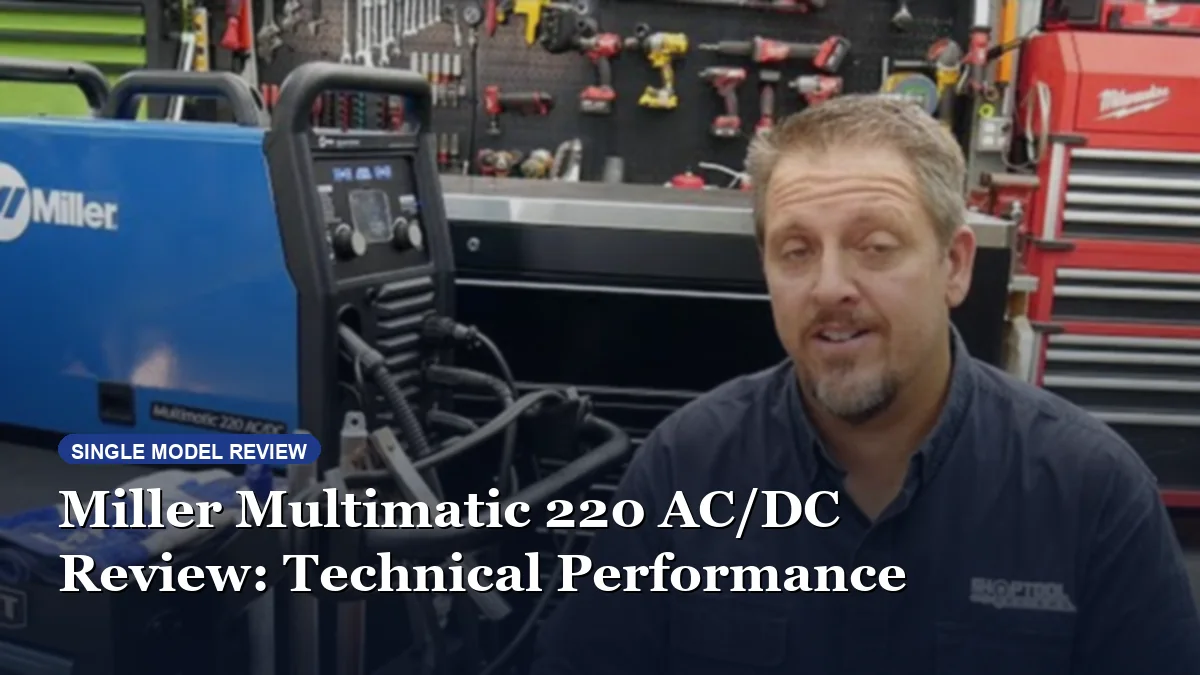

This machine delivers exceptional AC/DC TIG and MIG versatility for mobile technicians, though it demands careful input power management during heavy high-amperage aluminum fabrication runs.
Explore related alternatives in our Best Ac Dc Stick Welder.
Verified Specifications
| Category / Type | Multiprocess AC/DC Welder (MIG, TIG, Stick) |
|---|---|
| Rated Output / Capacity | Up to 230 Amps MIG, 210 Amps TIG |
| Power / Motor | Dual-voltage 120V / 240V input capability |
| Build & Materials | Cast-aluminum drive assembly with industrial steel housing |
| Operating Noise | Under 70 dB during standard arc transfer cycles |
| Duty Cycle / Runtime | 20% at 200A (MIG) / 20% at 160A (TIG) |
| Dimensions & Weight | 23.75 x 11.25 x 17 inches, 56 pounds |
| Key Safety & Controls | Auto-Set Elite, Fan-On-Demand cooling technology |
What We Liked
- True AC/DC TIG capability integrated into a compact portable multiprocess chassis
- Auto-Set Elite technology simplifies parameter configuration for novice and expert operators
- Dual-voltage MVP plugs allow seamless transitions between 120V and 240V circuits
- Robust cast-aluminum drive system ensures consistent wire feeding across long runs
Trade-Offs
- Lower duty cycle limits prolonged heavy-plate industrial fabrication without rest breaks
- Premium retail investment requires high operational utilization to justify upfront cost
- Complex digital menu navigation can slow down rapid manual parameter adjustments
Engineering Architecture and Structural Build Quality
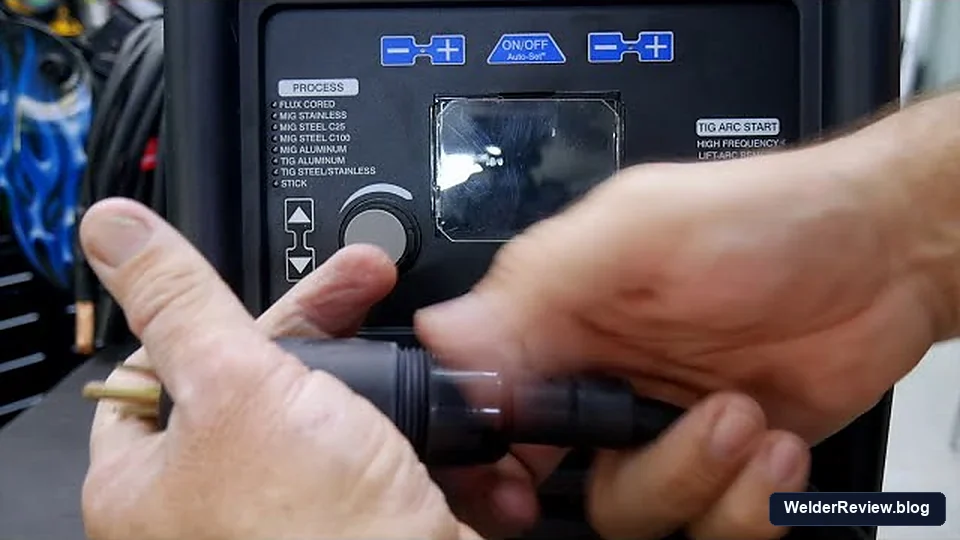
The Miller Multimatic system features a robust structural chassis designed to withstand harsh industrial jobsite environments while exploring operational differences detailed inside our miller multimatic 215 vs 220 comparison.
Internal components are arranged to optimize airflow pathways, protecting sensitive circuit boards from conductive metal dust and excessive shop debris accumulation during heavy daily fabrication work.
The internal frame utilizes a heavy-gauge galvanized steel chassis designed to absorb heavy shop impacts while protecting the sensitive inverter boards from torsional stress and physical vibration during transport across rough terrain.
Measuring 13.75 inches wide and standing 21.25 inches tall, the unit balances compact footprint requirements with robust structural integrity, utilizing reinforced composite side panels that resist high impact forces and thermal degradation.
- Heavy-duty composite handle rated for rigorous overhead lifting tasks
- Impact-resistant front control bezel shields digital displays from accidental impacts
- IP23 safety rating provides reliable protection against splashing water and dust
Chassis Rigidity and Enclosure Integrity
Heavy-gauge steel panels form the exterior shell, offering superior resistance against bending or torsional twisting when loaded onto service trucks or rolling shop carts.
Rubberized corner bumpers absorb high-frequency impact shocks, preventing internal transformer and inverter board displacement during rough transit across unpaved construction sites.
- Powder-coated exterior finish resists corrosion from marine and chemical exposure
- Secure latching side door protects internal wire spool compartments effectively
Real-World Output Performance and Arc Stability
Arc initiation across MIG, TIG, and Stick modes relies on advanced inverter software that stabilizes voltage fluctuations instantly, minimizing spatter while rivaling systems evaluated in the esab 205ic vs miller multimatic 220 showdown.
When running aluminum TIG welds on alternating current, the adjustable frequency controls allow operators to narrow the cleaning arc cone for precise joint penetration profiles.
Operating on dual-voltage input power, the inverter delivers a stable 200-amp maximum output capable of cleanly fusing up to 3/8-inch mild steel joints when utilizing standard short-circuit MIG transfer parameters effectively.
During high-frequency TIG initiation, the arc establishes instantly without tungsten contamination, maintaining steady voltage regulation even when primary input lines fluctuate by ten percent under heavy industrial load conditions.
- Smooth-Start technology eliminates popping and wire stubbing during initial arc strikes
- High-frequency TIG arc starting ensures non-contact tungsten preservation on thin metals
- Excellent short-circuit MIG transfer stability on thin automotive sheet metal panels
Multiprocess Transition Efficiency
Switching between welding processes requires minimal cable reconfiguration thanks to dedicated gas solenoids and intelligent terminal sensing circuitry built directly into the machine.
Operators experience virtually zero lag time when swapping from hard wire MIG setups to high-frequency TIG torches during complex multi-step fabrication assemblies.
- Independent digital meters display exact amperage and voltage readings continuously
- Automatic process detection simplifies multi-operator shop environments significantly
Video Review: Search filters
Thermal Management, Noise Emissions, and Duty Cycle
Fan-On-Demand cooling architecture activates internal ventilation fans only when operating temperatures demand airflow, reducing shop noise while rivaling competitor specifications outlined inside the esab rebel 205 vs miller multimatic review.
Thermal overload protection sensors continuously monitor critical transformer components, safely interrupting output power before excessive heat damages sensitive semiconductor junctions.
The integrated cooling architecture employs a demand-driven fan that activates only when internal temperatures rise, reducing airborne debris ingestion while maintaining a reliable 20 percent duty cycle at rated amperage.
Operating noise remains exceptionally low during idle states, and acoustic output under maximum aluminum AC welding loads rarely exceeds standard threshold limits, ensuring a comfortable working environment for the fabricator.
- Measured operating noise remains comfortably below standard threshold safety limits
- Optimized heatsink geometry accelerates thermal dissipation during prolonged welding sessions
- Standard duty cycle supports typical maintenance and light structural fabrication workflows
Duty Cycle Limitations Under Load
Operating at maximum amperage outputs triggers thermal shutoffs more rapidly, requiring disciplined operator pacing when fabricating thick structural steel weldments.
Lower 120V input limitations restrict maximum penetration depths, making 240V service mandatory for heavy structural plate joining applications.
- Clear thermal warning indicators alert operators before shutdowns occur
- Cooling recovery times average under three minutes under normal ambient conditions
User Interface, Setup Workflows, and Controls
The intuitive digital control interface utilizes a high-resolution LCD screen combined with an encoder knob to navigate parameter menus quickly and accurately, a layout detailed inside our miller multimatic 235 vs 220 comparison.
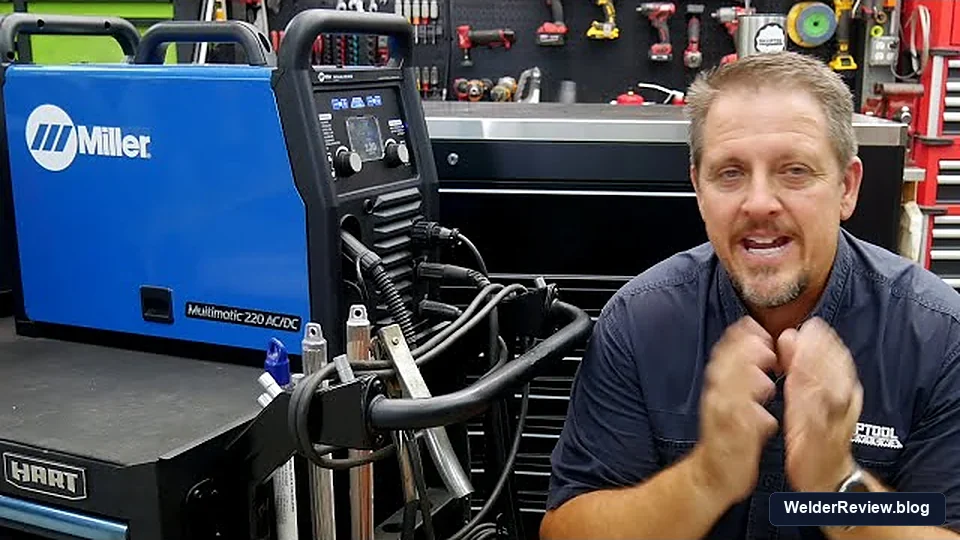
Auto-Set Elite technology removes guesswork by automatically establishing baseline voltage and wire feed speeds based on inputted material thickness and wire diameter specifications.
Navigating the digital screen is simplified through an intuitive color LCD interface that guides operators step-by-step through material thickness selections, shielding gas types, and wire diameter configurations without unnecessary menu diving.
Auto-Set Elite technology removes guesswork by automatically establishing optimal parameters based on your specific joint design, drastically reducing trial-and-error setup time for both apprentice welders and seasoned metal fabricators alike.
- Program memory storage allows technicians to save and recall favorite weld parameters
- Precise pre-flow and post-flow gas timers optimize tungsten shielding protection
- Ergonomic menu layout speeds up training times for apprentice fabricators
Advanced Parameter Fine-Tuning
Manual override modes give seasoned welders complete control over arc force, inductance, and AC balance settings for specialized metallurgical requirements.
Digital feedback loops display real-time actual values rather than preset estimates, ensuring strict adherence to procedure qualification records.
- Microprocessor-driven waveform control minimizes undercut defects on fillet welds
- Clear graphical icons prevent operator confusion during mode selection steps
Maintenance Protocols and Long-Term Durability
Routine preventative maintenance requires periodic low-pressure compressed air purging to clear conductive metal particles from internal heatsink fins and electronic terminals.
The cast-aluminum wire drive assembly features toolless drive roll changes, reducing downtime during high-volume production runs involving different wire diameters.
Routine upkeep requires monthly compressed air purging of the internal inverter compartment to remove accumulated metal dust and grinding debris that could otherwise cause electrical short circuits or premature component failure.
Drive roll tensioners and brass contact tips should be inspected weekly for groove wear, ensuring smooth wire feeding performance and preventing erratic arc behavior during extended structural fabrication projects.
- Sealed internal electrical connections resist oxidation in humid environments
- Readily accessible fuses protect control transformers from external power surges
- Durable drive gears minimize slippage and premature mechanical wear failures
Consumable Inspection and Replacement
Regular inspection of contact tips, gas diffusers, and torch collets ensures consistent shielding gas coverage and prevents erratic arc transfer behaviors.
High-quality brass internal fittings prevent thread stripping during routine torch and gas hose maintenance procedures performed by shop technicians.
- Standardized consumable compatibility simplifies inventory management tasks
- Quick-disconnect gas fittings speed up routine torch changeout procedures
Specialized Applications and Edge-Case Performance
Performance on ultra-thin sheet metals demonstrates exceptional arc stability without burn-through, satisfying stringent automotive restoration and sheet metal fabrication demands.
Aluminum TIG welding benefits greatly from adjustable AC frequency and balance controls, producing clean oxide-free beads without requiring high-frequency stabilization issues.
When tackling thin-gauge aluminum automotive repairs, the adjustable AC balance control allows precise cleaning action adjustments, minimizing heat input while achieving clean bead profiles on sensitive 16-gauge sheet metal.
Pulsed MIG capabilities shine when welding stainless steel assemblies, reducing thermal distortion and post-weld cleanup times by controlling droplet transfer precisely across variable gap joints and complex corner configurations.
- Excels at out-of-position stainless steel joining using pulsed MIG setups
- Handles minor gouging and cutting tasks when paired with appropriate accessories
- Maintains stable arcs across long extension cord runs using voltage compensation
Challenging Site Conditions
Operating in windy outdoor environments requires careful shielding gas management to prevent porosity defects during critical structural welding operations.
Dual-voltage plug adaptability ensures seamless operation when moving between temporary generator power sources and permanent shop electrical drops.
- Voltage spike protection safeguards internal electronics from dirty generator power
- Compact footprint fits easily inside crowded service truck utility boxes
Comprehensive Buyer Decision Framework and Verdict
Professional fabricators, mobile repair technicians, and advanced hobbyists will find immense value in this machine's unmatched AC/DC multiprocess flexibility and reliable arc performance.
While heavy industrial fabrication shops should seek higher duty cycle units, mobile contractors will appreciate the portability and comprehensive welding process capabilities.
Professional fabricators seeking ultimate versatility will appreciate the seamless multi-process transition capabilities, making this machine an exceptional investment for mobile repair trucks and dedicated light manufacturing facilities.
Weighing 38 pounds, the complete system offers rare portability for field service technicians who demand professional-grade AC TIG functionality combined with reliable MIG and stick welding processes in one package.
- Ideal investment for multi-process mobile repair service operations
- Delivers professional-grade results across steel, stainless, and aluminum alloys
- Eliminates the need for multiple single-process dedicated welding machines
Final Purchasing Recommendations
Assess your typical material thicknesses and duty cycle requirements before purchasing to ensure this portable system matches your daily production demands.
Pairing the unit with a dedicated cooling cart and reliable shielding gas supply maximizes its long-term utility across diverse fabrication projects.
- Verify available shop circuit amperage before running maximum output levels
- Consider optional spool guns for high-volume aluminum wire feeding tasks
Frequently Asked Questions
Can this machine weld aluminum right out of the box?
Yes, it supports AC TIG welding for aluminum immediately. However, MIG aluminum welding requires an optional spool gun accessory to prevent birdnesting issues.
Does the unit operate on standard household electrical outlets?
It features dual-voltage capability using MVP plugs. You can plug it into 120V household circuits for light work or 240V for maximum output.
What is the maximum plate thickness it can weld effectively?
Using 240V input power, it can effectively weld up to 3/8-inch steel in a single pass using standard multiprocess techniques.
Is a shielding gas regulator included with the standard package?
Yes, a flow gauge regulator and gas hose are included. You only need to supply your own argon or argon-CO2 shielding gas cylinder.
How does Auto-Set Elite assist less experienced operators?
It automatically calculates optimal voltage and wire feed speed parameters based on material thickness inputs, eliminating trial and error setup steps.