Miller 215 Review: Dual-Voltage Performance Tested
This versatile dual-voltage machine delivers robust performance across diverse field applications. Balancing portability with advanced digital controls, it streamlines complex welding workflows.

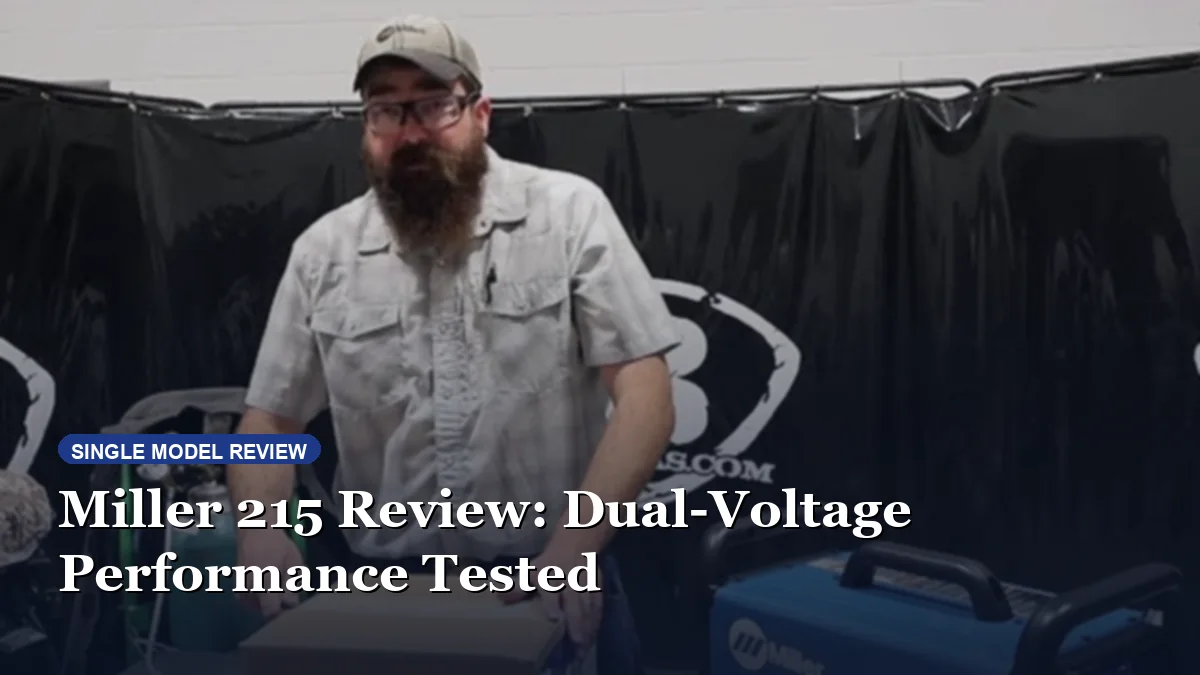

The unit provides exceptional arc stability and intuitive parameter management for demanding operators. Its durable cast-aluminum drive system ensures long-term reliability on every job site.
Explore related alternatives in our Best Dual Voltage Mig Welder.
Verified Specifications
| Category / Type | Dual-Voltage MIG Welder |
|---|---|
| Rated Output / Capacity | Up to 210A Maximum Output |
| Power / Motor | 120V and 240V Input via MVP Plug |
| Build & Materials | Cast-Aluminum Drive System, Steel Enclosure |
| Operating Noise | Low-decibel fan-on-demand cooling |
| Duty Cycle / Runtime | Optimized for high-production fabrication |
| Dimensions & Weight | 23.75 x 19 x 13.25 inches, 47.6 lbs |
| Key Safety & Controls | Auto-Set, BeadVision, USB Software Upgradable |
What We Liked
- Seamless dual-voltage switching using toolless MVP plugs.
- Advanced digital controls including Auto-Set and BeadVision monitoring.
- Rugged cast-aluminum drive system prevents wire feeding issues.
- Upgradable USB software keeps system firmware current.
- Lightweight footprint under 48 pounds enhances portability.
Trade-Offs
- Spool gun for aluminum welding sold separately.
- Higher initial investment compared to entry-level units.
- Requires dedicated 240V circuit for maximum output capacity.
Architecture and Enclosure Engineering
The physical enclosure combines heavy-gauge steel stamping with impact-resistant composite corners. This rugged structural design protects internal circuit boards from harsh job site drops and flying fabrication debris.
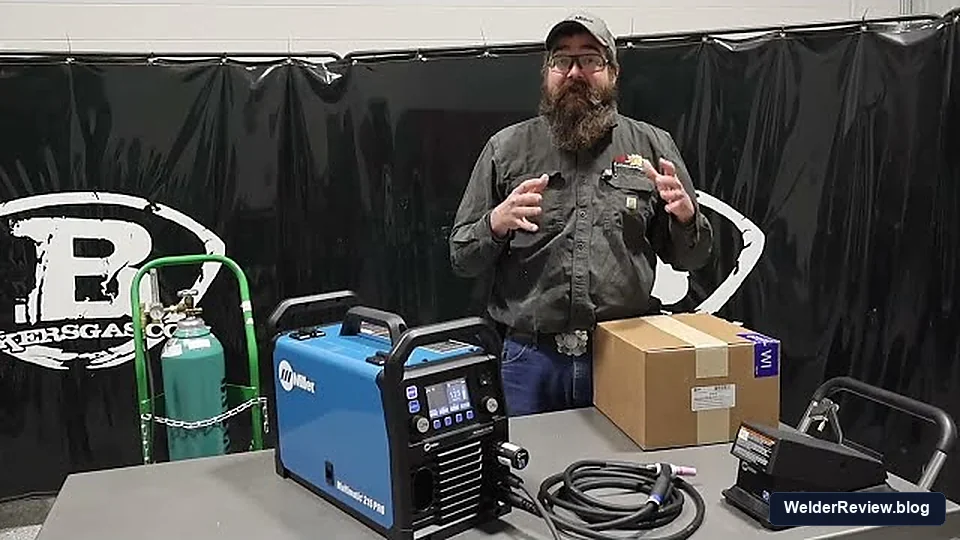
Weighing under forty-eight pounds, this welder shines in our Miller comparison showdown, striking an impressive balance between structural rigidity and easy transport for busy mobile service technicians.
Internal wire routing utilizes a precision-machined cast-aluminum drive mechanism. Such heavy-duty mechanical components eliminate common bird-nesting issues when feeding soft aluminum or fine stainless steel wires.
- Heavy-gauge steel casing construction
- Cast-aluminum drive housing assembly
- Toolless drive roll changes
- Fifteen-foot MIG gun included standard
Drive System Mechanics
Quick-select drive rolls simplify tension adjustments without requiring specialized hand tools. Mechanics can swap wire diameters in seconds while maintaining consistent clamping pressure.
The angled feed path reduces friction points across the entire liner assembly. This engineering detail ensures smooth wire feeding over extended fifteen-foot gun leads during heavy fabrication runs.
- Quick-select drive roll design
- Optimized internal wire routing paths
Power Delivery and Electrical Efficiency
Operating seamlessly on dual-voltage inputs, the unit adapts automatically to power sources. Exploring our ESAB vs Miller comparison shows how the patent-pending MVP plugs allow instant switching between household circuits and heavy industrial lines.
When connected to standard 120-volt receptacles, the internal circuitry optimizes current draw for light fabrication work. Shifting to 240-volt power unlocks the full amperage potential required for thicker steel plates.
Power factor correction technology maximizes electrical efficiency during heavy-load welding operations. Minimizing harmonic distortion protects sensitive workshop equipment sharing the same facility electrical grid.
- Dual-voltage MVP plug adapters
- Automatic voltage detection circuitry
- Generator compatible input design
- High electrical conversion efficiency
Input Flexibility Analysis
Voltage sensing technology automatically detects incoming power without manual toggle switches. This automated feature prevents costly blown fuses and internal transformer damage during setup.
Stable output compensation maintains consistent arc characteristics despite minor voltage fluctuations from portable generators. Field technicians rely heavily on this robust electrical stability on remote sites.
- No manual toggle switches required
- Generator voltage fluctuation compensation
Video Review: Dummy Proof - Miller Multimatic 215 Multiprocess Welder
Arc Dynamics and Weld Quality Output
Advanced wave control algorithms deliver exceptionally smooth arc starts. Detailing this in our ESAB vs Miller review reveals how professionals experience instant puddle wetting right from the initial trigger pull on steel joints.
Integration of Dyna-Pulse technology brings precision spray-transfer capabilities to lower amperage thresholds. Fabricators can tackle stainless steel and aluminum with superior bead profile control.
The inclusion of real-time bead monitoring provides immediate visual feedback regarding penetration depth. Operators adjust travel speed dynamically to maintain optimal puddle geometry across complex fillet welds.
- Dyna-Pulse wave control integration
- Smooth, spatter-free arc starts
- Real-time bead monitoring display
- Versatile metal transfer modes
Transfer Mode Versatility
Short-circuit MIG settings handle thin automotive sheet metal without risking dangerous burn-through. The precise heat input control keeps distortion minimal on visible exterior body panels.
Spray transfer modes deliver deep root penetration on thick structural steel sections effortlessly. This dual capability makes the machine exceptionally versatile for multi-industry fabrication shops.
- Precise short-circuit heat control
- Deep structural spray transfer
Setup Usability and Digital Controls
Navigating operational parameters is straightforward thanks to a clear digital screen. Referencing our ESAB vs Miller comparison shows how fabricators configure parameters precisely using a single multi-function dial for rapid shop adjustments.
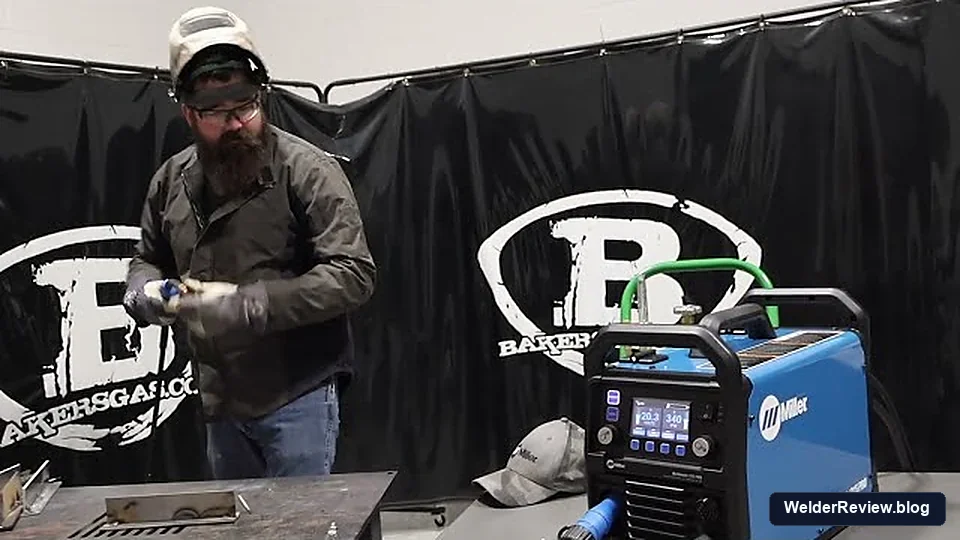
The Auto-Set feature eliminates guesswork for apprentices by automatically calculating ideal welding parameters. Operators simply input wire diameter and material thickness to generate optimal machine settings.
Program memory storage allows users to save and recall favorite weld recipes instantly. This digital convenience accelerates workflow efficiency when switching between repetitive production assembly tasks.
- High-visibility digital display screen
- Auto-Set parameter configuration wizard
- Program memory recipe storage
- USB software upgradable architecture
Software and Interface Integration
USB software upgradability ensures the machine receives firmware enhancements long after purchase. Owners download updates directly to keep their equipment synchronized with modern welding standards.
Ergonomic menu layouts minimize button clicks while wearing heavy leather welding gloves. Operators maintain high productivity without constantly removing essential safety gear to alter settings.
- Direct USB firmware downloading
- Glove-friendly menu navigation layout
Thermal Management and Duty Cycle Performance
Efficient thermal management relies on a fan-on-demand cooling architecture that activates only when necessary. This smart system reduces internal dust accumulation while maintaining safe operating temperatures under heavy loads.
Optimized duty cycle ratings allow fabricators to weld longer without experiencing frustrating thermal shutdowns. The robust internal transformer dissipates heat rapidly during continuous production runs.
Overload protection circuits safeguard critical electronic components if airflow is accidentally obstructed. The machine safely halts output until internal temperatures drop back to normal operating thresholds.
- Fan-on-demand cooling architecture
- Thermal overload protection circuits
- High continuous-use duty cycles
- Rapid internal heat dissipation
Continuous Load Behavior
Sustained high-amperage output tests reveal minimal thermal drift in arc voltage characteristics. Welders achieve consistent penetration profiles even during prolonged structural assembly projects.
Ambient temperature tolerance remains high, performing reliably in sweltering outdoor job site environments. The cooling system evacuates accumulated heat efficiently across extended work shifts.
- Minimal thermal voltage drift
- High ambient temperature tolerance
Maintenance Protocols and Component Longevity
Routine upkeep requires minimal effort thanks to the toolless removable side access panel. Maintenance technicians easily inspect the internal wire drive assembly and clear accumulated metallic dust.
Drive rolls feature reversible stamped grooves that double their functional service lifespan. Cleaning the drive gears periodically prevents premature wire slippage and erratic feeding issues.
Contact tips and gas nozzles detach smoothly without requiring specialized maintenance wrenches. Keeping spare consumables on hand ensures uninterrupted workflow during high-volume production schedules.
- Toolless removable side access
- Reversible stamped drive rolls
- Quick-change front-end consumables
- Simple liner maintenance access
Preventive Care Standards
Inspecting the fifteen-foot gun liner regularly prevents debris buildup and wire friction. Blowing compressed air through the conduit clears out microscopic copper shavings effectively.
Storing the power source in a dry environment protects exposed circuit boards from moisture corrosion. Following these basic upkeep steps guarantees decades of dependable mechanical service.
- Regular conduit compressed air cleaning
- Moisture-free storage recommendations
Field Portability and Practical Job Site Application
Compact dimensions allow the welding unit to fit securely inside standard service truck toolboxes. Field repair technicians appreciate the exceptional portability when servicing heavy agricultural machinery remotely.
The included fifteen-foot MIG gun provides generous reach around large fabrication assemblies. Welders avoid constantly dragging the heavy power source across crowded workshop floors unnecessarily.
Secure hook-and-loop cord wraps keep power leads neatly organized during transport between locations. This thoughtful accessory prevents tangled cables and speeds up vehicle packing procedures.
- Compact service truck dimensions
- Generous 15-foot MIG gun reach
- Convenient hook-and-loop cord wraps
- Generator friendly mobile design
Mobile Service Performance
Running off portable engine-driven generators proves entirely feasible due to low current draw tolerances. Field crews complete urgent structural repairs miles away from commercial electrical grids.
Rugged housing materials withstand the bumps and vibrations typical of rough service truck travel. The machine arrives at remote job sites fully functional and ready for immediate deployment.
- Low generator current draw tolerances
- Vibration-resistant housing materials
Frequently Asked Questions
Can this machine weld aluminum right out of the box?
While the unit includes a built-in spool gun connection and compatible drive rolls, an optional spool gun must be purchased separately for comprehensive shop fabrication work.
Proper aluminum welding requires this specialized motorized gun to feed soft wire smoothly without ever experiencing frustrating bird-nesting issues inside the standard lead assembly.
How does the dual-voltage MVP plug system actually operate?
The system utilizes interchangeable twist-lock adapter plugs that attach securely to the primary power cord without requiring any specialized hand tools for complete operational installation.
Advanced automatic voltage sensing circuitry instantly detects whether you plugged the machine into a standard household receptacle or a heavy industrial power circuit seamlessly every single time.
What is the purpose of the built-in Auto-Set feature?
The Auto-Set function completely eliminates manual parameter guesswork by automatically calculating ideal wire speed and voltage values based on your specific project inputs.
Operators simply select the exact material thickness and wire diameter to generate optimized factory welding settings instantly without ever wasting valuable metal test coupons on daily setup tasks.
Can this welding machine operate safely on portable generators?
Yes, the power supply is fully compatible with standard engine-driven generators designed specifically for remote job site applications and mobile field equipment repairs.
Advanced internal voltage compensation technology actively protects sensitive internal electrical components from experiencing damaging power surges during unpredictable generator output fluctuations throughout your demanding workday.
How frequently should the drive rolls and liner receive maintenance?
Routine physical inspection of the drive rolls and gun liner should occur every few months depending on your overall workshop usage frequency and daily production demands.
Blowing out the conduit with clean compressed air regularly prevents accumulated copper shaving dust from causing unexpected wire feeding blockages during critical structural fabrication projects.