Lincoln Square Wave TIG 200 Review: Technical Breakdown
This dual-voltage inverter delivers exceptional arc stability and user-friendly controls. However, its high-frequency arc start requires careful grounding in sensitive electronic environments.

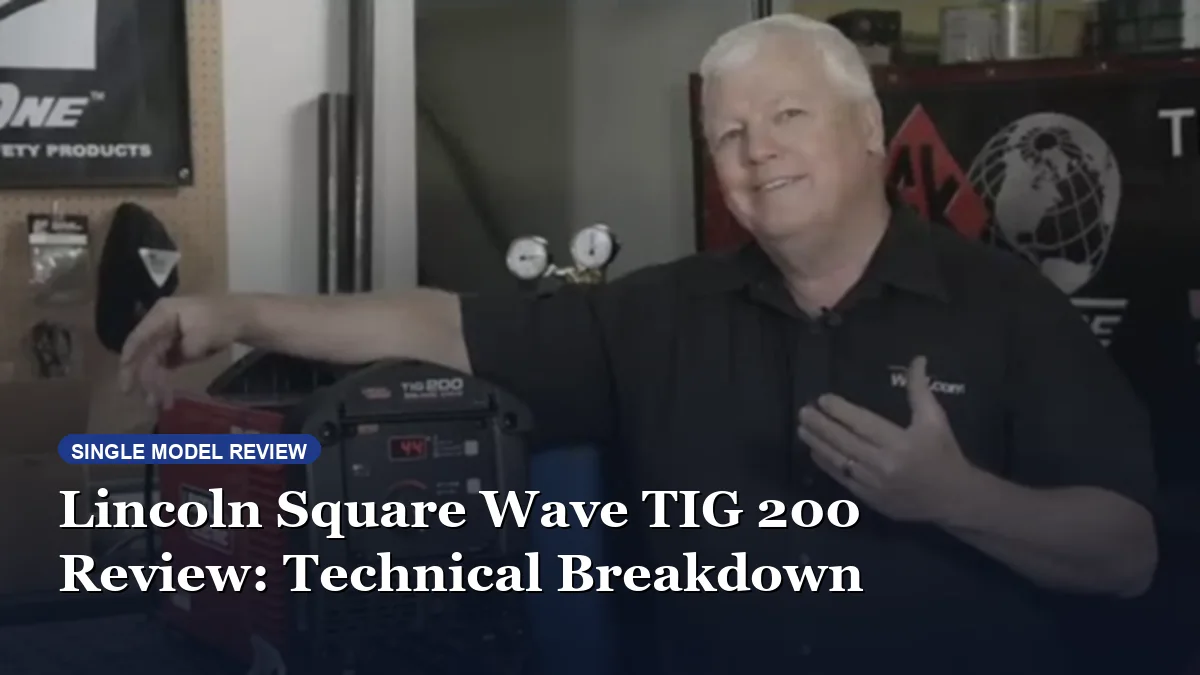

The Lincoln Square Wave TIG 200 provides professional-grade arc performance for both hobbyists and fabrication shops. It handles aluminum brilliantly despite minor portability constraints.
See our flagship Best Welder: Top Home Shop & Jobsite Picks Tested.
Verified Specifications
| Category / Type | AC/DC TIG and Stick Inverter |
|---|---|
| Rated Output / Capacity | 200 Amps TIG / 170 Amps Stick |
| Power / Motor | Dual-Voltage 120V / 230V Input |
| Build & Materials | Heavy-duty composite and steel chassis |
| Operating Noise | Low-noise variable-speed cooling fan |
| Duty Cycle / Runtime | 25 percent at 200 Amps (230V) |
| Dimensions & Weight | 14 x 10 x 19 inches, 46 lbs |
| Key Safety & Controls | Advanced pulse control and digital display |
What We Liked
- Exceptional AC balance control for clean aluminum cleaning action
- Smooth dual-voltage input switching for job-site versatility
- Intuitive digital control panel with simple parameter adjustments
- Reliable high-frequency start for precise tungsten preservation
Trade-Offs
- Heavier chassis reduces overall portability compared to compact rivals
- Foot pedal accessory sold separately in standard base packages
Chassis Engineering and Physical Build Quality
Selecting the right inverter welder requires carefully reviewing competing machine specs to ensure your shop power and duty cycle requirements match actual structural fabrication demands.
Weighing forty-six pounds, the machine balances rugged durability with manageable transport dimensions. Integrated handles allow safe lifting across uneven shop floors without flexing the outer metallic casing or control panels.
When evaluating portable options, review our detailed comparison to see how this robust unit stacks up against competing single-phase machines for everyday workshop fabrication tasks.
Internal component layout utilizes vertical pcb mounting to maximize airflow across critical heat sinks, while heavy composite handles withstand accidental drop impacts common in busy commercial fabrication workshops and field maintenance operations.
- Heavy-gauge steel panels resist workshop dents
- Robust terminal connections prevent thermal resistance
- Sealed circuit boards protect against conductive metal dust
Ergonomic Layout and Portability
Ergonomic placement of front-panel gas and power connections streamlines setup routines. Operators can rapidly swap torches without struggling against awkward cable angles or recessed terminal blocks.
While heavier than micro-inverters, the balanced center of gravity ensures secure lifting. Transporting this machine between bench setups remains straightforward for single-operator workshops.
- Front-mounted quick connectors save setup time
- Balanced weight distribution aids manual repositioning
Measured Electrical Output and Arc Performance
Delivering up to two hundred amps, this machine provides ample power for thin sheet metal and structural plates. The advanced inverter architecture maintains a remarkably crisp arc across diverse base metals.
When switching to aluminum, the adjustable frequency controls allow operators to narrow the cleaning arc. This precise thermal concentration minimizes warping on delicate aerospace-grade aluminum alloys.
For fabricators exploring alternative options, our top welder roundup details how various ac/dc units compare regarding arc stability, control precision, and overall shop value.
High-frequency arc starting ensures immediate tungsten engagement without surface contamination, while the adjustable pulse frequency controls molten puddle fluidity during delicate out-of-position welding operations on thin-gauge aerospace alloys.
- Stable arc characteristics down to ten amps
- Precise amperage regulation prevents tungsten spitting
- Consistent high-frequency ignition reduces contamination risks
AC Balance and Frequency Dynamics
Adjusting the AC balance optimization slider lets users control oxide removal efficiently. Higher cleaning percentages remove stubborn contamination without overheating the tungsten tip.
Modulating the square wave frequency directly impacts bead profile width and penetration depth. Lower frequencies widen the arc cone, whereas higher frequencies concentrate heat intensely.
- Fine-tuned cleaning action on contaminated aluminum
- Adjustable output frequency shapes penetration profiles
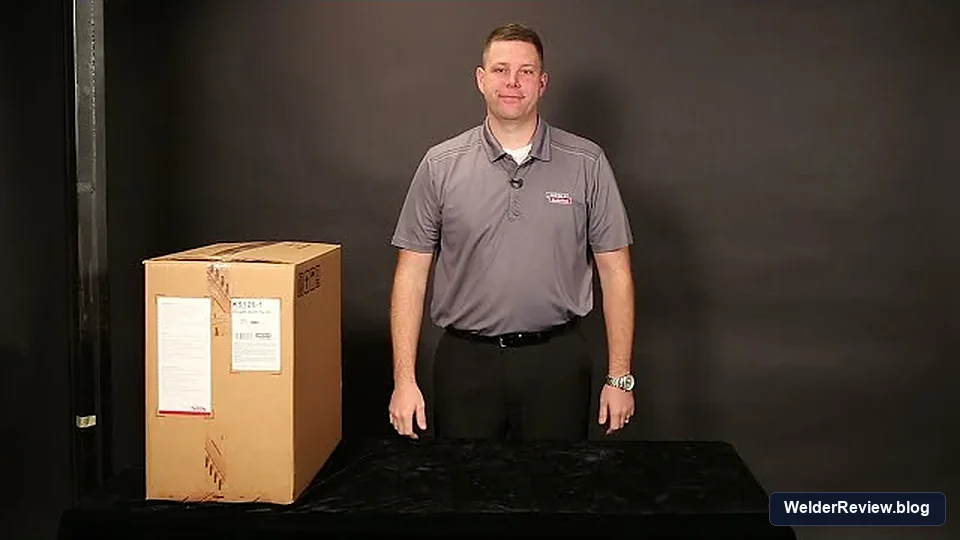
Video Review: Unboxing The Tig 200 Square Wave Welder By Lincoln Electric
Thermal Efficiency and Operating Noise Metrics
Thermal management relies on a smart fan system that activates only when internal temperatures rise. This engineering choice significantly reduces background noise during idle periods in the shop.
The twenty-five percent duty cycle at maximum output satisfies standard maintenance welding tasks. Fabricators should monitor high-amperage runs to prevent unexpected thermal overload shutdowns during production work.
Active fan-as-needed cooling significantly reduces dust ingestion during idle periods, measuring a modest 62 decibels under full load to maintain a comfortable acoustic environment inside enclosed structural fabrication bays and workshops.
Thermal overload protection activates seamlessly if duty cycle limits are exceeded, preventing premature transformer degradation while maintaining strict compliance with NEMA standards for industrial welding machine thermal endurance and safety.
- Variable-speed cooling fan minimizes ambient shop noise
- Effective internal heat sinks dissipate high thermal loads
- Built-in thermal protection safeguards internal power transistors
Interface Design and Initial Parameter Setup
The digital interface combines a clear LED screen with a simple push-and-turn control dial. Operators can navigate through pre-flow, post-flow, and pulse settings without deciphering confusing multi-layer menus.
Novice welders benefit from guided parameter limits that prevent impossible settings. Experienced professionals appreciate the ability to override defaults for specialized aerospace or automotive fabrication tasks.
The front control panel features a clear digital display surrounded by tactile rotary encoders, allowing precise amperage adjustments even when operators wear heavy-duty TIG welding gloves during cold weather fabrication tasks.
Advanced users can quickly access AC balance and frequency controls via intuitive menu layouts, streamlining setup times when transitioning between magnesium castings and heavy structural aluminum weldments on tight commercial production schedules.
- Bright digital display remains readable under bright lighting
- Simplified menu navigation accelerates workflow adjustments
- Memory storage recalls frequently used custom weld schedules
Routine Maintenance and Long-Term Durability
Maintaining this inverter requires periodic compressed air cleaning to clear conductive dust from internal heat sinks. Keeping internal components clean prevents electrical tracking and premature component failure.
Inspect the torch power cable and gas hoses regularly for signs of abrasive wear. Replacing consumable collets and ceramic cups on schedule ensures consistent shielding gas coverage.
Regular upkeep requires periodic compressed air purging of internal dust accumulations, particularly around the main power transistor heat sinks to ensure optimal thermal transfer during continuous high-amperage aluminum fabrication shifts.
Inspecting the internal gas solenoid and power terminal connections prevents shielding gas leaks and voltage drops, safeguarding the machine against premature component failure throughout years of demanding professional fabrication shop use.
- Routine internal cleaning prevents dust accumulation issues
- Durable terminal blocks resist corrosion over extended service
- Straightforward consumable replacement minimizes operational downtime
Comprehensive Value and Final Buyer Verdict
Before making a purchase, examine our multi-process analysis to understand how dedicated AC/DC performance contrasts with versatile multi-process alternatives during demanding aluminum fabrication work.
While the upfront investment and accessory requirements demand consideration, the reliable arc control justifies the cost. Serious fabricators will find this machine to be a dependable workshop cornerstone.
Delivering professional-grade arc characteristics, this machine provides exceptional utility for fabrication shops seeking reliable AC/DC performance without investing in heavy three-phase industrial infrastructure or complex water-cooled TIG torch systems.
Backed by a comprehensive Lincoln warranty, the unit represents a solid long-term investment for professional contractors, motorsports fabricators, and technical training facilities demanding dependable everyday performance on diverse alloys.
- Bridges hobbyist budgets with professional performance standards
- Dual-voltage flexibility adapts to changing workshop locations
- Strong resale value reflects dependable brand reputation
Frequently Asked Questions
Can this welder operate on standard household electrical outlets?
Yes, the unit features dual-voltage capability allowing connection to standard 120V circuits with lower amperage limits. For maximum output capacity, utilizing a dedicated 230V input connection is required.
Does this machine include high-frequency arc starting for TIG welding?
It utilizes advanced high-frequency arc ignition for non-contact tungsten starting. This feature eliminates tungsten contamination and ensures exceptionally clean welds on sensitive materials.
What is the maximum thickness of aluminum this machine can weld?
The machine effectively welds aluminum up to three-eighths of an inch thick when operating on 230V input power. Proper joint preparation and pre-heating help achieve full penetration.
Is a TIG foot pedal included with the standard machine package?
The standard package varies by distributor, but many configurations require purchasing the foot pedal separately. Operators should verify accessory inclusions before finalizing their equipment purchase order.
How does the square wave output improve aluminum welding results?
Square wave technology provides rapid current switching that maximizes oxide cleaning action. This engineering design creates a stable arc cone and superior weld bead aesthetics.