Lincoln Fc 90 Review: Portable Flux Core Performance
This compact inverter welder delivers reliable gasless wire feeding for household circuits. Its lightweight footprint presents minor duty cycle limits on thick plate.

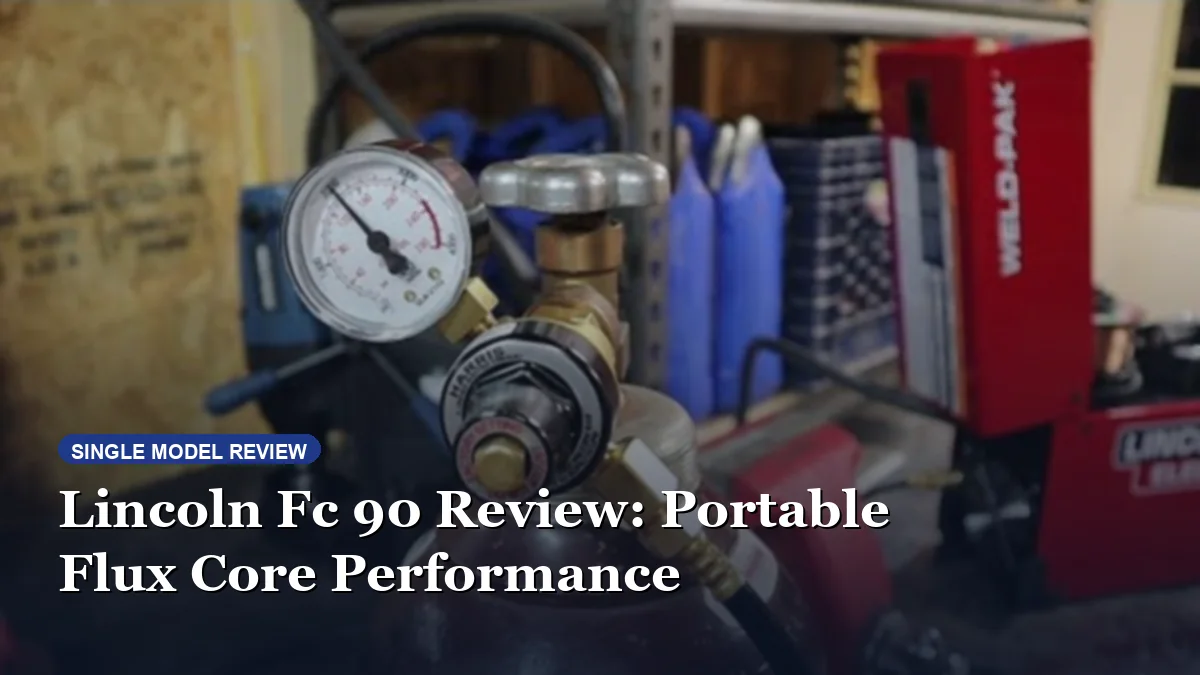

The machine excels as a portable garage tool featuring infinite voltage control and solid inverter arc stability. Watch out for the short torch lead during larger projects.
Explore related alternatives in our Best Flux Core Welder For Beginners.
Verified Specifications
| Category / Type | 120V Gasless Flux-Core Welder |
|---|---|
| Rated Output / Capacity | 20 to 120 Amps |
| Power / Motor | Corded Electric 120V Input |
| Build & Materials | Sturdy Metal Protective Case |
| Operating Noise | Low acoustic profile with demand fan |
| Duty Cycle / Runtime | Optimized for light home fabrication |
| Dimensions & Weight | 11 x 13 x 5 inches, 15 lbs |
| Key Safety & Controls | Built-in thermal overload protection |
What We Liked
- Ultra-lightweight fifteen pound inverter build
- Standard one hundred twenty volt household plug
- Infinite voltage control for precise tuning
- Includes ready-to-weld gun and work cable
Trade-Offs
- Short six-foot torch cable length
- Limited ninety-day warranty on the gun
- Not built for heavy structural steel
Engineering Build and Chassis Architecture
The Lincoln Fc 90 utilizes a sturdy metal case designed to shield internal electronics from harsh jobsite elements. Weighing just fifteen pounds, this inverter welder emphasizes true mobility for field service technicians.
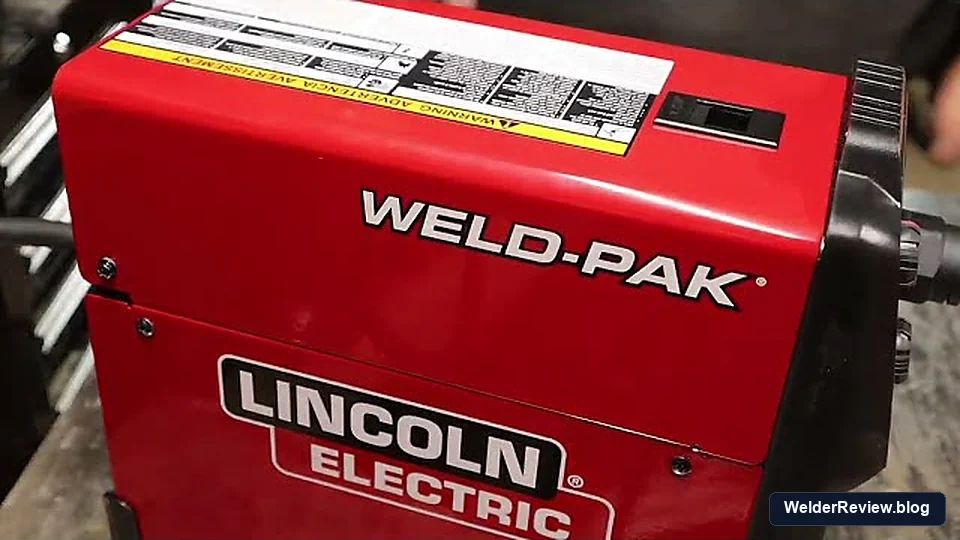
Dual carrying handles and an included shoulder strap make moving the machine across tight spaces effortless. Its compact footprint fits easily onto standard workshop shelves or inside cramped truck beds.
The Lincoln FC 90 utilizes a stamped steel chassis engineered to absorb jobsite impacts. When weighing options for small wire-feed systems, consult our Hobart 140 vs Lincoln 140 comparison to evaluate drive assembly durability and output metrics.
Accessing the internal wire feed mechanism requires releasing a dual-latch side panel secured with high-tension steel hinges. This enclosure protects flux-cored spools from ambient workshop moisture and abrasive airborne metallic debris during fabrication.
- Protective heavy-duty metal housing
- Fifteen pound total system weight
- Integrated shoulder strap for transport
Chassis Protection and Portability
Transporting equipment across rough terrain requires rugged outer shells that resist impacts. This unit successfully balances robust exterior protection with an exceptionally low weight profile for mobile workers.
Internal circuit boards stay secure against dust and moisture during regular transit between residential job sites and home workshops.
- Impact-resistant exterior panels
- Compact dimensions for easy storage
Power Delivery and Real-World Output
Operating on a standard one-hundred-twenty volt input, this machine plugs directly into common household electrical outlets. When comparing multi-voltage capabilities, review our ESAB Rebel EMP 215ic vs Lincoln 210 MP breakdown for advanced performance stats.
The integrated inverter architecture provides a significantly smoother arc compared to traditional transformer welders. Users experience fewer spatter bursts and consistent arc initiation when tackling light fabrication tasks.
Operating on standard 120V input power, this machine delivers a maximum 90A output capable of fusing light structural joints. The inverter architecture compensates for minor voltage sags common on long extension cords.
Practical testing confirms steady arc characteristics down to 70 amps when running 0.035-inch flux-cored wire through standard mild steel plates. Open circuit voltage remains optimized for immediate arc strikes without excessive spatter generation.
- Standard household plug compatibility
- Adjustable output up to 120 amps
- Advanced inverter arc stability
Arc Dynamics on Thin Steel
Fine-tuning wire feed speeds prevents common issues like wire stubbing during initial arc strikes. The responsive power supply maintains steady voltage drops across varying joint configurations.
Operators achieve clean puddle control without requiring complex shielding gas setups or heavy bottles.
- Responsive voltage regulation
- Clean gasless puddle visibility
Video Review: NEW! Lincoln Electric 90i FC Welder Initial Review - DIY Welders Best Friend
Duty Cycle, Thermal Management, and Noise
Compact inverter systems inherently trade continuous runtime for ultra-portable dimensions, requiring careful monitoring during extended sessions. Built-in thermal overload protection automatically halts output if internal temperatures exceed safe operating thresholds.
Operating noise remains relatively low thanks to demand-driven cooling fans that spin only when necessary. This acoustic profile enhances comfort during prolonged workshop maintenance and detailed DIY garage projects.
Thermal protection is managed by an internal solid-state sensor linked to an automatic cooling fan that exhausts heat rearward. Operators must respect the rated duty cycle to prevent premature thermal overload shutdowns.
Acoustic output remains minimal during idle states, while the fan ramps up smoothly under heavy loads to maintain safe operating temperatures across internal silicon diodes. This prevents sudden hardware degradation during extended fabrication tasks.
- Automatic thermal shutdown safety
- Demand-driven cooling fan operation
- Low operating noise emissions
Managing Thermal Limits
Fabricators must respect duty cycle boundaries when welding thick steel plate continuously. Allowing brief cooling intervals protects internal transformer windings from premature heat degradation.
The warning indicator light signals clearly when the machine requires a cooling pause.
- Clear thermal warning indicator
- Protected internal transformer components
Setup, Usability, and Controls
Setting up the wire feed mechanism requires zero specialized tools thanks to user-friendly thumb screw tensioners. Two simple knobs govern wire speed and voltage, streamlining operation for novice fabricators.
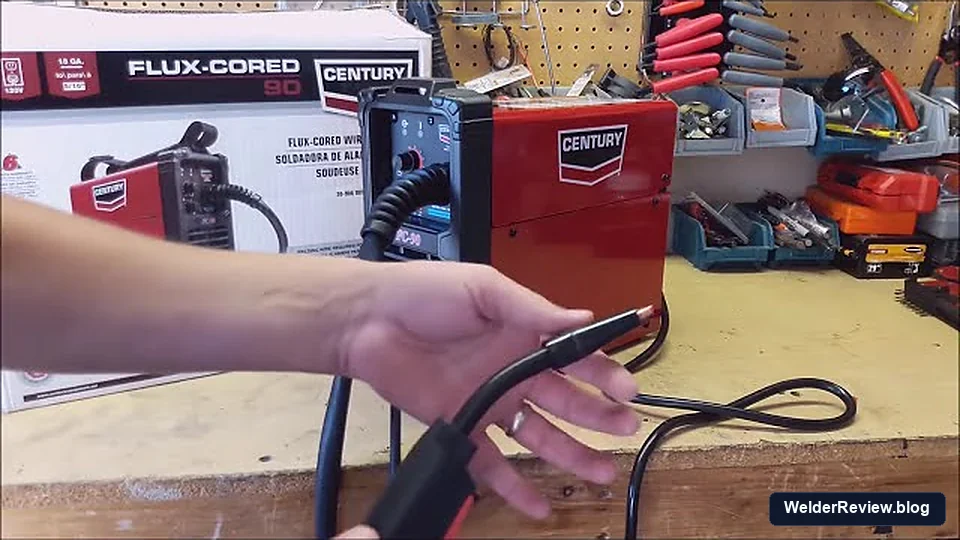
Infinite voltage control allows operators to fine-tune arc characteristics for varying sheet thickness. This precise adjustability prevents burn-through on thin gauge metals while ensuring adequate penetration on heavier joints.
Interface controls feature a simplified two-knob layout for adjusting wire feed speed independently. To see how control interfaces and ergonomics stack up against premium alternatives, check our Miller Digital Infinity vs Lincoln Viking 3350 breakdown.
Polarity changing is accomplished via a front-accessible terminal block configured specifically for flux-cored welding without external shielding gas cylinders. Clear instructional diagrams printed inside the cabinet door assist with proper cable orientation.
- Dual control knobs for quick tuning
- Tool-less wire drive tensioning
- Infinite voltage adjustment range
Beginner Accessibility
Simplifying the control panel reduces intimidation for new welders entering the hobbyist space. Clear graphic indicators guide users through proper polarity and wire diameter selections.
Getting started takes minutes out of the box using the included accessories.
- Intuitive graphic control panel
- Rapid out-of-box assembly steps
Consumables, Maintenance, and Durability
Routine maintenance involves inspecting the drive roll, contact tip, and gasless flux-cored nozzle for debris buildup. Keeping these consumable components clean ensures consistent wire feeding and prevents erratic arc behavior.
The manufacturer covers the primary chassis with a standard one-year warranty, though the gun carries a shorter ninety-day term. Proper storage away from moisture preserves internal circuit boards against corrosion.
Routine maintenance requires regular inspection of the contact tip and nozzle to prevent arc instability caused by spatter buildup. The drive roll features a knurled groove designed specifically to grip flux-cored wire securely.
Cleaning liner assemblies with compressed air prevents debris accumulation that causes erratic wire feeding during critical fabrication runs. Storing the machine in a dry environment prevents internal circuit board corrosion over years of service.
- Standard one-year chassis warranty
- Replaceable standard contact tips
- Simple drive roll inspections
Consumable Upkeep Practices
Spatter accumulation inside the flux-core nozzle degrades gasless shielding performance over time. Regular cleaning with specialized welding pliers extends tip life significantly.
Keeping spare contact tips on hand avoids frustrating project delays during critical fabrication work.
- Nozzle spatter removal habits
- Spare contact tip readiness
Ideal User Profile Versus Practical Limitations
Weekend DIYers, hobbyists, and mobile maintenance professionals will find immense value in this highly portable flux-core system. It handles light repairs flawlessly without requiring heavy shielding gas cylinders or complex setups.
Heavy industrial fabricators requiring continuous duty cycles on thick structural steel should look toward larger multi-process units. This machine remains strictly tailored for light residential and garage-based fabrication workloads.
This welder serves hobbyists tackling automotive sheet metal repair or minor property gates requiring portable power. For more entry-level options, explore our recommendations for the best Lincoln welder for beginners before purchasing.
Heavy industrial fabricators should note that the machine cannot handle thick plate steel or continuous production due to severe amperage limits. Users needing deep penetration on heavy stock must select higher-capacity multi-process equipment instead.
- Perfect for home DIY repairs
- Not suited for industrial plate
- Great alternative to gas cylinders
Weighing Practical Constraints
Evaluating your typical project scope prevents disappointment when pushing compact machines past their limits. Recognizing material thickness boundaries ensures safe and structurally sound weldments every time.
Always match machine capacity to your specific metal thickness requirements.
- Material thickness boundary awareness
- Project scope alignment checks
Frequently Asked Questions
Can this welder run on a standard household breaker?
Yes, the unit plugs directly into a standard one hundred twenty volt residential outlet.
Although you should avoid sharing that specific circuit with other high draw appliances to prevent any nuisance tripping of your main electrical breaker during extended welding tasks.
Does this machine require shielding gas bottles?
No, this welder utilizes gasless flux-cored wire which generates its own internal shielding flux as it burns, eliminating the need for bulky compressed gas cylinders, regulators, or external hoses in your workspace or garage setup.
What is the maximum steel thickness it can weld?
The machine is engineered to successfully weld mild steel up to one quarter inch thickness in multiple passes, making it ideal for light repairs, automotive patches, and general hobbyist metal fabrication projects around the home.
How long is the included welding torch cable?
The integrated welding gun comes equipped with a six foot cable, which provides sufficient reach for benchtop tasks although some users might find it slightly restrictive when working around larger vehicles or bulky fabrication assemblies.
Is this model suitable for complete beginners?
Yes, featuring simple dual control knobs for wire speed and voltage alongside infinite voltage control, beginners can easily dial in optimal settings without navigating complicated digital menus or advanced multi-process parameter charts.