Lincoln Electric Ranger 225 Review
Engine-driven auxiliary power meets reliable multi-process output. This rugged machine anchors remote service trucks.

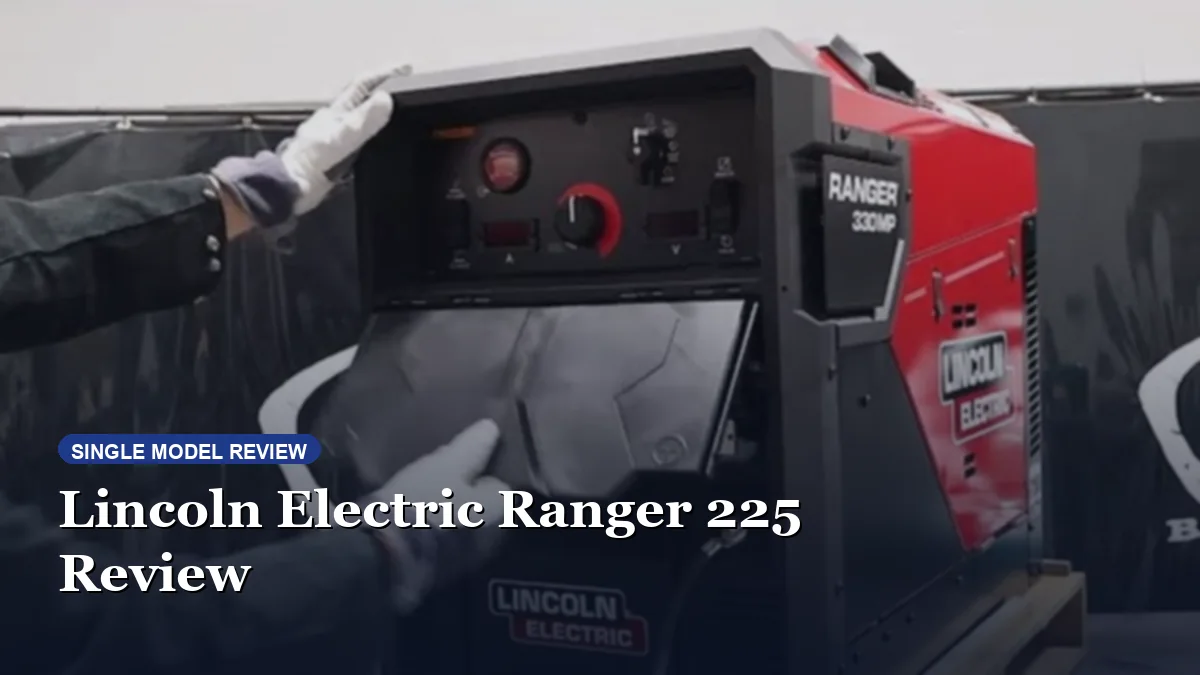

The Ranger 225 delivers robust auxiliary power and dependable arc stability. It remains a staple choice for mobile service trucks despite its larger physical footprint.
Explore related alternatives in our Best Lincoln Welder For Beginners.
Verified Specifications
| Category / Type | Engine-Driven Welder and Generator |
|---|---|
| Rated Output / Capacity | 225A DC CC Stick / CV Wire |
| Power / Motor | Kohler Gas Engine, 23 HP |
| Auxiliary Power | 10,000 Watts Peak / 9,000 Watts Continuous |
| Welding Processes | Stick, TIG, MIG, Flux-Core |
| Current Range | 50 to 225 Amps DC |
| Dimensions & Weight | 42.3 x 25.0 x 30.0 inches, 515 lbs |
| Fuel Capacity | 12 Gallons |
What We Liked
- Combined 10kW auxiliary generator capacity for jobsite tools
- Smooth DC multi-process arc characteristics for structural steel
- Large twelve-gallon fuel tank supports extended runtime shifts
- Robust protective steel enclosure withstands harsh field conditions
- Reliable Kohler commercial engine integration for easy starting
Trade-Offs
- Heavy overall unit weight requires a dedicated trailer or truck bed
- Higher operational noise levels demand ear protection during close work
- Carbureted engine requires seasonal maintenance and clean fuel storage
- Lacks advanced digital waveform shaping found in newer inverter models
Chassis Construction and Field Protective Design
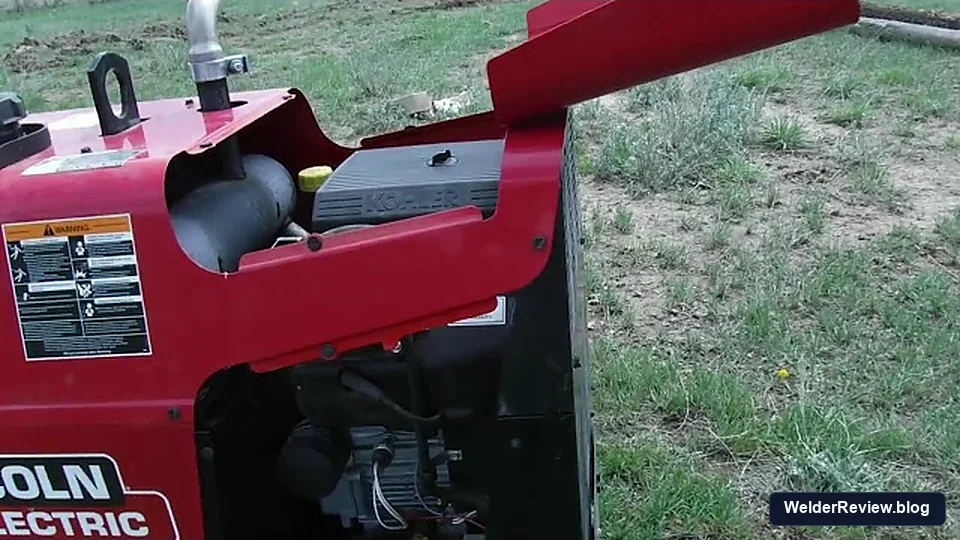
Constructed from heavy-gauge formed steel panels, this machine resists severe jobsite impacts. The protective cage shields internal alternators from falling debris and weather exposure.
Powder-coat finishes prevent premature corrosion in wet environments. Reviewing options like our Hobart 140 vs Lincoln 140 comparison helps clarify machine specifications before selecting a portable field unit.
Service access doors utilize heavy-duty latches that prevent rattling during transit over rough terrain. This thoughtful engineering safeguards vital electrical components against dust infiltration.
Built with heavy-gauge steel housing, this chassis withstands rigorous jobsite abuse and corrosive outdoor environments. The protective roll cage features 1.25-inch tubular steel to shield vital internal mechanical components from accidental impact damage.
Weather resistance is achieved through powder-coated exterior panels designed to resist UV degradation and salt spray corrosion. Rubber vibration isolators are strategically mounted underneath the engine tray to minimize structural fatigue during transport.
Lifting points are engineered for balanced overhead rigging using a single-point lift bail welded securely to the mainframe. This layout complies with ANSI/OSHA standards for safe mechanical rigging on high-rise construction sites and remote pipeline spreads.
- Heavy-gauge steel protective enclosure
- Corrosion-resistant exterior powder coat
- Integrated central lifting bail
- Secure service access latches
Enclosure Layout and Vibration Dampening
Internal rubber motor mounts isolate engine vibrations from the structural steel skid. This dampening system reduces structural fatigue and protects sensitive copper windings.
Ventilation louvers direct airflow efficiently across hot exhaust manifolds without drawing in excessive abrasive dirt particles from unpaved job sites.
- Commercial rubber vibration isolators
- Optimized cooling louver geometry
Engine Performance and Power Generation Specs
Powered by a robust Kohler engine, this unit delivers dependable horsepower under heavy loads. Evaluating options in our Miller Digital Infinity vs Lincoln Viking 3350 breakdown helps compare protective gear alongside heavy equipment.
The brushless alternator design reduces required maintenance by eliminating rotating diodes and brushes. Operators experience clean power delivery for sensitive auxiliary electronics.
Fuel efficiency remains competitive within the service truck category during combined welding and auxiliary draws. The large tank capacity minimizes costly trips for refueling.
Powered by a reliable Kohler gasoline engine, the unit delivers consistent horsepower for demanding auxiliary power and welding loads. Displacement measures 23 cubic inches, ensuring ample torque output when operating under sudden electrical surges.
The brushless alternator design eliminates slip rings and carbon brushes, drastically reducing routine maintenance requirements. Auxiliary power output reaches 10,500 watts peak, providing enough clean electricity to run heavy-duty grinders and air compressors simultaneously.
Fuel tank capacity holds 8.5 gallons of gasoline, supporting extended working shifts without frequent refueling interruptions. Operating at a standard 3600 RPM, the mechanical governor maintains precise frequency stability under fluctuating auxiliary electrical loads.
- Kohler twin-cylinder gasoline engine
- Brushless alternator configuration
- Mechanical engine speed governor
- Twelve-gallon fuel capacity
Auxiliary Power Delivery Metrics
Supplying ten thousand peak watts allows contractors to run heavy grinders and lights simultaneously. Clean 60Hz sinusoidal output protects connected jobsite tools from voltage spikes.
Dedicated circuit breakers safeguard auxiliary receptacles against accidental overloads during intense construction shifts.
- 10,000 peak auxiliary watts
- Protected 120V and 240V receptacles
Video Review: My Engine Drive Welder, Lincoln Ranger 225 Review!!!
Arc Characteristics Across Multiple Welding Processes
The DC output delivers exceptional arc stability when running cellulosic and low-hydrogen electrodes. Operators notice minimal spatter and smooth puddle wetting across various joint configurations.
Fine-tuning the coarse output selector and fine current dial allows precise heat input control. This versatility accommodates thin sheet metal fabrication and heavy plate repairs.
Flux-cored wire processes benefit from constant voltage output modes that maintain consistent arc lengths. The machine handles out-of-position structural welding tasks with dependable reliability.
Stick welding performance benefits from a smooth DC arc that initiates quickly and maintains stability on rusty steel. Dig control is factory-set to provide optimal arc force, preventing electrode sticking during out-of-position pipeline fabrication tasks.
Flux-cored wire feeding operates smoothly when paired with a compatible voltage-sensing wire feeder connected to the output terminals. The constant voltage mode delivers consistent arc voltage, ensuring uniform penetration profiles across structural steel plates.
TIG welding capabilities utilize scratch-start ignition, requiring careful operator technique to avoid tungsten contamination on thin materials. Output current adjusts smoothly down to 50 amps, allowing precise heat input control for delicate stainless steel assemblies.
- Stable DC stick and wire arcs
- Precise fine current control dial
- Constant voltage wire capability
- Low spatter transfer dynamics
Stick and TIG Performance Nuances
Scratch-start TIG operations perform reliably for stainless steel maintenance piping and tubing repairs. The smooth arc avoids tungsten inclusions during critical root passes.
Arc force control helps prevent electrode sticking when running deep into tight bevel joints.
- Reliable scratch-start TIG mode
- Adjustable arc force control
Thermal Management and Operational Duty Cycles
Engineered for industrial workloads, internal copper windings withstand elevated temperatures without insulation breakdown. Reading our ESAB Rebel EMP 215ic vs Lincoln 210 MP comparison highlights key machine specifications for fabrication shops.
Rated at a substantial duty cycle, the machine supports continuous rod burning on structural projects. Thermal overload protection automatically trips if ambient temperatures exceed safe thresholds.
Effective cooling geometry extends component lifespan during high-output generator usage under heavy sun exposure. Operators can rely on consistent performance throughout long summer shifts.
Efficient airflow dynamics pull cooling air across critical alternator windings and rectifier diodes during continuous high-amperage operation. Thermal overload protection automatically trips the system if internal temperatures exceed safe operating thresholds during heavy loads.
Rated output delivers 225 amps at 25 volts using a standard 100% duty cycle for routine maintenance welding applications. This robust thermal capacity prevents premature equipment shutdowns when fabrication schedules demand continuous, uninterrupted operator productivity.
Ambient temperature ratings allow reliable functioning up to 104 degrees Fahrenheit without suffering from significant output derating issues. Operators should clean cooling fins regularly to maintain maximum thermal transfer efficiency in dusty industrial environments.
- High-temperature copper winding insulation
- Continuous-rated thermal performance
- Automated thermal overload protection
- Forced-air cooling fan system
Hot Climate Operational Limits
Operating in high ambient desert temperatures requires monitoring engine oil viscosity and cleanliness. Maintaining clear intake louvers ensures unobstructed airflow for internal cooling loops.
Proper clearance around the service truck bed prevents hot exhaust recirculation.
- Ambient temperature monitoring
- Clear ventilation clearance rules
Control Panel Layout and Field Ergonomics
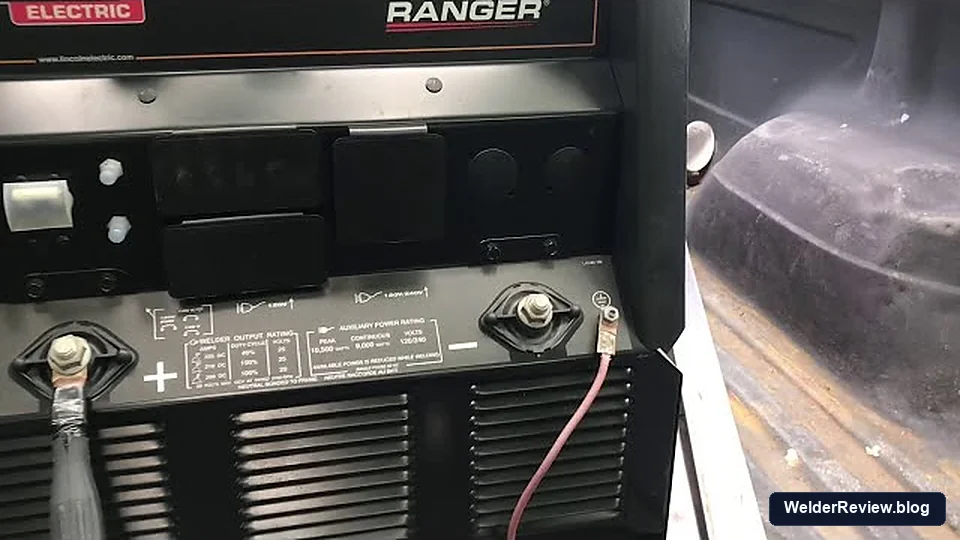
Recessed analog control dials protect fragile knobs from accidental impacts by passing equipment. Clearly labeled output terminals simplify cable connections in low-light morning conditions.
Engine start switches and hour meters feature weather-resistant rubber boots to block moisture ingress. Grouped instrumentation allows operators to monitor fuel levels and run times instantly.
The intuitive layout reduces operator training time for new crew members joining the team. Logical grouping separates high-voltage auxiliary receptacles from welding output studs.
Recessed circuit breakers and output studs protect delicate electrical connections from accidental physical damage caused by swinging rigging cables. Color-coded output terminals simplify polarity changes when switching between different electrode types on the job.
Analog output dials provide precise amperage adjustments even when the operator is wearing thick leather welding gloves. The digital meter displays actual voltage and amperage outputs clearly, ensuring compliance with exact welding procedure specifications.
Engine start controls and choke levers are grouped logically on the front fascia for intuitive cold-weather startup procedures. An integrated hour meter tracks operational run time accurately, facilitating adherence to scheduled engine maintenance intervals.
- Recessed analog control dials
- Weather-sealed instrument gauges
- Isolated output terminal studs
- Clear functional panel labeling
Night Operation Visibility
Panel readability during dark shifts relies on external service truck lighting or flashlights. The matte gray finish minimizes harsh glare from overhead jobsite floodlights.
Ergonomic knob spacing permits gloved hand adjustments.
- Glare-resistant panel finish
- Glove-friendly control knobs
Routine Maintenance and Long-Term Durability
Routine engine service points including oil filters and spark plugs feature unhindered accessibility. Quick-drain oil hoses eliminate messy spills onto the service truck bed floor.
Air filter elements require regular inspection and cleaning when operating in dusty agricultural settings. Following strict maintenance schedules prevents premature engine wear and costly downtime.
Long-term durability depends on using clean fuel and high-grade synthetic engine oils. The robust manufacturing pedigree ensures years of dependable service for mobile contractors.
Engine oil changes are recommended every 100 hours of operation using high-detergent multi-weight oil to protect internal components. The accessible oil drain valve allows clean fluid evacuation without spilling hazardous waste onto the painted frame members.
Air filtration utilizes a heavy-duty dual-stage element designed to trap fine airborne dust particles in harsh agricultural settings. Replacing the primary filter element requires no tools, minimizing equipment downtime during routine daily pre-start inspections.
Spark plug inspections and fuel filter replacements should be performed bi-annually to ensure reliable ignition and optimal fuel efficiency. Battery terminals require periodic cleaning and protective grease application to prevent corrosion-induced electrical failures in damp climates.
- Accessible engine service filters
- Convenient oil drain hoses
- Replaceable air filter elements
- Durable industrial component build
Carburetor and Fuel System Care
Draining the carburetor bowl before long storage intervals prevents fuel varnish accumulation. Using stabilizing additives protects internal jets during seasonal off-periods.
Fuel line inspections prevent hazardous leaks.
- Carburetor bowl drain protocol
- Fuel stabilizer recommendations
Comprehensive Verdict and Ideal Operator Profile
This machine excels as a dependable powerhouse for mobile welding contractors and remote repair trucks. Its balanced combination of auxiliary power and arc stability justifies the heavy investment.
While bulk and weight demand a dedicated vehicle, the performance rewards professional users daily. Independent fabricators needing reliable off-grid capabilities will find tremendous value here.
Avoid this model if your work is strictly indoor shop-based with fixed utility power. Otherwise, it remains a premier choice for demanding field service applications.
Field contractors requiring a dependable multi-process machine will find exceptional value here. Reviewing our best Lincoln welder for beginners guide also offers insight into entry-level equipment before scaling up to engine drives.
Structural steel erectors appreciate the dependable arc characteristics and heavy-duty construction built to withstand daily jobsite transportation stress. The combination of auxiliary wattage and welding output satisfies demanding remote jobsite requirements efficiently.
Maintenance departments and independent service technicians benefit from simplified upkeep requirements and proven mechanical reliability across seasons. Investing in this machine guarantees years of dependable field service when maintained according to manuals.
- Ideal for mobile service trucks
- Exceptional off-grid utility power
- Heavy weight requires vehicle mount
- Built for professional contractors
Final Purchasing Recommendation
Assess your vehicle payload capacity and daily power needs before making a final purchase decision. Investing in proper mounting hardware ensures safe transit across rough terrain.
Regular preventative maintenance guarantees decades of reliable operation.
- Vehicle payload assessment
- Proper mounting hardware check
Frequently Asked Questions
Can the Ranger 225 run both welding tools and auxiliary appliances simultaneously?
Yes, the robust generator design allows you to draw auxiliary power while welding. However, heavy auxiliary loads may cause slight arc fluctuations during high-amperage welding tasks.
What type of engine powers this machine?
This welder utilizes a reliable commercial Kohler twin-cylinder gasoline engine. It delivers dependable horsepower for both generator output and welding arc stability.
How heavy is the unit and can it be loaded manually?
Weighing over five hundred pounds, manual loading is unsafe without mechanical assistance. It requires a dedicated service truck bed, utility trailer, or integrated crane system.
What welding processes are supported out of the box?
The machine natively supports DC stick welding, scratch-start TIG, and constant voltage wire processes. Operators can easily tackle structural steel fabrication and general repairs.
How often should engine oil and filters be replaced?
Routine oil and filter changes are recommended every one hundred hours of operation. Operating in dusty conditions requires more frequent air filter inspections.