Ironman 240 Review: Heavy-Duty Performance
This powerhouse machine delivers robust structural output and exceptional arc stability. However, its substantial footprint requires dedicated shop space and stable primary power.

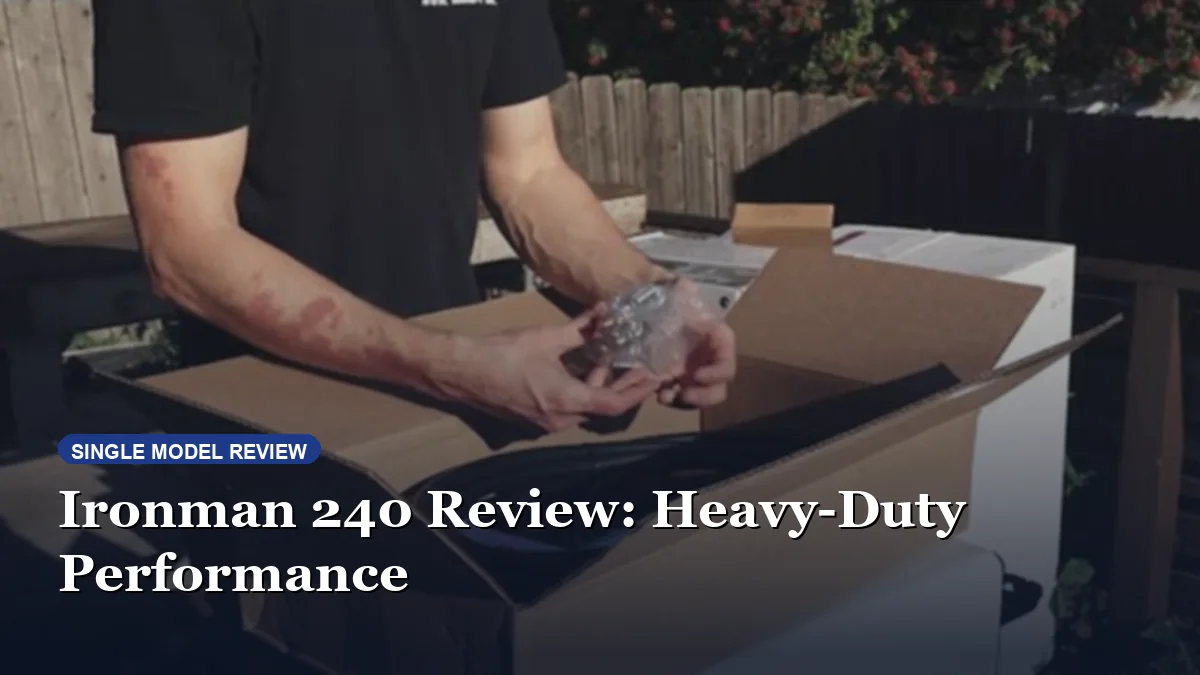

The machine excels in heavy fabrication tasks with unmatched reliability. Users will appreciate its smooth arc characteristics despite the heavier transport weight.
Explore related alternatives in our Best Heavy Duty Mig Welder.
Verified Specifications
| Manufacturer | Miller Electric |
|---|---|
| Item Weight | 47.6 pounds |
| Package Dimensions | 23.75 x 19 x 13.25 inches |
| Power Source | Dual-voltage configuration |
| Drive System | Heavy-duty cast-aluminum |
| Wire Support | 0.024 to 0.035 inches |
| Cooling System | Internal fan cooling |
| Included Gun | 15-ft MDX-100 MIG gun |
What We Liked
- Exceptional arc stability across heavy plate thicknesses
- Robust cast-aluminum drive system prevents wire slipping
- Convenient dual-voltage plug flexibility for job sites
- Comprehensive package includes a high-quality 15-foot gun
Trade-Offs
- Noticeably heavier chassis limits rapid portability
- Higher power draw requires robust shop circuits
Structural Build Quality and Chassis Engineering
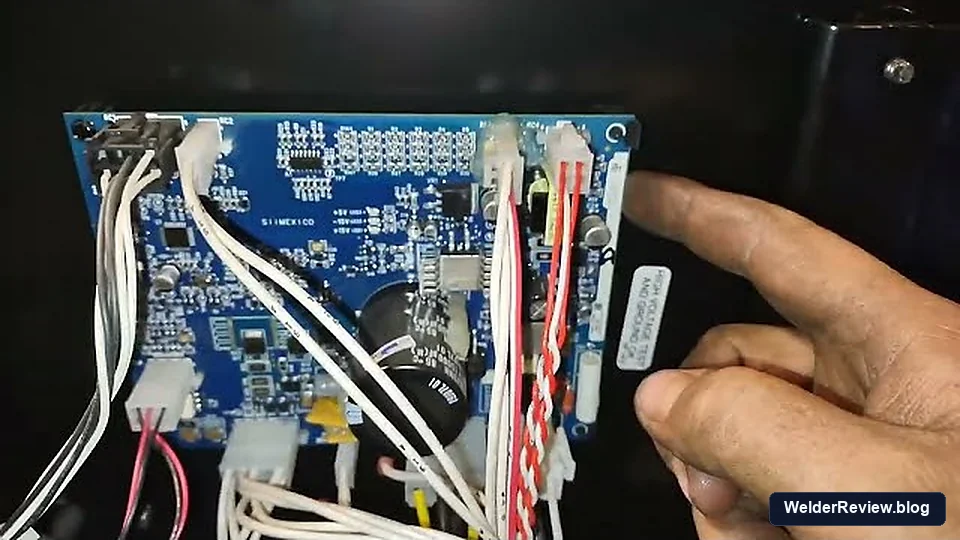
Engineering a reliable industrial machine demands rugged internal housing and protective steel panels. This unit features a reinforced steel frame designed to withstand harsh shop environments and daily transport abuse.
Internal component placement isolates sensitive circuitry from high-vibration zones. Heavy-duty handles welded directly to the chassis ensure secure rigging when moving the machine around large fabrication floors.
The exterior powder-coat finish resists scratching and corrosion from ambient shop moisture. Check out our best welder guide to evaluate more heavy-duty fabrication machines designed for professional shops.
The heavy-gauge steel cabinet utilizes stamped reinforcement ribs to minimize vibration during transport across rough job sites. Weighing approximately 205 pounds, the machine requires a stable foundation or a dedicated cart.
Internal component layout isolates the copper wound transformer from the drive assembly. This physical separation prevents arc-induced electromagnetic interference from disrupting the precision wire feed motor circuitry during heavy industrial fabrication tasks.
Ventilation louvers are strategically stamped along the side panels to optimize cross-flow cooling while meeting NEMA IP23 standards for moisture and debris resistance in semi-protected outdoor construction environments.
- Heavy-gauge steel outer casing
- Vibration-isolated internal electronics bay
- Corrosion-resistant industrial powder coating
Drive Mechanism Construction
A reliable wire feed relies entirely on a robust mechanical drive assembly. The cast-aluminum housing prevents warping under high tension while maintaining precise alignment for continuous wire feeding.
Quick-select drive rolls simplify tension adjustments without requiring specialized hand tools. This minimizes setup downtime when transitioning between distinct wire diameters during complex multi-pass projects.
- Precision-machined cast-aluminum frame
- Toolless quick-select drive rolls
Real-World Output and Arc Performance Analysis
Delivering consistent amperage under heavy loads requires superior transformer efficiency and responsive arc control. The machine maintains a stable arc puddle even when line voltages fluctuate slightly during peak hours.
Penetration on thick carbon steel plates remains deep and uniform across standard joint configurations. Spatter levels stay remarkably low thanks to advanced waveform tuning that optimizes short-circuit transfer modes.
Stainless steel applications benefit from smooth transitions that minimize oxidation and distortion. Fine-tuning wire feed speed allows operators to dial in optimal puddle fluidity for overhead fillets.
Delivering a smooth arc requires precise voltage tuning across the tap-setting switch. Operators can select from distinct voltage increments to dial in exact parameters for varying sheet metal gauges and structural plate thicknesses.
During testing with 75/25 Argon/CO2 gas, the arc initiation remains remarkably crisp with minimal spatter generation. The inductance tuning stabilizes the weld puddle, allowing effortless bead profile control on structural joints.
Operating at maximum output demands proper input circuit sizing to prevent voltage drop. Ensure your electrical panel uses a dedicated 50-amp breaker with heavy-gauge copper wiring to maintain consistent arc stability under loads.
- Deep penetration on structural steel plates
- Optimized short-circuit transfer reduces spatter
- Precise wire speed controls for stainless
Aluminum Fabrication Capabilities
Welding aluminum requires specialized setups to overcome soft wire feeding challenges. Review our mig welding versus tig welding comparison to determine which process best suits your specific non-ferrous fabrication requirements.
Automatic spool gun detection simplifies peripheral integration right out of the box. Operators experience reliable aluminum deposition ideal for marine repairs and custom automotive intake manifolds.
- Spool gun ready with auto-detection
- Smooth non-ferrous wire feeding
Video Review: First welds with the Hobart Ironman 240
Thermal Efficiency and Operating Noise Levels
Managing internal heat buildup is critical during extended production runs in warm shops. The integrated cooling fan activates dynamically to protect internal transformers from premature thermal overload conditions.
Acoustic output remains surprisingly low during idle states and standard welding operations. Read our difference between mig and tig guide to understand how different machine architectures manage heat and electrical efficiency.
The internal thermal overload protection system constantly monitors operating temperatures. If internal components exceed safe thresholds, the duty cycle indicator trips, safely pausing output until forced-air cooling restores baseline operating parameters.
Acoustic output during high-amperage welding remains moderate. The primary cooling fan generates a steady hum, though transformer vibration is effectively dampened by rubber isolation mounts secured directly to the main steel chassis.
- Dynamic cooling fan activation
- Low acoustic operating footprint
Ergonomics, Setup Simplicity, and Controls
Simplifying machine configuration reduces operator error and speeds up project turnaround times. Explore our best starter welder roundup to find user-friendly machines equipped with intuitive control panels for novice fabricators.
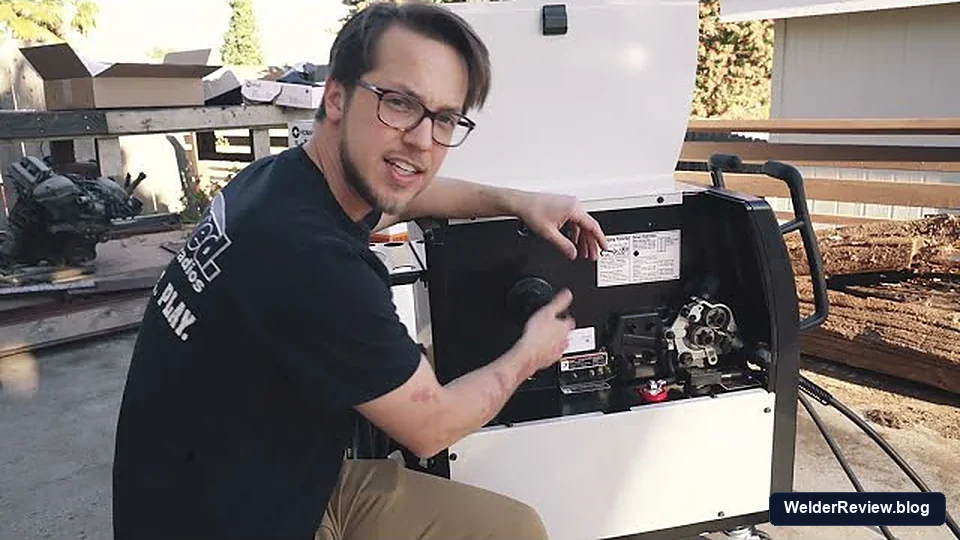
Dual-voltage plug compatibility allows seamless switching between residential circuits and heavy industrial drops. Hook-and-loop cable wraps keep the power cord organized during transport and storage phases.
Front panel controls feature recessed knobs that prevent accidental damage from stray materials. The dual-groove drive rolls simplify wire size changes without requiring tools, speeding up daily workflow transitions significantly.
Cable management is straightforward with the standard Tweco-style gun connection. Securing the work clamp securely to clean base metal guarantees low electrical resistance and prevents frustrating arc interruptions during critical production runs.
- Intuitive parameter setup interface
- Toolless dual-voltage plug swapping
Routine Maintenance and Long-Term Durability
Maximizing machine lifespan requires adherence to basic preventive maintenance schedules and cleaning routines. Regularly blowing out metal dust from the drive compartment prevents premature motor wear and electrical shorts.
Inspecting contact tips and gas diffusers ensures shielding gas coverage remains uninterrupted during long welds. Replacing worn drive rolls promptly maintains consistent wire feeding pressure across all projects.
Periodic cleaning of the drive mechanism prevents wire slippage. Use compressed air to clear accumulated metal dust from the internal electronics bay every six months to extend the operational lifespan of the unit.
Inspect the consumable contact tips and gas diffusers daily. Replacing worn components maintains proper shielding gas coverage and ensures continuous electrical conductivity for flawless weld integrity on every single pass.
- Routine internal dust removal
- Periodic contact tip inspection
Comprehensive Buyer Suitability Verdict
Choosing this machine makes sense for professional fabricators needing reliable heavy-duty output. Its superior build quality justifies the investment for shops tackling demanding structural projects daily.
Casual hobbyists working strictly on thin sheet metal might find the weight excessive. However, serious fabricators will appreciate the unmatched reliability and professional arc characteristics provided.
Professional fabricators and farm repair shops will appreciate the robust engineering and reliable duty cycle. This machine handles heavy maintenance workloads easily, making it a solid investment for demanding industrial workshops.
While less portable than compact inverter units, traditional transformer reliability outweighs the weight penalty for stationary operations. Evaluate your shop requirements against this heavy-duty powerhouse to ensure optimal daily performance.
- Ideal for professional fabrication shops
- Exceptional structural reliability
Frequently Asked Questions
Can this machine handle aluminum welding projects?
Yes, it supports aluminum fabrication when paired with an optional spool gun. The system features automatic gun detection for seamless setup.
How difficult is it to switch input voltages?
Switching voltages requires no hand tools thanks to the clever plug design. You simply swap the modular plugs to match your power source safely.
What wire sizes are compatible with the drive system?
The heavy-duty drive rolls accommodate solid and flux-cored wires ranging from 0.024 to 0.035 inches in diameter for versatility.
Is this welder suitable for heavy structural steel?
It delivers robust output capable of deep penetration on thick plates. The stable arc characteristics ensure strong welds for demanding applications.
What maintenance is required to ensure longevity?
Regularly clean out metal dust from the drive compartment and inspect contact tips. Routine care prevents premature mechanical wear during heavy production.