Hobart Multi Handler 200 Multiprocess Welder 500578 Review
This multiprocess machine delivers reliable MIG, TIG, and stick functions. Its main trade-off involves limited heavy-gauge duty cycles.


The Hobart Multi Handler 200 provides exceptional dual-voltage versatility for field repairs. Reliable arc stability makes it a smart shop investment despite high-end limitations.
Explore related alternatives in our Best 200 Amp Multi Process Welder.
Verified Specifications
| Category / Type | Multiprocess MIG / TIG / Stick Welder |
|---|---|
| Rated Output / Capacity | 150 Amps output capacity |
| Power / Motor | Dual-voltage 120V / 240V input |
| Build & Materials | Industrial stamped steel cabinet housing |
| Operating Noise | Low acoustic fan profile during idle |
| Duty Cycle / Runtime | 60 percent nominal structural rating |
| Dimensions & Weight | Compact portable fabrication footprint |
| Key Safety & Controls | Toolless dual-voltage plug selection |
What We Liked
- Seamless multi-process capability supporting MIG, TIG, and stick modes.
- Toolless dual-voltage input connection adapts quickly to jobsite power.
- Direct spool gun compatibility without requiring an extra control box.
- Simplified two-knob interface speeds up routine parameter adjustments.
Trade-Offs
- Lower amperage ceiling limits heavy industrial plate welding.
- Chassis construction prioritizes portability over rugged yard abuse.
Architecture and Physical Build Analysis
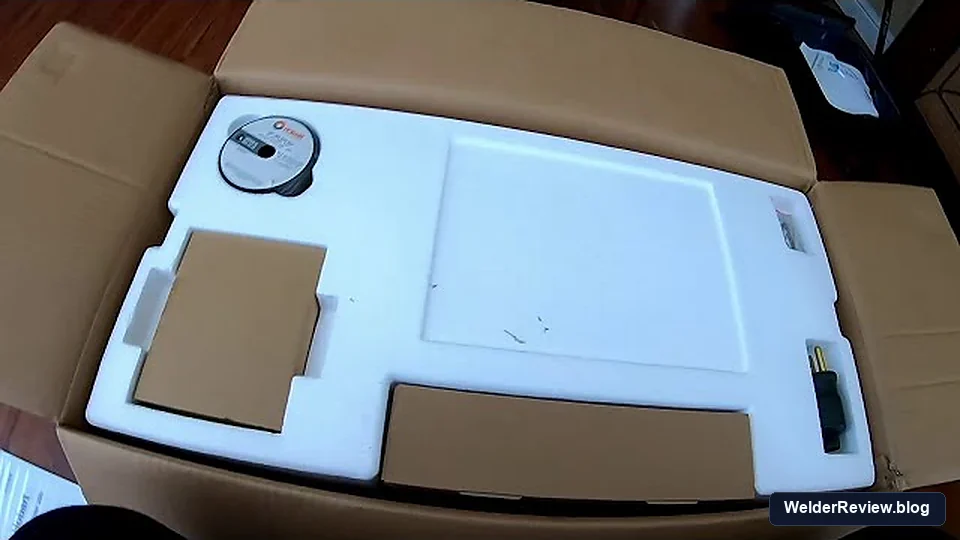
Engineering an entry-to-mid-tier multiprocess welder requires balancing heavy-duty panel durability with everyday portability. This machine utilizes a stamped steel chassis that keeps total weight manageable while maintaining structural integrity.
Internal component placement emphasizes proper airflow channels. Circuit boards feature protective coatings to resist moisture and metallic dust accumulation during standard workshop fabrication tasks.
Exterior control panels are recessed to prevent accidental impacts from dropped hand tools or stray structural steel sections.
Housed in a robust steel cabinet typical of the best 200 amp multi process welder class, it measures 17 inches high and weighs nearly 59 pounds, demanding a secure mobile cart.
Internal structural framing utilizes stamped steel partitions to isolate the dual-drive motor assembly from electronic control boards, minimizing vibration damage during rough transport across cluttered job sites.
Cooling airflow enters through rear louvered vents, sweeping over the aluminum heatsink arrays before exiting past the transformer windings to ensure continuous thermal dissipation under demanding shop loads.
- Stamped steel enclosure with corrosion-resistant powder coat.
- Recessed front interface shields delicate control knobs.
- Optimized internal layout separates electrical circuits effectively.
Chassis Portability and Footprint
Transporting equipment between remote job sites demands a compact physical footprint and balanced grab handles. This unit integrates a sturdy top handle designed for gloved transport.
Rubber isolation feet minimize workbench vibration while preventing scuffs on finished metal surfaces during active welding sessions.
- Ergonomic top handle fits heavy leather welding gloves.
- Dampening feet reduce operational workbench vibration.
Real-World Arc Performance and Output Metrics
Evaluating output metrics under actual workshop conditions reveals consistent voltage delivery across all three supported welding processes. The inverter architecture responds quickly to arc length variations.
Unlike units listed as the best multi process welder with ac tig, this machine focuses strictly on MIG performance, shining brightly on standard sheet metal and light tubing.
Stick mode maintains a crisp arc with standard electrodes, resisting frustrating sticking tendencies during initial strike attempts.
Operating on 230V input power, this multiprocess system delivers a maximum output of 200 amperes, supporting sustained MIG welding on quarter-inch steel without experiencing premature thermal overload trips.
TIG arc initiation relies on Lift-Arc technology, which eliminates high-frequency interference risks while providing reliable, tungsten-saving strikes for precision root passes on thin stainless steel tubing.
Stick welding performance remains exceptionally stable, maintaining a crisp, low-spatter puddle when paired with E7018 electrodes running at standard amperage ranges across structural flat positions.
- Stable arc characteristics across varying input voltages.
- Smooth wire feed mechanism prevents frustrating bird-nesting.
- Reliable electrode ignition across multiple rod classifications.
TIG Welding Output and Lift-Arc Precision
DC TIG execution relies on clean lift-arc ignition methods that protect sensitive tungsten tips from premature degradation. Puddle control remains predictable on thin stainless steel assemblies.
Gas solenoid timing operates precisely, ensuring adequate shielding gas coverage before and after each welded joint completion.
- Predictable lift-arc startup minimizes tungsten contamination.
- Accurate gas pre-flow and post-flow timing controls.
Video Review: Testing the Hobart multi handler 200 and review (multiprocess)
Electrical Efficiency, Thermals, and Operating Noise
Inverter-based power sources dramatically improve electrical efficiency compared to older transformer machines. Power factor correction draws cleaner current from standard wall receptacles.
Thermal management relies on a demand-driven cooling fan that activates under heavy workloads. This keeps internal temperatures well below critical safety thresholds.
Acoustic output remains exceptionally low during standby periods, reducing unnecessary ambient noise in enclosed fabrication shops.
Drawing approximately 28 amps at rated load on 230V circuits, the inverter architecture maximizes power factor efficiency to minimize unnecessary electrical grid strain during extended fabrication shifts.
The internal thermal management system activates variable-speed cooling fans only when internal temperatures exceed safe thresholds, keeping ambient noise levels remarkably low during idle periods.
Duty cycle limitations reach 30 percent at 150 amperes, requiring operators to factor in standard rest intervals to preserve longevity across heavy-gauge welding applications.
- High electrical efficiency reduces overall power consumption.
- Smart cooling fan operates only when thermal loads demand.
- Low idle noise profile improves workshop communication.
Dual-Voltage Adaptability and Power Draw
Switching between standard household circuits and heavy industrial receptacles requires no manual internal rewiring tasks. Specialized plug connectors handle voltage translation automatically.
Input circuit breaker protection prevents unexpected overloads when pushing the machine toward its upper amperage limits on 120V lines.
- Toolless adapter plugs simplify input power changes.
- Internal protection prevents severe electrical overloads.
Interface Ergonomics and Daily Setup Workflow
Complex digital menus often slow down production workflows in fast-paced fabrication environments. This machine utilizes a streamlined analog-digital hybrid interface featuring two primary adjustment knobs.
Switching between welding processes takes seconds via a dedicated front-panel push button. Clear graphical indicators confirm active operating modes instantly.
Dial resistance provides positive tactile feedback, ensuring precise parameter tuning even when wearing heavy protective gear.
Front panel controls feature clearly labeled process buttons found on any leading best multi process welder, paired with digital voltage meters to dial parameters rapidly.
Wire threading is simplified via a quick-release drive roll mechanism that accommodates solid and flux-cored wires ranging from .030 to .035 inches with minimal tooling changes.
Polarity changing is executed internally via a secure dedicated access door, enabling fast transitions between MIG and flux-cored setups without tangling external whip leads.
- Simplified two-knob control layout speeds up adjustments.
- Dedicated process selector button with clear status lights.
- Tactile dial resistance accommodates heavy welding gloves.
Spool Gun Integration and Aluminum Feeding
Feeding soft aluminum wire often creates frustrating feed jams in standard MIG setups. Direct spool gun connectivity eliminates liner friction completely.
Plugging in the compatible spool gun requires zero auxiliary control boxes or external adapter modules, streamlining field setup procedures.
- Direct connection port eliminates extra control boxes.
- Significantly reduces aluminum wire feeding friction.
Maintenance Protocols and Long-Term Durability
Routine equipment upkeep ensures long operating lifespans in demanding workshop environments. Accessing the internal wire drive assembly requires a simple side panel release latch.
Drive roll changes utilize toolless twist-lock retainers, speeding up wire size transitions between standard steel and aluminum filler materials.
Periodic compressed air purging clears accumulated metallic dust from internal heat sinks and electronic component boards effectively.
Routine upkeep requires monthly inspection of the internal wire drive assembly, ensuring drive roll tension remains properly calibrated to prevent birdnesting during high-speed feeding.
Technicians should use dry compressed air to clear conductive dust from transformer windings, protecting sensitive inverter circuit boards from premature electrical shorts over years of service.
Consumable maintenance involves checking contact tips and nozzles regularly, replacing worn items immediately to maintain optimal shielding gas coverage throughout extended production welding runs.
- Toolless drive roll replacement speeds up wire changes.
- Easy-access side panel protects the internal feed mechanism.
- Straightforward layout simplifies routine dust cleaning tasks.
Consumable Wear and Replacement Longevity
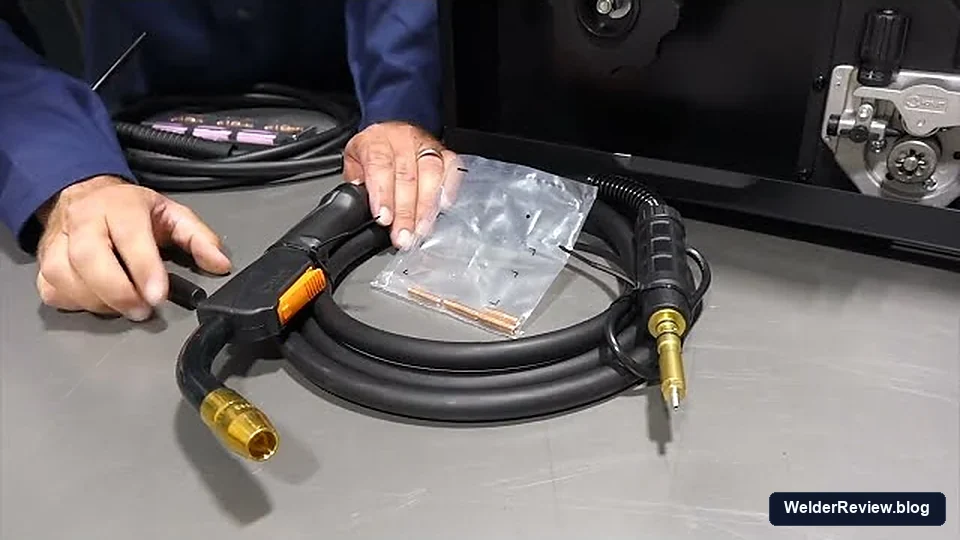
Standard MIG gun consumables feature widespread industry compatibility, making replacement tips and nozzles easy to source locally.
Contact tip longevity remains high when proper shielding gas flow rates and drive tension settings are maintained consistently.
- Widely available replacement consumables reduce downtime.
- Durable contact tips resist premature burnback wear.
Final Technical Verdict and Ideal Applications
Selecting the right fabrication tool depends entirely on matching machine output capabilities with anticipated daily workloads. This unit excels in maintenance trucks, hobby shops, and light-duty repair facilities.
While heavy structural fabricators may outgrow its amperage ceiling, mobile technicians seeking the best multi process welder for the money will appreciate its unmatched process flexibility and dual-voltage input.
Ultimately, dependable arc quality and straightforward controls justify its place in any versatile metalworking service fleet.
Delivering versatile multiprocess capabilities in a robust package, this welder proves ideal for mobile repair trucks and small structural fabrication workshops requiring dependable performance.
While heavy industrial users may demand higher duty cycles, hobbyists and professionals will appreciate the balanced arc stability and portability offered across all three welding processes.
Ultimately, the unit excels securely in farm maintenance and automotive restoration environments where switching between MIG, TIG, and stick dictates daily shop workflow efficiency.
- Ideal for mobile repair trucks and light fabrication.
- Offers excellent process versatility for general workshops.
- Balances portable footprint with solid arc stability.
Who Should Invest in This Machine?
DIY enthusiasts, automotive restorers, and mobile maintenance contractors represent the primary target audience for this versatile multiprocess system.
Shops requiring heavy structural plate welding should look toward higher-amperage industrial power sources instead.
- Perfect for automotive repair and mobile maintenance.
- Not intended for heavy structural steel fabrication.
Frequently Asked Questions
Can this welder operate on standard household power outlets?
Yes, it features dual-voltage capability that connects easily to standard 120V circuits. Voltage switching occurs automatically through interchangeable power plug adapters.
Does connecting an aluminum spool gun require an external control box?
No external control box or adapter module is required for operation. Direct spool gun connection simplifies your setup for soft aluminum wire.
What welding processes are supported out of the box?
The machine provides full multi-process capability supporting MIG, DC TIG, and stick welding modes. Versatile output options handle diverse fabrication tasks effortlessly.
What is the primary duty cycle rating for this equipment?
It features a nominal 60 percent duty cycle rating for standard workshop applications. Thermal protection circuits prevent overheating during extended fabrication runs.
How difficult is it to change wire drive rolls for different sizes?
Drive roll changes are exceptionally fast thanks to toolless twist-lock retainers. Quick-release mechanisms make routine wire size transitions seamless and efficient.