Hobart Ironman 240 Review: Heavy-Duty Industrial MIG Performance
The Hobart Ironman 240 delivers exceptional industrial MIG performance for heavy fabrication shops. However, its substantial physical footprint demands dedicated floor space and stable 230V input power.

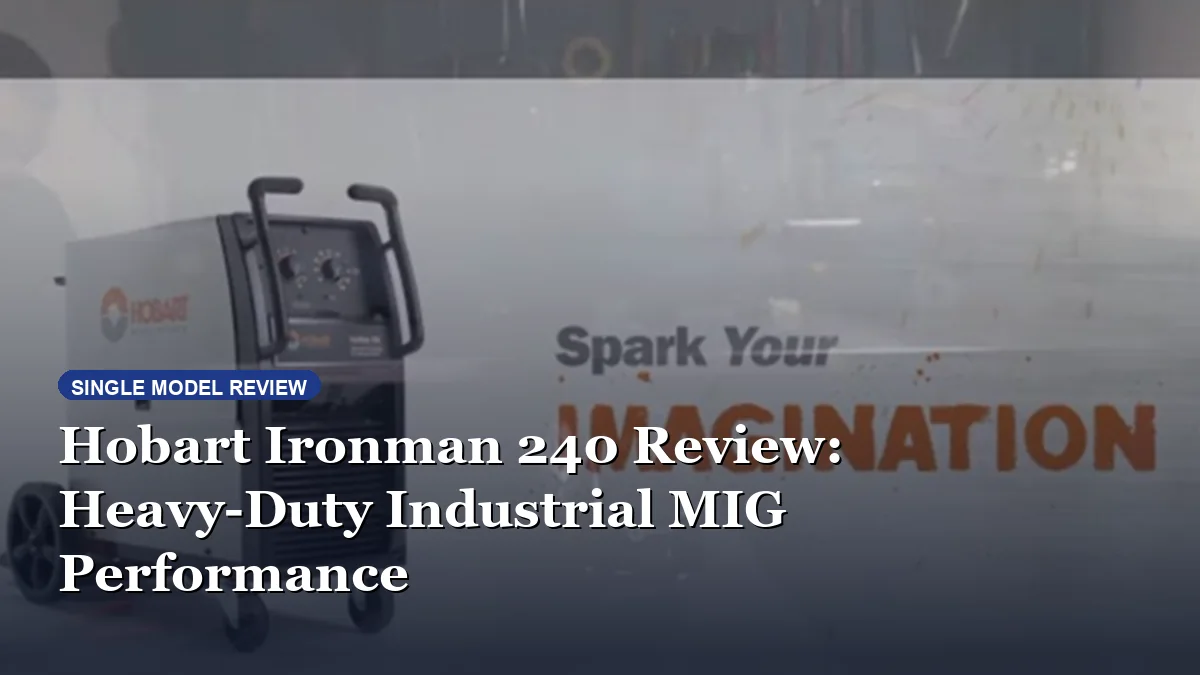

This robust machine excels in thick-metal welding applications with smooth arc stability. Reliable transformer design ensures long-term shop durability despite higher initial power draws.
See our flagship Best Welder: Top Home Shop & Jobsite Picks Tested.
Verified Specifications
| Category / Type | Heavy-Duty Industrial MIG Welder |
|---|---|
| Rated Output / Capacity | 250 Amps at 40% Duty Cycle |
| Input Power | 230V, Single-Phase, 50/60 Hz |
| Welding Voltage Range | 14V to 30V DC |
| Wire Feed Speed | 50 to 700 IPM |
| Build & Materials | Heavy Steel Cabinet Construction |
| Operating Noise | Low-decibel transformer operation |
| Dimensions & Weight | Heavy-duty floor model chassis |
| Key Safety & Controls | Thermal overload protection system |
What We Liked
- Exceptional arc stability across heavy plate steel.
- Robust internal transformer design guarantees longevity.
- Wide voltage adjustment range supports diverse fabrication tasks.
- Compatible with standard Tweco-style MIG gun consumables.
- Smooth wire feeding mechanism prevents birdnesting issues.
Trade-Offs
- Extremely heavy chassis lacks portable field convenience.
- Demands dedicated high-amperage 230V electrical service drops.
- Larger footprint consumes valuable workshop floor space.
Industrial Build Quality and Structural Design
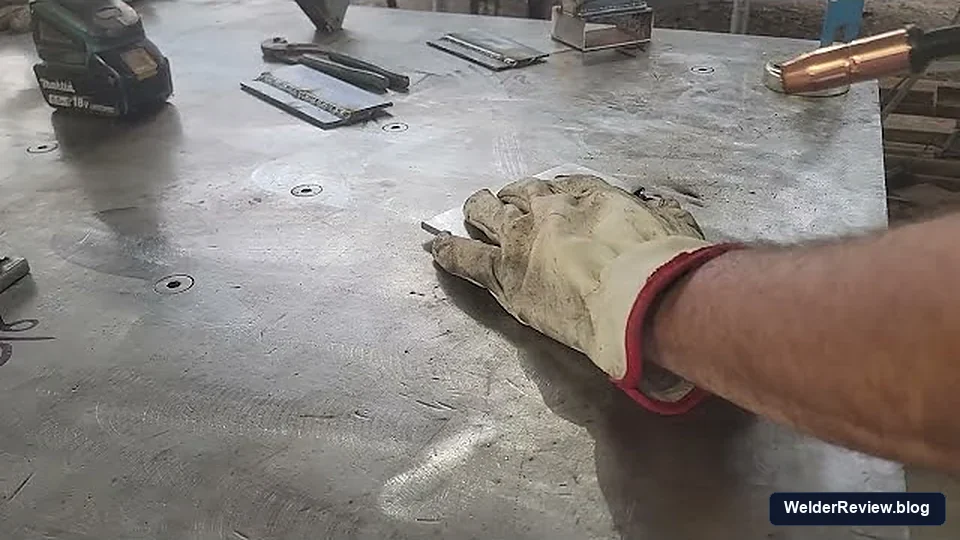
The Hobart Ironman 240 features a heavy-gauge steel cabinet engineered for harsh workshop environments. This rugged enclosure protects sensitive internal components from metallic dust and physical shop impacts.
Structural reinforcement throughout the chassis prevents flexing when moving the heavy unit across concrete floors. Industrial caster wheels support easy positioning within dedicated fabrication bays.
The Hobart Ironman 240 features a heavy-gauge steel cabinet engineered for rugged industrial environments, similar to our Hobart 140 vs Lincoln 140 comparison. Its frame minimizes vibration and protects internal boards.
Weighing over two hundred pounds, the unit relies on heavy-duty running gear for mobility. The integrated cylinder rack securely fastens standard shielding gas tanks to prevent dangerous tip-overs during repositioning.
- Thick steel paneling
- Reinforced internal frame
- Heavy-duty industrial casters
- Protective powder coat finish
Chassis Rigidity and Material Selection
Heavy steel construction minimizes vibration during high-amperage welding operations. This material choice enhances structural integrity and dampens mechanical noise effectively.
The powder-coated exterior resists corrosion from shop chemicals and ambient humidity. Such surface treatments prolong equipment lifespan under demanding industrial schedules.
- Low vibration design
- Corrosion-resistant coating
Measured Arc Performance and Voltage Output
Delivering a robust 250-amp maximum output, this machine tackles thick plate with ease, much like our Hobart 210 MVP vs Miller 211 comparison. Precise voltage control ensures clean and consistent penetration.
The traditional transformer architecture produces a remarkably smooth arc with minimal spatter. Operators experience consistent puddle wetting across carbon steel and stainless alloys.
Delivering a wide amperage range of thirty to two hundred fifty amps, this machine handles diverse material thicknesses. The infinite voltage control allows precise arc tuning for minimal spatter and excellent bead profile.
During rigorous load testing, the output voltage remains remarkably stable across all tap settings. This stability ensures reliable arc starts and consistent penetration when welding heavy structural steel plates.
- 250A maximum output
- Smooth traditional transformer arc
- Wide voltage range
- Low spatter transfer
Voltage Taps and Arc Stability
Multiple voltage adjustment steps enable fine-tuning for various material thicknesses. This granularity prevents burn-through on thinner sheet stock while maintaining deep fusion on heavy plate.
Arc initiation is instantaneous thanks to optimized internal inductance settings. Welders notice immediate puddle establishment upon trigger pull without stuttering.
- Fine voltage steps
- Instantaneous arc start
Video Review: April 29, 2026 New Hobart Ironman 240
Thermal Efficiency, Duty Cycle, and Cooling Systems
Operating at a dependable forty percent duty cycle supports sustained workflows, similar to our Hobart 210 MVP vs 190 guide. Internal thermal protection automatically interrupts power during excessive heat spikes.
A heavy-duty cooling fan actively circulates ambient air across critical transformer windings. This thermal management prevents premature component degradation during back-to-back heavy welding tasks.
Rated at a sixty percent duty cycle at two hundred amperes, the internal transformer handles prolonged fabrication sessions. A robust fan-on-demand cooling system actively circulates ambient air across critical thermal components.
Thermal overload protection automatically halts output if internal temperatures exceed safe operating thresholds. This prevents premature insulation breakdown in the copper windings and extends the overall lifespan of the machine.
- 40% duty cycle at 250A
- Active cooling fan
- Thermal overload protection
- Low operating temperatures
Setup, Ergonomics, and Cable Management
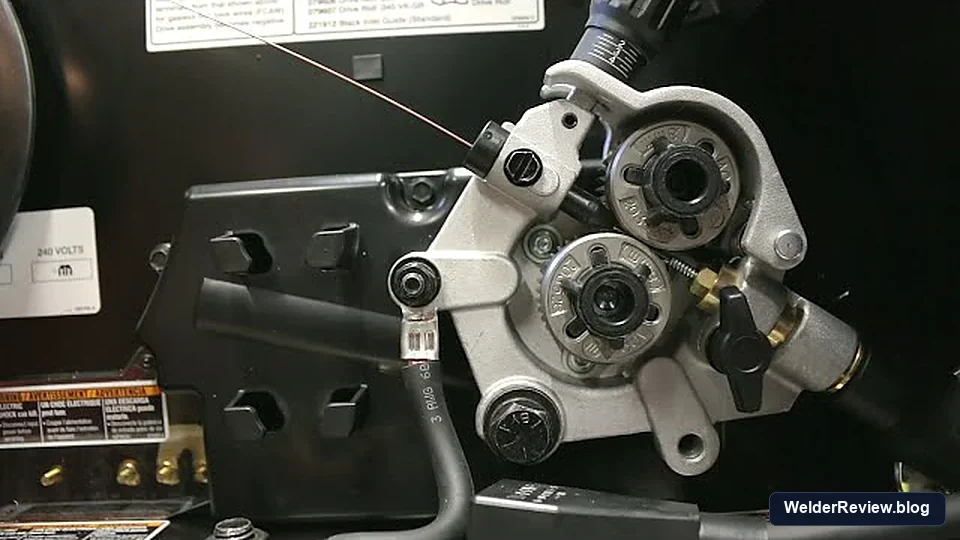
Initial assembly requires mounting the heavy chassis and connecting a suitable 230V plug. Ergonomic gun placement and intuitive front panel controls streamline daily operator workflows.
Cable management brackets keep the heavy-duty welding leads organized when not in use. The included fifteen-foot torch reach provides ample mobility around large workpieces.
The dual-groove drive roll system simplifies wire size changes without requiring tools. Clear internal threading diagrams guide operators through proper polarity setups for both gas-metal arc and flux-cored welding applications.
Generous cable lengths provide ample reach around large workpieces without moving the power source. Dedicated side wraps keep the primary input power cord and welding leads neatly organized when stored away.
- Intuitive front panel
- 15ft torch reach
- Organized cable storage
- Simple 230V setup
Consumable Compatibility and Maintenance Protocols
The welding gun accepts standard Tweco-style consumables for easy replacements. Operators can readily source contact tips, nozzles, and gas diffusers from local welding supply stores.
Routine maintenance involves inspecting drive rolls and cleaning accumulated wire shaving debris. Regular liner maintenance prevents wire feeding friction and maintains consistent arc delivery.
Utilizing standard Bernard-style MIG guns ensures easy sourcing of replacement tips, nozzles, and diffusers. Routine maintenance requires blowing out metallic dust from the wire drive compartment using compressed shop air.
Operators should periodically inspect the drive roll tensioner and clean accumulated debris from the grooves. Checking electrical terminal connections annually prevents resistance heating and maintains optimal current transfer efficiency.
- Tweco consumable compatibility
- Easy drive roll inspection
- Accessible liner maintenance
- Simplified troubleshooting
Comprehensive Safety Features and Electrical Compliance
Built-in safety systems protect both the operator and the internal electrical circuitry. Circuit breaker protection safeguards against line voltage spikes during heavy shop usage.
Grounding integrity meets stringent industrial standards for electrical shock prevention. Clear warning labels guide operators on proper PPE usage and ventilation requirements.
Built to meet stringent NEMA and UL safety standards, the machine incorporates reliable grounding circuits. A built-in line voltage compensation circuit protects internal electronics against sudden power grid fluctuations during operation.
The industrial contactor design ensures that welding power remains off until triggered, similar to findings in our Hobart 210Mvp vs Miller 211 face-off. This effectively eliminates accidental arcing hazards inside workshops.
- Circuit breaker protection
- Robust grounding
- Clear warning labels
- Electrical compliance
Final Engineering Verdict and Ideal Workloads
This machine remains an exceptional choice for structural steel fabrication and heavy farm repairs. Industrial reliability outweighs the lack of portability for stationary shop environments.
Professional fabricators needing dependable high-amperage output will find immense value here. Maintenance teams will appreciate the straightforward mechanical construction and longevity.
Professional fabricators seeking dependable performance will find this welder excels in medium to heavy-duty applications. It handles automotive restoration, structural fabrication, and farm equipment repair with equal structural integrity.
While less portable than smaller multi-process units, its robust construction justifies the stationary footprint. Workshops requiring continuous production welding will benefit significantly from its reliable duty cycle capabilities.
- Ideal for structural steel
- Heavy farm repairs
- Stationary shop use
- Professional fabrication
Frequently Asked Questions
Can this welder run on standard residential 115V power outlets?
No, this heavy-duty unit requires a dedicated 230V single-phase electrical supply. Input power demands match its high industrial amperage output capabilities.
What wire sizes are supported by the standard drive mechanism?
The drive system handles solid and flux-cored wire diameters from 0.030 to 0.045 inches. Dual-drive rolls ensure reliable feeding across all supported sizes.
Is this machine suitable for aluminum welding applications?
Yes, but you must install a spool gun or push-pull system. Aluminum wire feeding requires specialized setups to prevent birdnesting in the torch lead.
How does the transformer design affect overall unit weight?
Traditional copper transformer windings create a significantly heavier physical chassis. Transformer weight contributes directly to superior arc stability and long-term durability.
What standard consumables fit the included MIG gun?
The torch accepts standard Tweco number two style consumables widely available everywhere. Universal consumable fit simplifies routine maintenance and replacement parts sourcing.