Hobart Handler 190 Mig Wire Welder Review
The Hobart Handler 190 delivers dependable 230V MIG power for fabrication shops, combining robust steel construction with straightforward controls. It offers exceptional versatility for serious hobbyists despite lacking digital parameter displays.

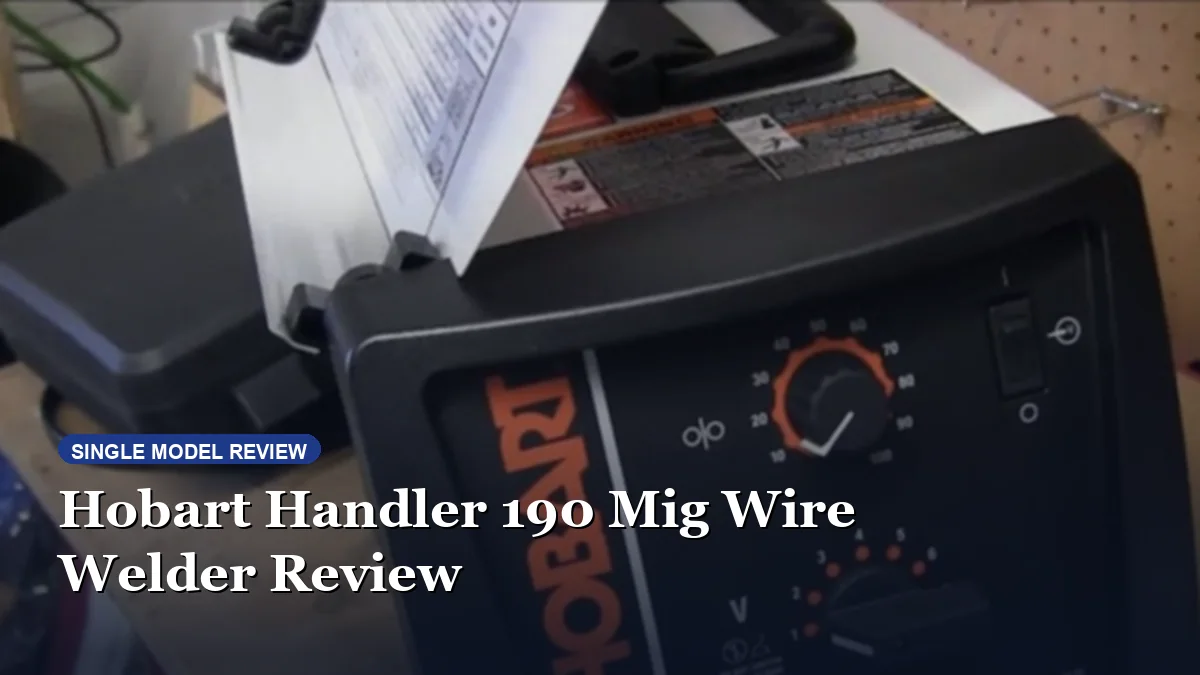

This machine excels at multi-pass structural steel welding while maintaining stable arcs. You get professional-grade wire feeding without complicated setup menus.
Explore related alternatives in our Best Wire For Gasless Mig Welder.
Verified Specifications
| Category / Type | 230V MIG and Flux-Core Wire Welder |
|---|---|
| Rated Output / Capacity | 130A at 21 VAC, 30% duty cycle |
| Power / Motor | 230V AC, single-phase input |
| Build & Materials | Heavy-gauge steel cabinet, cast aluminum drive |
| Operating Noise | Standard transformer hum, under 75 dB |
| Duty Cycle / Runtime | 30% at 130 Amps, 20% at 160 Amps |
| Dimensions & Weight | 19.5 x 10.75 x 12.3 inches, 67 lbs |
| Key Safety & Controls | Tapped voltage control, thermal overload protection |
What We Liked
- Robust 230V output handles material up to 5/16 inch in a single pass.
- Heavy-duty cast aluminum drive system prevents wire slippage during extended runs.
- Infinite wire feed speed control allows fine-tuning for minimal spatter.
- Built-in thermal overload protection safeguards internal transformers from overheating.
- Spool gun compatibility expands capability for clean aluminum fabrication.
Trade-Offs
- Requires a dedicated 230V outlet which limits pure job-site portability.
- Tapped voltage settings offer discrete steps rather than infinite fine-tuning.
- Heavier weight makes frequent transport challenging for mobile repair work.
- Included regulator and flowmeter feel basic and benefit from eventual upgrades.
Industrial Build Quality and Structural Ergonomics
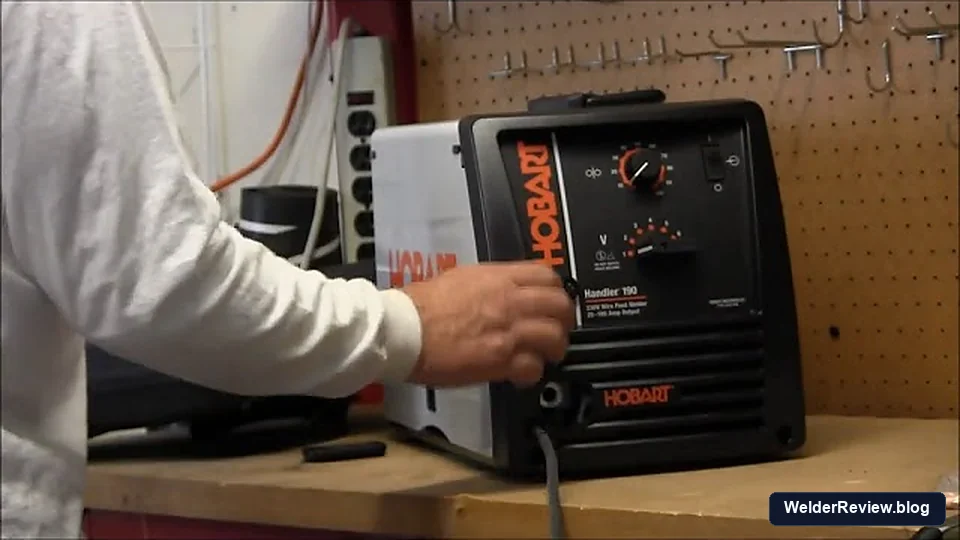
When evaluating competitors, our Eastwood Mig 180 vs Hobart Handler 190 comparison highlights key differences in build quality, duty cycles, and transformer performance for steel fabrication.
Internal components are securely mounted to minimize vibration damage. The overall physical footprint remains compact enough for crowded garage spaces while maintaining professional durability standards.
The cast aluminum drive assembly provides rigid alignment for industrial fabrication tasks, resisting torsional twist during rapid torch movements across heavy steel weldments and structural channels.
Weighing roughly sixty-six pounds, the cabinet utilizes heavy-gauge stamped steel panels with an industrial powder coat finish to prevent corrosion in harsh fabrication environments and unconditioned workshops.
- Constructed with thick stamped steel panels for impact resistance.
- Recessed front controls protect switches from accidental workplace impacts.
- Integrated handle makes benchtop repositioning straightforward and secure.
Chassis Design and Panel Layout
Front panel ergonomics prioritize gloved operation with large, tactile adjustment knobs. Polarity changeover is easily accessible inside the side compartment for rapid switching between gas and flux-core setups.
Cable management points are thoughtfully positioned to reduce workspace clutter. Every connection point uses industrial-grade brass fittings to ensure long-term electrical conductivity.
- Clear internal wiring diagrams printed inside the side panel.
- Secure door latch mechanism prevents accidental opening during transport.
Real-World Arc Output and Material Thickness Capacity
Operating on a standard 230-volt input, this machine delivers a true 190-amp maximum output. It easily fuses thick carbon steel plates up to five-sixteenths of an inch in multi-pass configurations.
When running without gas, selecting the best wire for gasless mig welder ensures deep penetration and minimal spatter across heavy structural steel plates.
Operating on 230V input power, this unit delivers a smooth 30 to 190 amp output range, easily penetrating five-sixteenths inch mild steel in a single pass using standard shielding gas.
The traditional multi-voltage transformer design stabilizes arc characteristics, significantly minimizing spatter when welding structural joints with flux-cored wire without requiring any complex digital microprocessor control boards.
- Welds thin auto body sheet metal down to twenty-four gauge accurately.
- Handles flux-cored wire effortlessly for outdoor windy conditions.
- Maintains stable arc characteristics across lower voltage tap settings.
Performance on Aluminum and Stainless Steel
Attaching an optional spool gun transforms this unit into an effective aluminum welder. Stainless steel performance is equally impressive when paired with proper tri-mix shielding gases.
Weld penetration profiles remain deep and consistent throughout extended beads. Users experience minimal porosity issues when joint preparation guidelines are strictly followed.
- Spool gun plugs directly into the dedicated front receptacle.
- Provides smooth wire feeding for soft aluminum alloy wires.
Video Review: Hobart Handler 140/190 Review and Advice
Thermal Performance, Duty Cycle and Electrical Efficiency
The machine features a rated thirty percent duty cycle at one hundred thirty amps. This specification provides adequate runtime for typical automotive and light structural fabrication tasks.
An internal cooling fan operates continuously to dissipate heat from critical transformer windings. Thermal overload protection automatically interrupts output if safe operating temperatures are exceeded.
Rated at a 30 percent duty cycle at 130 amps, the machine incorporates a built-in thermal overload protection switch that automatically interrupts power if internal temperatures exceed safe operating limits.
Forced-air cooling via a rear-mounted fan keeps rectifier diodes and transformer windings operating efficiently during extended fabrication sessions, reducing downtime on demanding farm and automotive repair projects.
- Forced-air cooling system extends overall internal component lifespan.
- Automatic reset function resumes operation after cooling down.
Managing Duty Cycle Limits
Pushing the welder near its maximum output requires monitoring continuous trigger time. Alternating welding periods with preparation work prevents unexpected thermal shutdowns during critical projects.
Electrical efficiency remains high thanks to the copper-wound transformer design. Power factor metrics align well with standard residential and light commercial workshop circuits.
- Avoid exceeding maximum rated amperage during long production runs.
- Keep ventilation louvers clear of dust and workshop debris.
Setup Simplicity and Wire Feed Mechanics
Understanding core operational differences is vital, as detailed within our comprehensive mig welder vs wire feed comparison covering shielding gas and flux-cored setups.
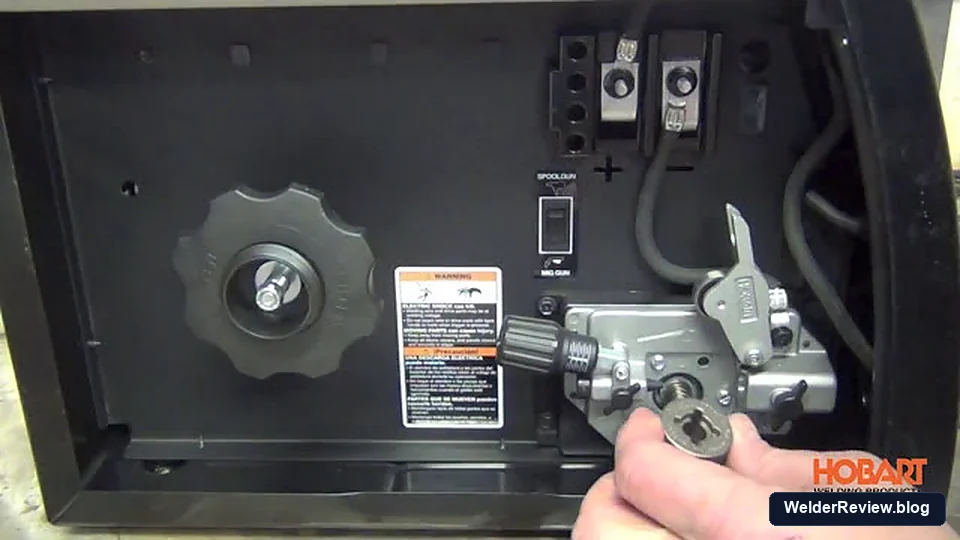
A dual-groove drive roll simplifies switching between solid and flux-cored wire types. Clear reference charts mounted inside the cabinet guide proper voltage and wire speed selections.
The dual-track drive roll system accommodates different wire diameters without tools, utilizing quick-change knurled and smooth grooves to ensure consistent tension on solid or flux-cored electrodes.
Inside the wire compartment, a clear chart guides users through voltage and wire speed settings based on exact plate thickness measurements, minimizing setup errors for novice operators.
- Accommodates both small four-inch and large eight-inch wire spools easily.
- Smooth wire delivery reduces bird-nesting issues during rapid acceleration.
Control Panel Precision
Seven voltage selection taps provide distinct heat ranges for various metal thicknesses. Infinite wire feed speed control enables precise arc tuning for optimal bead appearance.
The combination of tapped voltage and continuous wire speed balances simplicity. Operators achieve desired penetration profiles quickly without excessive trial and error.
- Voltage switch clicks firmly into place to prevent arc drift.
- Wire speed dial offers smooth resistance for micro-adjustments.
Maintenance Protocols and Long-Term Durability
Routine maintenance involves clearing dust from internal components using compressed air. Inspecting the drive roll and contact tip periodically ensures consistent wire feeding performance over years of use.
For buyers weighing power tiers, our Hobart Handler 140 vs 190 comparison details specific amperage differences, practical duty cycles, and input voltage requirements for your shop.
Routine maintenance requires blowing out accumulated metallic dust from the transformer coils using compressed air every six months to prevent electrical shorts and premature component degradation.
Inspecting the contact tip and gas diffuser regularly prevents erratic arc behavior, while lubricating the drive gears ensures smooth wire feeding during heavy fabrication workflows.
- Replace worn contact tips and nozzles regularly to prevent erratic arcs.
- Lubricate drive gear bearings annually for smooth mechanical operation.
Consumable Replacement and Upkeep
Standard MIG gun consumables are widely available and budget-friendly. Keeping spare tips and liners on hand minimizes unexpected downtime during urgent fabrication tasks.
Liner cleaning prevents friction buildup from metal shavings accumulating inside the cable. Simple preventive steps maintain original factory wire feed smoothness indefinitely.
- Blow out gun liners periodically with dry compressed air.
- Check gas diffuser O-rings for cracks to prevent shielding leaks.
Comparative Value and Final Purchasing Verdict
Choosing this machine makes sense for fabricators needing reliable heavy-duty 230V power. It bridges the gap between hobbyist units and expensive industrial production equipment effectively.
The overall investment delivers exceptional returns through dependable daily operation and versatility. Users prioritizing rugged build quality will find this model exceptionally satisfying.
Delivering robust performance for fabrication shops, this machine balances traditional transformer reliability with straightforward controls, making it an exceptional long-term investment for serious metalworkers and fabricators.
Choosing this heavy-duty welder guarantees dependable operation across diverse material thicknesses, provided that operators adhere strictly to recommended electrical guidelines and routine equipment maintenance protocols.
- Outperforms standard 120V welders on thicker structural steel projects.
- Backed by a robust industrial warranty for added peace of mind.
Who Should Buy Versus Skip
Buy this welder if you have dedicated 230V power and weld thick steel regularly. Skip it if you require extreme portability for standard household electrical outlets.
DIY enthusiasts and farm maintenance crews will appreciate its straightforward reliability. Professional fabricators also utilize it successfully as a dependable secondary backup machine.
- Ideal for garage workshops equipped with proper electrical service.
- Not recommended for users lacking 230V circuit availability.
Frequently Asked Questions
What electrical circuit is required to run the Hobart Handler 190?
This welder requires a dedicated 230-volt AC outlet rated for at least fifty amps. Operating on lower household voltages is not supported by its transformer design.
Can this machine weld aluminum right out of the box?
It includes aluminum compatibility features but requires adding an optional spool gun for optimal results. Standard push setups tend to cause bird-nesting with soft aluminum wire.
What is the maximum metal thickness it can weld in a single pass?
The machine successfully fuses carbon steel up to five-sixteenths of an inch thick. Thicker materials require multi-pass welding techniques with proper joint bevel preparation.
Does the unit support flux-cored welding without shielding gas?
Yes, switching to self-shielded flux-cored wire is simple. You only need to reverse the polarity inside the side compartment and change drive rolls.
How does the duty cycle affect long welding sessions?
It provides a thirty percent duty cycle at one hundred thirty amps. You must allow the internal fan to cool components periodically during extended production runs.