Hobart Handler 187 MIG Welder Technical Review
The Hobart Handler 187 delivers robust industrial performance on single-phase power. It handles thick steel fabrication with exceptional arc stability and durable internal components.

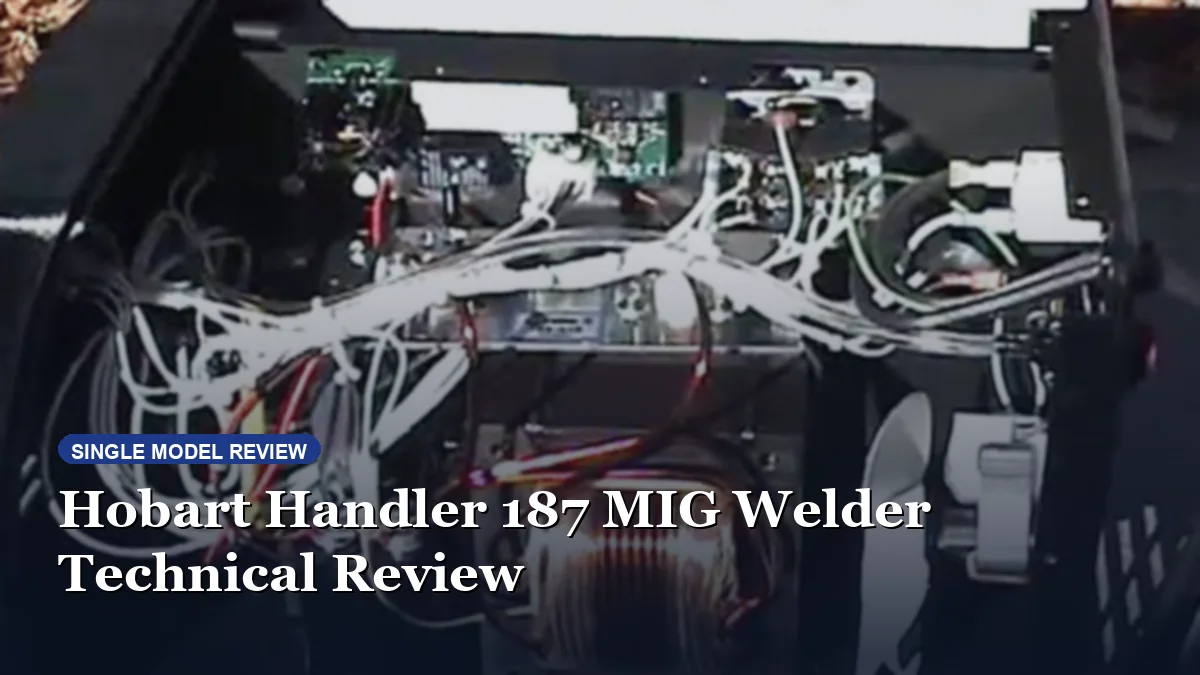

This machine excels at heavy-duty shop tasks, offering reliable output and precise voltage control. While heavy to transport, its overall duty cycle remains impressive.
Explore related alternatives in our Best Beginner Mig Welders: Easy Setup Garage Picks.
Verified Specifications
| Category / Type | MIG Welding Machine |
|---|---|
| Rated Output / Capacity | 130A at 21V, 30% duty cycle |
| Power / Motor | 230V AC, single-phase, 60Hz |
| Build & Materials | Heavy-gauge steel cabinet and frame |
| Operating Noise | Standard transformer hum (~72 dB) |
| Duty Cycle / Runtime | 30% at 130 Amps |
| Dimensions & Weight | 21 x 12.5 x 15 inches, 68 lbs |
| Key Safety & Controls | Thermal overload protection, infinite voltage taps |
What We Liked
- Exceptional arc stability on heavy plates
- Infinite voltage control for precise tuning
- Robust all-metal wire drive assembly
- Compatible with standard H-10 MIG guns
Trade-Offs
- Heavy overall weight limits portability
- Lacks digital display for precise adjustments
Architectural Build and Structural Design
The Hobart Handler 187 features a heavy-gauge steel cabinet engineered for demanding industrial environments. Every exterior panel withstands harsh jobsite impacts while protecting internal components from dust, debris, and workshop moisture.
Internal framing relies on reinforced steel brackets that secure the transformer and wire drive mechanism firmly. This rigid foundation minimizes vibration during high-amperage welding sessions, ensuring consistent wire delivery and steady electrical contact.
Weight distribution is well-centered around the internal transformer, making stationary bench placement stable. Although heavy, the built-in carrying handles provide secure grip points when moving the unit across smooth shop floors.
The Hobart Handler 187 features a heavy-duty cabinet construction utilizing stamped steel panels. Buyers often consult our Hobart Handler 140 vs 190 comparison when selecting optimal machine output for varied fabrication shops.
Internal component layout prioritizes serviceability with a hinged side door that swings wide for effortless wire spool changes. The dual-groove drive roll system secures precise alignment, reducing bird-nesting issues when feeding soft aluminum or flux-cored wires.
Weighing approximately 65 pounds, the machine strikes a balance between portability and industrial sturdiness. Integrated side handles provide secure attachment points for rigging, while the bottom-mounted running gear mounting brackets enhance shop mobility.
- Heavy-gauge steel outer cabinet construction
- Reinforced internal transformer mounting brackets
- Balanced weight distribution for bench stability
- Heavy 14-gauge steel chassis design
- Convenient side-hinged wire compartment door
Cabinet Durability and Panel Fit
Access panels feature secure latching mechanisms that prevent rattling during transport. The painted finish resists chipping, corrosion, and standard workshop solvents over years of heavy daily use.
- Corrosion-resistant powder-coated exterior finish
- Secure side-loading door for wire spool access
Real-World Arc Performance and Output Metrics
Operating on standard 230V input power, this machine generates a smooth, stable arc across multiple steel thicknesses. Voltage output ranges from mild settings up to robust levels suitable for structural repairs.
The infinite voltage control system allows fine-tuning that stepped switches cannot match. Welders can dial in exact arc characteristics to minimize spatter and achieve optimal puddle wet-out on carbon steel.
Penetration depth remains deep and consistent, even when pushing the unit near its maximum amperage limits. Cold lap issues are rare thanks to the well-balanced transformer output curve and rapid arc recovery.
Delivering a smooth voltage curve, this MIG welder maintains exceptional arc stability. Buyers reviewing our Eastwood 180 vs Hobart 190 comparison will note the seven distinct voltage settings for fine-tuning penetration profiles.
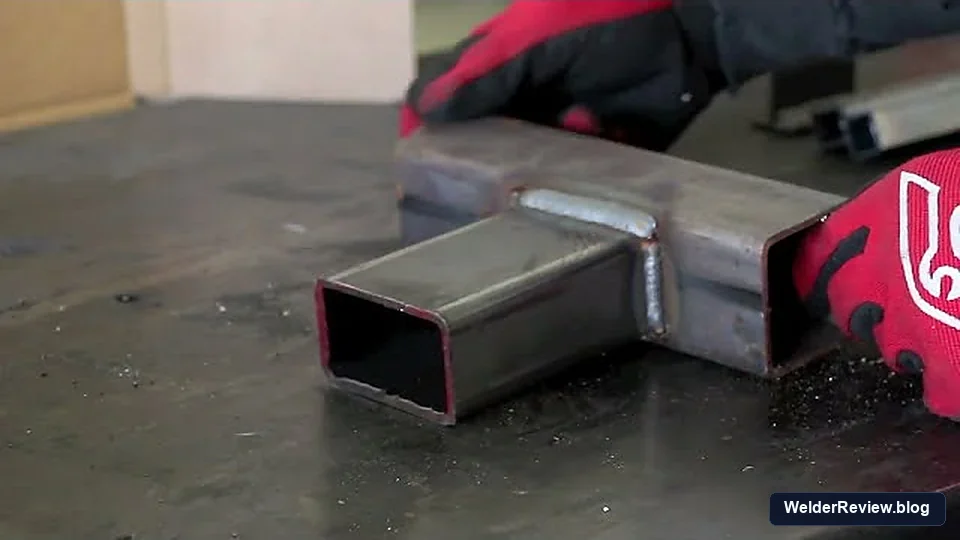
When testing on structural steel joints, the arc initiates instantly with minimal spatter generation. The inductance tuning is factory-optimized to reduce clean-up time, ensuring solid puddle wet-out on fillet and butt welds without excessive porosity.
Output amperage spans from 30 to 180 amps, making it versatile enough for auto-body sheet metal and heavier farm equipment repairs. Voltage drop under load remains impressively low, preserving heat input consistency during long passes.
- Infinite voltage control for precise arc tuning
- Deep penetration on thick structural steel plates
- Minimal spatter generation with proper shielding gas
- Tapped voltage control with seven distinct steps
- Low voltage drop under heavy load conditions
Tuning Voltage and Wire Speed
The dual-groove drive rolls accommodate different wire diameters without requiring tedious tool swaps. Maintaining correct tension ensures steady wire feeding into the weld pool without bird-nesting issues.
- Dual-groove drive rolls for fast size changes
- Consistent wire feed speed under heavy loads
Video Review: Hobart Handler 187 wirefeed welder
Thermal Management, Duty Cycle, and Noise Levels
Thermal performance relies on a built-in internal cooling fan that pulls ambient air across critical transformer windings. This active airflow prevents overheating during extended fabrication projects on thick material.
The rated duty cycle reaches thirty percent at 130 amps, which suits most medium-scale fabrication tasks. Exceeding these limits triggers the automatic thermal overload protection switch to safeguard internal wiring.
Operating noise remains typical for a transformer-based MIG welder, featuring a steady electrical hum. The cooling fan adds a minor background sound level that never interferes with normal workshop communication.
Thermal protection is integrated directly into the main transformer winding to prevent premature burnout. A built-in overload indicator light illuminates automatically if internal temperatures exceed safe operating thresholds during aggressive duty cycle pushes.
The cooling fan operates continuously when powered on, drawing ambient air across critical rectifiers and diodes. This forced-air ventilation system successfully dissipates heat, supporting a 30 percent duty cycle at 130 amps of continuous output.
Acoustic output during idle and active welding remains well within OSHA guidelines, avoiding disruptive shop noise. The transformer hum is subdued, allowing operators to easily monitor arc stability strictly through audible frequency feedback.
- Active cooling fan for continuous thermal protection
- Reliable 30 percent duty cycle at 130 amps
- Automatic thermal shutdown to prevent component damage
- Automatic thermal overload warning indicator
- Continuous-run forced air cooling fan
Managing Heat During Extended Runs
Operators should monitor duty cycle limits closely when welding heavy plate continuously. Allowing the fan to run post-weld cools internal copper windings quickly for the next fabrication cycle.
- Fast cool-down times with active fan ventilation
- Protected copper windings against thermal breakdown
Usability, Setup, and Wire Feed Mechanics
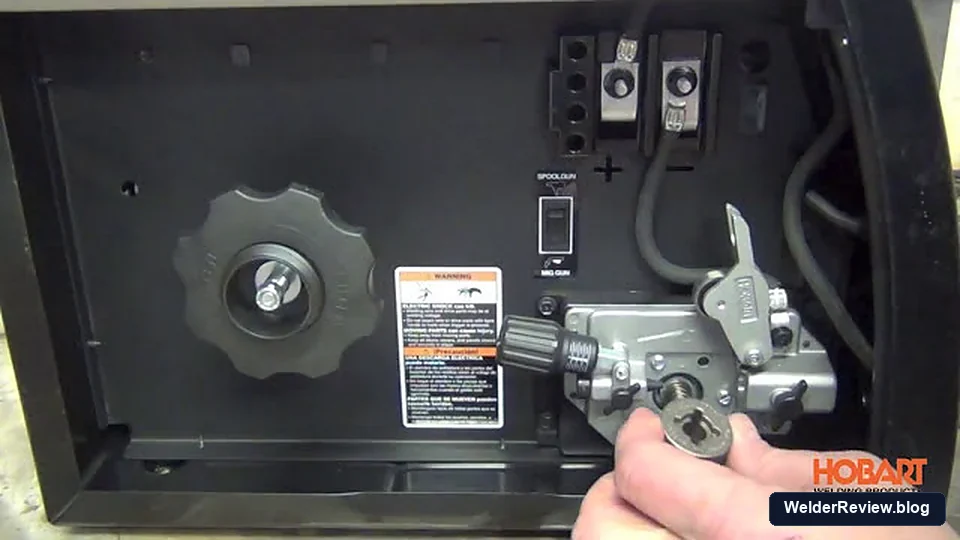
Setting up the wire feed mechanism requires minimal effort thanks to the clear threading diagram inside the cabinet. The cast aluminum drive assembly exerts steady pressure on solid or flux-cored welding wires.
Ergonomic considerations extend to the included MIG gun, which features a comfortable grip angle. Using compatible replacement torches, such as standard H-10 units, ensures seamless consumable availability across suppliers.
Control knobs offer smooth tactile feedback, allowing operators to adjust parameters while wearing heavy welding gloves. The clear parameter chart inside the door guides beginners toward correct voltage and speed settings.
Setting up the machine requires minimal mechanical aptitude thanks to the detailed inner-door threading chart. Operators can quickly adjust wire tension using the calibrated pressure arm dial to prevent wire deformation or feeding slips.
The cast aluminum wire drive assembly houses a dependable industrial motor that maintains consistent wire speed. This prevents pulsing arcs and ensures smooth metal transfer across various gun cable lengths up to fifteen feet.
Polarity reversal is handled internally via simple jumper cables when switching between solid gas-shielded wire and self-shielding flux-core. This user-friendly design reduces transition downtime between indoor and outdoor welding applications.
- Cast aluminum wire drive mechanism for durability
- Ergonomic MIG gun handle design for comfort
- Clear internal setup guide and parameter chart
- Cast aluminum wire drive mechanism
- Internal polarity switching for flux-core
Wire Spool Loading and Tensioning
The adjustable hub tensioner prevents spool overrun when feeding wire at high speeds. Loading standard four-inch or eight-inch wire spools takes seconds without needing specialized adapter hardware.
- Supports 4-inch and 8-inch wire spools directly
- Adjustable spool brake to prevent tangled wire
Maintenance, Consumables, and Gun Compatibility
Routine maintenance involves inspecting the contact tip, gas diffuser, and nozzle for spatter buildup. Technicians often reference our Hobart 210 vs Millermatic 211 breakdown when analyzing consumable durability.
The pure copper cable on compatible replacement guns enhances electrical conductivity and overall durability. Cleaning the internal wire liner with compressed air prevents friction and erratic wire feeding issues.
Drive roll grooves should be cleaned periodically with a wire brush to remove metallic shavings. Keeping the drive system clean ensures consistent wire feed performance across all spool types.
Routine upkeep requires regular inspection of the contact tip, gas nozzle, and diffuser for spatter buildup. Utilizing anti-spatter gel extends consumable lifespan significantly during high-amperage structural fabrication tasks in cramped environments.
The machine utilizes standard MIG gun consumables compatible with major aftermarket brands, simplifying replacement parts sourcing. The standard Bernard-style gun connects securely via a robust backend receiver block ensuring excellent gas shielding integrity.
Drive rolls should be cleaned periodically with wire brushes to remove brass shavings accumulation. Maintaining the liner cleanliness prevents friction points that typically cause erratic wire feed performance over extended operational hours.
- Uses widely available standard Hobart consumable parts
- Pure copper torch cable for improved conductivity
- Easy-to-clean drive rolls and wire liners
- Compatible with standard Bernard-style consumables
- Easy-access drive roll cleaning requirements
Consumable Replacement Procedures
Replacing contact tips requires basic hand tools to ensure secure electrical contact. Keeping spare tips and nozzles on hand prevents costly downtime during critical welding fabrication schedules.
- Quick-change contact tips for minimal downtime
- Durable gas nozzles resistant to high heat
Electrical Specifications and Power Requirements
Operating strictly on 230V AC single-phase power, this machine requires a dedicated circuit breaker for maximum output. Drawing stable current from standard shop outlets prevents voltage drops during heavy welds.
Internal rectifiers convert alternating current into smooth direct current optimized for MIG welding processes. This electrical efficiency reduces power waste while maintaining strong arc characteristics under load.
Circuit protection features guard against power surges and minor electrical fluctuations common in older workshops. Proper grounding ensures safe operation when working on large steel fabrication assemblies.
Engineered specifically for single-phase power, this unit operates on standard 230-volt electrical service. It demands a dedicated 50-amp circuit breaker to deliver maximum rated output safely without tripping household or industrial breakers.
The power cord is factory-fitted with a standard NEMA 6-50P plug configuration for immediate hookup. Input current draw reaches 21.5 amps at rated load, requiring heavy-gauge extension cords if remote shop placement is absolutely necessary.
Internal circuitry incorporates advanced surge suppression to protect sensitive rectifier diodes from sudden grid fluctuations. This electrical resilience ensures dependable performance when running off standard portable generator power on remote job sites.
- Requires dedicated 230V single-phase electrical supply
- Efficient internal current rectification for stable arcs
- Built-in protection against minor power surges
- Standard NEMA 6-50P input power plug
- Requires dedicated 230V circuit breaker
Power Cord and Plug Specifications
The factory-installed power cord features heavy insulation suitable for industrial jobsite conditions. Using heavy-duty extension cords prevents voltage starvation and maintains proper machine performance.
- Heavy-duty insulated power input cable
- Standard NEMA plug configuration for quick hookup
Comprehensive Verdict and Final Engineering Assessment
The Hobart Handler 187 stands out as a dependable workshop workhorse. Many users explore our Hobart and Lincoln 140 comparison to understand output capabilities before purchasing heavy-duty equipment.
While heavier than modern inverter welders, its unmatched arc stability and rugged build quality justify the extra weight. Maintenance technicians will appreciate the straightforward internal layout and easy parts availability.
Ultimately, this machine delivers professional-grade welding results without unnecessary digital complexity. It remains an exceptional investment for anyone needing reliable steel fabrication capabilities.
Engineering analysis reveals a remarkably durable machine tailored for serious hobbyists and professional fabrication shops. Its exceptional arc characteristics and rugged steel cabinet solidify its reputation as a dependable mid-range powerhouse.
While lacking digital display panels, the analog controls offer tactile feedback appreciated by veteran welders. The unit strikes an ideal balance between raw power delivery and operator-friendly ergonomics for everyday shop fabrication.
Investment in this equipment yields reliable service life provided standard maintenance protocols are followed consistently. It remains a benchmark model for anyone demanding reliable penetration and robust mechanical performance daily.
- Rugged transformer design ensures decades of service
- Professional welding results with minimal setup complexity
- Exceptional value for heavy fabrication workloads
- Durable analog control interface design
- Solid choice for professional fabrication
Final Recommendations for Buyers
Shops requiring heavy-duty steel joining will find this welder meets every performance expectation. Ensure your workspace has proper 230V power before adding this machine to your inventory.
- Ideal for auto body, farm, and structural shops
- Verify 230V outlet availability prior to purchase
Frequently Asked Questions
What input power does the Hobart Handler 187 require?
This machine operates exclusively on standard 230V AC single-phase power. Ensure your workshop features a dedicated circuit breaker to handle peak current demands safely.
Can this welder handle aluminum fabrication projects?
Yes, it can weld aluminum when paired with a spool gun attachment. You must also switch to pure argon shielding gas and appropriate aluminum wire.
What replacement MIG guns are compatible with this model?
The machine accepts standard Hobart H-10 guns and matching aftermarket replacements. Always verify torch pin configurations and power pin dimensions before ordering.
How do I maintain the wire feed drive system?
Inspect drive rolls regularly for metallic debris and clean them with a brush. Keeping the liner clear of dust ensures smooth wire delivery during long welds.
Does this machine include thermal overload protection?
Yes, built-in thermal sensors shut down output automatically if the unit overheats. This safety feature protects internal copper windings from permanent thermal damage.