Hobart Handler 140 Review: Compact 120V MIG Powerhouse
This versatile 120V welder delivers robust arc stability for light industrial tasks. However, its duty cycle requires careful management during prolonged sessions.

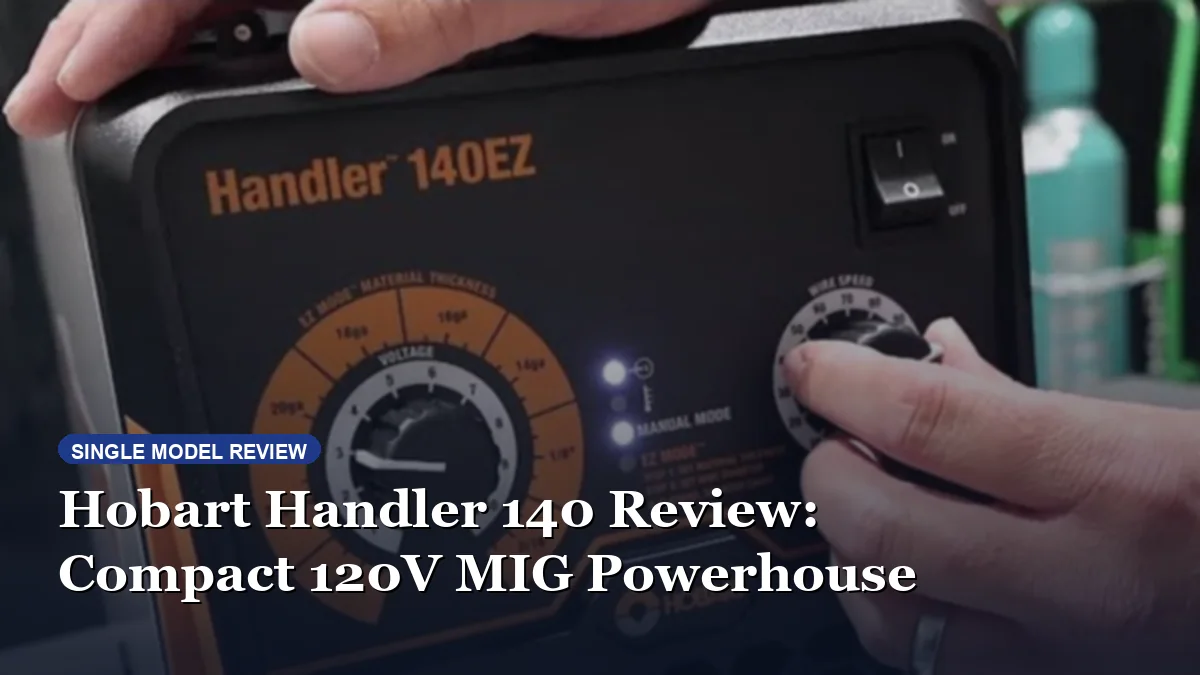

The Hobart Handler 140 remains a benchmark in portable wire-feed performance. It offers exceptional arc control for steel fabrication despite modest input power limits.
Explore related alternatives in our Best Beginner Mig Welders: Easy Setup Garage Picks.
Verified Specifications
| Category / Type | 120V MIG and Flux-Core Welder |
|---|---|
| Rated Output / Capacity | 30A to 140A DC Output |
| Power / Motor | 115V, 60 Hz, Single Phase Input |
| Build & Materials | Heavy-duty steel cabinet, industrial cast aluminum drive |
| Operating Noise | Standard transformer hum (~70 dB under load) |
| Duty Cycle / Runtime | 20 percent at 90 Amps (19V) |
| Dimensions & Weight | 24 x 18.5 x 12.5 inches, 55.9 pounds |
| Key Safety & Controls | Infinite voltage control, thermal overload protection |
What We Liked
- Infinite voltage control allows fine-tuned arc adjustments for minimal spatter.
- Robust industrial cast aluminum wire drive mechanism ensures consistent feeding.
- Spool gun ready design simplifies aluminum welding without conversion boxes.
- Comprehensive 5/3/1 industrial warranty backs core electrical and mechanical components.
Trade-Offs
- Limited to standard 120V household outlets, restricting maximum material thickness.
- Moderate duty cycle requires frequent cool-down intervals during heavy fabrication.
- Heavier than inverter-based competitors at nearly 56 pounds total weight.
Industrial Build Quality and Structural Ergonomics
When scaling up your output requirements, reviewing specifications in our Hobart Handler 140 vs 190 comparison helps determine if the larger model fits your shop.
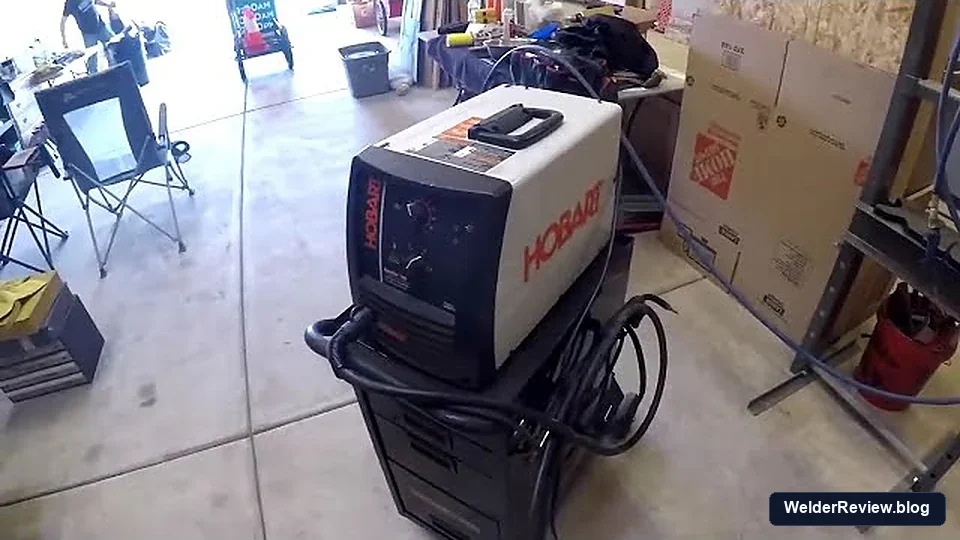
Weighing nearly 56 pounds, this unit is noticeably heavier than modern inverter competitors. However, the extra mass houses a traditional transformer that guarantees long-term electrical reliability under demanding working conditions.
The internal layout prioritizes component accessibility, keeping the wire feed mechanism and transformer well-insulated. Integrated handles provide secure transport options, ensuring the chassis remains protected against drops and impacts.
The cast aluminum drive assembly provides rigid alignment for the wire feed mechanism, preventing slippage during continuous fabrication tasks. Heavy-gauge steel cabinet panels withstand harsh shop environments while protecting internal electrical components against debris.
Ergonomic positioning of the dual-groove drive rolls simplifies wire size changes without requiring specialized hand tools. The heavy-duty ground clamp secures firmly to raw steel, minimizing electrical resistance and maintaining consistent arc stability throughout long shifts.
Internal component routing keeps the transformer isolated from the wire spool compartment, reducing potential short circuits. Integrated cable management hooks prevent torch lead kinks, preserving shielding gas flow integrity and extending overall consumable service life considerably.
- Heavy-gauge stamped steel outer shell resists jobsite impact.
- Weighs 55.9 pounds for a stable footprint on workbenches.
- Industrial cast aluminum dual-groove drive roll system.
Wire Drive Mechanism Analysis
A dependable wire feed is vital for eliminating bird-nesting and erratic arc behavior. This machine incorporates a cast aluminum drive featuring quick-release tension knobs for fast wire changes.
The dual-groove drive rolls accommodate varying wire diameters effortlessly. This mechanical setup ensures smooth filler metal delivery when transitioning between solid steel and flux-cored wires.
- Quick-release tension lever for rapid spool changes.
- Dual-groove rolls fit standard wire sizes seamlessly.
Real-World Arc Output and Material Penetration
Operating on standard household power, this machine delivers competitive output when evaluated alongside rival units in our Hobart Handler 140 vs Lincoln Weld Pak 140 analysis for garage fabricators.
The infinite voltage control system provides superior arc tuning compared to tapped-transformer alternatives. Welders can dial in precise voltage parameters to optimize bead profile and minimize post-weld cleanup.
Whether running self-shielded flux-core or gas-shielded solid wire, the arc remains exceptionally stable. This stability reduces spatter and helps operators maintain a clean puddle across various joint configurations.
Operating on standard 115V household current, this welder delivers a smooth DC arc that easily wets out on thin automotive sheet metal. Voltage tap settings allow fine adjustments to match varying joint configurations and joint fit-up gaps.
When tackling thicker structural steel up to one-quarter inch, proper multi-pass welding techniques ensure complete fusion. The tap-select switch provides repeatable voltage delivery, eliminating the guesswork associated with infinite control dials during critical fabrication milestones.
Flux-cored wire performance shines outdoors where wind gusts compromise gas shielding, offering deep penetration on rusty or painted surfaces. Stable arc characteristics minimize spatter production, drastically reducing post-weld cleanup time on busy production shop floors.
- Adjustable output range from 30 to 140 amps DC.
- Capable of welding materials from 24 gauge up to 3/16 inch.
- Infinite voltage control replaces rigid multi-step tap switches.
Performance on Thin Versus Thick Metals
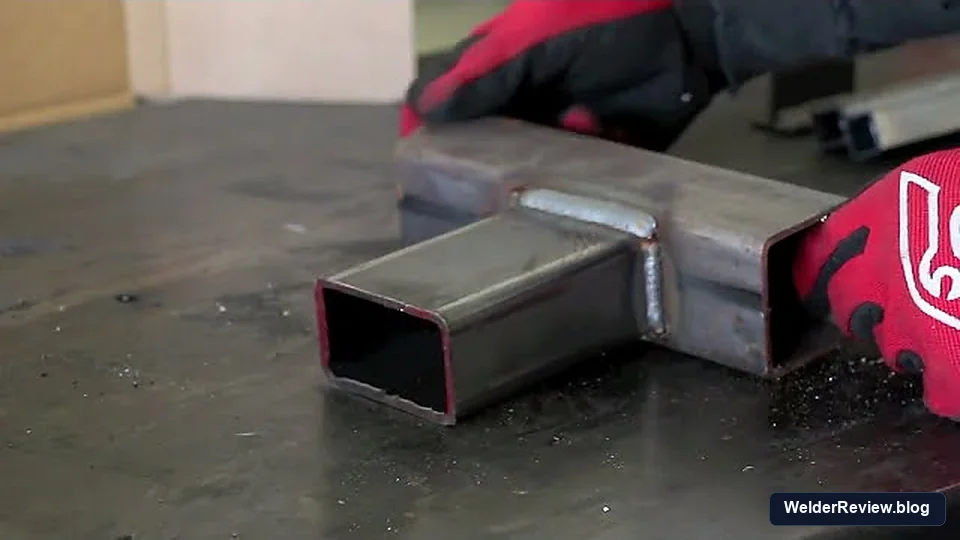
Testing on 24-gauge sheet metal reveals excellent arc control without burn-through risks. Lower amperage settings allow precise heat input management for delicate automotive repair projects.
Pushing the machine to its upper limit on 3/16-inch steel requires proper joint beveling. Utilizing flux-cored wire at maximum output ensures adequate structural fusion for heavier DIY tasks.
- Precise low-end control prevents sheet metal distortion.
- Maxes out cleanly on 3/16-inch structural steel.
Video Review: Hobart Handler 140 Review \u0026 Welding
Thermal Efficiency, Duty Cycle and Electrical Performance
Understanding electrical limitations prevents premature equipment failure during extended fabrication sessions. The unit features a rated duty cycle of 20 percent at 90 amps, which suits intermittent hobbyist tasks.
Built-in thermal overload protection automatically shuts down the output if internal temperatures spike. This safety mechanism safeguards the transformer windings and rectifier diodes against catastrophic heat damage.
Drawing power from standard 115V circuits makes this machine highly accessible for garage workshops. Users must ensure dedicated 20-amp breakers are utilized to prevent nuisance tripping under heavier loads.
The built-in thermal overload protection automatically interrupts power if internal temperatures exceed safe operating limits during heavy usage. This safety mechanism prevents premature transformer degradation and ensures long-term reliability under demanding shop conditions.
Delivering a 20 percent duty cycle at ninety amperes, the machine handles routine maintenance projects without unexpected shutdowns. Transformer-based architecture prioritizes raw durability over complex digital circuitry, making field repairs straightforward for experienced technicians.
Input power draw requires a dedicated twenty-amp circuit to prevent nuisance breaker trips at maximum output settings. Copper transformer windings maximize electrical efficiency, translating wall power directly into stable welding energy without excessive thermal loss.
- Rated duty cycle: 20 percent at 90 amperes.
- Automatic thermal overload breaker prevents transformer burnout.
- Requires dedicated 115V, 20-amp household circuit supply.
Managing Thermal Limits in the Shop
Operators must respect the duty cycle limitations during prolonged multi-pass welding jobs. Allowing the internal fan to cool components extends the operational lifespan of the unit significantly.
Monitoring input voltage drop with long extension cords is crucial for maintaining arc stability. Heavy-gauge wiring ensures the transformer receives optimal current without voltage starvation.
- Forced-air cooling fan actively dissipates internal heat.
- Use thick extension cords to prevent voltage drops.
Setup Simplicity and EZ Mode Parameter Tuning
Getting started quickly is essential for both beginner fabricators and busy mobile contractors. The control panel layout features intuitive dials that eliminate guesswork during initial machine configuration.
The EZ Mode setup simplifies parameter selection by streamlining wire speed and voltage matching. Operators can dial in exact settings with minimal adjustments, ensuring reliable arc starts every single time.
Clear polarity change diagrams inside the wire compartment guide proper setup transitions. Switching between gas-shielded MIG and gasless flux-core operations takes only a few minutes of preparation.
Setting up the wire feed speed is streamlined via a clearly labeled interior chart that removes guesswork for operators. The polarity changeover procedure from MIG to flux-cored requires simple internal lead swaps without complex wiring modifications or specialized tools.
While lacking digital memory presets, the straightforward mechanical interface allows rapid dialing of voltage and wire feed parameters. Operators quickly master the tactile response of the tap-select switches, achieving consistent weld profiles across diverse material thicknesses.
Quick-release tension levers on the wire drive assembly allow instantaneous adjustments to wire pressure without crushing softer alloys. This precision tension control ensures bird-nesting remains minimal during high-speed feeding of aluminum wire configurations.
- Streamlined EZ Mode reduces parameter tuning complexity.
- Internal chart details recommended settings for various thicknesses.
- Straightforward DC polarity reversal for different wire types.
Torch Ergonomics and Cable Management
The included MIG gun feels balanced in hand, reducing fatigue during long welding sessions. Flexible cable liners prevent binding and ensure continuous wire feed performance through the neck.
Consumables like contact tips and nozzles are standard industry sizes, making replacements easy to source. Routine torch maintenance requires minimal tooling and takes only seconds to complete.
- Ergonomic torch handle minimizes wrist strain.
- Standard consumable compatibility ensures easy replacement parts.
Routine Maintenance and Long-Term Durability Standards
Maintaining reliable performance requires adherence to basic preventive maintenance schedules. Regularly inspecting the drive rolls and clearing metal debris from the wire path prevents feeding friction.
Blowing out accumulated dust from the transformer housing with compressed air prevents overheating. Keeping internal electrical connections tight eliminates resistance and ensures consistent welding output.
Hobart backs this machine with a strong industrial warranty structure. You can examine competing brand protections directly in our detailed Hobart 140 vs Lincoln 140 showdown to compare coverage terms.
Routine maintenance requires regular inspection of the contact tip and nozzle to prevent spatter buildup and erratic wire feeding. Cleaning the drive rolls with a wire brush removes metallic debris that compromises smooth wire delivery.
Periodically blowing out internal dust using compressed air prevents electrical tracking across the transformer windings and cooling fan motor. Inspecting the work cable connection prevents voltage drop issues that negatively impact overall welding arc performance.
Lubricating the drive motor gear box annually ensures mechanical longevity and prevents premature wear during heavy fabrication schedules. Keeping spare liners and consumables on hand minimizes operational downtime during urgent structural repair projects.
- Inspect drive rolls monthly for metallic shaving buildup.
- Clean internal transformer compartments with dry compressed air.
- Backed by a robust five-year transformer warranty.
Consumable Inspection and Replacement
Contact tips wear down over time, causing arc wander and erratic wire delivery. Inspecting tips frequently and replacing them when orifices enlarge ensures optimal electrical contact.
Gas nozzles should be cleaned of spatter regularly using specialized anti-spatter gels. This practice maintains proper shielding gas coverage and prevents costly weld porosity issues.
- Check contact tip orifices for wear and elongation.
- Keep gas nozzles clear of excessive weld spatter.
Definitive Buyer Verdict: Who Should Invest?
Choosing the right wire-feed welder depends heavily on your power availability, similar to the multi-voltage testing covered in our Hobart Handler 210 MVP vs Millermatic 211 guide for shop owners.
While it lacks the heavy amperage needed for industrial plate welding, its 120V portability makes it unmatched for garage use. The solid construction and intuitive controls justify the initial investment.
Skip this model if you routinely fabricate steel exceeding a quarter-inch in thickness. However, for everyday repairs and sheet metal projects, it remains a premier industry choice.
Hobbyists and light fabrication professionals seeking a dependable 115V machine will find exceptional value in this robust structural platform. Its heavy-duty construction outperforms lightweight competitors, delivering reliable performance for automotive restoration and farm repairs.
Professional welders requiring portability for mobile repair trucks appreciate the compact footprint and rugged steel outer housing. While limited to lighter gauges, the unit excels at precision tasks where arc stability and durability matter most.
Investing in this proven platform guarantees long-term serviceability backed by readily available replacement parts and strong industry support. It remains a benchmark choice for workshops prioritizing mechanical reliability over complex digital feature sets.
- Ideal for auto body repair and home DIY fabrication.
- Unmatched portability for standard household electrical circuits.
- Not suited for heavy industrial plate fabrication work.
Final Recommendations for Purchasers
Investing in a quality shielding gas cylinder unlocks the full potential of this welder. Solid wire MIG welding produces cleaner results with significantly less post-processing cleanup required.
Pairing the machine with a dedicated spool gun allows seamless aluminum fabrication capabilities. This versatility makes it an all-in-one solution for diverse metalworking hobbyists.
- Add shielding gas for clean, spatter-free steel joints.
- Consider optional spool gun for aluminum fabrication.
Frequently Asked Questions
Can the Hobart Handler 140 run on a standard household outlet?
Yes, this welder operates on standard 115V household power. You should always use a dedicated 20-amp circuit to prevent breaker trips during extended fabrication sessions.
What is the maximum metal thickness this machine can weld?
It effectively handles materials ranging from 24 gauge up to 3/16 inch thick in a single pass. Multi-pass techniques can push slightly beyond these standard structural limits.
Does this welding machine support aluminum fabrication?
Yes, it is spool gun ready out of the box for aluminum projects. Connecting an optional direct-plug spool gun eliminates wire feeding issues common with soft aluminum.
What kind of warranty comes with this model?
Hobart provides an industry-leading industrial warranty covering the unit. This includes five years of protection on main transformers, stabilizers, and rectifiers.
Is gas required to operate this wire feed welder?
No, gas is optional because the machine runs self-shielded flux-cored wire. Connecting an external shielding gas cylinder enables clean solid-wire MIG welding processes.