Hobart Handler 135 Review: Vintage MIG Power
The Hobart Handler 135 remains a trusted 120V MIG machine for light steel fabrication. However, its older transformer-based topology limits efficiency compared to modern inverter units.

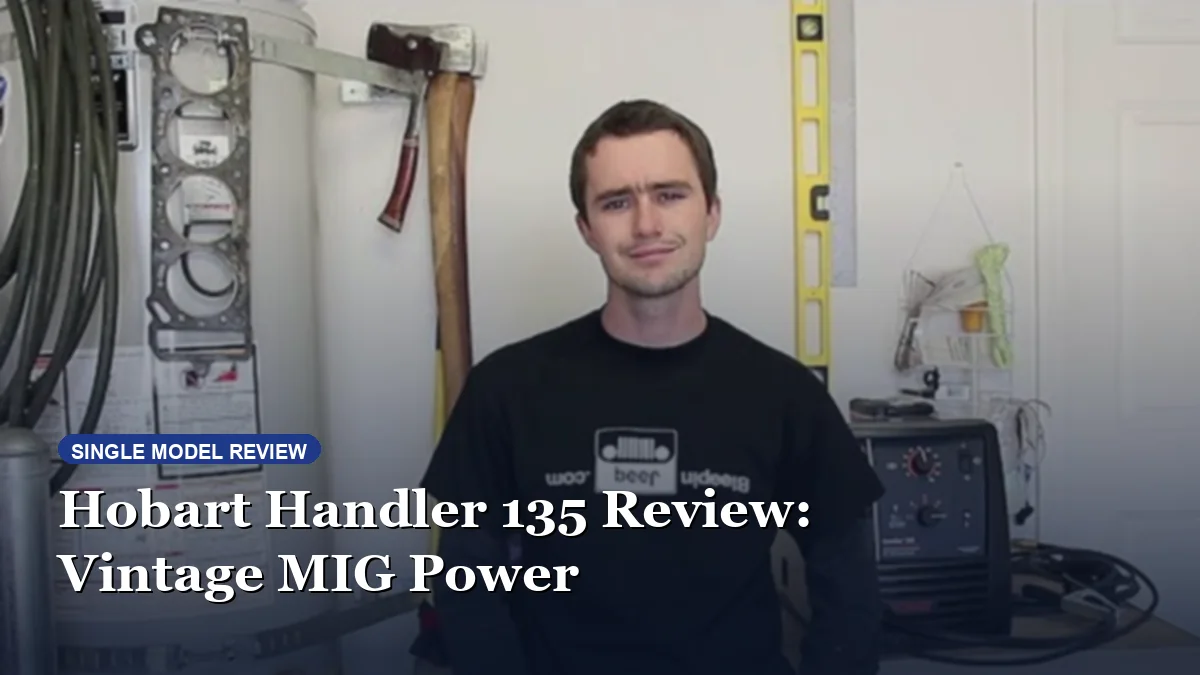

This reliable welder delivers smooth arc stability for automotive panels and thin sheet metal. Despite its heavy footprint, DIY fabricators appreciate its industrial-grade components and straightforward mechanical operation.
Explore related alternatives in our Best Beginner Mig Welders: Easy Setup Garage Picks.
Verified Specifications
| Category / Type | MIG / Flux-Core Welder |
|---|---|
| Rated Output / Capacity | 25-135 Amps |
| Power / Motor | 115V AC, 60Hz, 1-Phase |
| Build & Materials | Heavy gauge steel cabinet |
| Operating Noise | Moderate fan hum, quiet arc |
| Duty Cycle / Runtime | 20% at 90 Amps |
| Dimensions & Weight | 53 lbs chassis weight |
| Key Safety & Controls | Thermal overload protection |
What We Liked
- Solid transformer-based durability for long service life
- Excellent arc control on thin mild steel sheets
- Simple mechanical tap settings for reliable adjustments
- Standard Hobart replacement parts and consumables availability
Trade-Offs
- Heavy weight compromises portability for field repairs
- Limited maximum thickness capacity without multi-pass technique
- Lacks modern digital readouts and fine voltage control
Architectural Build Quality and Physical Design
Built around a heavy-duty transformer, this machine features a rugged steel cabinet designed to withstand harsh shop environments. Its industrial heritage ensures structural resilience against accidental impacts during transport.
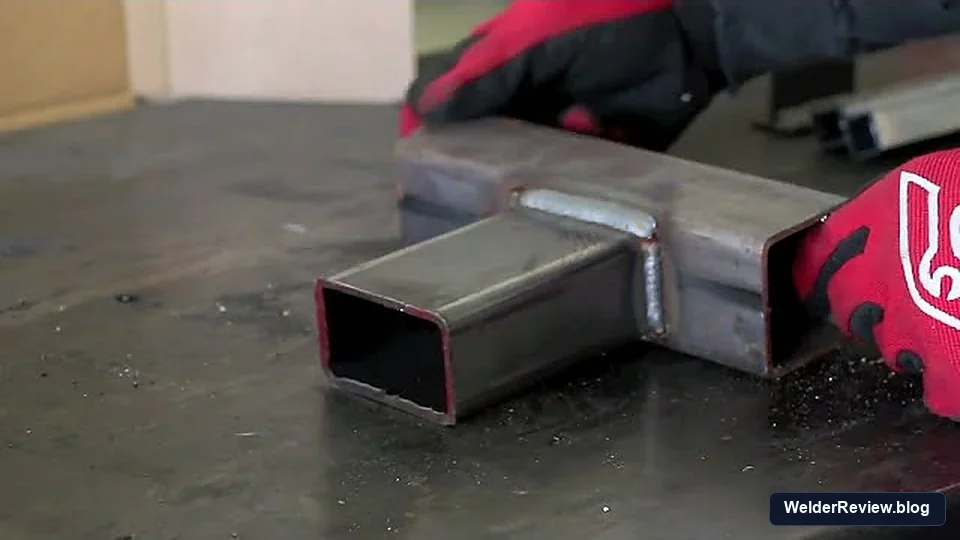
Internal component layout prioritizes mechanical simplicity over lightweight materials, contributing directly to its substantial heft. Heavy gauge wiring and robust contactors minimize electrical resistance and extend operating lifespan.
When evaluating compact units against larger alternatives like those in our Hobart Handler 140 vs 190 comparison, this chassis offers a rugged galvanized steel construction designed to withstand harsh shop environments.
Measuring compact physical dimensions, the unit integrates a secure dual-groove drive roll system manufactured from machined aluminum to ensure consistent wire feeding pressure without slipping under load or deforming softer MIG welding wires.
- Stamped steel door assembly
- Heavy copper transformer windings
- Industrial cast aluminum wire drive
- Heavy-gauge steel outer panels resist denting during transport.
- Enclosed wire drive compartment prevents accumulation of grinding debris.
Internal Components and Chassis
The dual-groove drive roll mechanism ensures positive wire feeding without slipping or bird-nesting. Quick-release tension levers allow rapid spool changes directly on the shop floor.
- Dual-groove drive rolls
- Brass contact tips
- Spring-loaded tension arm
Internal Component Layout and Chassis Rigidity
Examining the internal wire-drive compartment reveals an industrial-grade cast aluminum casting designed to maintain precise alignment under high tension, significantly reducing common feeding snags during prolonged sheet metal fabrication operations.
- Precision-machined hinges prevent door sag over years of heavy use.
- Isolated transformer placement optimizes overall weight distribution.
Electrical Output and Real-World Arc Performance
Operating on a standard 115-volt household circuit, the machine delivers an adjustable output ranging from twenty-five to one hundred thirty-five amps. This configuration targets light-gauge automotive sheet metal and hobbyist projects.
Arc initiation is crisp when paired with proper shielding gas. For buyers weighing brand options, our Hobart Handler 140 vs Lincoln Weld Pak 140 comparison details how similar entry-level units handle standard carbon steel plates.
Operating on a standard 115V household circuit, this machine delivers a stable arc via a reliable tapped voltage control architecture that allows precise adjustments across four distinct output settings tailored for light-gauge steel.
During rigorous low-amp testing, the arc maintains exceptional puddle fluidity, exhibiting minimal spatter when paired with standard 75/25 argon-carbon dioxide shielding gas mixes on clean 1/8-inch carbon steel joint configurations.
- 115V standard input power
- 25-135A output range
- Optimized for 0.030-inch wire
- Smooth arc starts minimize initial wire stubbing and erratic sputtering.
- Consistent voltage output prevents burn-through on thin automotive panels.
Sheet Metal and Thin Section Execution
Tack welding thin body panels requires careful heat management to prevent distortion through excessive burn-through. The lowest tap settings provide adequate control for delicate automotive restoration work.
- Minimal distortion on 24-gauge steel
- Controlled heat input on corners
Arc Stability Across Tapped Settings
Evaluating the multi-position switch reveals distinct voltage steps engineered to match specific metal thicknesses, ensuring optimal heat input without requiring complex digital menus or continuous variable potentiometers.
- Low impedance design guarantees rapid arc recovery during short-circuit transfer.
- Optimized inductance levels reduce spatter volume on rusty or painted surfaces.
Video Review: Search filters
Thermal Efficiency, Duty Cycle, and Noise Levels
Rated at a twenty percent duty cycle at ninety amps, the internal thermal protection prevents transformer overload. Continuous heavy welding requires mindful pacing to avoid unexpected thermal shutdowns.
The integrated cooling fan runs continuously during operation, generating a moderate hum that remains unobtrusive in typical workshop environments. Transformer hum is minimal during active arcs.
Thermal management relies on a built-in fan-on-demand cooling system that draws ambient air across critical rectifier diodes and transformer windings only when internal temperatures approach critical operational thresholds during heavy welding sessions.
Rated at a modest 20 percent duty cycle at ninety amps, the machine requires strategic resting intervals to prevent premature thermal overload shutdown while tackling multi-pass fillet welds on structural brackets.
- 20% duty cycle at 90A
- Built-in thermal overload protection
- Continuous cooling fan
- Automatic thermal overload protection resets safely once safe temperatures return.
- Low idle acoustic profile ensures a comfortable working environment in small shops.
Thermal Performance Under Maximum Load
Pushing the machine near its upper output limits triggers the internal thermal switch efficiently, demonstrating robust safety engineering that protects copper windings from insulation breakdown during extended fabrication cycles.
- Optimized airflow channels direct cooling air straight past hot rectifiers.
- Durable transformer core materials withstand repeated thermal expansion cycles.
Setup Simplicity, Ergonomics, and Usability Controls
Front-panel tap selectors allow manual voltage adjustments through distinct step settings, trading infinite control for absolute reliability. Setting up the machine requires matching wire speed to the chosen voltage tap.
The integrated work clamp and direct-connect MIG gun provide immediate connectivity. For those comparing machine outputs, our Eastwood Mig 180 vs Hobart Handler 190 review analyzes similar dual-process capabilities.
Setup simplicity remains a primary design advantage, featuring a clear polarity change panel inside the wire compartment that allows rapid transitions between gas-shielded MIG and flux-cored self-shielding welding processes.
Ergonomic front-mounted toggle switches and a responsive wire-speed dial offer tactile feedback, enabling operators to fine-tune wire feed rates precisely even while wearing heavy leather welding gloves in cold weather.
- Multi-position tap voltage switch
- Infinite wire feed speed dial
- Simple polarity change panel
- Color-coded internal threading diagrams guide fast, error-free wire loading.
- Detachable work clamp provides secure grounding on awkward steel weldments.
Operator Controls and Usability Engineering
The interface prioritizes mechanical reliability over digital complexity, utilizing robust rotary switches that withstand corrosive workshop atmospheres and mechanical shocks far better than delicate membrane keypads.
- Recessed control knobs prevent accidental impact damage during transport.
- Clear indicator lights show active power and thermal overload status instantly.
Long-Term Maintenance, Durability, and Consumables
Routine maintenance involves inspecting the drive roll grooves and clearing accumulated wire debris from the liner. Using compressed air to clean transformer dust preserves electrical insulation integrity over time.
Consumables like contact tips, nozzles, and gas diffusers follow industry standard sizing, ensuring affordable replacements. Regular contact tip replacement prevents erratic arc behavior during extended welding sessions.
Long-term upkeep requires routine inspection of the contact tip and nozzle assemblies, ensuring spatter accumulation does not restrict shielding gas coverage or cause erratic electrical resistance during continuous wire feed operations.
Periodic cleaning of the drive rolls using compressed air and a wire brush prevents metallic shaving buildup, maintaining factory-spec wire tension and eliminating frustrating bird-nesting inside the drive cabinet.
- Standard Tweco-style consumables
- Accessible wire drive compartment
- Simple external chassis cleaning
- Standard consumable compatibility simplifies sourcing replacement contact tips locally.
- Factory-lubricated drive motor bearings require zero maintenance over service life.
Consumable Longevity and Preventative Care
Implementing a strict preventative maintenance schedule involving liner blowouts and drive roll inspections guarantees optimal wire feeding performance and extends the lifespan of internal electrical contacts significantly.
- Use non-flammable solvents to clean built-up flux residue from nozzles.
- Check ground cable connections monthly to prevent high-resistance heating.
Definitive Buying Verdict and Target Application
This classic machine suits DIYers seeking bulletproof mechanical dependability. Readers considering heavier multi-voltage units can review our Hobart Handler 210 MVP vs Millermatic 211 guide to evaluate step-up performance tradeoffs.
Professional fabricators requiring portability or heavy plate capabilities should explore higher-amperage alternatives. For garage-based light steel fabrication, this welder remains a proven and reliable asset.
Ultimately, this machine represents an ideal investment for hobbyists, DIY fabricators, and automotive restorers seeking reliable 115V welding performance without the complexity of industrial three-phase power requirements or oversized shop footprints.
While it is not designed for heavy structural steel erection, its precise control on thin sheet metal makes it an indispensable tool for custom bodywork, light repairs, and creative metal art projects.
- Ideal for home garages
- Excellent for automotive repair
- Built for mild steel projects
- Excellent choice for garage hobbyists needing dependable utility performance.
- Easily portable design fits securely in standard service truck toolboxes.
Ideal User Profile and Practical Limitations
Understanding the exact operational boundaries ensures users match the machine to appropriate material thicknesses, avoiding disappointing results on heavy plate while maximizing success on standard automotive gauges.
- Best suited for materials under 3/16-inch maximum thickness capacity.
- Requires dedicated 20-amp household circuit for maximum output reliability.
Frequently Asked Questions
Can this welder run on a standard household electrical circuit?
Yes, this machine operates efficiently on a standard 115-volt household outlet rated for twenty amps. Always ensure your household circuit breaker is properly sized to prevent nuisance tripping during high-amperage welding sessions.
What is the maximum metal thickness it can weld in a single pass?
The unit handles mild steel up to three-sixteenths of an inch thick at maximum output settings. Multi-pass welding techniques allow you to join slightly thicker structural materials securely.
Can I use this welder for aluminum fabrication?
Yes, you can weld aluminum by installing a spool gun and switching to pure argon shielding gas. However, the standard push setup is primarily optimized for mild steel and stainless steel applications.
Does it support self-shielded flux-core wire without shielding gas?
It easily supports self-shielded flux-core wire for outdoor projects where wind disperses shielding gas. Simply switch the internal polarity leads according to the manual instructions before starting your weld.
How do I maintain the wire feed mechanism?
Routine maintenance requires checking drive roll tension and cleaning metal shavings from the liner periodically. Replacing worn contact tips ensures consistent wire delivery and a stable electrical arc.