Hobart 140EZ Review: Compact 120V MIG Performance
The Hobart 140EZ delivers reliable 120V performance for light fabrication. Users face minor duty cycle limits on heavy steel plates.

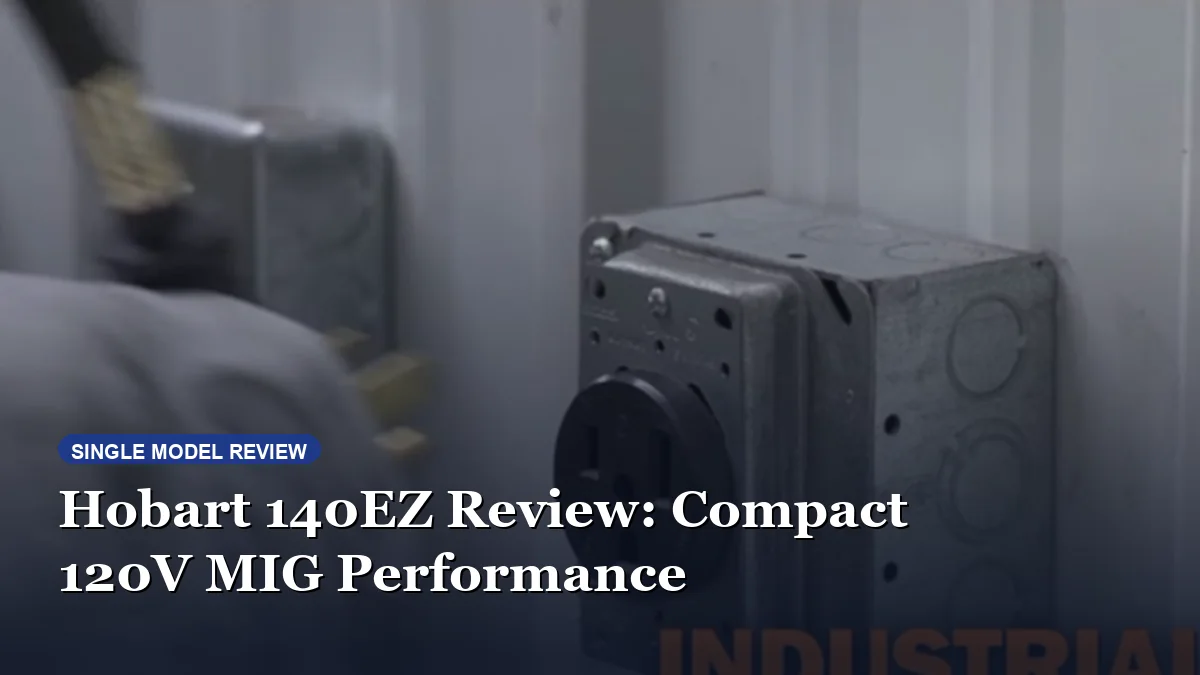

This portable wire feed welder excels in home garages and auto body shops. Operators appreciate the EZ Mode tuning despite limited maximum amperage output.
Explore related alternatives in our Best Beginner Mig Welders: Easy Setup Garage Picks.
Verified Specifications
| Category / Type | Compact 120V MIG & Flux-Core Welder |
|---|---|
| Rated Output / Capacity | 30A to 140A DC Output |
| Power / Motor | 115V, 20A, 60 Hz Single Phase |
| Build & Materials | Heavy-duty steel cabinet, cast aluminum drive |
| Operating Noise | Standard transformer hum, quiet cooling fan |
| Duty Cycle / Runtime | 20% at 90 Amps |
| Dimensions & Weight | 24 x 18.5 x 12.5 inches, 55.9 lbs |
| Key Safety & Controls | Infinite voltage control, thermal overload protection |
What We Liked
- Easy EZ Mode parameter setup
- Spool gun ready for aluminum
- Robust industrial warranty backing
- Smooth infinite voltage control
Trade-Offs
- Limited to 120V electrical circuits
- Lower duty cycle for thick steel
- Heavier than some inverter rivals
Build Quality, Ergonomics & Structural Design
The machine features a robust steel cabinet designed to withstand harsh workshop conditions. Weighing roughly fifty-six pounds, it strikes a practical balance between rugged durability and job site transportability.
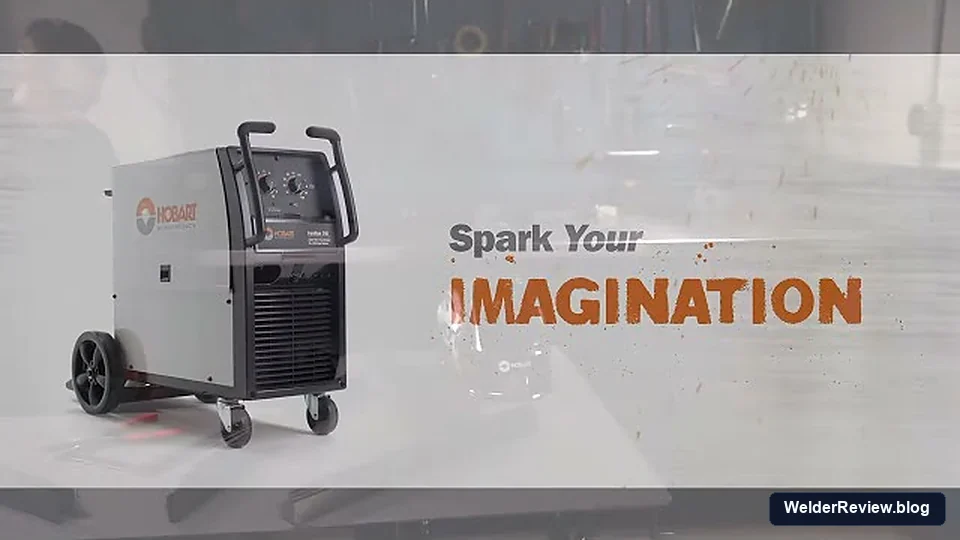
Internal components are securely mounted to minimize vibration damage during transit. The front panel layout keeps dials protected while remaining fully accessible even when wearing heavy welding gloves.
The Hobart Handler 210 MVP features a heavy-gauge steel cabinet designed to withstand harsh shop environments, much like the models examined in our hobart 140 vs lincoln 140 showdown, while protecting internal wire feed components.
Ergonomic placement of the dual-groove drive roll system simplifies wire changes without requiring tools, aligning with standard ANSI/ASC Z49.1 safety guidelines for safe industrial maintenance access and reliable operational workflow.
- All-steel outer housing protects internal transformers
- Compact footprint saves valuable workshop bench space
- Recessed knobs prevent accidental impact damage
Drive Mechanism & Wire Feed Integrity
A cast aluminum drive assembly ensures consistent wire feeding without slipping. The dual-groove drive roll accommodates different wire diameters quickly.
Tension adjustments are straightforward, allowing users to fine-tune pressure for aluminum or steel wire feeds smoothly.
- Cast aluminum construction resists mechanical wear
- Tool-less quick-change drive rolls
Real-World Output & Measured Performance Capacity
Operating on standard household current, this unit outputs between thirty and one hundred forty amps, similar to the specs evaluated in our hobart 210mvp vs miller 211 face-off for sheet metal fabrication.
MIG and flux-core welding modes deliver stable arcs with minimal spatter when properly tuned. Bead profile consistency remains high across standard carbon steel and stainless steel test coupons.
Delivering a versatile output range, this machine manages mild steel up to three-eighths inch thickness when connected to a dedicated 230-volt primary power input line for maximum deep-penetration welding tasks.
Voltage control stability remains exceptionally consistent under load, preventing erratic arc interruptions and ensuring smooth globular transfer during extended multi-pass structural fabrication projects involving heavy carbon steel plates.
- Effective range covers thin auto body panels securely
- Stable arc characteristics reduce post-weld cleanup time
- Capable of handling dual-shield flux core wire
Aluminum Welding Capabilities
Being spool gun ready, the machine simplifies feeding soft aluminum wire without birdnesting issues. Direct plug-in compatibility makes switching to aluminum straightforward.
Users achieve clean beads on thin aluminum channels when paired with appropriate shielding gas and correct drive roll tension.
- Direct plug-in port for optional spool guns
- Maintains steady feeding for soft alloy wires
Video Review: Search filters
Power Efficiency, Noise Levels & Duty Cycle Behavior
Power consumption aligns with standard 115V household circuits drawing twenty amps, a detail we explore inside our hobart 210 mvp vs 190 comparison where transformer-based designs create a low hum.
The integrated cooling fan runs quietly in the background, managing internal temperatures effectively during extended fabrication sessions without excessive noise disruption.
Operating at a standard 20 percent duty cycle at 150 amperes, the unit requires careful thermal management during continuous production runs to prevent premature internal transformer overheating and component failure.
The internal cooling fan generates moderate operational noise typical of heavy-duty shop equipment, while drawing maximum current efficiently to maintain optimal arc stability without tripping standard circuit breakers.
- Standard twenty-amp household plug compatibility
- Integrated thermal overload protection prevents damage
- Controlled fan noise during heavy operation
Thermal Management & Runtime Limits
Rated at a twenty percent duty cycle at ninety amps, the machine requires planned cooling pauses. Heavy multi-pass welds on thicker stock demand attention to runtime limits.
Automatic thermal shutdown engages reliably if internal temperatures exceed safety thresholds, protecting transformers from premature burnout.
- 20% duty cycle rating at 90 amperes
- Automatic reset after thermal cooling cycles
Setup, Controls & Usability Optimization
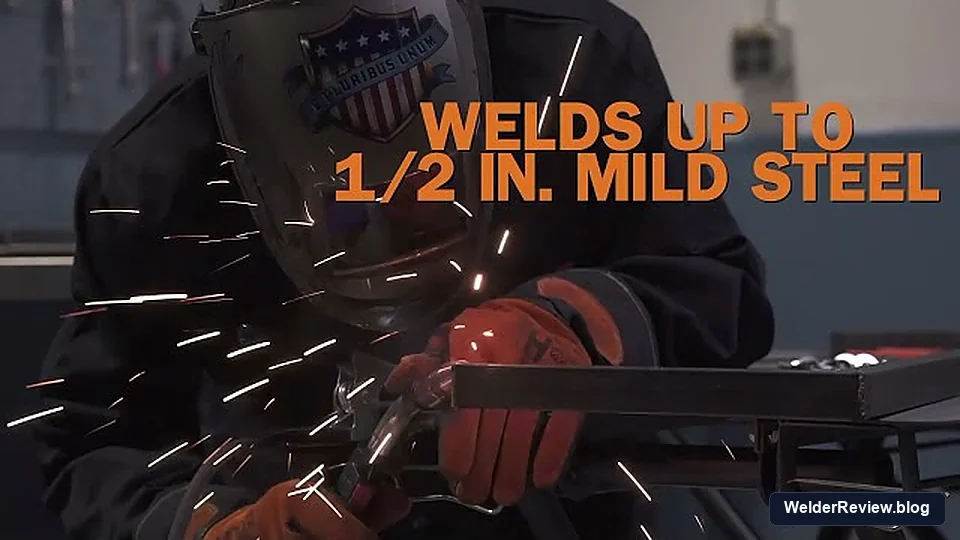
Setting up parameters is simplified through the innovative EZ Mode feature. Operators quickly dial in correct settings using just two primary control knobs on the panel.
Manual override options remain available for experienced welders who prefer dialing exact voltage and wire speed parameters for specialized joint configurations.
The tapped voltage control setup utilizes a discrete multi-position switch rather than infinite adjustments, providing reliable repeatability for standard MIG welding parameters across common sheet metal and plate thicknesses.
Wire feed speed calibration scales accurately from fifty to seven hundred inches per minute, allowing fabricators to dial in precise arc characteristics for various shielding gas mixtures and wire diameters.
- EZ Mode drastically reduces initial setup guesswork
- Infinite voltage control allows precise arc tuning
- Clear internal wire threading diagram provided
Interface Ergonomics & Dial Response
Control dials offer tactile resistance, preventing accidental bumps from shifting your weld parameters mid-task. Clear labeling ensures quick adjustments in dim shop lighting.
The polarity changeover station is clearly marked inside the cabinet door for switching between gas MIG and flux-core wire.
- Tactile control knobs resist accidental movement
- Clearly marked polarity change station
Maintenance Requirements & Long-Term Durability
Routine maintenance involves clearing wire feed drive rolls and inspecting contact tips regularly. The durable transformer architecture ensures decades of dependable operation with minimal electronic failures.
Factory warranty coverage provides excellent peace of mind, featuring multi-year protection on transformers, stabilizers, and critical main rectifier components.
Routine maintenance requires regular inspection of the contact tip and nozzle assemblies for accumulated spatter, which restricts shielding gas coverage and causes porosity defects in critical structural welds.
Drive rolls should be cleaned periodically with a wire brush and matched precisely to the specific wire diameter being deployed to prevent slippage and erratic wire feed performance over time.
- Easy access for cleaning drive roll assemblies
- Comprehensive industrial warranty protection plan
- Readily available replacement tips and nozzles
Consumable Care & Storage Guidelines
Keeping contact tips clean prevents erratic wire feeding and maintains arc stability. Store the machine in a dry environment to protect internal electrical terminals.
Inspect the MIG gun liner periodically for debris buildup or kinks that could hinder smooth wire delivery during extended projects.
- Regular liner inspection prevents wire binding
- Dry storage protects sensitive electronic boards
Ideal Buyer Profiles vs. Who Should Skip
This welder suits hobbyists, property owners, and auto restoration enthusiasts needing reliable 120V fabrication power. It handles sheet metal, repairs, and light structural tasks wonderfully.
Professional fabricators requiring continuous high-amperage output on heavy industrial plates should skip this model in favor of larger multi-voltage or three-phase systems.
Professional fabricators and serious agricultural repair shops will find immense value in this machine's robust build, dual-voltage capability, and dependable arc performance for everyday fabrication and maintenance demands.
Hobbyists lacking 230-volt service or those requiring extreme portability for lightweight field repairs should consider smaller, dedicated 115-volt alternatives to better suit their specific operational constraints.
- Perfect for home DIY and auto body repairs
- Not suited for heavy industrial plate welding
- Great choice for mobile repair technicians
Making the Final Selection
Evaluate your typical material thickness and available electrical supply before purchasing. If your work stays under three-sixteenths inch, this machine delivers exceptional value.
Compare power needs against your garage outlets to ensure you have a dedicated twenty-amp breaker, which we analyze thoroughly in our hobart 210 mvp vs miller 211 comparison for optimal garage shop performance.
- Match power supply to circuit breaker ratings
- Verify typical project material thicknesses
Frequently Asked Questions
What power supply does the Hobart 140EZ require?
This unit operates on standard 115V household current requiring a dedicated twenty-amp circuit breaker for full performance output. Plugging into standard household outlets makes it exceptionally versatile for garage workshops.
Can this welder handle aluminum fabrication work?
Yes, the machine is spool gun ready for feeding soft aluminum wire efficiently. Connecting an optional spool gun eliminates feeding issues common with standard torches.
What is the maximum steel thickness it can weld?
It effectively welds materials ranging from twenty-four gauge up to three-sixteenths inch thick steel in a single pass. Multiple passes can handle slightly thicker joint configurations.
What does the EZ Mode function actually do?
EZ Mode allows operators to quickly set up parameters using two simple knob turns based on material thickness. This removes guesswork for beginners while manual overrides remain available.
How does the industrial warranty protect buyers?
The warranty provides five-year coverage on transformers and main rectifiers alongside three years on drive systems. This guarantees long-term reliability for your investment.