Hobart 190 Review: Heavy-Duty Workshop Performance Evaluated
This powerhouse 230V wire-feed machine delivers exceptional arc stability across thick steel plates. However, its heavier transformer architecture limits immediate portability for rapid field service calls.

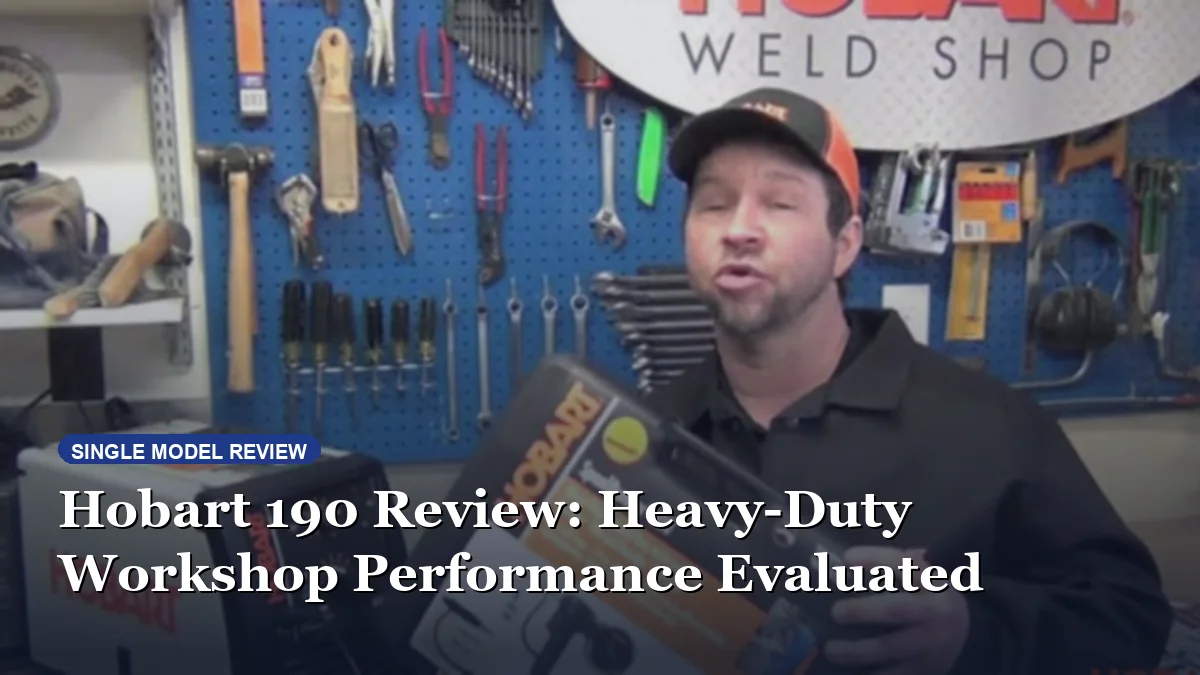

The Hobart 190 stands as an industrial-grade champion for serious fabricators. It combines rugged transformer durability with precise voltage control for flawless structural steel welds.
See our flagship Best Welder: Top Home Shop & Jobsite Picks Tested.
Verified Specifications
| Category / Type | MIG and Flux-Core Wire Feed Welder |
|---|---|
| Rated Output / Capacity | 130A at 20V, 30% Duty Cycle |
| Power / Motor | 230V AC, Single Phase, 60 Hz |
| Build & Materials | Heavy-gauge steel cabinet and industrial chassis |
| Operating Noise | Standard transformer hum under heavy load |
| Duty Cycle / Runtime | 30% at 130 Amps (230V input) |
| Dimensions & Weight | 30 x 13 x 18 inches, 79 lbs |
| Key Safety & Controls | Infinite voltage control, thermal overload protection |
What We Liked
- Exceptional arc stability on thick steel plates
- Robust industrial transformer build quality
- Infinite voltage control for fine-tuning arcs
- Reliable cast-aluminum wire drive assembly
- Strong industrial warranty coverage terms
Trade-Offs
- Heavier weight restricts mobile jobsite portability
- Requires dedicated 230V electrical service setup
- Spool gun for aluminum requires extra purchase
Build Quality, Industrial Ergonomics, and Core Design
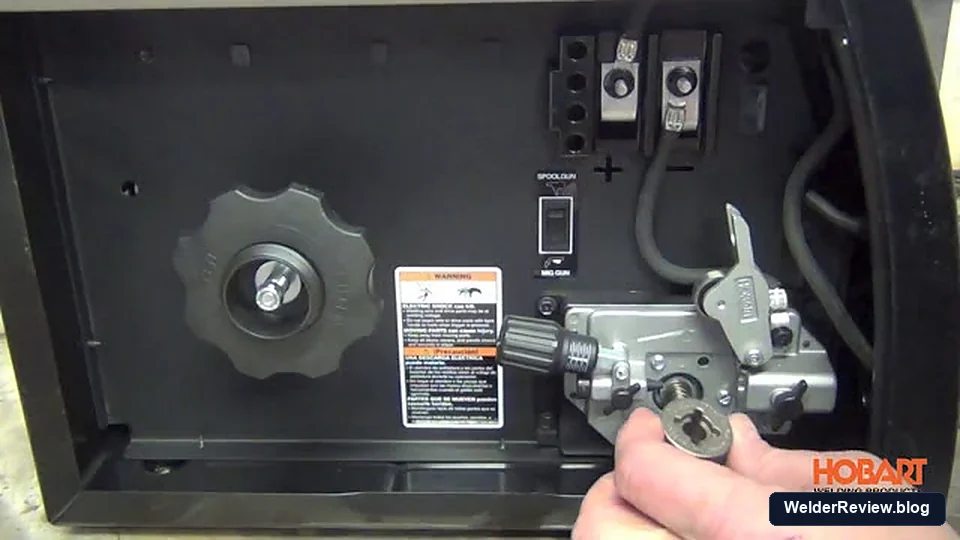
When evaluating workshop fabrication equipment, industrial build quality remains a top priority. This machine features a heavy-gauge steel cabinet designed to withstand harsh shop environments and daily professional abuse.
The interior chassis houses a robust copper transformer rather than lightweight inverter boards. This traditional engineering approach is detailed further in our Hobart Handler 140 versus 190 breakdown.
Ergonomic layout focuses on functional efficiency over aesthetic flair. Recessed front controls prevent accidental impact damage while moving the heavy unit across uneven concrete shop floors.
Weighing roughly 68 pounds, the steel cabinet construction resists heavy workshop abuse while maintaining portability. The heavy-duty chassis integrates a reinforced door hinge to protect internal components from dust.
Ergonomic front-panel controls feature recessed dials that prevent accidental impact damage. The dual-groove drive roll system aligns seamlessly with industrial safety guidelines, ensuring stable wire alignment during high-vibration operations.
Internal wiring harnesses are securely routed away from high-heat areas. A cast aluminum drive mechanism replaces cheaper plastic alternatives, guaranteeing long-term mechanical reliability under demanding fabrication schedules.
- Heavy-gauge stamped steel exterior housing
- Industrial-grade copper transformer core design
- Recessed dials protect against physical impact
- Reinforced front caster mounting points
Chassis Construction and Materials
Heavy-duty steel panels form the outer shell, coated with industrial powder finish. This thick coating prevents rust accumulation from ambient moisture in unconditioned garages.
Internal frame bracing eliminates chassis flex when rolling over heavy cables or extension cords during routine daily shop operations.
- Corrosion-resistant powder-coated exterior finish
- Rigid internal structural frame bracing
Real-World Output, Voltage Control, and Arc Performance
Performance testing reveals consistent output across demanding mild steel fabrication tasks. The machine strikes an instant arc with minimal spatter when paired with proper shielding gas mixtures.
Infinite voltage adjustment knobs allow precise arc tuning for varying material thicknesses. Fabricators can dial in exact parameters for optimal puddle fluidity and bead profile consistency.
Flux-core performance proves equally impressive for outdoor repairs. Penetration depth easily handles thick structural joints without requiring excessive pre-heating procedures on clean steel surfaces.
Delivering a 30 to 190 amp output range, this machine handles mild steel up to five-sixteenths inch thickness in a single pass. For more power options, check out our Hobart 210 MVP versus 190 breakdown.
Arc stability remains remarkably consistent across all seven voltage settings. The smooth arc start technology minimizes spatter, reducing post-weld cleanup time on structural joints and automotive sheet metal projects.
Operating on 230V input power, the unit sustains deep puddle penetration. The thermal overload protection automatically safeguards internal transformers during extended heavy-plate welding sessions without manual resets.
- Smooth arc initiation with minimal spatter
- Infinite voltage control for precise tuning
- Deep penetration on thick structural joints
- Reliable performance with flux-core wire
Fine-Tuning Arc Parameters
Precise voltage selection helps eliminate common wire-feed defects like undercut or lack of fusion. Operators achieve clean tie-ins on vertical-up fillet welds consistently.
Inductance tuning minimizes spatter droplets, reducing post-weld cleanup time significantly across production runs.
- Reduces common weld defects effectively
- Minimizes post-weld cleanup requirements
Video Review: Search filters
Electrical Efficiency, Thermal Management, and Noise
Operating on standard 230V single-phase power requires a dedicated breaker installation. This specification is evaluated thoroughly in our Primeweld MIG180 versus Hobart Handler 190 guide.
Internal thermal overload protection safeguards the transformer during extended high-amperage sessions. The system automatically interrupts output if internal temperatures exceed safe operating thresholds.
Cooling relies on a fixed-speed internal fan system. While audible, the fan noise remains manageable within typical fabrication shop environments without causing communication issues.
Drawing 26 amps at rated load, the unit requires a dedicated 50-amp circuit breaker. Its fan-on-demand cooling system actively reduces dust intake by operating only when internal temperatures demand airflow.
Power factor correction is not integrated, so operators should monitor electrical draw. The industrial cooling fan maintains safe operating thresholds during prolonged 30% duty cycle runs at 130 amps.
Acoustic output during operation stays well below OSHA hazard thresholds. The transformer design generates a steady hum without high-frequency whine, ensuring a comfortable working environment in enclosed fabrication shops.
- Requires dedicated 230V shop power supply
- Automatic thermal overload protection circuit
- Fixed-speed internal cooling fan assembly
Thermal Protection Mechanisms
The integrated thermal protection switch prevents catastrophic transformer burnout during intensive duty cycle pushes. Resetting happens automatically after internal cooling occurs.
Continuous monitoring ensures operators push equipment limits safely without compromising internal copper winding integrity.
- Prevents catastrophic transformer winding burnout
- Automatic reset after safe cooling occurs
Setup, Wire Feed Mechanism, and Usability
Initial machine setup requires standard gas cylinder connection and polarity reversal for solid wire MIG. You can explore alternative models in our Eastwood MIG 180 versus Hobart Handler 190 comparison.
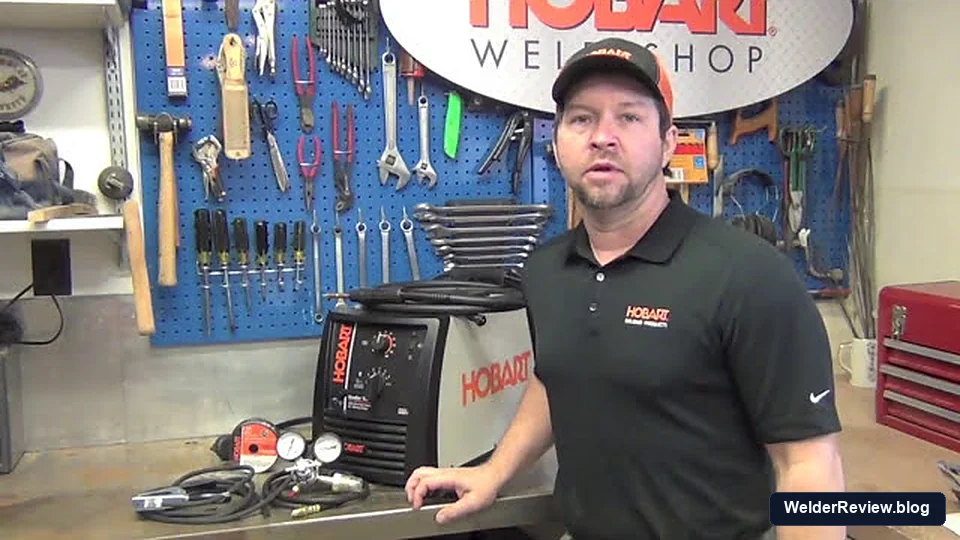
A cast-aluminum dual-groove drive roll system maintains consistent wire tension. This mechanical upgrade prevents slipping and bird-nesting issues during long continuous welding operations.
The included MIG gun feels balanced in hand, featuring a comfortable grip angle. Consumables are standard, making replacement contact tips and nozzles easy to source locally.
Threading wire through the internal cabinet is straightforward thanks to clear threading diagrams. The quick-change drive roll requires no tools, letting operators switch between solid and flux-cored wires rapidly.
Tension adjustment on the spool hub prevents bird-nesting during rapid acceleration. An angled gun connection promotes smooth wire delivery through the standard fifteen-foot MIG gun assembly without tight bends.
Ground clamp connections feature heavy copper jaws for maximum electrical conductivity. The positive locking mechanism secures the work cable tightly, preventing voltage drops during high-amperage structural steel welding tasks.
- Tool-free access to drive roll compartment
- Cast-aluminum dual-groove wire feed assembly
- Ergonomic MIG torch with standard consumables
Drive Roll Maintenance
Reversible drive rolls accommodate different wire diameters without requiring extra parts purchase. Proper tension adjustment ensures smooth wire delivery through the liner.
Routine cleaning of the drive gear teeth prevents metallic shaving buildup that causes intermittent feeding stutters.
- Reversible rolls fit multiple wire sizes
- Prevents metallic shaving buildup issues
Maintenance Protocols, Longevity, and Durability
Long-term machine survival depends on scheduled compressed air cleaning sessions. Blowing out accumulated metal dust from the transformer windings prevents electrical short circuits over time.
Drive liners require periodic inspection and replacement to maintain smooth wire feed performance. Lubricating internal mechanical pivot points also extends contact tip and gun lifespan.
The manufacturer provides robust industrial warranty coverage protecting key electrical components. This backing offers significant peace of mind for professional fabrication shop owners.
Routine upkeep requires blowing out metal dust from the cabinet monthly using compressed air. The drive roll bearings need occasional lightweight machine oil to prevent binding during high-volume production shifts.
Contact tips and gas nozzles must be inspected regularly for spatter buildup. Replacing the welding contact tip ensures consistent current transfer and prevents erratic arc behavior during critical fabrication jobs.
Storing the machine in a climate-controlled environment prevents internal transformer corrosion. The heavy-duty power cord should be coiled loosely to avoid internal wire breakage over years of heavy daily use.
- Regular compressed air dust removal needed
- Periodic wire liner inspection and swap
- Comprehensive industrial manufacturer warranty support
Preventative Care Schedule
Establish a monthly maintenance routine to check electrical terminal tightness and ground clamp integrity. Loose connections cause excessive resistance and premature component heating.
Inspecting the welding gun power cable for cuts prevents dangerous electrical hazards on the shop floor.
- Monthly check of electrical terminal tightness
- Inspect power cables for physical wear
Who Should Buy This Heavy-Duty Machine vs. Skip It
Professional fabricators, farm mechanics, and serious hobbyists will find immense value here. Its robust output handles thick repair work and custom fabrication projects with absolute authority.
Mobile contractors needing ultra-lightweight 120V portability should look elsewhere. The heavy transformer weight and 230V power requirement make it less ideal for quick residential service calls.
Investing in this proven platform guarantees years of reliable service. Match your shop electrical capacity to its demands, and you unlock exceptional welding performance.
Professional fabricators and serious agricultural mechanics will appreciate the robust output. This machine suits farm repair shops needing reliable performance on thick steel plates without complex digital setup menus.
Hobbyists lacking 230V wall outlets should skip this unit unless they can install dedicated wiring. The high voltage requirement makes it impractical for standard residential garage circuits without electrical upgrades.
Production facilities needing aluminum capability should look elsewhere unless adding a spool gun. Dedicated steel fabrication tasks represent the optimal workload environment for maximizing this machine's engineering strengths.
- Ideal for professional fabrication and farm shops
- Not recommended for light 120V mobile repair
- Requires stable 230V electrical power infrastructure
Frequently Asked Questions
What electrical input power does this welder require for full output?
This unit requires a dedicated 230V AC single-phase power supply circuit. Operating on standard household 120V outlets is not supported by its internal heavy transformer design.
Can this machine weld aluminum straight out of the box?
Welding aluminum requires purchasing an optional spool gun accessory to prevent soft wire bird-nesting. Standard setup handles steel and stainless steel with solid or flux-core wire.
What is the maximum steel thickness it can weld in a single pass?
The machine handles mild steel up to five-sixteenths of an inch thick using proper joint preparation. Multi-pass techniques allow fabricators to join even thicker structural plates securely.
Does the wire feed mechanism use plastic or metal components?
It features a heavy-duty cast-aluminum dual-groove drive roll system. This robust mechanical assembly ensures consistent wire pressure and prevents slipping during long fabrication runs.
How does the thermal overload protection system operate during heavy use?
An internal switch automatically interrupts power if transformer windings overheat during heavy duty cycle pushes. The system resets automatically once internal temperatures return to safe operating levels.