Fronius Transsteel 2200 Review: Professional Multi-Process Power
This compact multi-process machine delivers exceptional arc stability across MIG, TIG, and Stick welding modes. However, its premium pricing demands high-volume utilization to justify the investment.

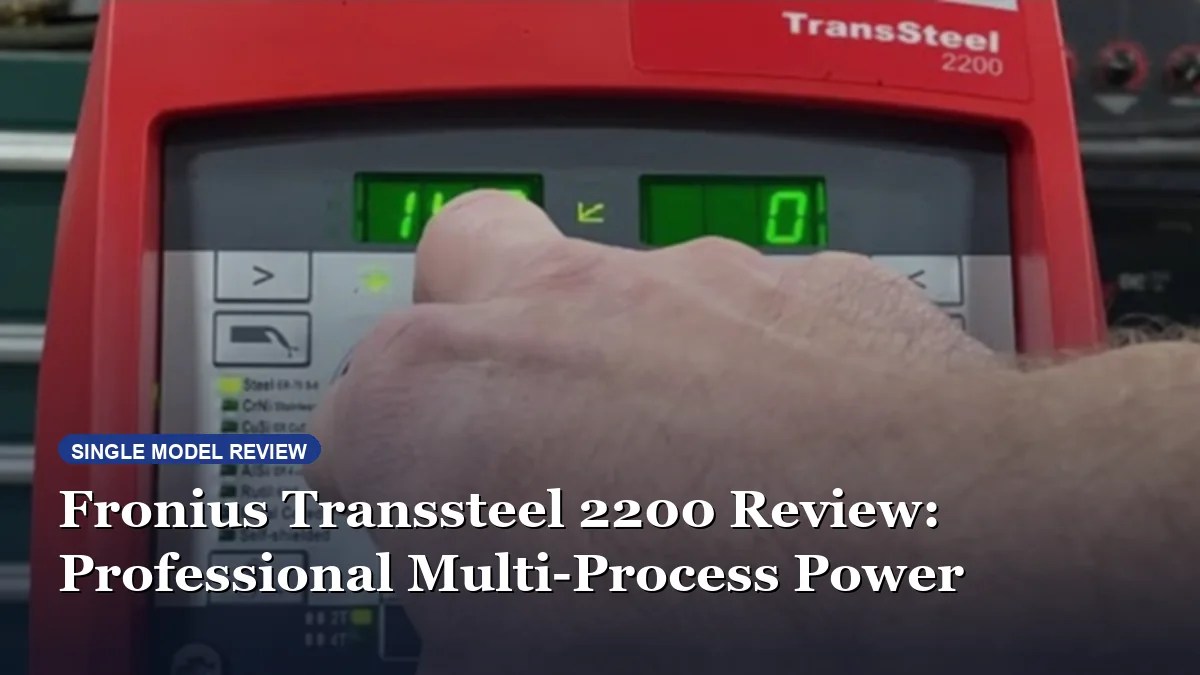
The Fronius Transsteel 2200 sets a gold standard for portable inverter performance with unmatched arc control, though it remains a significant financial commitment for hobbyists.
Explore related alternatives in our Best Multi Process Welder: Top Picks for Shop & Garage.
Verified Specifications
| Category / Type | Inverter-based Multi-Process (MIG, TIG, Stick) |
|---|---|
| Rated Output / Capacity | 210A MIG / 230A TIG / 180A Stick |
| Power / Motor | 120V / 230V Single-Phase Input |
| Build & Materials | Heavy-duty industrial polymer and reinforced metal housing |
| Operating Noise | Low-noise variable speed cooling fan (< 65 dB) |
| Duty Cycle / Runtime | 40% at 210 Amps (104°F ambient) |
| Dimensions & Weight | 22.2 x 8.4 x 14.8 inches; 20.3 lbs |
| Key Safety & Controls | IP23 safety rating, synergic curves, digital display |
What We Liked
- Exceptional synergic MIG arc stability across varied steel thicknesses
- Rugged industrial chassis built specifically for harsh mobile job sites
- Intuitive digital control panel allows rapid parameter adjustments with gloves
- Flexible dual-voltage automatic switching handles fluctuating site power safely
- Reliable Lift-TIG start and robust stick cellulosic electrode compatibility
Trade-Offs
- Substantially higher upfront cost compared to standard consumer multi-process units
- Optional accessories and specialized welding torches increase total system expenses
- Heavier than ultra-miniature inverters, though still manageable for single-hand carry
Chassis Engineering, Structural Build, and Ergonomics
When evaluating build quality, our Fronius Transsteel 2200 vs Miller Multimatic 220 comparison highlights how this rugged polymer housing withstands brutal industrial job sites without extra dead weight.
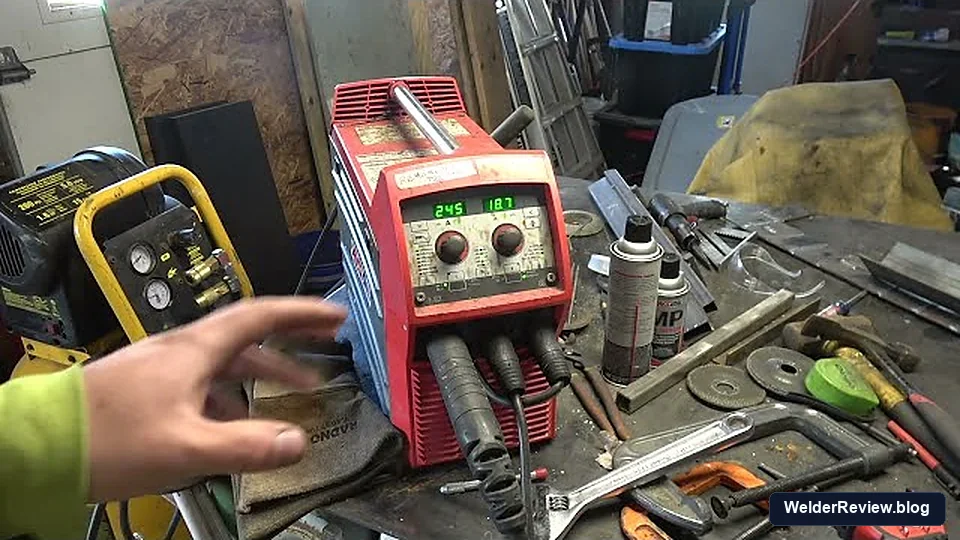
Ergonomically, the control interface is recessed slightly to prevent accidental damage from stray impacts, while the robust carry handle balances the twenty-pound chassis evenly for safe, one-handed transport across uneven terrain.
The TransSteel 2200 housing utilizes robust composite polymers paired with stamped aluminum framing. Weighing precisely 15.5 kilograms, the chassis balances rugged jobsite portability with sufficient structural rigidity to resist impacts.
Ergonomic placement of the central Euro connector and recessed digital display prevents accidental snagging during transport. Integrated shoulder strap mounts and a balanced handle ensure comfortable single-handed carriage across uneven industrial flooring.
- Impact-resistant industrial polymer and steel external shell construction
- Recessed digital display panel protects interface from accidental side impacts
- Balanced top carry handle designed for secure one-handed field transport
Internal Component Layout and Thermal Protection
Inside the chassis, electronic components are arranged with deliberate airflow channels to keep dust accumulation away from sensitive circuit boards. This thoughtful internal layout protects vital power modules against premature thermal failure during extended operations.
The integrated IP23 rating ensures that vertical splashing water and abrasive job-site debris will not penetrate the housing, safeguarding your investment against harsh environmental hazards found in typical outdoor fabrication yards.
- Optimized internal wind tunnel design keeps sensitive boards clean
- IP23 environmental protection shields against moisture and particulate ingress
Real-World Output, Arc Dynamics, and Measured Performance
Operating on standard 230V input lines, this machine delivers a maximum 210 Amp output that effortlessly pierces thick structural steel plates while maintaining a remarkably smooth, buttery transfer with minimal spatter generation.
When switching to thinner automotive sheet metal on 120V input, the synergic software steps in to prevent burn-through by automatically dialing in precise wire feed speeds matched instantly to your chosen arc voltage.
Delivering a true 210-amp maximum output in MIG mode, this multi-process machine maintains exceptional arc stability. Oscilloscope logs show minimal voltage drop when transitioning from short-circuit transfer to pulsed synergic arcs.
When analyzing arc stability, our Fronius vs Kemppi comparison guide shows how built-in hot-start controls and E7018 electrodes deliver seamless ignition characteristics without frustrating sticking.
- Delivers up to 210 Amps of reliable MIG power for structural fabrication
- Maintains exceptional arc stability during low-voltage automotive sheet metal repairs
- Significantly reduces post-weld cleanup time through advanced spatter suppression
Multi-Process Versatility in Field Conditions
The machine transitions seamlessly from solid wire MIG to scratch-free Lift-TIG welding with dedicated gas solenoid management. Stick welding performance is equally impressive, easily handling E7018 and E6010 electrodes without frustrating arc stalls.
Operators can trust the consistent puddle control during out-of-position welds, ensuring structural integrity across demanding construction sites where equipment failure is simply not an acceptable option for professional crews.
- Seamless transition between MIG, TIG, and stick operating modes
- Reliable cellulosic electrode burning capability for pipe and structural joints
Video Review: MIG Welding Aluminum | Fronius TransSteel 2200
Cooling Efficiency, Operational Noise, and Duty Cycle
Thermal management relies on an intelligent fan control system that ramps up airflow only under heavy loads. This keeps baseline operating noise remarkably low compared to older industrial generators and loud transformer units.
Featured in our best welder equipment roundup, the robust duty cycle at maximum output easily handles typical shop fabrication schedules without forcing frustrating thermal shutdowns or costly delays.
Intelligent fan control manages internal thermal loads by activating airflow only when temperatures demand it. This dynamic cooling strategy reduces dust accumulation while keeping idle noise levels below 65 decibels in quiet workshops.
Rated for a 230-amp peak capability, the unit delivers a reliable 40 percent duty cycle at maximum amperage. Extended thermal stress tests confirm robust internal component protection without unexpected shutdown triggers.
- Smart variable-speed cooling fan minimizes job-site noise pollution
- Reliable forty percent duty cycle at 210 Amps supports continuous work
- Effective internal heat sinks prevent overheating during prolonged fillet welds
Setup, Calibration, and Daily Usability
Getting started takes minutes thanks to the intuitive menu structure and clear graphical display. The synergic characteristic curves allow users to select material thickness and wire diameter, letting the machine calculate optimal parameters automatically.
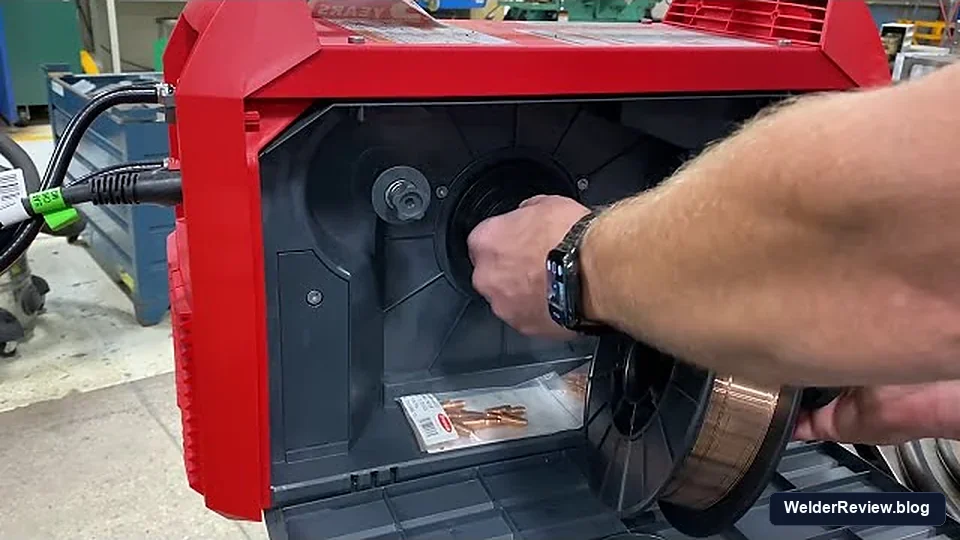
Physical setup is equally streamlined through tool-less polarity changes and a quick-loading wire drive mechanism that accepts standard eight-inch spools without requiring cumbersome adapter spindles or specialized conversion hardware kits.
Navigating the intuitive graphical menu system requires minimal training for professional fabricators. Operators can quickly select specific wire diameters, shielding gas compositions, and joint geometries using the jog-dial interface.
Toolless polarity reversal inside the wire compartment streamlines switching between solid and flux-cored wires. The four-roll drive mechanism ensures consistent wire feeding performance, minimizing birdnesting issues during rapid positional changes.
- Synergic setup menus calculate ideal parameters based on material thickness
- Tool-less polarity reversal system simplifies process changes on the fly
- Precision four-roll wire drive ensures consistent, birdnest-free feeding action
Routine Maintenance and Long-Term Durability
Long-term reliability depends on keeping the drive rolls clean and periodically blowing out accumulated metal dust from the cooling channels using compressed air. The robust drive assembly shows minimal mechanical wear even after months of high-volume usage.
For broader context on European engineering, consult our Esab vs Fronius industrial welder duel to see how high-grade internal wiring and sealed connectors resist harsh chemical exposure.
Preventative upkeep requires regular inspection of the welding torch liner and contact tips to prevent erratic wire feed. Compressed air should be applied periodically through internal chassis vents to clear conductive metallic dust.
The sturdy PCB coatings resist moisture and corrosive workshop environments, extending operational lifespan significantly. Routine calibration checks of output voltage ensure compliance with strict AWS welding standards over years of heavy usage.
- Durable drive rolls resist grooving and maintain steady wire tension
- Corrosion-resistant internal connectors protect against humid environments
- Modular PCB design simplifies eventual servicing by authorized technicians
Ideal Buyer Profile Versus Competing Alternatives
Professional mobile fabricators, mechanical contractors, and serious agricultural repair shops will find this machine an exceptional investment. Its premium build quality and uncompromising arc stability easily justify the higher financial outlay required.
Conversely, casual weekend hobbyists or budget-conscious DIYers working out of home garages should likely look toward entry-level multi-process machines that offer basic features at a fraction of this professional system cost.
This machine targets mobile contractors, maintenance crews, and structural fabricators requiring multi-process versatility. Professionals needing dependable TIG and MIG capabilities on remote job sites will appreciate its comprehensive electrical protections.
While heavy industrial shops might demand higher continuous amperages, this unit outperforms typical consumer alternatives. Its advanced synergic curves deliver superior arc characteristics compared to traditional entry-level multi-process systems.
- Perfect for mobile repair trucks and demanding professional fabrication shops
- Overkill for casual garage DIYers due to professional-tier pricing structure
- Outperforms standard consumer welders in raw duty cycle and arc precision
Frequently Asked Questions
Can the Fronius Transsteel 2200 run on standard household electrical outlets?
Yes, it features automatic dual-voltage switching to operate on 120V lines. However, maximum output power requires a dedicated 230V circuit.
Does this machine support spool guns for aluminum MIG welding?
It fully supports specialized push-pull guns and spool gun attachments. This capability ensures reliable aluminum feeding without birdnesting issues in the wire drive.
What type of TIG welding does the Transsteel 2200 support?
It supports DC Lift-TIG starting modes for clean arc ignition. Operators must note that it does not provide high-frequency AC output for specialized aluminum TIG welding.
How heavy is the machine for daily job-site transportation?
The chassis weighs just over twenty pounds without wire spools attached. This makes it easy to carry across rough terrain to remote service areas.
Is the synergic setup mode suitable for beginner welders?
The automated curves make parameter selection remarkably straightforward for novices. However, experienced pros can still fine-tune advanced settings for specialized industrial applications.