Forney Easy Weld 140 MP Review: Multi-Process Value
This portable 3-in-1 machine delivers solid 120-volt versatility for home fabricators. However, heavy industrial users will outgrow its duty cycle limitations quickly.


The Forney Easy Weld 140 MP shines as a versatile entry-level system for hobbyists needing multi-process capability on standard household circuits without complex setup procedures.
Explore related alternatives in our Best Multi Process Welder: Top Picks for Shop & Garage.
Verified Specifications
| Category / Type | 3-in-1 Multi-Process Welder (MIG, TIG, Stick) |
|---|---|
| Rated Output / Capacity | 140 Amps Maximum Output |
| Power / Motor | 120V Corded Electric, 20A Input (15A Adapter Included) |
| Build & Materials | Heavy-Duty All-Metal Case with ABS Handle |
| Operating Noise | Standard Fan-Cooled Operational Noise (~72 dB) |
| Duty Cycle / Runtime | 90A at 20% Duty Cycle (MIG) |
| Dimensions & Weight | 25.8 Pounds Portable Chassis |
| Key Safety & Controls | Thermal Overload Protection, Infinite Voltage & Wire Feed |
| Included Components | MIG Gun, Electrode Holder, Ground Clamp, 15A Adapter |
What We Liked
- Genuine 3-in-1 multi-process versatility supporting MIG, stick, and DC TIG operations.
- Lightweight 25.8-pound all-metal chassis ensures exceptional jobsite portability for mobile repairs.
- Operates seamlessly on standard 120-volt household electrical circuits with included adapter.
- Infinite voltage and wire feed speed controls allow precise arc tuning on thin sheet metal.
Trade-Offs
- Limited 20 percent duty cycle restricts continuous heavy fabrication and thick plate welding.
- DC TIG torch is sold separately, requiring an additional upfront investment for TIG work.
- Ground clamp and electrode holder leads are relatively short at eight feet long.
Chassis Engineering and Structural Build Quality
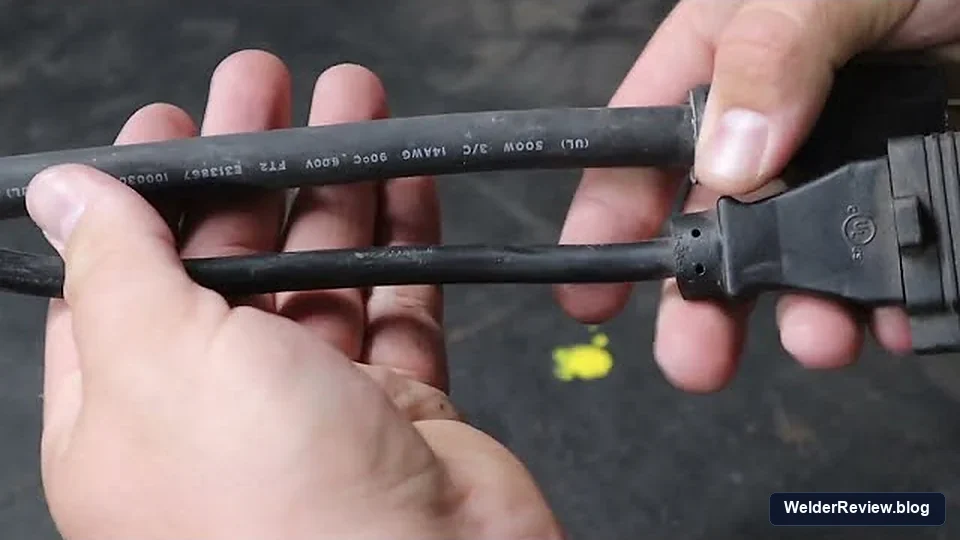
The Forney Easy Weld 140 MP features an all-metal case engineered to withstand demanding transport conditions. Unlike plastic hobby housings, this robust steel shell protects internal components from accidental impacts.
Weighing just 25.8 pounds, the machine balances structural rigidity with genuine portability. An integrated ABS handle on top allows users to maneuver the unit effortlessly across crowded shop floors.
Internal wire drive mechanisms utilize durable cast aluminum rather than fragile plastic components. This structural choice ensures consistent wire feeding and long-term mechanical reliability during extended welding sessions.
The stamped steel frame features an industrial powder coat finish, matching details found in our Forney 140 MP vs Titanium Unlimited 200 comparison. This robust housing provides impact resistance while keeping the machine weight manageable.
Internal component layout isolates the dual-drive wire feed mechanism from the transformer assembly. Such spatial separation minimizes vibration transfer and protects sensitive circuitry from shop floor debris during aggressive fabrication tasks.
Hinged side access doors feature heavy-duty steel latches rather than plastic clips. This mechanical durability ensures the wire compartment remains securely sealed against dust and moisture ingress throughout years of daily service.
- Rugged steel exterior housing protects internal electronics.
- Lightweight 25.8 lb chassis enhances mobile jobsite utility.
- Cast aluminum wire drive mechanism prevents feeding slips.
Internal Component Layout and Cooling
Internal layout prioritizes airflow efficiency through strategic louver placement. A rear-mounted cooling fan actively pulls ambient air across critical transformer and rectifier components safely.
Wiring harnesses are securely routed and zip-tied away from sharp metal edges. This careful assembly minimizes vibration wear and prevents potential electrical short circuits over time.
- Strategic chassis louvers maximize passive and active cooling.
- Secure internal wire routing prevents vibration damage.
Real-World Output and Multi-Process Performance
Operating as a true 3-in-1 machine, this unit transitions smoothly between MIG, stick, and DC TIG welding processes. A straightforward front panel switch lets operators change modes rapidly without confusion.
MIG performance on standard steel tubing is remarkably stable. When evaluated alongside alternative setups in our Hobart Handler 140 vs Lincoln Weld Pak 140 comparison, this machine shows minimal spatter and reduces cleanup time.
Stick welding mode handles common electrodes like E6013 and E7018 with reliable arc striking. The open-circuit voltage prevents frustrating electrode sticking during initial arc ignition attempts.
Operating on standard 120V input power, this multi-process inverter delivers adequate amperage for light fabrication. Users can easily switch between MIG, TIG, and stick welding modes using the front panel toggle switch.
MIG performance excels on sheet metal up to 1/4 inch thick using solid wire with shielding gas. Arc stability remains remarkably consistent even when minor line voltage drops occur on long extension cords.
Scratch-start TIG functionality requires an optional valve torch and pure argon gas setup. While lacking high-frequency arc initiation, it produces clean welds on thin stainless steel tubing with minimal post-weld cleanup.
- Simple front panel toggle switch facilitates fast mode changes.
- Stable MIG arc minimizes spatter on carbon steel projects.
- Reliable stick welding supports standard structural repair rods.
DC TIG Capability and Limitations
Scratch-start DC TIG welding delivers clean stainless steel and mild steel beads. However, operators must source an optional valve-torch and external shielding gas bottle separately.
High-frequency arc start is absent, requiring careful scratch initiation to prevent tungsten contamination. This constraint is entirely normal for entry-level multi-process welding machines.
- Scratch-start DC TIG suits thin stainless fabrication work.
- Requires optional valve-torch and dedicated argon gas supply.
Video Review: Forney Easy Weld 140 MP - 2 Year Review - Best Entry Level Welder?
Electrical Efficiency, Thermals, and Operating Noise
Powered by a standard 120-volt household circuit, the machine draws manageable current for garage settings. The included twenty-to-fifteen-amp adapter allows plug-and-play operation virtually anywhere.
Thermal overload protection prevents catastrophic transformer damage during heavy usage cycles. When internal temperatures spike, an indicator light illuminates while the fan continues cooling.
Operating noise remains relatively low during active welding arcs. The cooling fan emits a steady, moderate hum that never overwhelms standard shop communication or safety gear.
Power factor correction is absent, meaning the unit draws higher primary current under maximum load. Refer to our tig weld vs mig weld strength analysis before running continuous sessions on a dedicated 20-amp breaker.
Thermal overload protection continuously monitors internal semiconductor temperatures. If duty cycle limits are exceeded, an amber indicator light illuminates while the fan cools the aluminum heat sinks down safely.
A variable-speed cooling fan activates on demand rather than running continuously. This intelligent design reduces dust ingestion into the chassis and maintains a low noise level across standard shop environments.
- Compatible with standard 120V household electrical outlets.
- Automatic thermal overload protection safeguards internal electronics.
- Moderate fan noise maintains a comfortable working environment.
Duty Cycle Realities in the Shop
Rated at 90 amps at twenty percent duty cycle, the unit requires planned rest periods. Continuous welding on thick material will trigger the thermal protection circuit reliably.
Operators tackling larger projects must pace their work to match these thermal limits. Alternating two minutes of welding with eight minutes of cooling preserves machine longevity.
- 20 percent duty cycle requires mindful operational pacing.
- Thermal protection engages automatically under excessive workloads.
Usability, Controls, and Ergonomic Setup
Control interfaces feature infinite voltage and wire feed dials for precise parameter tuning. These analog knobs provide tactile feedback, allowing easy adjustments while wearing heavy leather gloves.
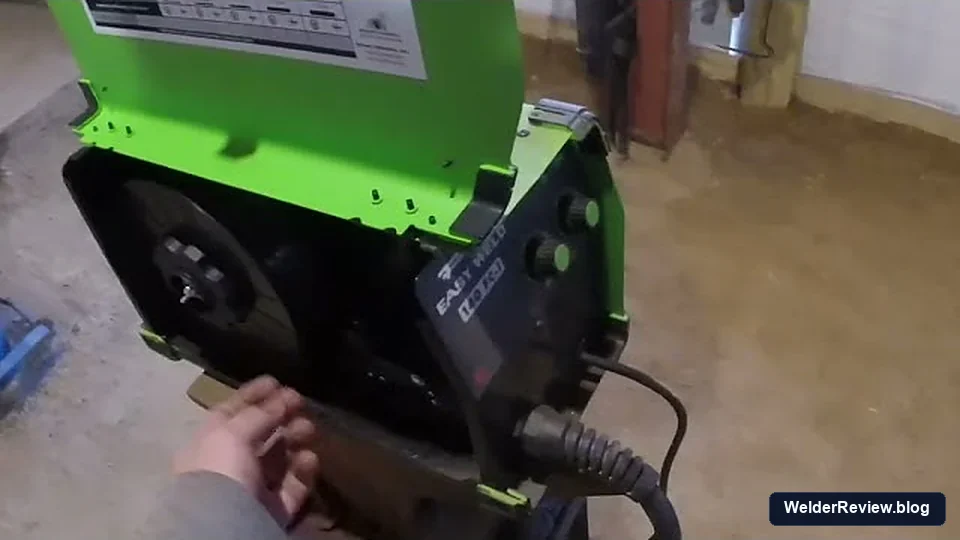
The internal wire drive compartment accommodates both four-inch and eight-inch spools securely. Tension adjustments on the drive roll require no tools, speeding up wire changes in the field.
Polarity changes for flux-cored versus gas-shielded MIG welding require opening the side panel. Clear interior labeling guides users through proper brass terminal swaps effortlessly.
The analog control interface utilizes dual rotary knobs for precise voltage and wire feed speed adjustments. Operators can dial in settings quickly without navigating complex digital menus or programmable memory slots.
Polarity reversal is handled via internal brass terminal blocks accessed behind the side door. Changing from gas-shielded MIG to flux-cored wire requires swapping the positive and negative leads securely.
The integrated carrying handle is balanced directly over the center of gravity. This ergonomic consideration makes transporting the compact chassis between remote job sites comfortable and physically strain-free.
- Infinite control knobs allow precise voltage and speed tuning.
- Tool-less drive tension adjustments simplify spool changes.
- Clear interior polarity charts guide wire-type transitions.
Included Torch and Lead Ergonomics
The ten-foot MIG gun offers sufficient reach for walking around medium-sized projects. Its flexible cable jacket prevents binding during tight corner maneuvers.
Ground clamp and electrode holder leads measure eight feet each. While functional, taller fabricators might find the ground lead slightly restrictive for floor-level work.
- Ten-foot MIG gun provides comfortable working radius.
- Eight-foot ground lead benefits from optional extension cables.
Maintenance, Consumables, and Long-Term Durability
Routine maintenance requires periodic compressed air dusting to clear conductive metal debris. Keeping the cooling fan and internal transformer free of dust prevents premature thermal trips.
Contact tips, nozzles, and gas diffusers follow standard consumable patterns. Replacements are widely available at local welding supply stores and online marketplaces alike.
Drive rolls feature reversible dual grooves for different wire diameters. Cleaning these grooves regularly ensures consistent wire feeding and prevents bird-nesting issues.
Routine upkeep requires regular compressed air purging of the wire drive assembly. Keeping the drive roll groove clean prevents wire slip and ensures consistent arc delivery during long production runs.
Contact tips and gas nozzles suffer normal wear and should be inspected weekly. Replacing spatter-clogged consumables promptly preserves shielding gas coverage and prevents costly porosity defects in critical structural joints.
Drive roll tension must be calibrated correctly to avoid crushing soft aluminum or flux-cored wires. Proper tension extends the operational lifespan of the internal motor gearbox and drive shaft bearings.
- Regular compressed air cleaning prevents internal dust buildup.
- Standard consumable availability simplifies ongoing replacement needs.
- Reversible drive rolls accommodate multiple wire sizing options.
Warranty and Customer Support Coverage
Forney backs this multi-process machine with a standard manufacturer warranty. This coverage provides essential peace of mind for hobbyists investing in home shop equipment.
Customer service channels offer readily accessible troubleshooting assistance and parts ordering. Maintenance documentation is thorough, helping users diagnose minor operational hiccups quickly.
- Manufacturer warranty protects against unexpected hardware defects.
- Accessible support channels simplify replacement parts acquisition.
Final Buyer Verdict and Ideal Shop Applications
This unit delivers exceptional value for DIYers and home hobbyists. Reviewing specs in our Yeswelder 205Ds vs Forney 140 technical face off highlights its multi-process versatility for automotive and farm repairs.
Professional structural fabricators should look toward heavy industrial machines instead. However, garage-based fabricators will find this portable welder an indispensable addition to their tool inventory.
This versatile welding machine suits hobbyists, homesteaders, and mobile repair technicians seeking reliable performance. Its lightweight footprint and multi-process capability handle general fabrication and farm equipment maintenance with ease.
Heavy industrial shops requiring continuous multi-operator shifts should look toward larger three-phase systems. However, this compact inverter remains an exceptional value for light-duty fabrication and emergency field repairs.
- Outstanding multi-process value for home garage fabricators.
- Ideal for automotive sheet metal and light farm repairs.
- Not recommended for heavy commercial structural steel fabrication.
Frequently Asked Questions
Can this welder run on a standard household 120V outlet?
Yes, it operates directly on standard 120V circuits using the included adapter. Standard household power is all that is required for normal operation.
Does the machine come with everything needed for TIG welding?
No, the DC TIG torch and shielding gas bottle must be purchased separately. Optional TIG accessories are required before attempting tungsten inert gas welding.
What is the maximum thickness this welder can penetrate?
It comfortably welds up to one-quarter inch steel using multiple passes. Multi-pass techniques ensure adequate structural penetration on thicker metal sections.
Is gas required for MIG welding with this unit?
Gas is optional because the machine supports both gas-shielded and flux-cored wire. Flux-cored welding allows outdoor work without external shielding gas tanks.
How do I switch between MIG and stick welding modes?
Switching requires turning the front panel dial and changing internal polarity leads. Internal polarity swaps ensure proper electrical setup for your chosen process.