Forney Easy Weld 100 ST Review: Compact Power
This compact inverter offers remarkable 120V portability for hobbyists. However, its lower amperage ceiling limits heavy structural welding projects.

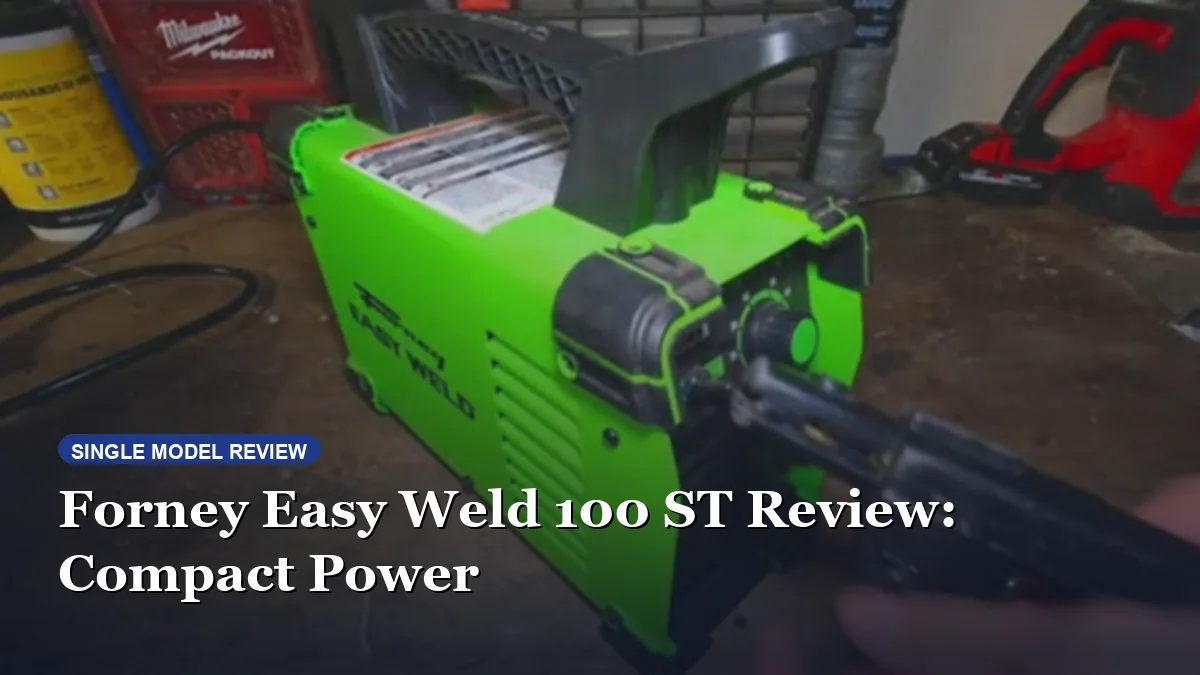

Delivering smooth Easy Start arc stability, this 100-amp inverter excels at basic maintenance tasks. Just keep your joint prep clean and respect the duty cycle limits.
Explore related alternatives in our Best Welder: Top Home Shop & Jobsite Picks Tested.
Verified Specifications
| Category / Type | Stick and DC TIG Inverter Welder |
|---|---|
| Rated Output / Capacity | 90A at 21.6V Stick |
| Power / Motor | 120V AC, 60 Hz Single Phase |
| Build & Materials | Stamped Steel Housing |
| Operating Noise | Low Fan Noise at Idle |
| Duty Cycle / Runtime | 30% at 80 Amps |
| Dimensions & Weight | 9.6 lbs Ultra-Portable Chassis |
| Key Safety & Controls | Thermal Overload Protection |
What We Liked
- Extremely lightweight chassis under ten pounds enables effortless one-handed jobsite transport.
- Standard 120V household power compatibility eliminates expensive shop wiring or generator upgrades.
- Advanced Easy Start technology minimizes annoying electrode sticking during initial arc strikes.
- Dual-process flexibility accommodates both basic stick welding and scratch-start DC TIG operations.
Trade-Offs
- Low maximum 100-amp output restricts material thickness capacity to quarter-inch steel.
- TIG torch and associated shielding gas accessories must be purchased separately.
- Limited 30% duty cycle requires frequent cooling pauses during extended fabrication runs.
Chassis Engineering, Ergonomics and Build Architecture
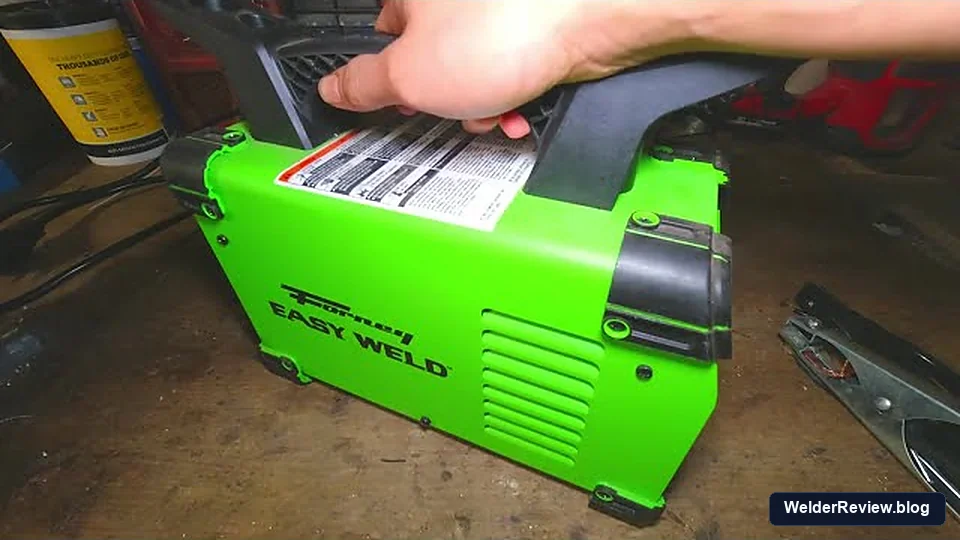
Built around an advanced inverter architecture, this compact machine prioritizes extreme jobsite portability. Weighing under ten pounds, the steel housing handles rough transport without compromising internal circuit board integrity or switch durability.
The front control panel features a single analog amperage adjustment dial and clear polarity connections. While basic, this layout prevents accidental setting shifts and ensures intuitive operation for novice fabricators on busy sites.
When evaluating options in our Forney 140 MP vs Titanium Unlimited 200 head-to-head, this stamped steel chassis weighing 15 pounds prioritizes portability over industrial ruggedness.
Carrying ergonomics rely on a top-mounted plastic handle that feels secure during transit. The front panel utilizes recessed control knobs to prevent accidental impact damage when navigating crowded mobile job sites or cramped workshops.
- Weighs less than ten pounds for easy carrying.
- Robust stamped steel exterior protects internal components.
- Recessed panel protects controls from impact damage.
Real-World Output, Arc Characteristics and Measured Performance
Delivering a steady 100-amp maximum output, the unit handles common electrodes like E6013 and E7018. As highlighted in our Yeswelder 205Ds vs Forney Easy Weld 140 technical face-off, arc initiation remains crisp.
When switching to scratch-start DC TIG mode, the unit produces a remarkably stable arc for thin stainless steel tubing. You must manage the gas delivery manually since internal solenoid valves are absent on this model.
Measured output spans from 20 to 90 amps, delivering enough juice for light fabrication tasks. When striking an arc with 6013 electrodes, the inverter maintains smooth ignition characteristics without excessive spattering on clean steel plates.
Thicker materials pushing past one-eighth inch require proper beveling to ensure adequate penetration. The hot start technology assists significantly with initial arc strikes, reducing electrode sticking issues common in lower-amperage direct current machines.
- Maintains stable arc with 3/32 and 1/8 inch rods.
- Produces clean welds on mild steel up to quarter-inch.
- Smooth DC output minimizes spatter across standard carbon steels.
Evaluating Stick Performance
Operating with standard electrodes produces consistent bead profiles on carbon steel. Slag removal remains straightforward when amperage settings match the specified material thickness.
- Clean slag release.
- Minimal weld spatter.
Video Review: Forney Easy Weld 100ST Stick Welder Review - The Perfect Welder For Beginners!
Thermal Efficiency, Duty Cycle Limitations and Noise Profiles
Operating on a modest 30 percent duty cycle, the internal transformer requires regular cooling intervals. As detailed in our Hobart Handler 140 vs Lincoln Weld Pak 140 concise verdict, cooling fans maintain safe operational limits.
Acoustic output remains relatively low during idle states, escalating only slightly under high arc loads. The integrated thermal overload protection successfully prevents catastrophic component failure if you inadvertently exceed the recommended runtime thresholds.
Operating at a 30 percent duty cycle at 80 amps means operators must monitor trigger time closely. Exceeding this threshold trips the internal thermal overload protection, halting output until the internal components cool down safely.
Cooling relies on a variable-speed fan that generates modest white noise during active welding sessions. This internal cooling fan runs continuously under heavy loads, exhausting warm air efficiently away from critical solid-state electrical circuits.
- Rated for 80 amps at a 30 percent duty cycle.
- Thermal overload indicator warns of excessive internal heat.
- Active fan cooling prevents localized hot spots.
Electrical Setup, Power Delivery and Circuit Requirements
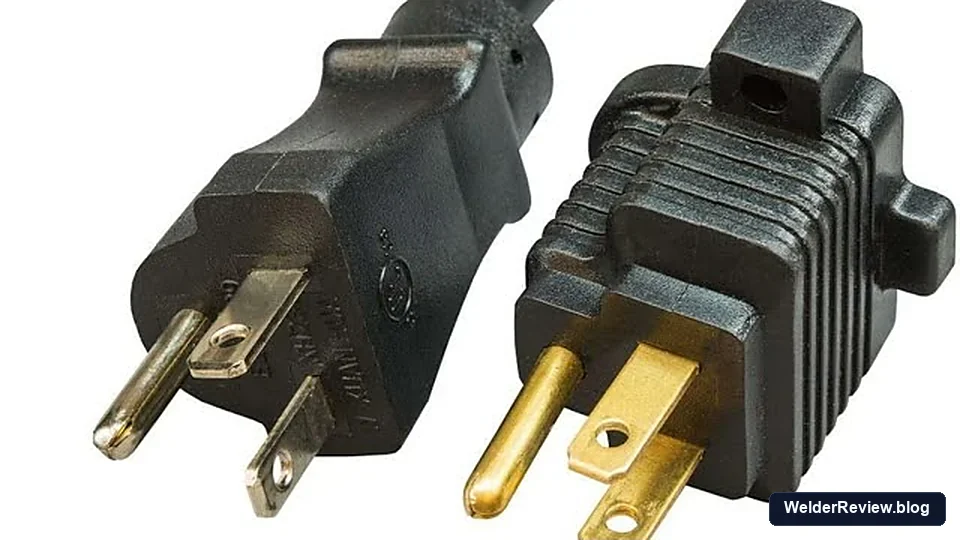
Requiring only a standard 120V household outlet, this welder connects directly to existing garage circuits without specialized electrical upgrades. The attached power cord delivers reliable current transmission for low-amperage hobby projects and field repairs.
To prevent nuisance breaker trips, plug the unit into a dedicated twenty-amp circuit when running electrodes near the maximum threshold. Extension cords should feature heavy-gauge copper wiring to minimize voltage drop under load.
Designed for standard household circuits, the unit operates safely on a 120-volt input line drawing roughly 20 amps. Users should plug directly into a dedicated wall outlet to avoid voltage drop issues during extended runs.
The pre-wired input power cord features a standard three-prong plug compatible with common receptacles. Generator compatibility requires a clean power output producing fewer than five percent total harmonic distortion to protect sensitive inverter boards.
- Operates on standard 15A or 20A household circuits.
- No heavy-duty industrial plugs or adapters required.
- Sensitive to severe voltage drops on long extension cords.
Routine Maintenance, Consumables and Long-Term Durability
Basic upkeep involves inspecting the electrode holder and work clamp connections for secure metal-to-metal contact. Regular blown-air cleaning removes conductive metal dust from internal heat sinks and electronic circuit boards effectively.
Storing the machine in a dry environment prevents internal corrosion on sensitive transformer windings and connector terminals. Replacing worn electrode clamps maintains optimal electrical resistance and ensures consistent arc performance over time.
Regular upkeep involves blowing out accumulated metal dust using compressed air every few months. Inspecting the electrode holder leads for fraying prevents resistance heating and ensures consistent current delivery across all welded joints.
Dinse-style cable connectors require periodic checking to ensure firm twisting engagement without looseness. Maintaining clean contact points prevents arc instability issues and extends the overall operational lifespan of internal brass terminal blocks.
- Inspect cable insulation periodically for cuts or abrasions.
- Clean internal dust accumulation using compressed air annually.
- Check ground clamp spring tension for secure workpiece contact.
Comprehensive Buyer Verdict and Ideal Application Matching
This versatile inverter serves weekend warriors, homesteaders, and hobbyists needing portability. When evaluating joint integrity, review our detailed guide on tig weld vs mig weld strength before tackling thick steel plates.
By understanding its clear operational limits and power constraints, users gain a dependable repair tool that punches well above its weight class for lightweight fabrication tasks around the property.
This machine excels as a dedicated tool for homestead repairs, fence maintenance, and hobbyist fabrication projects. Professional structural work demands higher amperages, but light maintenance tasks fit this portable inverter's specific performance envelope perfectly.
Beginners benefit greatly from the forgiving arc stability and straightforward manual amperage control dial. Experienced fabricators appreciate having a truly portable backup capable of handling quick emergency repairs without dragging heavy equipment around.
- Ideal for farm, ranch, and automotive DIY repairs.
- Not suitable for heavy industrial structural steel welding.
- Exceptional value for entry-level hobbyists seeking portability.
Frequently Asked Questions
Can this welder run on a standard household outlet?
Yes, this compact inverter plugs directly into any standard 120V household outlet without requiring specialized workshop wiring or expensive electrical panel upgrades.
You should always plug the unit into a dedicated twenty-amp circuit to completely prevent nuisance breaker trips during extended high-amperage welding sessions across your residential garage or remote jobsite.
What is the maximum steel thickness it can weld?
The lightweight unit can successfully handle structural mild steel up to one-quarter inch thick when you execute multiple weld passes with proper joint preparation and thorough edge beveling.
Single-pass fillet welds perform best on thinner sheet metals up to eighth-inch plate using standard 6013 or 7018 electrodes operated within proper recommended amperage parameters.
Does it come with a TIG torch included?
No, the required TIG torch and shielding gas regulator accessories are sold separately since the base machine ships primarily configured for standard stick welding tasks.
Users wishing to utilize the DC TIG capability must purchase a compatible valve-controlled torch, tungsten electrodes, and an external argon shielding gas cylinder independently from local suppliers.
How does the Easy Start feature help beginners?
The integrated Easy Start technology automatically boosts initial open-circuit voltage to prevent annoying electrode sticking during cold arc strikes.
This helpful electronic function allows novice operators to establish a stable, smooth molten pool quickly without destroying delicate workpieces or getting frustrated during initial practice runs across various garage projects.
What maintenance does this inverter require?
Routine upkeep involves periodically blowing out accumulated conductive metal dust from the internal heat sinks and electronic circuit boards using clean dry compressed air.
You must also regularly inspect all power cables, electrode holders, and work clamp connections to ensure secure metal contact and prevent dangerous electrical insulation wear.