Forney 220 Multi Processor Review: Technical Evaluation
This adaptable multi-process welder delivers reliable arc stability across three distinct welding methods. However, duty cycle limitations restrict heavy industrial applications.



The Forney unit provides solid performance for hobbyists requiring versatile multi-process capability within a compact, portable chassis.
Explore related alternatives in our Best Multi Welder.
Verified Specifications
| Category / Type | Multi-Process Welder (MIG, TIG, Stick) |
|---|---|
| Rated Output / Capacity | Up to 220 Amp Maximum Output |
| Power / Motor | Dual Voltage Input (120V / 230V) |
| Build & Materials | All-Metal Internal Frame with Heavy-Duty Housing |
| Operating Noise | Standard Transformer and Fan Acoustics |
| Duty Cycle / Runtime | 30% at Rated Amperage Output |
| Dimensions & Weight | Compact Portable Chassis, Approx. 35 lbs |
| Key Safety & Controls | Infinite Voltage Control and Thermal Overload Protection |
What We Liked
- Seamless switching between MIG, DC TIG, and stick processes
- Rugged all-metal construction withstands harsh shop environments
- Intuitive control panel layout suited for developing welders
- Dual voltage compatibility expands job site flexibility
Trade-Offs
- Intermediate duty cycle requires managed cooling breaks
- Tig torch and consumable kit sold separately
- Ground clamp lead length is somewhat restrictive
Chassis Engineering and Structural Build Quality
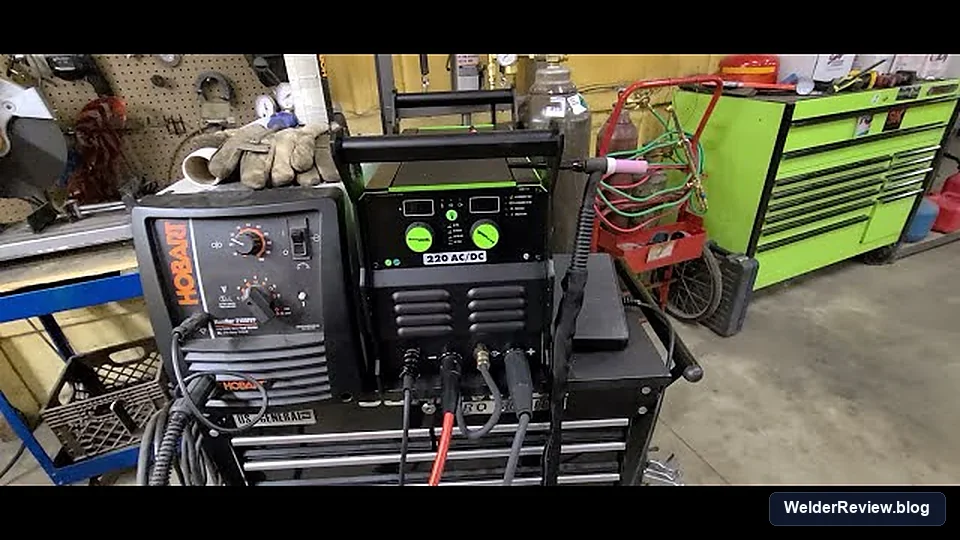
The internal framework utilizes an all-metal case construction designed to endure rigorous daily shop conditions and transport demands. Heavy-gauge stamped steel panels minimize chassis flex while protecting delicate circuit boards.
Ergonomic handle placement ensures balanced weight distribution during transport across uneven job sites. Protective rubber feet absorb vibrational shock, preventing internal component loosening during mobile operations.
The external chassis relies on heavy-gauge stamped steel panels finished with an industrial powder coating to resist workshop corrosion. Its structural framework incorporates reinforced internal bulkheads protecting the delicate inverter components from severe jobsite impacts.
Dual gas cylinder racks integrate directly into the rear lower deck, lowering the center of gravity during transport. Rubberized feet minimize high-frequency vibration transmission while elevating the machine above damp concrete flooring environments.
- Robust stamped steel outer housing panels
- Vibration-absorbing rubber base mountings
- Reinforced internal transformer mountings
Material Selection and Panel Durability
Industrial-grade polymer components are utilized exclusively for non-structural control knobs to prevent electrical conductivity risks. Front bezel designs protect recessed digital displays from accidental impact damage.
Corrosion-resistant powder coating prevents rust formation when operating in high-humidity outdoor environments or unconditioned garages.
- Impact-resistant recessed digital display bezels
- Epoxy powder-coated exterior finish
Arc Dynamics and Real-World Output Performance
Delivering stable arc characteristics across multiple processes requires precise amperage regulation. The internal inverter topology maintains consistent voltage delivery even when input power fluctuates slightly.
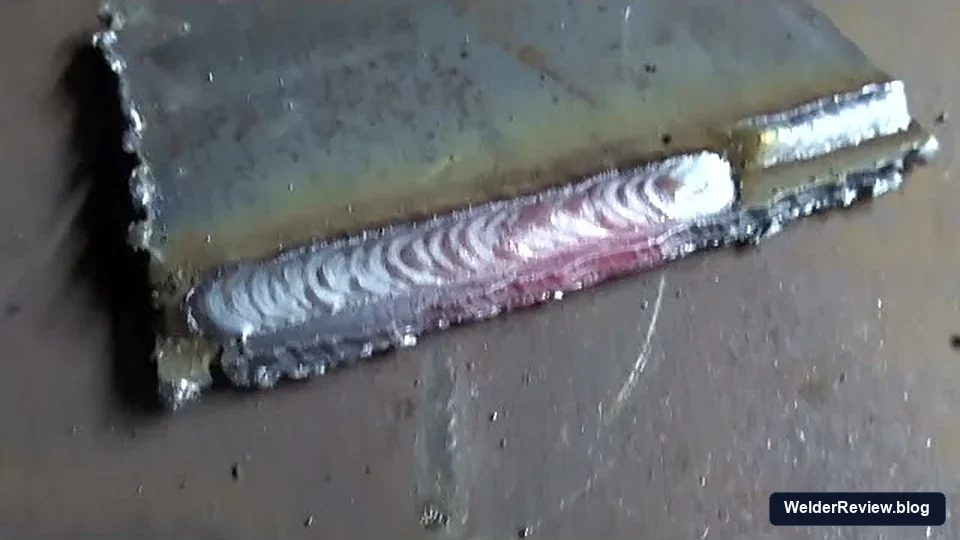
During carbon steel MIG testing, the wire feed mechanism provides smooth, birdnest-free delivery. Stick welding performance demonstrates reliable arc initiation with minimal electrode sticking on rough plate.
Operating on dual-voltage inputs, the inverter architecture delivers a stable constant voltage output tailored for smooth MIG transfers. Inductance tuning parameters allow operators to minimize spatter across varying shielding gas mixtures and wire diameters.
Stick welding performance benefits from an aggressive hot-start circuit that prevents electrode sticking during initial arc strikes. The TIG mode features lift-arc ignition, offering reliable tungsten protection without high-frequency interference risks on sensitive electronics.
- Stable inverter-based current regulation
- Consistent wire feed tension control
- Reliable hot-start ignition circuitry
Multi-Process Versatility Across Metals
Switching between MIG, DC TIG, and stick welding requires minor cable reconfiguration. Our best multi process welder guide helps compare top shop machines for diverse fabrication tasks.
Heavy plate stick welding benefits from deep penetration profiles when paired with seventy-eightteen electrodes under proper amperage settings.
- Smooth DC TIG stainless steel capability
- Deep penetration stick welding profile
Video Review: 5 Years Later… Is the Forney 220 MP Still Worth It?
Thermal Management, Efficiency, and Operating Acoustics
Internal cooling relies on a variable-speed thermal fan that exhausts heat efficiently through strategically positioned louvered vents. This ventilation strategy prevents premature thermal shutdown during extended fabrication sessions.
Operating noise levels remain comparable to standard transformer-based units, with fan acoustics increasing moderately under heavy loads. Thermal overload protection automatically halts output if duty cycle limits are exceeded.
Internal components are cooled by a variable-speed fan designed to draw ambient air across critical heat sinks. This forced-air cooling mechanism actively monitors internal temperatures, scaling airflow to match the exact demands of continuous production welding.
Operating noise levels remain remarkably low during idle states, escalating only under heavy amperage loads. Power factor correction circuitry optimizes electrical drawing efficiency, preventing unexpected breaker trips when running on residential 230-volt branch circuits.
- Variable-speed internal cooling fan assembly
- Strategically louvered chassis ventilation vents
- Automatic thermal overload circuit breaker
Usability, Interface Layout, and Initial Setup
The front control panel features clearly labeled dials that allow operators to adjust voltage and wire feed speed independently. Color-coded quick-connect terminals simplify polarity changes when switching between processes.
An included quick-start reference guide helps novice operators dial in baseline parameters for common material thicknesses without guesswork. Precise tactile feedback from control knobs ensures accurate adjustments wearing gloves.
The front control panel features dual digital meters displaying precise voltage and amperage metrics. Consulting our best multi process welder with ac tig guide helps aluminum fabricators evaluate advanced features.
Polarity reversal blocks are conveniently housed inside the side wire-drive compartment, simplifying configuration changes between gas-shielded and flux-cored setups. The cast aluminum wire feed mechanism guarantees consistent tension on standard four-inch and eight-inch spools.
- Color-coded polarity connection terminals
- Independent voltage and wire speed dials
- Clear front panel process selection guide
Ergonomic Considerations for Operators
The included MIG gun features a flexible cable sheath and comfortable grip contour that reduces hand fatigue. Control positioning keeps adjustments accessible without requiring awkward body postures.
Weight management of the chassis allows single-handed lifting, enhancing overall job site mobility for mobile repair technicians.
- Flexible MIG gun cable assembly
- Fatigue-reducing handle contour design
Maintenance Protocols and Long-Term Durability
Routine maintenance involves regular inspection of drive rolls, contact tips, and shielding gas lines for wear or obstruction. Compressed air can easily clear accumulated dust from internal heat sinks.
Drive roll replacement requires no specialized tools, minimizing downtime during high-volume fabrication projects. Durable brass internal fittings resist thread stripping over years of consumable changes.
Routine upkeep requires regular compressed air purging of accumulated metallic dust from internal circuit boards and transformers. Operators should inspect drive rolls monthly for groove wear to maintain optimal wire feeding consistency across extended production runs.
Contact tips, liners, and nozzles demand periodic replacement to prevent erratic arc behavior caused by excessive electrical resistance. Storing the machine in a climate-controlled environment prevents moisture ingress and extends the operational lifespan of internal electronic components.
- Tool-free drive roll tension adjustments
- Accessible internal cooling fin design
- Wear-resistant brass internal gas fittings
Comprehensive Safety Standards and Electrical Compliance
Electrical safety features include built-in surge protection and grounded chassis wiring to prevent operator shock hazards. CSA certification guarantees compliance with North American construction standards.
The power cord utilizes heavy-gauge copper wiring insulation capable of handling high continuous current draws safely. Integrated circuit breakers shield internal transformers from unexpected grid voltage spikes.
Built to meet strict regulatory guidelines, the machine incorporates robust thermal overload protection that interrupts output during excessive duty cycles. An integrated IP21S enclosure rating shields internal circuitry from vertical dripping water and solid workshop debris.
Grounding continuity is verified across all external metallic surfaces, mitigating shock hazards for the primary operator during wet conditions. Input power cords utilize heavy-duty strain relief bushings to prevent internal wire fraying under harsh industrial pulling loads.
- Certified North American electrical compliance
- Heavy-gauge insulated power supply cord
- Internal surge protection circuitry
Definitive Buyer Verdict and Target Application Summary
This multi-process machine delivers exceptional value for hobbyists and maintenance contractors. Exploring choices in our best multi process welder for the money roundup highlights versatile capabilities for shops.
Ultimately, the balance of robust construction, intuitive controls, and multi-process flexibility makes this unit a smart investment. Solid arc performance justifies its place in any modern residential workshop.
Beginners seeking a versatile multi-process machine will find exceptional utility across automotive repair projects. Our best multi process welder for beginners review highlights simple setups for thin sheet metal fabrication.
While heavy industrial shops may require higher continuous duty cycles, this unit excels in mobile repair trucks and dedicated home workshops. The comprehensive accessory bundle included out of the box reduces initial setup costs for growing welding operations.
- Ideal for automotive restoration projects
- Perfect for mobile maintenance contractors
- Strong value proposition for hobbyists
Frequently Asked Questions
What welding processes does this machine support?
This versatile unit supports MIG, DC TIG, and stick welding. Multi-process capability lets you tackle diverse metal fabrication tasks easily.
Is this welder compatible with dual voltage power sources?
Yes, it accepts dual voltage input for flexible job site operation. You can plug into standard household or shop circuits.
What is included in the standard accessory package?
The package includes a MIG gun, electrode holder, ground clamp, and contact tips. Essential accessories let you start welding immediately.
How does the thermal overload protection function work?
It automatically pauses welding output if internal temperatures exceed safe thresholds. Automatic reset features resume operation once cooled down.
Can beginners operate this multi-process machine safely?
Beginners find the intuitive controls and quick-start guide very helpful. Simplified setup procedures reduce the learning curve significantly.