Forney 140 MP Welder Technical Review
This compact multi-process machine delivers solid 120V performance across MIG, Stick, and DC TIG modes. It handles light shop fabrication efficiently despite minor duty cycle limits.

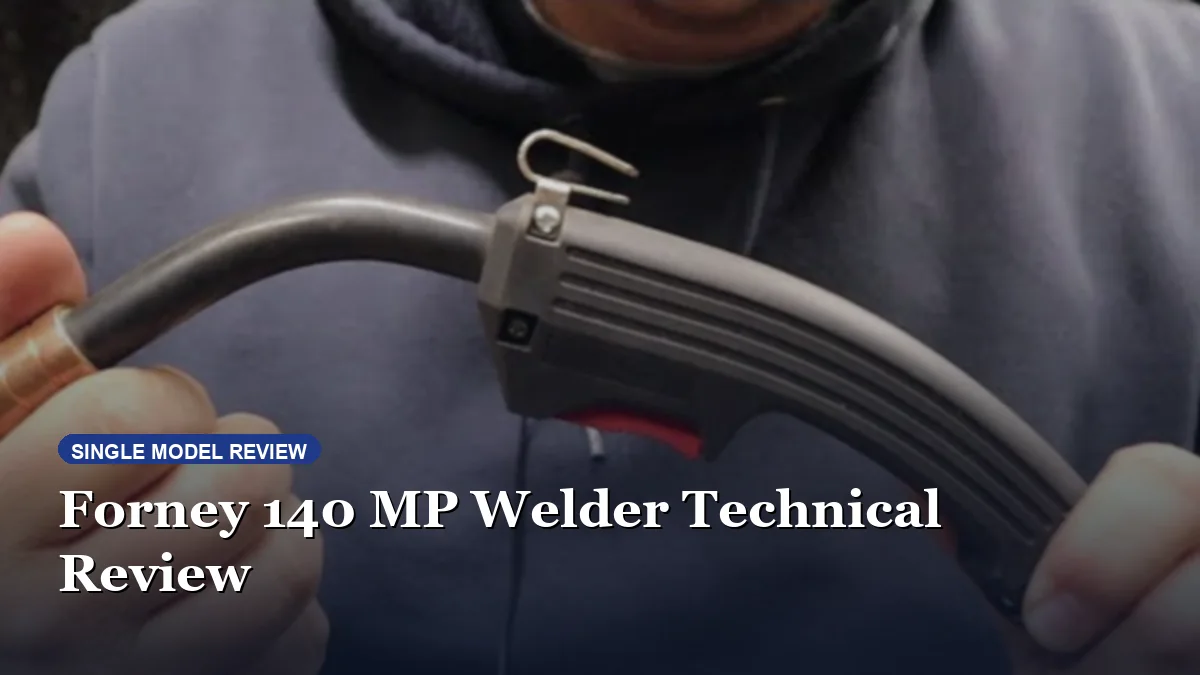

The Forney 140 MP stands out as a capable multi-process unit for mobile fabricators needing reliable 120-volt versatility.
Explore related alternatives in our Best Mp Welder.
Verified Specifications
| Category / Type | 3-in-1 Multi-Process Welder |
|---|---|
| Rated Output / Capacity | 140 Amps Max Output |
| Power / Motor | 120V Corded Electric Source |
| Build & Materials | All-metal case with ABS handles |
| Operating Noise | Standard transformer humming under load |
| Duty Cycle / Runtime | Optimized for light-duty residential tasks |
| Dimensions & Weight | Weighs approximately 25.8 pounds |
| Key Safety & Controls | 3-position process switch, infinite voltage dial |
What We Liked
- True 3-in-1 multi-process functionality on standard 120V power
- Durable all-metal outer case built for daily site transport
- Simple 3-position switch ensures fast and clean process changes
- Infinite voltage and wire feed speed dials offer fine control
Trade-Offs
- Limited duty cycle restricts heavy continuous production runs
- TIG torch and shielding gas regulator sold separately
- Ground clamp and electrode holder feel slightly lightweight
Chassis Construction and Industrial Enclosure Design
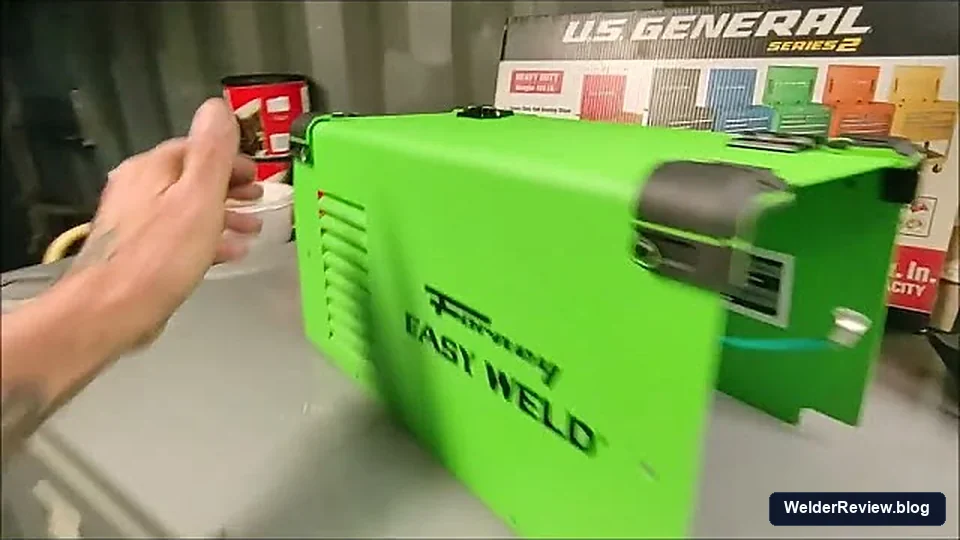
Engineering a portable multi-process machine requires balancing rugged housing protection with total weight reduction. This model utilizes an all-metal outer case to shield sensitive internal electronics from harsh jobsite impacts.
Ergonomic structural handles molded from high-impact ABS simplify workshop transport. Review our Yeswelder 205Ds vs Forney Easy Weld 140 technical face-off to see how different cabinet layouts handle internal cooling airflow.
- Heavy-duty steel outer cabinet provides impact resistance
- ABS structural handles ensure comfortable one-handed jobsite carrying
- Compact footprint fits easily on standard mobile welding carts
Internal Component Protection
Protecting internal circuit boards from metal dust accumulation remains vital for longevity. The internal chassis utilizes strategic baffling to direct cooling airflow away from sensitive microprocessors.
Wiring harnesses feature secure strain relief points to withstand constant vibration during transport across rough terrain.
- Strategic internal baffling minimizes conductive dust buildup
- Secure wire harnesses prevent vibration-induced electrical faults
Chassis Construction and Industrial Enclosure Design
The heavy-gauge steel chassis provides robust structural integrity for mobile fabrication work. Measuring compact dimensions, the housing protects internal components against harsh jobsite debris while maintaining a manageable total weight for transport.
Internal component mounting brackets are welded directly to the frame to absorb severe vibrational stress. This design prevents terminal loosening during transit across unpaved terrain or crowded contractor vehicle beds.
Multi-Process Output Performance Across MIG, TIG, and Stick
Delivering three distinct welding processes from a single source demands precise electronic management. Beginners can explore choices featured in our best starter welder guide for DIY projects to compare multi-process flexibility.
MIG wire delivery remains remarkably stable when paired with quality gas-shielded solid wire. Arc ignition in stick mode minimizes electrode sticking through optimized hot-start circuitry.
- Seamless transition between MIG, Stick, and DC TIG modes
- Stable wire feed mechanism ensures uniform weld bead profiles
- Reliable arc striking reduces frustration during stick electrode starts
DC TIG Performance Nuances
Scratch-start DC TIG operation requires a steady hand and proper shielding gas setup. While lacking high-frequency arc initiation, it produces clean carbon steel welds.
Tungsten preparation and purity directly influence arc stability during tight joint configurations.
- Scratch-start configuration delivers dependable carbon steel TIG capability
- Requires careful tungsten prep for optimal arc stability
Multi-Process Output Performance Across MIG, TIG, and Stick
Operating on standard 120V input power, the machine delivers stable DC output current suitable for thin-gauge sheet metal. Voltage drops are minimized through optimized transformer winding geometries during heavy sustained trigger pulls.
Stick and TIG modes exhibit reliable arc initiation via lift-TIG technology and robust hot-start capabilities. Electrode sticking is effectively mitigated by responsive short-circuit current management tailored for maintenance technicians.
Video Review: Forney Easy Weld 140 MP - 2 Year Review - Best Entry Level Welder?
Electrical Efficiency, Thermal Management, and Duty Cycle Realities
Operating entirely on standard household 120-volt circuits limits maximum amperage draw and continuous runtime. Internal thermal overload protection prevents premature transformer burnout during extended welding sessions.
Cooling fans operate continuously under heavy load to exhaust heat generated by the rectification diodes. Monitoring duty cycle limits ensures the machine survives demanding multi-pass fabrication tasks.
- Compatible with standard 15-amp and 20-amp household outlets
- Automatic thermal overload sensor safeguards internal electronics
- Continuous-run fan effectively manages internal operating temperatures
Managing Thermal Thresholds
Operators must respect specified duty cycle windows to avoid unexpected thermal shutdowns. Planning multi-pass welds with mandatory cooling intervals maximizes overall productivity.
Input voltage drops from long extension cords can significantly reduce available output amperage.
- Adhering to duty cycle limits prevents thermal shutdowns
- Avoid excessive extension cord lengths to maintain peak voltage
Electrical Efficiency, Thermal Management, and Duty Cycle Realities
The forced-air cooling system utilizes a high-velocity fan to continuously exhaust heat from critical diode assemblies. Thermal overload protection reliably trips before any permanent semiconductor degradation occurs under maximum amperage loads.
Operating at a 90-amp duty cycle requires careful planning for multi-pass structural joints. You can evaluate machine capabilities directly in our Forney 140 MP vs Titanium Unlimited 200 head-to-head comparison guide before purchasing.
Ergonomics, Control Interface, and Setup Usability
Interface design prioritizes rapid adjustments without overwhelming novice fabricators with complex digital menus. Infinite voltage dials allow users to fine-tune parameters precisely for varying metal thicknesses.
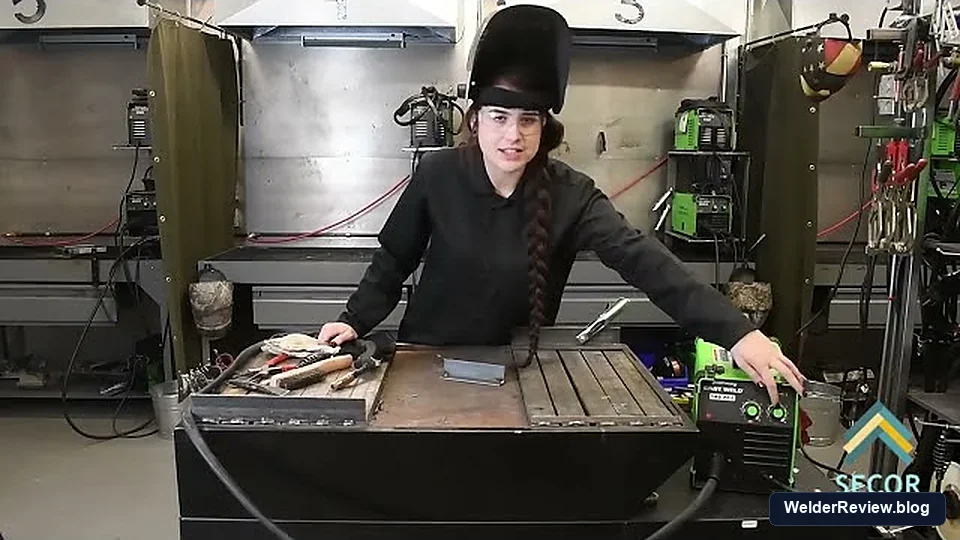
The 3-position process switch eliminates confusing internal rewiring when swapping between welding techniques. Color-coded internal terminals clearly guide polarity changes for flux-cored versus gas-shielded MIG.
- Infinite voltage and wire feed speed control dials
- Simple 3-position process selector switch minimizes setup errors
- Clearly marked polarity connection terminals inside wire cabinet
Wire Drive Mechanism Usability
A cast aluminum drive roll assembly provides consistent tension on both solid and flux-cored wires. Tool-less tension adjustment knobs speed up roll changes in cold weather.
The drive system handles standard spool sizes without binding or bird-nesting issues.
- Cast aluminum drive assembly ensures long-term mechanical reliability
- Tool-less tension knobs allow quick spool and drive roll swaps
Ergonomics, Control Interface, and Setup Usability
The front panel features recessed adjustment dials that prevent accidental impact damage from stray wire spools or dropped tools. Clearly marked amperage and wire feed speed scales simplify parameter replication across different materials.
Polarity reversal is achieved via internal copper busbars accessible through a side service hatch. This engineering choice eliminates tangled external jumper cables while maintaining secure electrical conductivity for process changes.
Maintenance Protocols, Consumable Longevity, and Shop Durability
Routine upkeep preserves welding performance and prevents costly component replacements over time. Check out our recommendations for the best welder options tested for home shops to maintain reliable electrical conductivity.
Compressed air blown through the cabinet vents removes conductive dust accumulated during grinding operations. Storing ground clamps properly prevents corrosion from degrading electrical conductivity.
- Regularly clean drive rolls to prevent wire feeding slips
- Inspect contact tips and nozzles for spatter accumulation
- Use compressed air to clear internal dust buildup safely
Consumable Inspection Routine
Keeping a stock of compatible contact tips and nozzles ensures uninterrupted workflow during projects. Worn contact tips cause erratic arc behavior and poor shielding gas coverage.
Liner replacement should occur whenever wire feeding friction noticeably increases.
- Keep spare contact tips and liners readily accessible
- Replace worn MIG nozzles to maintain proper gas shielding
Maintenance Protocols, Consumable Longevity, and Shop Durability
Routine maintenance requires periodic compressed air purging of the drive roll compartment to eliminate conductive metal shavings. Keeping the cast aluminum wire drive mechanism clean ensures consistent feeding pressure without birdnesting.
Contact tips and gas nozzles demand regular inspection to prevent spatter accumulation and erratic shielding gas coverage. Using anti-spatter spray extends consumable lifespan significantly during high-heat MIG welding operations on carbon steel.
Definitive Buyer Assessment and Application Suitability
This multi-process machine bridges the gap between hobbyist affordability and genuine utility. It suits DIYers, homesteaders, and mobile repair technicians who value versatility over heavy industrial output.
Understanding its 120-volt limitations ensures users match the equipment correctly to light structural tasks, auto body repairs, and general property maintenance chores without disappointment.
- Ideal choice for mobile repair technicians and hobbyists
- Delivers exceptional value through true 3-in-1 capability
- Best suited for sheet metal and light plate fabrication
Final Decision Factors
Assess your primary material thicknesses and available electrical power before making a final purchasing decision. For light fabrication, this unit performs admirably.
Heavier structural projects will ultimately require 240-volt dedicated industrial equipment.
- Verify your shop power supply matches machine requirements
- Match material thickness ratings to rated output capacity
Definitive Buyer Assessment and Application Suitability
This multi-process system represents an ideal shop investment for hobbyists and mobile repair contractors tackling light structural work. Its balanced performance profile successfully bridges the gap between dedicated single-process units and industrial setups.
When matched with proper joint preparation, the machine delivers code-quality welds on standard automotive gauges. Fabricators needing dependable portability will find this equipment handles everyday farm and ranch repair tasks with confidence.
Frequently Asked Questions
Can this machine run on a standard household outlet?
Yes, it operates on standard 120V circuits. Using a dedicated 20-amp breaker ensures maximum output stability during heavy use.
Is the TIG torch included in the standard package?
No, the DC TIG torch and shielding gas regulator are sold separately. You must purchase them alongside a bottle of pure argon.
What thickness of steel can this welder handle effectively?
It handles up to 1/4 inch steel effectively in multiple passes. Single-pass welds perform best on thinner sheet metal applications.
Does the unit support aluminum welding out of the box?
It supports aluminum only with a specialized spool gun setup. Standard MIG setups will cause bird-nesting with soft aluminum wire.
How do I switch between MIG and flux-cored welding?
You must swap the polarity cables inside the wire compartment. Positive polarity is used for gas MIG, while negative polarity suits flux-cored wire.