Forney 100St Review: Compact 120V Stick & TIG Powerhouse
This inverter stick welder brings true 120-volt portability to the garage. It sacrifices heavy industrial duty cycles for exceptional user-friendly field mobility.

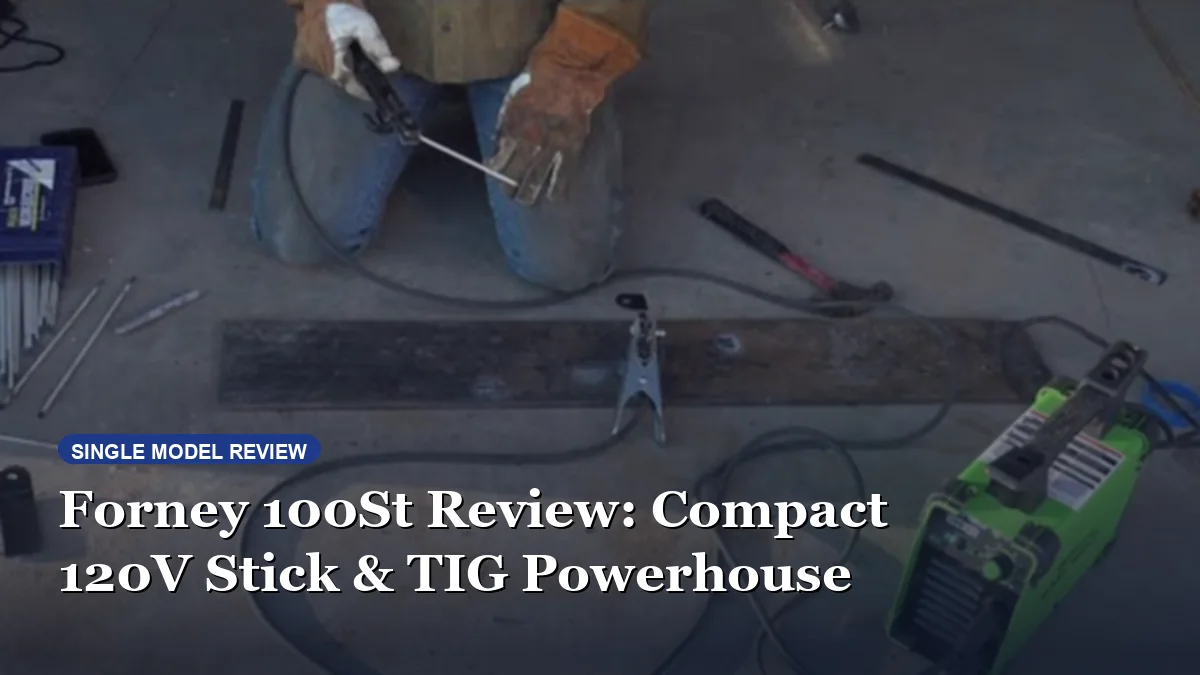

The Forney 100St is a reliable entry-level machine for light repairs. Its compact inverter design makes it an excellent choice for mobile hobbyists needing basic utility.
Explore related alternatives in our Best Budget Stick Welder: Top Picks for Home & Shop.
Verified Specifications
| Category / Type | Inverter Stick and TIG Welder |
|---|---|
| Rated Output / Capacity | 90 Amps DC Max |
| Power / Motor | 120V Corded Electric |
| Build & Materials | All-Metal Outer Casing |
| Operating Noise | Standard Fan Cooling Sound |
| Duty Cycle / Runtime | Light-duty hobby cycle |
| Dimensions & Weight | 16.25 inches, 13.7 pounds |
| Key Safety & Controls | Thermal Overload Protection |
What We Liked
- Weighs under 14 pounds for supreme portability
- Operates safely on standard 120V household power
- Durable all-metal outer housing construction
- Includes basic scratch-start TIG capability
Trade-Offs
- Limited 90-amp output restricts heavy plate welding
- Shorter duty cycle requires frequent cooling pauses
- Does not include a TIG torch in the base box
Engineering Architecture and Build Construction
The Forney 100St utilizes a modern inverter architecture that significantly reduces weight compared to older transformers. When weighing options, consult our Forney 140 MP vs Titanium Unlimited 200 Head-to-Head for alternative portable choices.
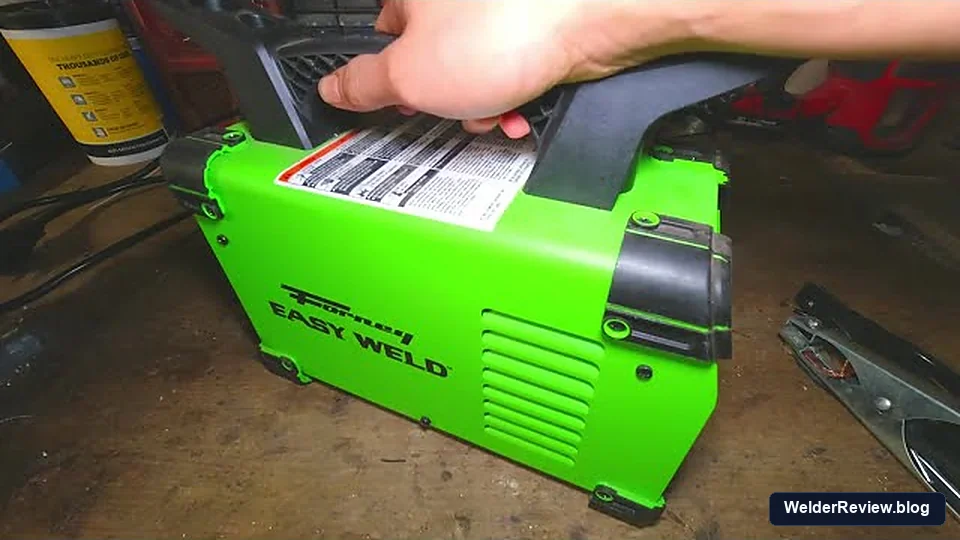
Constructed with an all-metal outer casing, the machine withstands standard workshop bumps and minor jobsite impacts. The rugged exterior protects internal electronic components from dust and casual moisture exposure during transit.
Internal circuit boards feature clean solder joints and organized wire routing to enhance thermal dissipation. Forney engineered this housing to balance structural rigidity with minimal footprint requirements for tight storage spaces.
The Forney 100ST utilizes an inverter-based architecture relying on IGBT technology to reduce overall chassis weight while maintaining structural rigidity across its stamped steel exterior housing and protective corner guards.
Internal component placement prioritizes airflow separation, isolating the primary transformer and rectifier bridge from the control board to minimize conductive dust accumulation during harsh field fabrication and mobile repair tasks.
Measuring compact dimensions and weighing roughly eight pounds, the physical envelope easily integrates into service truck toolboxes or overhead rigging baskets without compromising structural integrity or enclosure impact resistance ratings.
- 13.7-pound total weight profile
- Sturdy all-metal outer enclosure
- Compact inverter power source layout
Enclosure Rigidity and Materials
The steel housing panels resist twisting under heavy service loads. Rubberized corner guards or sturdy plastic accents absorb impact energy before it reaches the core inverter board.
Ventilation louvers are strategically stamped into the side panels to direct airflow over critical heat sinks. This geometric placement prevents accidental foreign debris entry while maintaining optimal cooling channels.
- Stamped ventilation louvers
- Impact-resistant panel geometry
DC Output Performance and Arc Stability
Delivering a maximum output of 90 amps of direct current, this machine handles standard electrodes with reliable arc control. The DC output ensures smoother arc starts and reduced spatter compared to AC alternatives.
Operators can successfully run popular rod diameters like sixty-thirteen and seventy-eighteen on thin to medium steel plates. The arc maintains good stability even when household line voltages fluctuate slightly under load.
Scratch-start TIG capability adds secondary utility for precision welding on stainless steel plates. Read our Mig Welding vs Tig Welding technical showdown to understand joint preparation and shielding gas requirements.
Delivering a smooth direct current output, this machine prevents common arc outages by utilizing built-in hot start circuitry that momentarily increases amperage to strike stubborn electrodes instantly without excessive sticking.
The inverter topology rapidly adjusts voltage fluctuations, ensuring consistent arc column length even when primary input power drops slightly during long extension cord runs on remote job sites.
Arc force control dynamically manages short-circuit conditions by boosting amperage when the arc tightens, allowing operators to push 6013 rods deeply into tight joints without smothering the puddle.
- 90-amp maximum DC output
- Smooth scratch-start TIG mode
- Reliable arc initiation performance
Video Review: Forney Easy Weld 100ST Stick Welder Review - The Perfect Welder For Beginners!
Electrical Efficiency and Input Power Demands
Operating entirely on a standard 120-volt household outlet, this welder eliminates specialized wiring. For broader options, browse our Best Welder: Top Home Shop & Jobsite Picks Tested guide for top-performing garage machines.
Inverter technology drastically improves electrical efficiency over older transformer designs by drawing less idle current. Power factor optimization helps maintain steady performance levels even during long garage fabrication sessions.
Users should avoid long, undersized extension cords that introduce severe voltage drop and degrade arc quality. Plugging directly into a dedicated wall receptacle ensures the internal inverter receives proper operating voltage.
Operating on a standard 120V household circuit, the unit draws roughly twenty amps under maximum rated load, requiring a dedicated breaker to prevent nuisance tripping during extended welding passes.
Power factor correction within the internal circuitry ensures high electrical efficiency, reducing reactive power draw and lowering total amperage consumption compared to older heavy transformer-based stick machines.
Users should always deploy heavy-duty copper extension cords rated for twelve gauge wire or thicker to prevent dangerous voltage drops that degrade output performance and overheat input plugs.
- Standard 120V household plug
- Low idle current draw
- Inverter power factor efficiency
Thermal Management and Duty Cycle Limits
Designed primarily for light-duty maintenance, the machine features a modest duty cycle suited for hobbyists. Pushing the unit past its rated thermal limits triggers the automatic thermal overload protection system immediately.
An internal cooling fan runs continuously to exhaust heat generated during active welding sequences. Allowing adequate rest periods between heavy passes protects delicate diodes and transistors from premature thermal degradation.
Monitoring your electrode consumption rates helps gauge safe operating intervals without overheating internal components. Respecting these thermal thresholds guarantees years of dependable service life from the compact inverter board.
Thermal protection is managed by an integrated cooling fan and internal thermostats that monitor critical semiconductor temperatures to prevent catastrophic failure during heavy operational cycles.
Operating at the maximum output rating yields a conservative duty cycle, requiring operators to pace their welding passes to avoid frequent thermal shutdowns in warm ambient environments.
Reducing the output amperage allows for significantly extended trigger-on times, making the machine exceptionally well-suited for repetitive maintenance tasks utilizing three-thirty-seconds electrodes without overheating internal components.
- Built-in thermal overload protection
- Continuous internal cooling fan
- Light-duty cycle optimization
Setup, Ergonomics, and Operational Usability
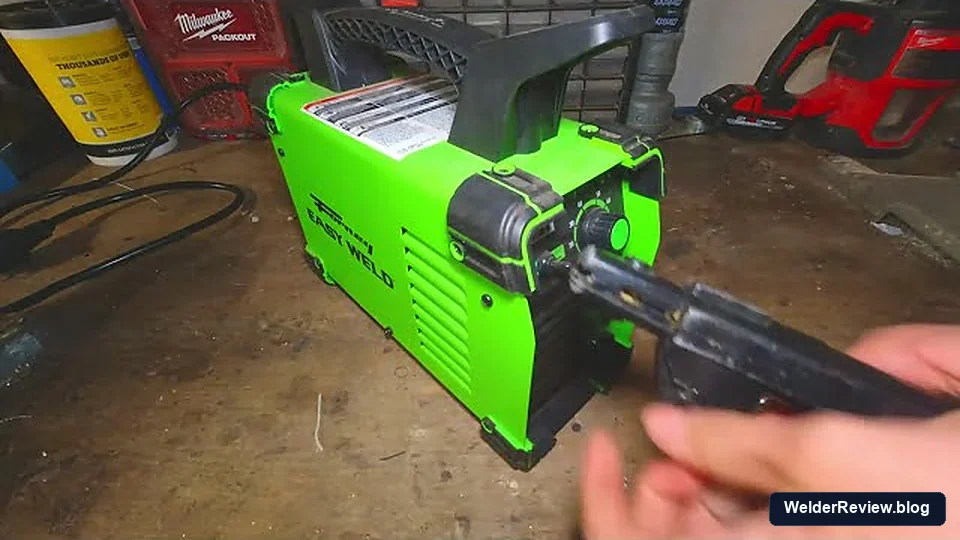
Out-of-the-box setup takes only minutes thanks to clear front-panel polarity connections and straightforward cable locking. The included electrode holder and ground clamp feature rugged cable connections that resist accidental pullouts.
A top-mounted carrying handle allows for effortless one-handed transport between different work stations. The lightweight form factor reduces physical fatigue when moving the machine across multi-level residential properties.
Front panel controls feature a single recessed amperage adjustment dial alongside clear polarity connection ports, allowing operators to quickly switch between electrode positive and negative configurations safely.
The included electrode holder and ground clamp feature heavy-duty spring connections, though users working in tight spaces might prefer swapping cables for more flexible aftermarket copper leads.
- Simple front-panel connections
- Ergonomic top-mounted carry handle
- Includes eight-foot cables
Routine Maintenance and Long-Term Durability
Maintaining this welder requires minimal effort beyond keeping internal dust accumulation to a sensible minimum. Periodically blowing out the cabinet with dry compressed air prevents conductive debris from bridging sensitive circuits.
Inspecting the electrode holder and ground clamp jaws regularly ensures solid electrical contact during ignition. Replacing worn consumables promptly prevents excessive electrical resistance and protects internal connection terminals from heat damage.
Preventive maintenance requires periodic compressed air purging to clear metallic dust from internal heat sinks, preventing short circuits across sensitive printed circuit boards over extended years.
Inspecting terminal connections for corrosion and ensuring twist-lock cable receptacles remain tightly secured will guarantee reliable electrical conductivity throughout the lifespan of the welding system.
- Regular compressed air cleaning
- Inspect cable clamps monthly
- Check terminal connection tightness
Final Engineering Verdict and Ideal Applications
The Forney 100St excels as a portable, cost-effective solution for weekend fabricators. Before buying, review our Yeswelder 205Ds vs Forney Easy Weld 140 technical face-off to weigh output capabilities against rival multi-process machines.
Combining solid build quality, effortless 120V setup, and versatile stick-plus-TIG functions, this machine delivers dependable value. It remains an ideal companion for quick fence repairs, bracket fabrication, and automotive hobby projects.
This machine excels as a portable tool for farm repairs, fence maintenance, and light structural fabrication where extreme amperage isn't required and portability remains the top operational priority.
While not designed for heavy industrial plate welding, its reliable arc characteristics and rugged enclosure make it an indispensable asset for mobile service technicians and DIY fabricators alike.
- Perfect for home DIYers
- Great value for light repairs
- Unmatched 120V portability
Frequently Asked Questions
Can this welder run on a standard household outlet?
Yes, it operates seamlessly on any standard 120-volt wall receptacle without requiring special electrical upgrades. This makes it convenient for garage and driveway repairs.
Is this machine capable of TIG welding?
It features scratch-start TIG capabilities by switching the leads and attaching an optional gas torch. Users must supply their own shielding gas cylinder.
What size electrode rods work best with this unit?
The machine handles sixteen-thirtieths to thirty-secondth inch electrodes most effectively under normal operating conditions. Sixty-thirteen rods strike easily and provide smooth beads on thin metal.
How does the thermal protection feature function?
An internal sensor automatically cuts output power if the unit exceeds safe operating temperatures during heavy use. You simply wait for the indicator light to reset.
Is this welder suitable for heavy industrial fabrication?
It is strictly designed for light-duty maintenance, hobby welding, and minor farm repairs. Heavy structural steel fabrication exceeds its 90-amp maximum capacity.