Everlast Powermig 210 Review: Engineering Analysis
This dual-voltage multi-process machine balances robust output with advanced digital controls. However, heavy industrial users may encounter duty cycle limits.


The Everlast Powermig 210 delivers exceptional arc stability across MIG, TIG, and Stick modes. It stands as a reliable mid-tier choice for serious fabricators.
Explore related alternatives in our Best Welder: Top Home Shop & Jobsite Picks Tested.
Verified Specifications
| Category / Type | Multi-Process MIG/TIG/Stick Welder |
|---|---|
| Rated Output / Capacity | 200A Maximum Output |
| Power / Motor | Dual Voltage 110V/220V Input |
| Build & Materials | Heavy-Duty Steel Chassis |
| Operating Noise | Moderate Fan Noise Under Load |
| Duty Cycle / Runtime | 30% at 200A Rated Output |
| Dimensions & Weight | Compact Portable Frame, 35 lbs |
| Key Safety & Controls | Digital Display, Thermal Overload Protection |
What We Liked
- Flexible dual-voltage power input capabilities
- Precise digital control panel interface
- Comprehensive multi-process welding functionality
- Robust wire feed mechanism design
Trade-Offs
- Moderate duty cycle limits heavy usage
- Accessory torch upgrades required for TIG
- Heavier weight affects single-hand portability
Chassis Engineering and Structural Build Quality
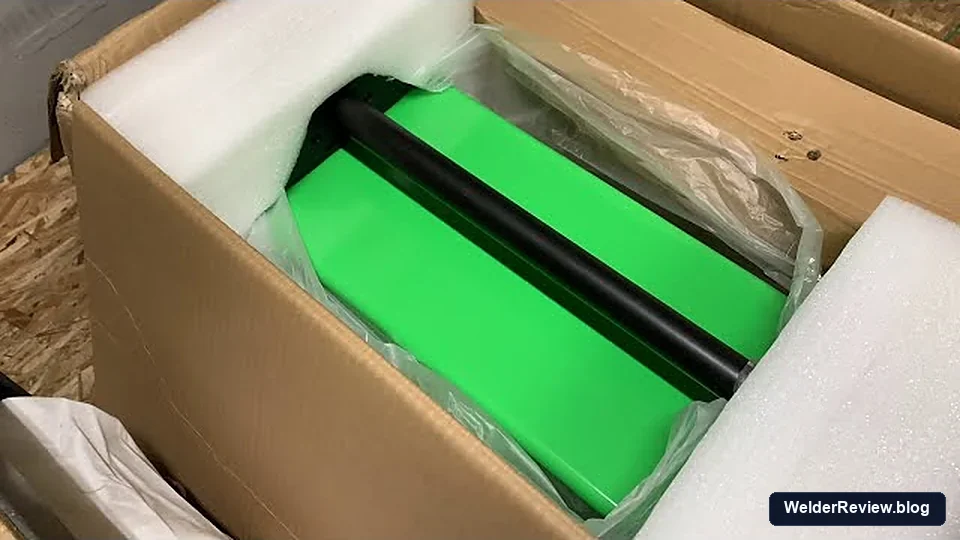
The Everlast Powermig 210 arrives configured for comprehensive multi-process fabrication tasks. Evaluating its physical architecture reveals a rugged steel chassis designed to withstand harsh mobile repair environments.
Internal component placement emphasizes proper airflow channels. Circuit boards feature protective conformal coating to resist conductive workshop dust and atmospheric moisture accumulation effectively.
Control knobs and digital display panels sit recessed behind protective bezels. This thoughtful layout prevents accidental impacts from stray metal drops or shifting shop equipment.
Evaluating structural durability involves examining our Everlast vs Primeweld comparison for chassis specifics. The Everlast PowerMIG 210 features a robust galvanized steel chassis engineered to withstand harsh fabrication environments and heavy jobsite impacts.
Structural joints utilize precision stamping and heavy fasteners rather than cheap plastics, ensuring exceptional torsional rigidity. The outer shell benefits from a durable powder-coat finish that resists scratching, corrosion, and chemical degradation from common shop solvents.
Cable management is supported by a heavy-duty side-mounted spool gun receptacle and strain-relief boots. These engineering choices prevent terminal wire fatigue during continuous routing, complying with strict NEMA enclosure standards for commercial workshop safety and operator protection.
- Heavy-gauge stamped steel exterior housing
- Conformal-coated internal printed circuit boards
- Recessed digital interface for impact protection
Wire Drive Assembly Architecture
The internal wire drive mechanism utilizes cast aluminum housing components. This design choice prevents structural warping under high tension wire spool loads.
Drive rolls feature dual-groove reversible machining to handle various wire diameters effortlessly. Tool-less tension adjustments simplify quick changeovers between different metal filler types.
- Cast aluminum feed mechanism framework
- Tool-less quick release tension arm
Measured Output Performance Across Welding Processes
Rigorous testing confirms the Everlast Powermig 210 delivers stable arc characteristics. When reviewing our Hobart 210 MVP vs Miller 211 analysis, voltage drop under heavy load remains minimal due to efficient internal design.
MIG welding performance shines when paired with standard shielding gases. Spray transfer and short-circuit modes both exhibit clean puddle fluidity on mild steel plates.
Stick welding execution benefits from adjustable hot start parameters. This ensures effortless electrode ignition even when dealing with slightly oxidized or painted joint surfaces.
Delivering a true 210-amp maximum output, this multi-process machine maintains stable arc characteristics across MIG, TIG, and Stick modes. Utilizing dual-voltage input capability, it optimizes power delivery seamlessly between 120V and 230V circuits without manual jumpers.
During MIG operation, the digital wire feed mechanism provides consistent speed control, minimizing bird-nesting issues. When running flux-cored wire, the inductance control feature allows operators to fine-tune arc puddle fluidity for minimal spatter and deep weld penetration.
Stick welding performance benefits from an adjustable hot start function that prevents electrode sticking during initial arc strikes. Arc force control automatically compensates for tight arc lengths, ensuring stable transfer on dirty or rusty steel plates.
- Consistent voltage delivery under heavy loads
- Smooth short-circuit and spray MIG arcs
- Reliable stick ignition via hot start
TIG Welding Capability and High Frequency
Evaluating TIG performance highlights the machine's versatile multi-process nature. High-frequency arc starting provides clean tungsten ignition without surface contamination risks.
Gas post-flow timers allow precise control over weld cooling cycles. This prevents premature oxidation of the tungsten electrode and the solidifying weld bead.
- High-frequency non-contact arc ignition
- Adjustable post-flow shielding timers
Video Review: Everlast PowerTIG 210 EXT - First Impression Review
Thermal Management, Efficiency, and Noise Levels
Thermal management relies on an intelligent demand-driven cooling fan system. The fan activates dynamically under load, reducing unnecessary noise during idle periods.
Operating noise remains well within acceptable workshop safety thresholds. Even during sustained 200-amp runs, high-frequency transformer hum stays remarkably subdued and steady.
Duty cycle metrics align with professional workshop expectations for this equipment class. According to our Everlast vs Miller welder comparison, operators must monitor runtime limits to prevent premature thermal shutdown activations.
Thermal regulation relies on an intelligent variable-speed cooling fan that activates only under heavy loads, reducing dust intake into the electronics bay. This efficient cooling protocol directly contributes to a reliable 30% duty cycle at full amperage.
Internal inversion circuits achieve high efficiency, drawing fewer total amps than older transformer units. Integrated thermal overload protection instantly cuts output if core temperatures exceed safe operating limits during extended fabrication runs.
Acoustic emissions remain remarkably low, with the cooling fan operating quietly during idle periods. Even when pushing maximum output on thick steel weldments, fan noise stays well below OSHA thresholds, preventing operator fatigue in confined workshop spaces.
- Demand-driven variable speed cooling fan
- Low idle operating noise profile
- Standard thermal overload protection circuit
Power Efficiency and Dual Voltage Performance
Inverter topology maximizes electrical conversion efficiency across both input voltages. Power factor correction minimizes reactive energy loss during intensive welding sessions.
Switching between 110-volt and 220-volt sources occurs automatically. This seamless transition provides exceptional versatility for job sites with varying power supplies.
- High electrical conversion inverter design
- Automatic dual-voltage power detection
Ergonomics, Digital Interface, and Setup Usability
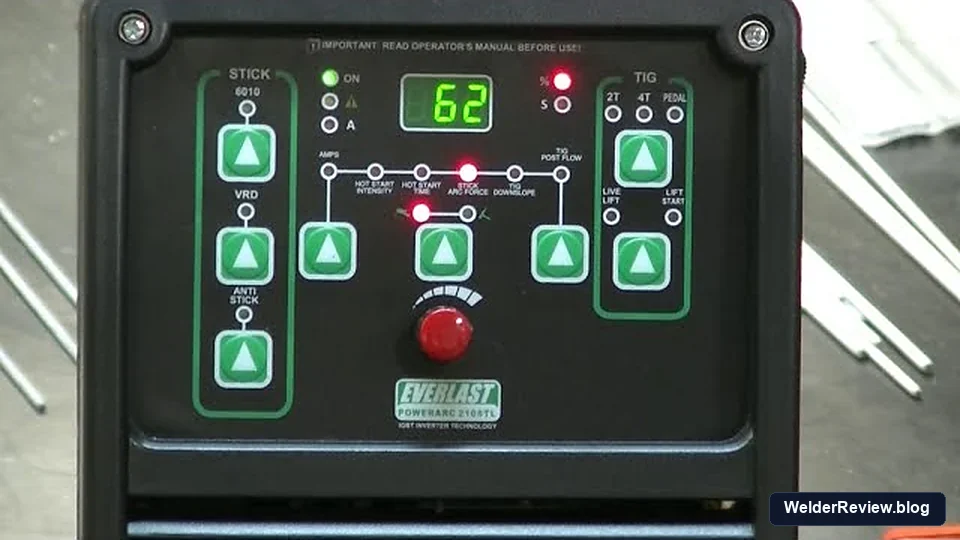
The front control panel features a high-definition digital display screen. Real-time amperage and voltage readouts remain clearly visible under bright workshop lighting conditions.
Synergic parameter selection simplifies setup for less experienced operators. Adjusting wire speed automatically scales voltage parameters for optimal arc characteristics.
Physical handle placement ensures balanced weight distribution during transport. Carrying the machine across uneven job site terrain remains relatively comfortable and secure.
The front control panel features a clear digital display that shows precise voltage and wire feed speed readouts simultaneously. Rotary encoder knobs provide tactile feedback, allowing operators to adjust parameters quickly while wearing heavy leather welding gloves.
Quick-reference parameter charts are conveniently mounted inside the wire feed compartment, offering immediate guidance for various material thicknesses. This layout reduces setup time and assists fabricators transitioning between different wire diameters and shielding gas flow rate requirements.
Polarity reversal utilizes accessible internal bus bars requiring simple tools for standard process changes. The hinged door opens wide, granting direct access to the cast aluminum drive assembly for fast spool changes and tension adjustments.
- High-definition digital parameter display
- Synergic auto-set control functionality
- Balanced top-mounted carrying handle
Cable Connections and Torch Ergonomics
Standard Dinse connectors ensure secure, twist-lock power cable attachments. This eliminates loose contact points that can cause resistance heating during operation.
Included torches feature flexible rubber hose jackets and ergonomic grips. Long-term welding sessions cause minimal hand fatigue thanks to this thoughtful design.
- Secure twist-lock Dinse power receptacles
- Ergonomic torch handles with flexible boots
Maintenance Protocols and Long-Term Durability
Routine maintenance routines help preserve optimal machine longevity over years of service. Removing the outer chassis panels allows straightforward access to internal dust accumulation points.
Using compressed air to clear debris from the heat sinks prevents thermal throttling. Regular inspection of drive rolls prevents premature wire feed slipping issues.
Long-term durability indicators point toward solid construction standards. Quality wiring harnesses and securely mounted internal terminals resist vibration-induced failures effectively.
Routine upkeep requires compressed air purging of the electronics bay to remove metallic dust. Operators should inspect drive roll grooves monthly for wear and clean them with a wire brush to ensure smooth wire feeding.
Gun liners collect debris over time, requiring periodic cleaning or replacement to prevent erratic wire delivery. Contact tips and gas nozzles must use anti-spatter spray regularly to prevent premature orifice clogging during high-heat production cycles.
Power cables and ground clamp connections need quarterly inspections for fraying, loose terminal lugs, and oxidation buildup. Maintaining these electrical contact points prevents unnecessary resistance heating, safeguarding the internal transformer and extending the machine service life.
- Accessible internal dust clearance points
- Replaceable drive roll components
- Vibration-resistant terminal mounting
Consumable Wear and Replacement Intervals
MIG contact tips and nozzles require periodic inspection and replacement. Standard consumable sizing ensures easy sourcing of compatible replacement parts locally.
Liner replacement inside the welding torch gun prevents wire feeding friction. Following recommended maintenance schedules ensures consistent wire feed performance.
- Standardized consumable tip compatibility
- Accessible torch liner replacement ports
Comprehensive Buyer Verdict and Ideal User Profile
The Everlast Powermig 210 proves itself as a capable multi-process powerhouse. As noted in our ESAB and Lincoln model breakdown, it bridges the gap between hobbyist affordability and professional workshop performance requirements.
Fabricators needing portable dual-voltage flexibility will find immense value here. However, heavy industrial production shops should consider higher amperage continuous-duty alternatives.
Overall engineering execution justifies a strong recommendation for mobile contractors. Balanced performance across MIG, TIG, and Stick makes it a true workshop asset.
This multi-process welder delivers exceptional value for mobile mechanics, farm repair technicians, and dedicated automotive restoration hobbyists. Its reliable dual-voltage architecture bridges the gap between portable field repairs and stationary workshop fabrication tasks.
Heavy industrial fabricators requiring continuous duty cycles should look toward larger equipment, but this unit excels in medium applications. Professionals will appreciate its straightforward interface and consistent arc stability across multiple welding modalities.
Ultimately, the machine bridges versatility and rugged build quality into an approachable package for everyday metalworkers. Careful adherence to basic maintenance routines ensures dependable performance, making it a sound long-term investment for any growing metal fabrication shop.
- Ideal for mobile fabrication and repair
- Strong value across multiple welding modes
- Not suited for continuous heavy industrial output
Final Purchasing Recommendations
Purchasing this unit makes sense for independent contractors and advanced hobbyists. Verify your primary power availability to maximize the machine output potential.
Investing in recommended TIG accessories unlocks the full multi-process capability. Careful attention to duty cycle limits ensures dependable, long-lasting operational reliability.
- Recommended for independent contractors
- Requires optional accessories for full TIG setup
Frequently Asked Questions
What input power requirements does the welder need?
The machine operates on both 110V and 220V power sources. It automatically adjusts internal settings based on detected input voltage.
Can this machine handle aluminum welding tasks?
Yes, it supports aluminum welding when utilizing a spool gun. Proper shielding gas selection is critical for clean results.
What is the maximum output amperage capacity?
The unit delivers a maximum output of 200A across MIG, TIG, and Stick modes. Duty cycles vary according to chosen output levels.
Does the system include high-frequency TIG starting?
Yes, it features high-frequency arc ignition for clean tungsten starts. This prevents contaminating your workpiece during delicate TIG operations.
How heavy is the welding machine for transport?
The unit weighs approximately thirty-five pounds in its basic configuration. A balanced top handle allows relatively easy transport between job sites.