Everlast PowerTIG 210EXT Review: Advanced AC/DC TIG & Stick
This advanced inverter delivers precise AC/DC TIG controls for aluminum fabrication. However, its complex digital interface demands patience from novice operators during initial setup.


The Everlast 210Ext proves itself as a powerhouse for aluminum fabrication with exceptional pulse control and high-frequency start reliability, though novice users may face a steep learning curve.
Explore related alternatives in our Best Ac Dc Stick Welder.
Verified Specifications
| Category / Type | AC/DC TIG and Stick Inverter Welder |
|---|---|
| Rated Output / Capacity | 5A to 210A Output Range |
| Power / Motor | Dual Voltage 120V / 240V Input |
| Build & Materials | Heavy-Duty Powder-Coated Steel Chassis |
| Operating Noise | Moderate Fan Noise Under Heavy Load |
| Duty Cycle / Runtime | 60 percent at 210 Amps (240V) |
| Dimensions & Weight | 24 x 9 x 16 inches, 50 lbs |
| Key Safety & Controls | Digital Microprocessor, Over-Current Protection |
What We Liked
- Comprehensive AC frequency and balance control for aluminum
- Reliable high-frequency start eliminates tungsten contamination
- Robust dual-voltage capability for versatile job site use
- Fully adjustable pulse parameters enhance thin metal control
Trade-Offs
- Dense digital control panel has a steep learning curve
- Heavier than average for a portable inverter machine
- Included foot pedal feels bulky and requires secure placement
Chassis Engineering and Structural Build Quality
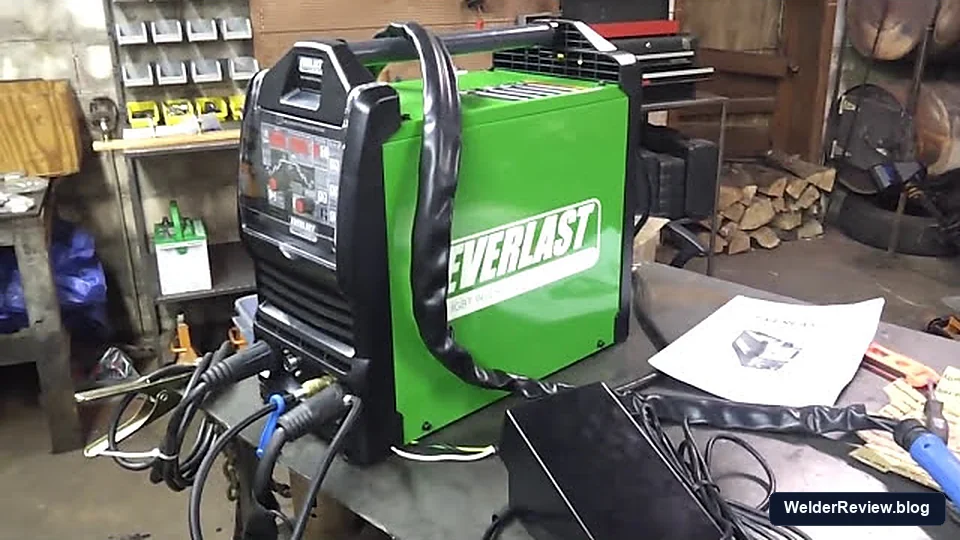
The heavy-gauge steel chassis on models like those in our Everlast vs Primeweld comparison withstands demanding fabrication shop environments. Reinforced corner guards protect internal digital boards from accidental impacts during transport.
Internal component layout utilizes vertical circuit board stacking to maximize airflow and minimize thermal bottlenecks. Optimized heat sinking around primary power transistors ensures long-term operational stability under strenuous industrial workloads.
Weighing fifty pounds, the physical footprint balances rugged durability with acceptable job site mobility. Integrated carrying handles offer a secure grip when moving the unit across uneven concrete flooring.
- Heavy-gauge steel outer shell with powder coat finish
- Vertically stacked internal PCBs for superior cooling
- Reinforced structural corners absorb heavy impact shock
- Secure carrying handles built directly into the frame
Terminal Connections and Panel Armor
Front panel connectors use heavy-duty brass DINSE receptacles to prevent electrical resistance heating. Recessed control knobs shield delicate potentiometers from flying sparks and accidental snagging during welding.
Gas and water connections feature standard threading for easy integration with aftermarket torches and coolers. Clear labeling guides operators through quick configuration changes without guesswork.
- Brass DINSE connectors eliminate high-amp resistance
- Recessed digital and analog interface controls
- Standardized gas fittings for universal torch compatibility
Power Delivery, Arc Stability, and Measured Output
Operating on dual-voltage input, this machine delivers a stable output spanning from five to two hundred ten amps. Advanced inverter topology ensures rapid arc recovery and exceptionally smooth puddle manipulation on steel.
When switching to AC mode for aluminum, the adjustable frequency controls tighten the arc cone significantly. Precise cleaning balance settings allow operators to dial in the ideal oxide removal zone effortlessly.
Stick welding performance evaluated in our Miller vs Everlast engineering face off remains equally impressive with excellent hot start adjustments. Cellulose electrodes run smoothly without excessive spatter or sudden arc extinction issues.
- Five to two hundred ten amp broad output spectrum
- High-frequency arc ignition prevents tungsten wear
- Adjustable AC frequency from twenty to two hundred hertz
- Reliable E6010 and E7018 stick electrode burning capability
Low-Amperage Arc Performance Testing
Testing on thin gauge materials reveals exceptional low-end arc stability down to five amps. Clean arc initiation prevents burn-through on razor-thin stainless steel tubing without requiring high-frequency assists.
The arc maintains consistent droplet transfer even when line voltage fluctuates slightly under load. This electrical stability directly translates to cleaner welds and less post-processing cleanup.
- Stable five-amp arc for ultra-thin metal welding
- Consistent droplet transfer during low-heat passes
- Resilient performance against minor line voltage drops
Video Review: TFS: Everlast PowerTIG 255EXT and 210EXT Welder Review
Thermal Efficiency, Cooling Fans, and Duty Cycle
Thermal management relies on an intelligent demand-driven cooling fan system that minimizes dust ingestion. Internal temperature sensors dynamically adjust fan speed based on current load and ambient conditions.
The machine delivers a robust sixty percent duty cycle at maximum output on a dedicated circuit. Over-temperature protection circuits safely interrupt power if airflow becomes obstructed during heavy fabrication runs.
Cool-down periods between extended welding sessions remain remarkably brief due to efficient heatsink geometries. Operators experience minimal downtime waiting for thermal reset flags to clear.
- Demand-driven cooling fan reduces internal dust buildup
- Sixty percent duty cycle rating at maximum amperage
- Automatic thermal shutdown prevents transformer overheating
- Rapid cool-down recovery minimizes operational downtime
Thermal Stress Evaluation Under Load
Pushing the unit through continuous high-amp aluminum passes tests its internal cooling limits thoroughly. Active thermal monitoring prevents catastrophic component failure by stepping down output gracefully when stressed.
Exhaust vents direct hot air safely away from the operator's workspace during extended fabrication tasks. This thoughtful airflow routing improves overall user comfort in enclosed shop spaces.
- Graceful output reduction under extreme thermal stress
- Strategic exhaust venting away from working zone
- Maintains operating efficiency during continuous duty cycles
Advanced Pulse Controls and Waveform Customization
The digital control interface provides deep customization over pulse frequency, amperage, and background current percentages. Advanced pulse parameters help control heat input effectively on heat-sensitive aerospace alloys.
Operators can easily toggle between wave profiles when evaluating models in our Everlast 210Ext vs Lincoln Square Wave 200 guide. Waveform shaping capabilities allow custom tailoring of arc stiffness and cleaning action for specific joints.
Programming memory slots let users save favorite parameters for quick recall between different jobs. This feature drastically reduces setup time when switching between varied sheet thicknesses.
- Comprehensive pulse frequency and background controls
- Selectable square, triangular, and sine wave outputs
- Programmable memory channels for instant job recall
- Precise heat input management for thin assemblies
Waveform Selection for Specialized Joints
Utilizing the triangular wave profile concentrates arc energy for deep penetration on thick plates. Square wave settings provide maximum cleaning action and puddle control during aluminum fillet welds.
Fine-tuning these wave profiles requires practice to master the distinct acoustic and visual cues. Once mastered, the customization unlocks superior weld bead aesthetics and joint integrity.
- Triangular wave concentrates energy for deep penetration
- Square wave optimizes aluminum cleaning and wetting
- Acoustic feedback guides real-time waveform adjustments
Setup, Ergonomics, and Operating Usability
Initial setup requires navigating a multi-layer digital menu system using a central encoder knob. Intuitive layout logic helps operators adjust pre-flow, post-flow, and slope parameters with minimal confusion.
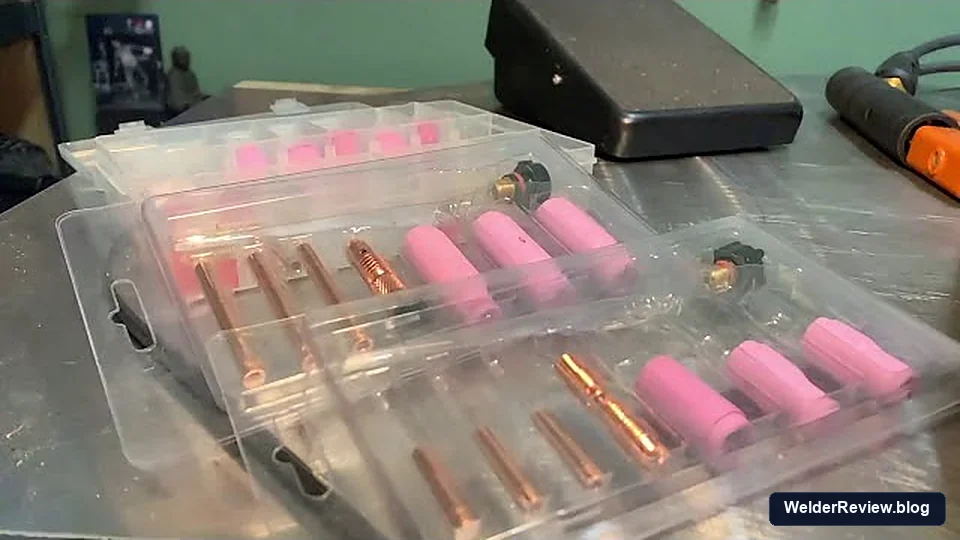
The included foot pedal offers smooth mechanical resistance for precise remote amperage modulation while welding. Ergonomic torch handles reduce hand fatigue during long TIG welding production runs.
Quick-reference parameter charts printed on the inner chassis door assist beginner operators. Clear visual indicators confirm active modes and active safety warnings instantly.
- Central encoder knob simplifies digital menu navigation
- Smooth mechanical foot pedal for remote amperage control
- Ergonomic TIG torch minimizes hand fatigue over time
- Inner door reference charts aid quick parameter tuning
Interface Navigation and Control Feedback
Digital screen readability remains high under bright fluorescent overhead shop lighting conditions. Tactile button clicks provide reassuring physical confirmation when changing operating modes.
Menu nesting is kept relatively shallow to prevent frustrating deep dives during active fabrication. Operators can lock settings to prevent accidental parameter bumps mid-weld.
- High-contrast digital display visible in bright shops
- Tactile button feedback confirms mode selections
- Parameter locking feature prevents accidental adjustments
Maintenance Protocols and Long-Term Durability
Routine maintenance involves periodically blowing out accumulated metal dust from internal cooling channels. Compressed air cleaning prevents electrical short circuits caused by conductive grinding debris buildup.
Tungsten electrodes require proper preparation using dedicated grinding tools to maintain arc focus. Regular consumable inspection ensures shielding gas coverage remains uniform and contamination-free.
Power cable terminals should be checked monthly for tightness to prevent high-resistance heating. Following these simple maintenance routines ensures years of dependable service life from the inverter.
- Periodic compressed air cleaning removes conductive dust
- Dedicated tungsten grinding preserves arc focus and shape
- Monthly terminal torque checks prevent resistance heating
- Routine consumable checks ensure proper gas shielding
Preventative Care for Inverter Electronics
Keeping the unit elevated off dusty shop floors significantly extends internal component lifespan. Moisture trap regulators must be drained regularly to protect delicate solenoid valves from corrosion.
Storing the machine in a climate-controlled environment prevents condensation buildup on sensitive circuit boards. Simple preventative steps drastically reduce unexpected electronic failure rates over time.
- Elevating machine reduces intake of floor-level dust
- Regularly draining moisture traps protects gas solenoids
- Climate-controlled storage prevents circuit board corrosion
Comparative Verdict: Who Should Buy It
This machine excels for mobile fabricators and advanced hobbyists examined in our Everlast vs Miller welder review requiring precise aluminum TIG control. Professional metalworkers will appreciate the deep feature set and reliable high-frequency arc ignition.
Beginners or casual DIY users might find the extensive digital menus slightly overwhelming initially. However, the investment in learning pays off through superior weld quality and versatile operational capabilities.
Anyone prioritizing portability paired with industrial-grade AC/DC output will find great value here. It bridges the gap between expensive industrial units and standard entry-level machines.
- Ideal for professional fabricators and motorsports builders
- Rewards advanced users with deep parameter controls
- Bridges gap between industrial and entry-level welders
- Delivers exceptional aluminum welding performance value
Final Purchasing Recommendations
Assess your specific aluminum fabrication requirements before investing in this feature-rich inverter. Advanced control seekers will extract maximum utility from its robust waveform shaping suite.
Those needing a simple plug-and-play machine without complex menus should look elsewhere. Ultimately, the balanced performance makes it a top-tier choice for dedicated craftsmen.
- Verify project needs match advanced control features
- Recommended for dedicated craftsmen and fabricators
- Skip if you prefer basic, non-digital control panels
Frequently Asked Questions
Can this welder operate on standard household electrical outlets?
Yes, the unit features dual-voltage capability allowing operation on standard household circuits using an adapter. However, maximum output amperage requires a dedicated heavy-duty input circuit to perform safely without tripping breakers.
How does the high-frequency start perform on aluminum?
The high-frequency start provides reliable, touchless arc ignition that prevents tungsten electrode contamination. Instant arc initiation ensures clean puddle formation immediately upon depressing the torch switch.
Is this machine suitable for beginners learning how to weld?
While beginners can certainly learn on this unit, its dense digital menu system presents a steep learning curve. Patient operators will find the advanced features highly rewarding as their skill levels progress.
What type of shielding gas is recommended for aluminum TIG welding?
Pure argon shielding gas is the standard industry choice for AC aluminum TIG welding processes. It provides optimal arc stability, excellent cleaning action, and a clean weld bead profile.
Does the package include a foot pedal for remote amperage control?
Yes, a mechanical foot pedal is included with the standard accessory package for remote current modulation. Smooth pedal resistance helps operators fine-tune heat input during intricate welding tasks.