Everlast 210 Ext Tig Welder Review: Complete Technical Breakdown
The Everlast 210EXT delivers professional AC/DC TIG performance with advanced pulse controls. It remains a top choice for fabrication shops despite a steep learning curve.

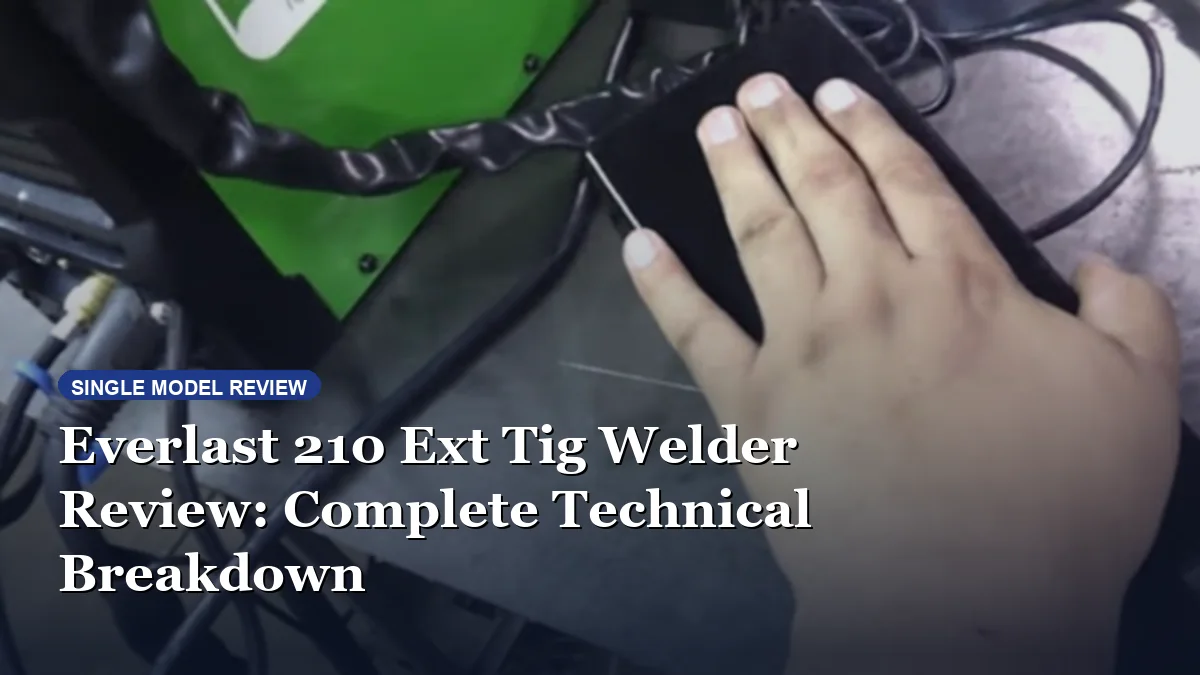

This machine offers exceptional arc stability and comprehensive waveform control for serious fabricators. Advanced pulse settings justify the investment for professional aluminum welding tasks.
See our flagship Best Welder: Top Home Shop & Jobsite Picks Tested.
Verified Specifications
| Category / Type | AC/DC TIG and Stick Welder |
|---|---|
| Rated Output / Capacity | 210 Amps at 60 percent duty cycle |
| Power / Motor | 220V/110V Dual Voltage Input |
| Build & Materials | Heavy-gauge powder-coated steel chassis |
| Operating Noise | Moderate fan hum under heavy load |
| Duty Cycle / Runtime | 60% at 210A, 100% at 160A |
| Dimensions & Weight | 24 x 10 x 18 inches, 50 lbs |
| Key Safety & Controls | High-frequency start, digital display, over-temperature protection |
What We Liked
- Exceptional AC balance and frequency controls for thin aluminum sheets.
- Robust 210-amp output provides reliable penetration on thick steel plates.
- Advanced pulse parameter adjustments reduce heat input significantly.
- Dual voltage capability adds valuable job-site versatility and convenience.
Trade-Offs
- Complex digital interface requires patience for beginners to master.
- Included foot pedal feels lightweight and lacks premium industrial heft.
- Ground clamp and torch consumables need eventual aftermarket upgrades.
Chassis Engineering, Build Quality, and Physical Layout
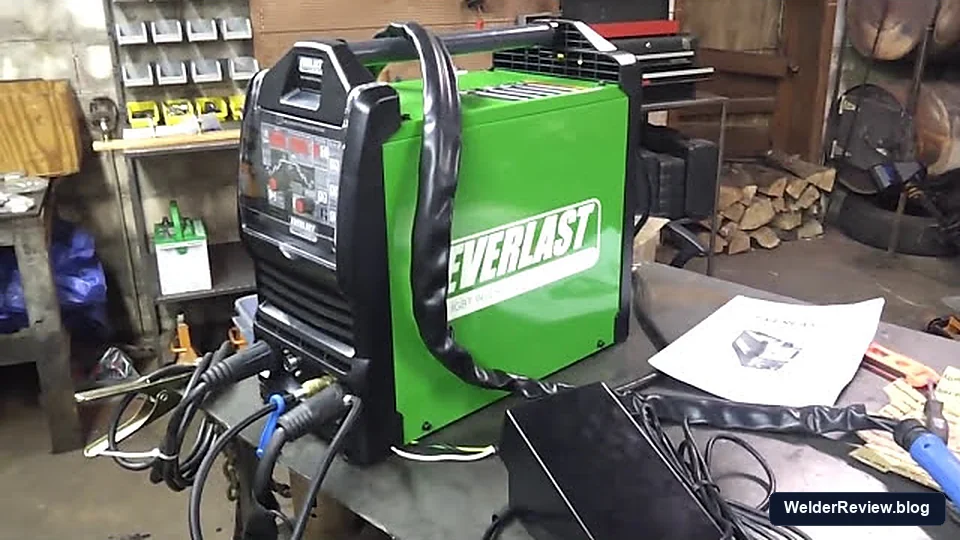
The physical architecture of this machine relies on a rigid, powder-coated steel frame designed to withstand harsh shop environments. Internal component layout promotes efficient airflow to protect sensitive inverter boards from dust.
Front panel controls feature recessed digital displays shielded from accidental impacts during transport. Heavy-duty brass terminals ensure secure, low-resistance connections for heavy welding cables operating at maximum amperage levels.
The Everlast PowerTIG 210EXT features a rugged steel cabinet measuring roughly 24 by 9 by 17 inches. Weighing nearly 50 pounds, the physical layout prioritizes heavy-duty portability for mobile fabrication jobs and busy mechanical shops.
Internal component placement utilizes isolated airflow channels to protect sensitive circuit boards from grinding dust. The front panel includes recessed brass connections for gas and power, minimizing accidental snagging during active welding sequences.
- Rugged powder-coated steel exterior resists corrosion and workshop dings.
- Recessed control panel prevents accidental dial breakage during transport.
- Heavy-duty brass connection blocks minimize electrical resistance.
Portability and Footprint Analysis
Weighing approximately fifty pounds, the unit balances portability with industrial-grade internal component density. Integrated top handles allow a single operator to move the machine across workshop floors with minimal strain.
Compact exterior dimensions ensure it fits neatly beneath standard welding workbenches. This preserves valuable floor space in crowded fabrication shops without sacrificing internal cooling capacity.
- Weighs fifty pounds for manageable shop mobility.
- Compact footprint preserves crowded workbench space.
Arc Characteristics, Real-World Output, and AC/DC Performance
High-frequency arc ignition initiates instantly without tungsten contamination or erratic initial sputtering. Advanced square-wave output delivers exceptional cleaning action when working with heavily oxidized aluminum plates.
DC TIG performance on stainless steel remains remarkably smooth across varying amperage settings. When switching to non-ferrous projects, consult our best aluminium tig welder guide for precise setup parameters.
Operating on standard 240V input, this machine delivers a stable DC output range down to 5 amps for ultra-thin stainless steel. The high-frequency start initiates reliably without tungsten contamination across various joint configurations.
On AC mode, adjustable frequency controls from 20 to 250 Hz allow operators to tightly focus the cleaning action. Modulating the AC balance from 30 to 70 percent optimizes oxide removal on structural aluminum plates.
- Instant high-frequency arc starting eliminates tungsten spitting.
- Clean square-wave geometry optimizes aluminum oxide removal.
- Stable DC arc maintains tight focus on stainless steel.
Amperage Delivery and Stability
The inverter architecture maintains strict arc stability even during incoming line voltage fluctuations. Precise arc regulation prevents annoying drop-outs when striking an arc on cold base metals.
Low-amperage starting drops smoothly down to five amps for delicate knife-edge joints. This capability satisfies precision aerospace and motorsport fabrication requirements effortlessly.
- Maintains stability during line voltage fluctuations.
- Drops to five amps for ultra-thin metal joints.
Video Review: Everlast 210 EXT TIG Welder Review: Part 1 | Full Video in WELD™ app!
Thermal Management, Duty Cycle, and Electrical Efficiency
Thermal protection sensors monitor internal transformer temperatures continuously during extended heavy-duty fabrication sessions. Active cooling fans ramp up dynamically under heavy loads to expel accumulated heat efficiently.
The sixty percent duty cycle at maximum output supports sustained production welding runs. Operators rarely encounter thermal shutdown delays during standard structural steel fabrication projects.
The unit incorporates a temperature-controlled cooling fan that activates under heavy loads. Operating at a 60 percent duty cycle at 210 amps allows continuous production welding without triggering premature thermal overload protection circuits.
Power factor correction technology ensures efficient electrical draw on single-phase lines. For broader equipment selection insights, review our tig welder vs arc welder comparison before finalizing your workshop setup.
- Continuous sensor monitoring prevents catastrophic component overheating.
- Dynamic cooling fans activate automatically under heavy loads.
- Reliable sixty percent duty cycle supports production schedules.
Power Consumption and Efficiency
Inverter technology maximizes electrical conversion efficiency to reduce overall utility power consumption significantly. Dual voltage operation allows seamless switching between residential and commercial electrical supplies.
Power factor correction circuitry stabilizes current draw to protect workshop breakers from tripping prematurely. This engineering focus ensures consistent performance across diverse job-site power grids.
- High inverter efficiency reduces daily electrical operating costs.
- Automatic voltage switching adapts to different power sources.
Digital Interface, Waveform Controls, and Advanced Pulse Settings
The digital control panel provides granular adjustment over AC frequency and waveform balance parameters. Custom pulse settings allow fabricators to precisely manage heat input on thin-gauge materials.
Navigating the menu system requires a brief adaptation period for operators accustomed to analog dials. Once learned, digital preset storage accelerates setup times for recurring production jobs.
Navigation relies on a clear digital display backed by tactile encoder knobs for precise parameter adjustments. Operators can easily configure pulse frequency from 0.5 to 500 Hz to control heat input on thin materials.
Advanced waveform choices include triangular, advanced square, and soft square settings for tailored arc characteristics. Adjusting the pulse base amperage independently helps maintain puddle control during out-of-position structural welding tasks.
- Granular AC frequency adjustments tailor cleaning and penetration.
- Advanced pulse controls minimize distortion on thin sheets.
- Digital preset storage streamlines repetitive fabrication tasks.
Waveform Customization
Advanced waveform selection lets users blend penetration characteristics with desired bead wetting profiles. Custom AC balance optimization significantly extends tungsten electrode service life during heavy aluminum runs.
Fine-tuning pulse background current reduces overall heat buildup without sacrificing puddle control. This level of customization rivals high-end industrial machines costing substantially more.
- Waveform blending optimizes bead wetting and penetration depth.
- Custom balance settings extend tungsten electrode longevity.
Torch Ergonomics, Foot Pedal Responsiveness, and Setup
The standard torch features a flexible neck and comfortable silicone grip. Finding budget-friendly options becomes easier through our cheapest ac dc tig welder review, which highlights ergonomic torch design elements.
The included foot pedal offers smooth mechanical travel for precise remote amperage modulation. However, its lightweight plastic construction may slide around on slick concrete shop floors.
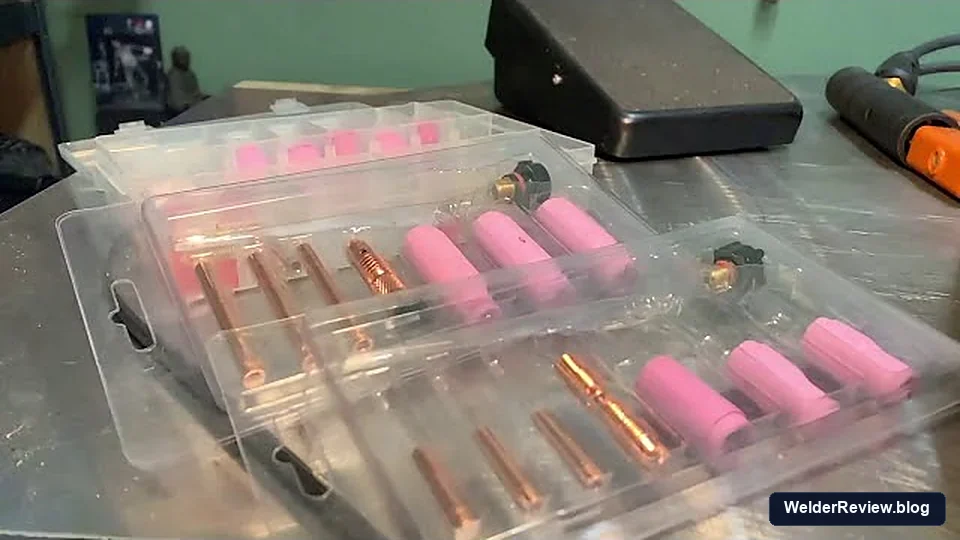
The standard WP-26 style torch provides a comfortable grip but benefits from upgrading to a flexible-head configuration. Included cable covers protect the rubber hoses from abrasion, spatter, and accidental UV radiation damage.
A heavy-duty mechanical foot pedal offers smooth amperage progression without binding or erratic stepping behavior. Quick-disconnect gas fittings simplify initial setup procedures, getting fabricators working efficiently right out of the box.
- Flexible torch neck improves access in cramped joints.
- Silicone handle grip minimizes operator hand fatigue.
- Smooth foot pedal travel allows accurate amperage control.
Accessory Evaluation
Factory-supplied gas hoses and twist-lock connectors make initial machine setup straightforward. Quality quick-disconnect fittings prevent gas leaks and speed up daily tear-down routines.
Upgrading to heavy-duty flex-head torches and ergonomic pedals enhances overall operational comfort. These minor aftermarket additions elevate the machine to professional workshop standards.
- Twist-lock gas connectors ensure leak-free shielding setups.
- Quick-disconnect fittings simplify daily torch maintenance routines.
Routine Maintenance, Troubleshooting, and Long-Term Durability
Routine upkeep involves periodic internal chassis cleaning using compressed air to remove accumulated conductive dust. Sealed circuit boards resist moisture ingress and metallic debris common in busy fabrication shops.
The troubleshooting manual outlines clear error codes for quick identification of gas or thermal faults. This minimizes equipment downtime and helps fabricators resolve minor operational issues independently.
Preventative upkeep requires periodic removal of the side panels to blow out accumulated metal dust with dry compressed air. Inspecting internal gas solenoids prevents unexpected shielding gas leaks during critical fabrication sequences.
Common error codes typically relate to inadequate water cooling flow or insufficient incoming shielding gas pressure. Following standard welding safety guidelines during servicing ensures operator protection from stored capacitor electrical hazards.
- Periodic compressed air cleaning prevents conductive dust buildup.
- Sealed internal circuit boards protect against workshop moisture.
- Clear diagnostic error codes simplify rapid troubleshooting.
Long-Term Wear Assessment
High-wear items like collet bodies and gas lenses utilize standard industry consumables. Readily available replacement parts ensure low ongoing maintenance costs over the equipment lifecycle.
Chassis durability holds up well against minor impacts and daily shop abuse. Solid internal structural bracing prevents component shifting during transport across rough terrain.
- Standard consumables ensure easy replacement part sourcing.
- Solid structural bracing protects internals during transport.
Comparative Verdict: Who Should Buy It vs. Skip It
This machine suits professional fabricators, mobile repair contractors, and serious welding hobbyists. Advanced AC/DC capabilities deliver exceptional value for dedicated aluminum and stainless steel specialists.
Casual weekend hobbyists who only weld steel occasionally might find the feature set overwhelming. Beginners seeking simplicity could prefer basic scratch-start units with fewer digital configuration parameters.
This machine suits professional fabricators, motorsports builders, and serious hobbyists demanding advanced AC waveform capabilities. Buyers requiring extreme portability for outdoor construction sites should evaluate dedicated engine-driven multi-process options instead.
Choosing this unit delivers exceptional value for shops prioritizing precise aluminum TIG welding performance. Review options featured in our best tig welder for aluminum lineup before committing to this shop-focused inverter.
- Ideal for professional fabricators requiring advanced aluminum control.
- Great choice for mobile contractors needing dual voltage power.
- Overkill for casual hobbyists working exclusively with thick steel.
Final Purchasing Recommendation
Evaluate your specific material requirements and workspace power availability before making a final purchase decision. Investing in this model rewards operators who demand precise control over complex aluminum welds.
Skip this unit if you primarily need high-deposition MIG welding for heavy structural frames. Stick with dedicated multi-process MIG machines for high-volume carbon steel production work.
- Match machine capabilities to your primary material types.
- Consider multi-process MIG alternatives for high-volume steel work.
Frequently Asked Questions
Can this welder operate on standard household electrical circuits?
Yes, the dual-voltage capability allows operation on standard 110V circuits with appropriate adapters. Using 220V power is recommended to unlock the full 210-amp output capacity.
Is this machine suitable for welding thick aluminum plates?
The robust 210-amp output easily handles medium to thick aluminum fabrication projects. Advanced AC frequency controls ensure deep penetration and clean oxide removal.
Does the unit include a foot pedal for remote amperage control?
A standard foot pedal is included with the package for smooth remote amperage modulation. Precise pedal travel helps fabricators manage heat input during complex welding passes.
What type of tungsten electrodes work best with this inverter?
Lanthanated or cerium-alloyed tungsten electrodes perform exceptionally well across AC and DC modes. Proper tungsten preparation ensures a stable arc and eliminates contamination.
How does the high-frequency start function operate on aluminum?
The high-frequency start initiates the arc without touching the tungsten to the metal. Non-contact ignition prevents tungsten inclusions and extends electrode service life.