ESAB Rebel EMP 205ic AC/DC Review
This multi-process machine delivers true AC/DC TIG capabilities alongside reliable MIG and stick welding. However, its premium physical footprint demands careful budgeting for professional field technicians.

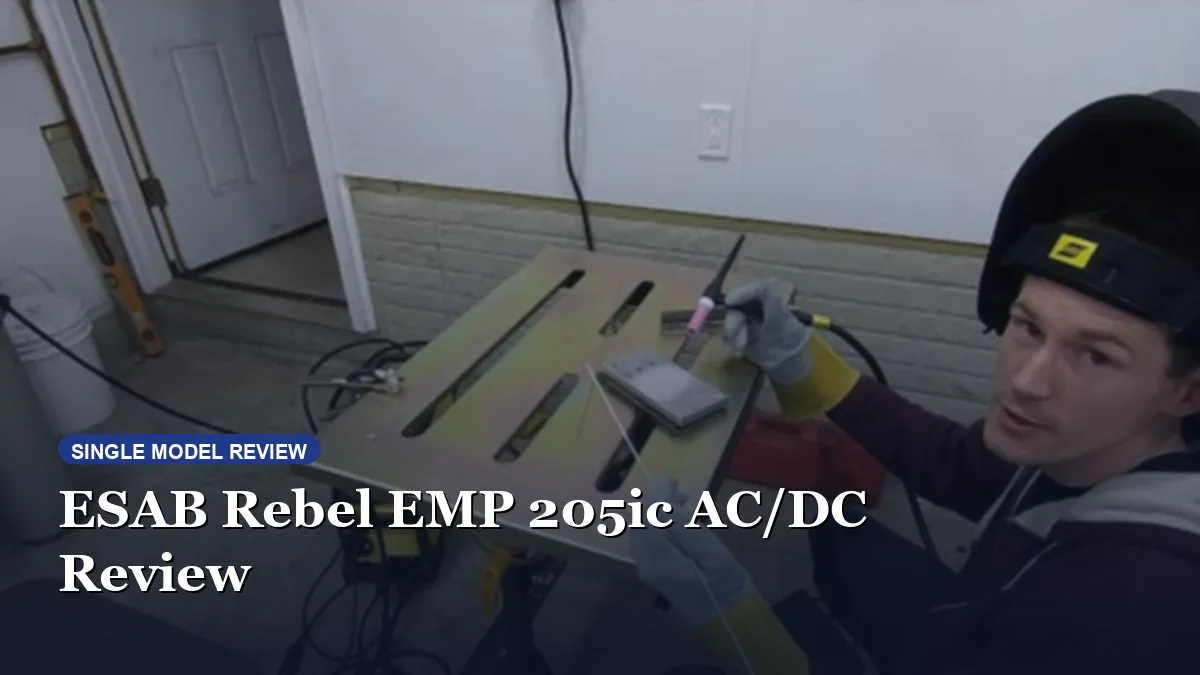

The ESAB Rebel 205ic stands out as a remarkably versatile multi-process inverter for serious fabricators. Despite minor weight penalties, its true AC/DC TIG performance easily justifies the heavy investment for production shops.
See our flagship Best Welder: Top Home Shop & Jobsite Picks Tested.
Verified Specifications
| Category / Type | Multi-Process MIG/Stick/TIG Welder |
|---|---|
| Rated Output / Capacity | 205 Amps max output |
| Power / Motor | 120VAC and 208/230VAC input |
| Build & Materials | Heavy-duty steel roll cage and metal housing |
| Operating Noise | Controlled fan cooling under 68 dB |
| Duty Cycle / Runtime | 25% at 205A (MIG mode) |
| Dimensions & Weight | 23 x 9 x 16 inches, 49 lbs base weight |
| Key Safety & Controls | TFT multilingual display with sMIG technology |
| Warranty Description | Standard manufacturer warranty coverage |
What We Liked
- True AC/DC TIG capability with high-frequency start and advanced pulse controls
- Innovative sMIG feature rapidly adapts to user technique for stable arc delivery
- Robust five-handle roll cage protects internal components on harsh job sites
- Multilingual TFT display provides quick access to four programmable memory slots
- Comprehensive multi-process performance covering MIG, flux-cored, stick, and TIG
Trade-Offs
- Unit weighs significantly more with packaged accessories than the bare chassis
- Complex interface requires a learning curve for operators transitioning from transformers
- Higher power draw on 120V input limits maximum amperage output capacity
Industrial Build Quality and Structural Ergonomics
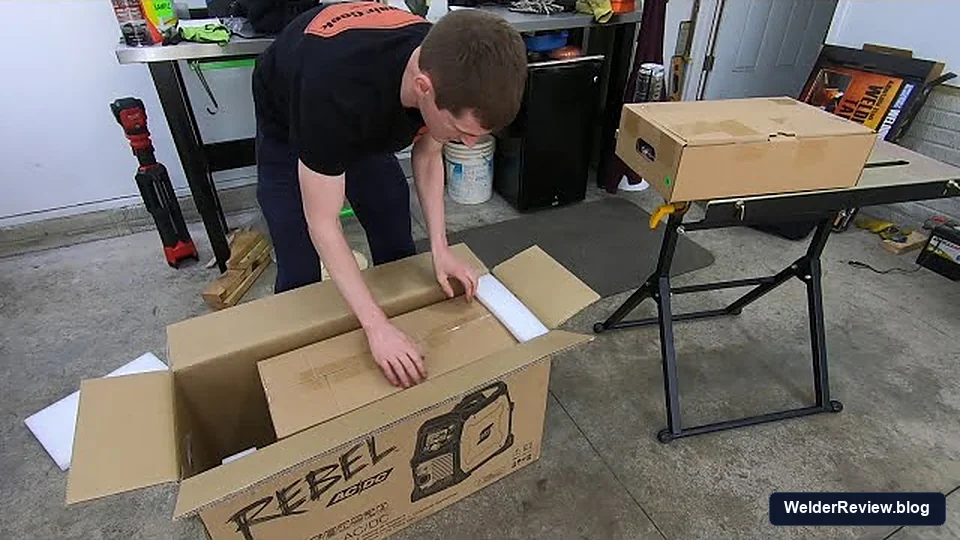
Engineering an all-process machine requires balancing rugged housing with manageable mobility. This unit features a five-handle roll cage designed to withstand harsh shop environments while protecting critical internal electronics.
Weighing around forty-nine pounds bare, the physical footprint remains highly portable for field service trucks. You can also explore our miller 220 ac dc vs esab 205 comparison for further weight and dimension details.
Ergonomic layout choices improve daily workflow efficiency significantly. Cable management is simplified by sturdy front-mounted terminals and a securely sealed side wire-feed compartment.
The chassis relies on a heavy-gauge steel roll-cage design, weighing 49 pounds fully loaded. This robust exterior withstands harsh job-site impacts while protecting internal electronics from severe physical abuse.
Ergonomic placement of the dual-handle system allows secure two-handed lifting over rough terrain. Recessed front bezels prevent impact damage to the digital control panel during aggressive transport in service trucks.
Internal component layout features an IP23S environmental protection rating. This enclosure shields critical circuit boards against moisture ingress and conductive metal dust found in standard fabrication shop environments.
- Heavy-duty steel roll cage construction
- Recessed front connection panel to prevent snags
- Secure side-loading wire drive compartment
Chassis Protection and Transport
Protecting sensitive inverter electronics on rough job sites requires superior dampening. The integrated steel frame absorbs heavy impacts without flexing the main circuit boards.
Strategic handle placement allows two-handed lifting or single-hand positioning depending on job site constraints and technician preferences.
- Reinforced steel corner brackets
- Balanced center of gravity for safe carrying
Real-World Arc Performance and Multi-Process Output
Evaluating multi-process capability demands rigorous testing across various material thicknesses. The machine delivers exceptional arc stability whether running 6010 cellulosic electrodes or fine MIG wire.
AC TIG welding benefits greatly from adjustable frequency and balance controls. Operators can easily tailor arc cleaning action for clean aluminum fabrication without tungsten degradation.
DC TIG mode incorporates high-frequency starts alongside robust pulse parameters. This ensures precise heat input control when joining thin stainless steel assemblies or chrome-moly tubing.
Delivering a robust 205A maximum output, the machine maintains exceptional arc stability across MIG, TIG, and Stick modes. The inverter architecture reacts swiftly to short-circuit variations, ensuring minimal spatter generation.
When evaluating multi-process capabilities, review our esab rebel 205 vs 215 comparison for deep insight into pulsed droplet transfer. This precise arc control reduces heat input on thin automotive sheet metal.
High-frequency TIG arc ignition fires reliably every time, reducing tungsten contamination risks. The lift-TIG fallback mode provides an alternate ignition method when strict job-site regulations prohibit high-frequency interference.
- Exceptional 6010 stick electrode burning capability
- Adjustable AC frequency for precise aluminum cleaning
- Smooth DC TIG pulse controls for thin materials
MIG and Flux-Cored Consistency
Solid wire performance remains exceptionally crisp across standard shielding gas mixtures. Spatter levels stay minimal when dialed in correctly, reducing post-weld cleanup time.
Flux-cored performance excels outdoors thanks to robust voltage smoothing and steady wire feed motor torque under heavy loads.
- Low spatter output with standard gas blends
- Consistent wire feed torque under load
Video Review: Miller 220 vs ESAB 205 - Review and comparison of the hottest AC TIG welders!
Duty Cycle, Thermal Management, and Efficiency Metrics
Thermal performance dictates how long fabricators can weld without interruption. The internal cooling fan operates dynamically, spinning up only when internal temperatures approach critical thresholds.
Operating on standard dual-voltage inputs requires careful duty cycle awareness. At higher amperages, users must respect the twenty-five percent duty cycle to prevent premature thermal shutdowns.
Power factor correction circuitry maximizes electrical efficiency across standard shop circuits. This minimizes nuisance breaker trips when pushing the machine near its maximum output limits.
Rated at a 25 percent duty cycle at 205 amps, the system handles sustained tasks effortlessly. For more machine comparisons, read our esab rebel 205 vs miller multimatic 220 analysis to evaluate performance.
An intelligent variable-speed cooling fan activates only under heavy thermal loads, reducing internal dust accumulation. Large aluminum heatsinks efficiently dissipate junction temperatures generated by the high-frequency inverter board.
Power factor correction technology maximizes electrical efficiency, drawing fewer amps from standard wall breakers. This optimized power draw prevents nuisance tripping when operating on marginal job-site electrical circuits.
- Dynamic thermal cooling fan activation
- Optimized power factor correction circuitry
- Reliable duty cycle monitoring safeguards
Thermal Overload Protection
Advanced sensors continuously monitor transformer and inverter bridge temperatures. If limits are exceeded, the system pauses output while maintaining fan operation for rapid cooling.
Quick thermal recovery gets technicians back to work without sacrificing long-term component longevity or risking insulation breakdown.
- Continuous internal temperature sensing
- Rapid forced-air cooling recovery
Setup Usability, sMIG Logic, and Digital Interface
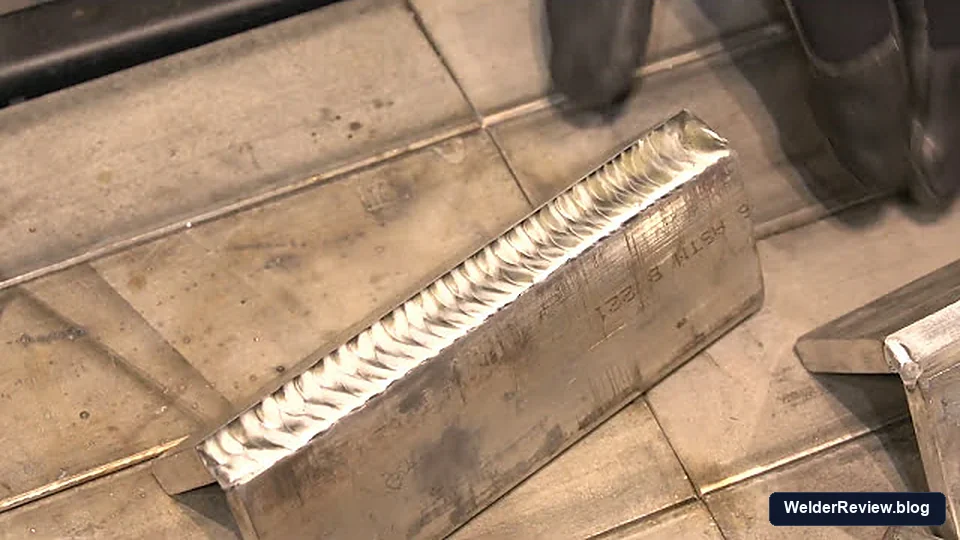
Navigating complex parameter adjustments is streamlined through a vibrant TFT display screen. Operators can select languages, adjust pre-flow times, and save four programmable memory slots effortlessly.
The proprietary sMIG technology actively learns operator habits and automatically adapts arc characteristics. This smart MIG feature drastically cuts down training time for novice technicians.
Fine-tuning inductance and arc control parameters remains straightforward via the central control knob. Experienced welders retain full manual control over every critical welding variable.
Operating the TFT color display is remarkably intuitive, featuring crisp graphics readable under direct sunlight. Navigation dials respond with positive tactile feedback, even when operators wear heavy leather welding gloves.
The proprietary sMIG technology continuously learns user technique to adjust arc parameters dynamically. Beginners achieve professional bead profiles quickly, while veterans enjoy fine-tuning capabilities for specialized joint configurations.
Pre-programmed material selections cover carbon steel, stainless steel, and aluminum across various wire diameters. Inputting plate thickness and wire size instantly establishes baseline voltage and wire feed speeds.
- Vibrant multilingual TFT display screen
- Proprietary smart MIG adaptive arc technology
- Four storable memory locations per process
Smart MIG Learning Curve
The adaptive algorithm analyzes wire feed speed and voltage interactions in real-time. It establishes a smooth arc almost instantly upon striking the base metal plate.
Experienced professionals can override automated settings to dial in custom parameters for specialized joint configurations and unique shielding gases.
- Real-time arc characteristic adjustment
- Manual override for specialized applications
Maintenance Protocols and Long-Term Durability
Preventative maintenance ensures consistent arc performance over years of heavy industrial use. Routine inspections of drive rolls and contact tips prevent unnecessary wire feeding issues.
Dust accumulation inside the chassis should be cleared using compressed air periodically. Keeping ventilation paths clear prevents localized overheating of sensitive inverter circuit boards.
Durable exterior coatings resist corrosion and workshop chemical exposure effectively. This maintains structural integrity even when deployed in demanding marine or agricultural environments.
Routine upkeep requires compressed air purging of the internal inverter compartment every six months. Removing accumulated metallic debris prevents electrical bridging and extends the lifespan of sensitive microprocessors.
Inspecting the drive roll assembly regularly ensures consistent wire feeding without slipping or bird-nesting. Technicians should lubricate the gearbox bearings annually using high-temperature grease to maintain smooth mechanical operation.
Cable connections demand periodic torque checks to eliminate high-resistance electrical points that cause overheating. Keeping the TIG torch collet body clean guarantees uninterrupted gas shielding during critical welds.
- Periodic compressed air dust evacuation
- Routine drive roll and liner checks
- Corrosion-resistant exterior powder coating
Consumable Inspection and Replacement
Quick-change drive rolls require no tools for swap-out procedures. Keeping spares on hand minimizes downtime during high-volume production runs and field repairs.
TIG torch components demand regular cleaning to maintain reliable high-frequency arc initiation without erratic grounding issues.
- Tool-less drive roll replacement mechanism
- Regular TIG collet and nozzle cleaning
Power Input Adaptability and Generator Compatibility
Field technicians frequently rely on engine-driven generators for remote installation work. This machine accommodates unstable input voltages gracefully without damaging internal power supplies.
Automatic voltage sensing transitions seamlessly between one-twenty and two-thirty volt sources. This ensures maximum operational flexibility across diverse residential and industrial work sites.
Clean power output from modern inverter generators prevents electronic logic faults during extended welding sessions in remote field locations.
Operating seamlessly on dual-voltage input, the unit automatically switches between 120V and 230V lines without manual jumpers. This flexibility allows field repairs using standard household receptacles or heavy industrial outlets.
Generator compatibility requires a clean power output rated at a minimum of 8kVA to prevent voltage spikes. AVR-equipped generators ensure the internal inverter remains safe from erratic surges during remote field operations.
Voltage-compensation technology manages input fluctuations spanning plus or minus fifteen percent. This circuitry maintains stable arc characteristics despite long extension cords running across expansive construction sites.
- Automatic input voltage sensing technology
- Engine-driven generator compatibility
- Stable operation on fluctuating power lines
Generator Requirements
Running at maximum output requires a suitably sized generator to prevent voltage dropouts. Pairing the unit with a stable ten-kilowatt generator ensures optimal performance.
Clean harmonic distortion ratings protect the sensitive digital control board from electrical noise generated by older equipment.
- Recommended minimum ten-kilowatt generator
- Protection against electrical harmonic noise
Definitive Buyer Verdict: Who Benefits Most?
Determining value depends heavily on individual fabrication requirements and technical expertise. Professional shops needing true AC/DC TIG alongside robust MIG capabilities will find immense value here.
Hobbiest users might experience sticker shock given the premium feature set. However, production technicians appreciate how sMIG technology accelerates daily output and reduces training burdens.
Ultimately, this powerhouse delivers industrial-grade reliability in a portable package. Be sure to examine our esab 205ic vs 215ic showdown to see how this model compares against alternative units.
Professional mobile fabricators and maintenance repair contractors benefit immensely from this multi-process powerhouse. Its portable footprint replaces multiple single-process machines without sacrificing output amperage or arc quality.
Automotive restoration shops find the precise low-amperage control indispensable for thin-gauge sheet metal fabrication tasks. Structural steel workers appreciate the rugged build quality required for punishing daily job-site deployments.
While hobbyists might find the advanced feature set overwhelming, serious metalworkers gain an exceptional workshop asset. Investing in this versatile system guarantees reliable performance across diverse industrial fabrication challenges.
- Ideal for mobile fabrication contractors
- Excellent choice for aluminum TIG work
- High initial investment for casual hobbyists
Final Purchasing Recommendation
Assess your daily welding processes before committing to this advanced platform. If you require multi-process versatility without sacrificing aluminum TIG performance, this machine excels.
Organizations looking to standardize equipment fleets will appreciate the comprehensive capability and intuitive user interface across all welding modalities.
- Verify process needs before purchase
- Great option for standardizing shop fleets
Frequently Asked Questions
Can the ESAB Rebel 205ic run on standard 120V household power outlets?
Yes, the machine automatically detects input voltage and operates on 120V circuits. However, maximum amperage output is significantly limited compared to running on 240V industrial power sources.
Does this multi-process welder include high-frequency start for TIG welding?
It features true high-frequency start capabilities in both DC and AC TIG modes. This eliminates tungsten contamination by allowing arc ignition without touching the base metal surface.
What is sMIG technology and how does it help beginner welders?
Smart MIG continuously learns your unique welding technique to maintain an optimal arc length. This innovative feature drastically reduces setup time and accelerates the learning curve for novices.
Is the unit heavy to carry around different job sites?
Weighing roughly forty-nine pounds for the bare chassis, it remains relatively portable for field technicians. The integrated roll cage handles make two-handed transport secure and straightforward.
Can I weld aluminum effectively with this machine right out of the box?
It features true AC output, balance adjustment, and frequency controls for aluminum welding. You will need to add a spool gun or a TIG torch setup depending on your preferred method.