Eastwood MP200I Review: Multi-Process Powerhouse
This flexible multi-process welder balances impressive arc performance with solid portability. However, extended high-amperage runs require careful monitoring of thermal duty cycles.

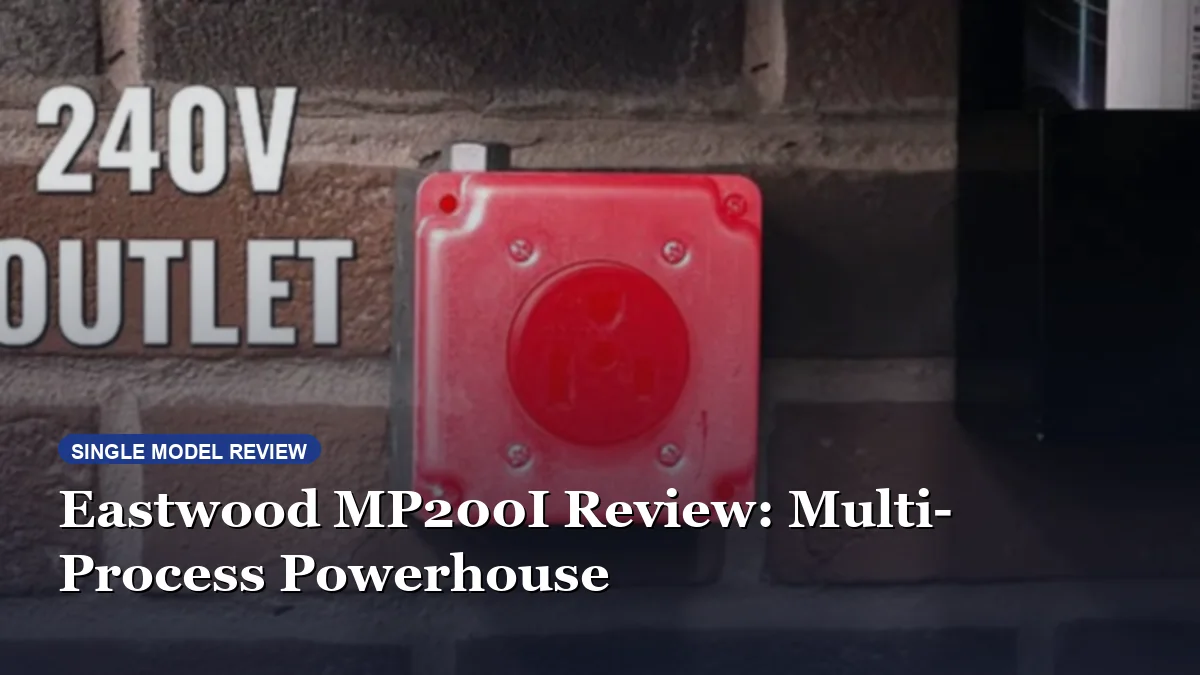

The Eastwood MP200I delivers exceptional process versatility for home fabricators, making it a reliable shop companion despite minor duty cycle limits.
See our flagship Best Welder: Top Home Shop & Jobsite Picks Tested.
Verified Specifications
| Category / Type | Multi-Process Inverter Welder |
|---|---|
| Rated Output / Capacity | 200 Amps Maximum Output |
| Power / Motor | Dual-Voltage 110V/220V Input |
| Build & Materials | Steel Chassis with Cast Aluminum Drive |
| Operating Noise | Moderate Fan and Arc Sound |
| Duty Cycle / Runtime | 30% at 200 Amps (220V) |
| Dimensions & Weight | Portable 30-Pound Footprint |
| Key Safety & Controls | Digital Display with Thermal Protection |
What We Liked
- Smooth multi-process transition across MIG, TIG, and Stick modes
- Dual-voltage input compatibility for flexible job site placement
- Clear digital control panel for precise parameter adjustments
- Robust internal drive system ensures consistent wire feeding
Trade-Offs
- Duty cycle limitations restrict heavy continuous industrial output
- Lift-start TIG setup lacks high-frequency arc initiation
Engineering Architecture and Chassis Construction
The Eastwood MP200I features a robust steel chassis designed for shop durability and transport resilience. Its internal component layout isolates sensitive electronics from heavy transformer vibrations during standard fabrication tasks.
Weighing around thirty pounds, the unit balances portability with structural integrity. Thick side panels protect the wire feed mechanism from accidental impacts on crowded job sites or busy garage floors.
The cast aluminum wire drive mechanism inside the cabinet ensures consistent tension for smooth wire feeding. Reviewing our eastwood mp250i vs miller comparison highlights how this robust assembly minimizes birdnesting during long aluminum fabrication sessions.
Housed in a heavy-gauge powder-coated steel chassis, the unit withstands harsh shop environments. Internal component layout separates the sensitive digital control board from the high-frequency inverter section to reduce electromagnetic interference.
- Rugged steel exterior housing protects internal electronics
- Compact layout optimizes workshop floor space utilization
- Reinforced carry handle aids secure job site transport
Internal Component Layout
Dual-drive roll systems ensure steady wire delivery without binding. The cast aluminum drive assembly reduces slippage when running aluminum or steel filler materials through extended lines.
Circuit boards feature conformal coatings to resist moisture and conductive metal dust accumulation. This design choice significantly extends operational life in unconditioned workshops facing high humidity levels.
- Cast aluminum wire feed mechanism
- Moisture-resistant conformal circuit coatings
Arc Performance and Process Versatility
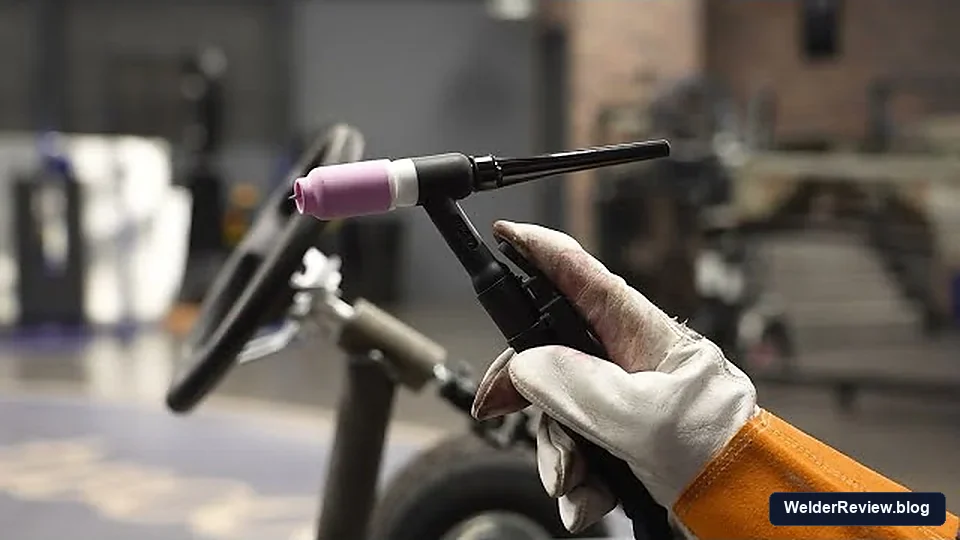
Delivering multi-process capability, this machine transitions smoothly between MIG, TIG, and Stick modes. Inverter technology ensures stable arc initiation, a topic we explore further in our eastwood tig 200 vs digital tig comparison.
The MIG function delivers crisp, low-spatter transfers when paired with standard shielding gases. Voltage and wire feed dials offer fine-tuning adjustments necessary for precise root passes on thin sheet metal.
Operating on a dual-voltage input, this machine delivers stable MIG, TIG, and Stick capabilities. The DC TIG arc starter provides clean high-frequency initiation without contaminating tungsten electrodes during precision stainless steel fabrication projects.
Flux-core performance benefits from adjustable inductance controls, allowing operators to fine-tune arc stiffness and spatter levels. This feature ensures deep penetration when joining thick carbon steel plates in demanding structural configurations.
- Three distinct welding processes in one compact unit
- Stable arc characteristics across varied metal thicknesses
- Low spatter output minimizes post-weld cleanup time
TIG and Stick Capabilities
Lift-start TIG performance provides reliable arc strikes without high-frequency interference issues. Operators can execute clean welds on stainless steel tubing using basic torch setups and argon gas.
Stick welding mode maintains a stiff, driving arc that handles standard electrodes effectively. Hot start features prevent electrode sticking during initial contact on cold, rusty structural steel.
- Reliable lift-start TIG arc stability
- Effective stick electrode arc control
Video Review: Elite AC/DC MP200i Setup Guide - DC TIG, AC TIG, MIG and Stick Welder
Thermal Efficiency and Duty Cycle Metrics
Operating on dual-voltage inputs, the machine optimizes power delivery for demanding fabrication tasks. Internal cooling fans activate dynamically to dissipate heat from critical transformer components during extended welding sessions.
Rated duty cycles support moderate production runs without triggering thermal overload protections prematurely. Operators welding at maximum amperage must monitor runtime to avoid premature equipment shutdown during long passes.
Rated at a 200-amp output, the inverter architecture maintains high electrical efficiency under heavy loads. Forced-air cooling fans activate dynamically to dissipate internal heat from critical IGBT modules during extended welding sequences.
Operating at maximum MIG output yields a 30 percent duty cycle at 150 amps. For context on these electrical performance limits, consult our eastwood mig 180 vs hobart handler 190 comparison.
- Dynamic cooling fan activation reduces internal heat
- Balanced duty cycle for medium fabrication work
- Thermal overload protection prevents permanent damage
Power Management and Stability
Voltage compensation circuitry maintains consistent output when input lines experience minor power fluctuations. This stability prevents porosity and incomplete fusion defects on critical structural welds and assemblies.
Power factor correction maximizes electrical efficiency, drawing fewer amps from standard wall receptacles. Users can operate safely on standard garage circuits without tripping breakers during medium-duty projects.
- Line voltage compensation circuitry
- Optimized electrical current draw
Setup Usability and Operator Interface
The front control panel utilizes a straightforward layout featuring clear digital displays and tactile dials. Welders can quickly adjust wire speed, amperage, and voltage parameters with gloved hands easily.
Polarity reversal is handled internally or via front terminal connections depending on the selected process. Quick-connect gas fittings minimize downtime when switching between MIG shielding mixes and pure argon.
The front panel features a dual digital display for precise voltage and amperage monitoring. Clear iconography guides operators through quick parameter adjustments when switching between shielding gases and varied wire diameters.
Polarity reversal is handled internally through easily accessible brass terminals behind the side door. This thoughtful design simplifies transitions from gas-shielded solid wire to self-shielding flux-core applications without rewiring internal harnesses.
- Intuitive digital display readouts
- Glove-friendly control dial layout
- Quick-connect shielding gas fittings
Ergonomic Controls and Visibility
Digital readouts provide accurate feedback of actual welding parameters rather than estimated baselines. This visibility helps fabricators replicate exact settings for repeatable production runs across multiple identical assemblies.
Cable connection ports utilize heavy-duty DINSE receptacles to ensure secure electrical contact. Twist-lock mechanisms prevent accidental pull-outs during dynamic shop movements and heavy-duty fabrication operations.
- Accurate digital parameter feedback
- Heavy-duty DINSE cable connections
Maintenance Protocols and Consumable Lifespan
Routine maintenance requires regular inspection of drive rolls, contact tips, and gas nozzles. Compressed air purging removes conductive metal dust from internal cooling channels and electronic component boards safely.
Drive tension must be calibrated correctly to prevent wire crushing and feeding hesitation. Replacing worn contact tips maintains consistent electrical transfer and prevents erratic arc behavior during long welds.
Routine maintenance requires regular inspection of the drive roll tensioner and copper contact tips. Clearing metal debris from the liner using compressed air prevents wire feeding friction and erratic arc delivery over time.
Inspecting the TIG torch collet body and gas lens ensures optimal inert gas coverage. Keeping these consumables clean extends torch lifespan and prevents porosity defects in critical structural aluminum and stainless steel welds.
- Regular drive roll inspection protocols
- Periodic compressed air dust removal
- Timely contact tip replacement
Consumable Compatibility
The machine accepts standard consumables widely available across industrial welding supply distributors. Operators can easily source replacement liners, diffusers, and nozzles compatible with standard gun configurations.
Keeping spare contact tips and liners on hand minimizes unexpected workflow interruptions on job sites. Proper storage of filler wire prevents moisture absorption and subsequent weld porosity issues.
- Universal consumable part availability
- Standard torch gun compatibility
Ideal Applications and Operator Fit
This multi-process welder excels in auto body restoration and custom fabrication shops. Versatile output capabilities accommodate hobbyists, as detailed within our eastwood vs vulcan welder comparison for single-machine buyers.
Industrial fabricators requiring continuous high-amperage output might find duty cycle limitations restrictive. However, mobile repair technicians benefit immensely from its lightweight footprint and flexible multi-process functionality.
This multi-process system suits mobile fabrication contractors and automotive restoration shops needing diverse capabilities. Its portability allows technicians to perform structural repairs on-site without hauling multiple dedicated power sources.
Hobbyists and professional fabricators working on custom roll cages will appreciate the balanced performance. The machine handles sheet metal repairs and heavy bracket fabrication equally well across various shop settings.
- Excellent for automotive and farm repair
- Ideal single-machine solution for hobbyists
- Portable footprint for mobile technicians
Final Verdict Analysis
The system delivers solid performance across multiple welding processes without breaking the bank. Careful attention to maintenance ensures reliable service life for diverse workshop applications and projects.
Investing in compatible high-grade consumables enhances overall arc stability and weld appearance. This machine remains a top recommendation for users needing comprehensive welding capability in one package.
- Balanced multi-process performance
- Strong value for diverse shops
Frequently Asked Questions
Can this machine run on standard household 110V power outlets?
Yes, the dual-voltage capability allows you to plug securely into standard household electrical circuits for light-duty repair projects, though maximum output requires a dedicated 220V connection.
Always verify circuit breaker ratings before attempting to weld at higher amperages to prevent frustrating power interruptions and ensure safe operation throughout your complete fabrication session.
Is this welder suitable for welding aluminum right out of the box?
While the machine supports aluminum MIG welding, achieving truly optimal results requires swapping the standard steel liner for a Teflon alternative and utilizing a dedicated external spool gun.
Pure argon shielding gas is also mandatory to prevent severe weld contamination and ensure exceptionally clean, crack-free aluminum joints during your complex fabrication tasks.
What kind of maintenance does the internal wire drive system require?
The internal wire drive mechanism needs periodic careful inspection for metal shavings and debris accumulation around the drive rolls, tension arms, and brass inlet guides inside the housing.
Cleaning drive grooves regularly prevents wire slippage and ensures smooth, consistent filler metal delivery during your extended workshop welding sessions and complex fabrication projects.
Can I use this welder for TIG welding structural steel and pipe?
The lift-start TIG mode handles thin-gauge sheet metal and stainless steel tubing exceptionally well, although it naturally lacks high-frequency arc start features for delicate precision work.
Experienced operators can achieve great results on light structural applications, though heavy industrial pipe welding demands a specialized machine featuring advanced pulse controls and high-frequency capability.
How does the duty cycle affect long continuous welding passes?
Operating at higher amperages will quickly trigger the thermal overload protection if you exceed the rated duty cycle limits specified by the manufacturer.
Properly monitoring your continuous runtime actively prevents unexpected equipment shutdowns and protects sensitive internal transformer components from overheating during heavy workshop production runs and demanding structural projects.