Eastwood Mig 180 Review: Performance & Build Analysis
This dual-voltage machine delivers reliable arc stability for shop fabrication. However, heavy structural projects demand careful thermal management.


The Eastwood Mig 180 offers solid multi-process performance for hobbyists. Its dual-voltage input makes it exceptionally adaptable for mobile service trucks.
See our flagship Best Welder: Top Home Shop & Jobsite Picks Tested.
Verified Specifications
| Category / Type | MIG, Flux-Core, and Stick Welder |
|---|---|
| Rated Output / Capacity | 180 Amps at 20 Percent Duty Cycle |
| Power / Motor | Dual Voltage 120V / 230V Input |
| Build & Materials | Heavy-duty steel cabinet with cast wire drive |
| Operating Noise | Standard transformer hum with cooling fan |
| Duty Cycle / Runtime | 90A at 60% on 120V, 130A at 30% on 230V |
| Dimensions & Weight | 21 x 10 x 15 inches, 32 pounds |
| Key Safety & Controls | Thermal overload protection, infinite voltage control |
What We Liked
- Dual voltage capability provides excellent job-site versatility
- Infinite wire feed and voltage controls allow fine tuning
- Spool gun ready setup for clean aluminum fabrication
- Compact chassis design reduces total bench footprint
Trade-Offs
- Ground clamp feels lightweight and benefits from an upgrade
- Factory drive rolls require manual tension adjustments
- Duty cycle drops quickly during maximum amperage runs
Chassis Construction and Ergonomic Layout
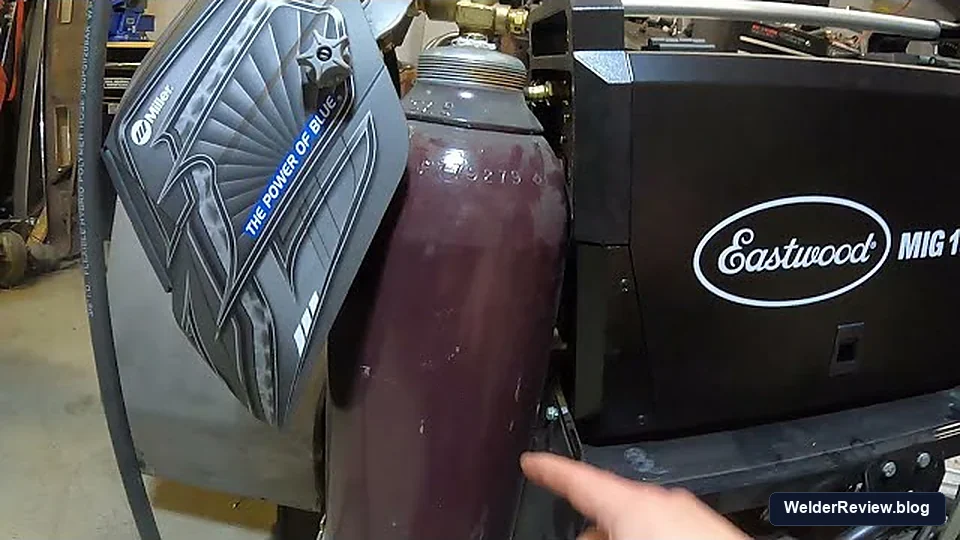
The steel cabinet construction provides solid protection for internal electronics during transport. Its compact footprint easily fits on crowded workshop benches without sacrificing internal component cooling airflow.
Front panel controls feature deeply recessed knobs to prevent accidental damage. Clear silkscreen markings guide operators through proper voltage selection and wire feed speed optimization for standard sheet metal.
The internal wire drive assembly utilizes cast aluminum housing components, ensuring consistent wire tension. Review our detailed machine comparison to evaluate similar dual-voltage welders for your workshop.
The heavy-duty steel cabinet utilizes a powder-coated finish to resist workshop corrosion. Its overall footprint measures roughly 18 by 10 inches, balancing portability with structural integrity for mobile fabrication rigs.
Internal component placement prioritizes airflow channels and weight distribution. A top-mounted carrying handle features reinforced steel brackets, preventing flex when transporting the unit across uneven concrete shop floors.
Cable management is straightforward with dedicated side brackets for the torch lead. The door latch mechanism employs stamped steel, ensuring a secure seal over the wire drive compartment during operation.
- All-steel outer housing with durable powder coat finish
- Cast aluminum wire feed mechanism with quick-release tensioner
- Recessed control dials protect against accidental impacts
- Clear front panel reference charts for material thickness
Torch and Cable Ergonomics
Included MIG gun features a flexible rubber neck jacket for comfortable positioning. Ergonomic handle contours reduce hand fatigue during long horizontal fillet weld passes.
Power cable lengths provide adequate reach around standard automotive fender wells. Strain reliefs at both ends prevent premature copper strand fatigue during daily shop use.
- Comfortable trigger switch with positive tactile feedback
- Flexible coaxial cable assembly reduces wrist strain
Panel Layout and Controls
Front panel controls feature industrial rotary switches for voltage selection. Operators benefit from a clearly labeled chart inside the consumable door, providing accurate baseline settings for various metal gauges.
Arc Characteristics and Measured Output
Operating on 230V input power, the machine delivers a smooth, stable arc across 18-gauge sheet metal up to three-eighths inch plate. Infinite voltage control allows precise arc tuning for minimal spatter.
Short-circuit transfer mode remains remarkably consistent when running standard solid wire with shielding gas. Dynamic inductance adjustments help tailor puddle wetting action for varying joint configurations.
Flux-core performance excels outdoors where shielding gas blows away. The machine maintains steady wire delivery even when running knurled drive rolls under demanding field conditions.
Operating on a standard 230V input, this machine delivers a stable arc across varied material thicknesses. The smooth DC output minimizes spatter when running traditional solid wires with shielding gas.
Voltage control steps allow fine-tuning for sheet metal applications. When striking an arc, the inductive choke design helps maintain puddle fluidity, reducing the learning curve for less experienced fabricators.
Output amperage ranges effectively from thirty to one hundred eighty amps. For deeper insight into process selection, read our definitive technical comparison covering arc characteristics and penetration depths.
- Smooth arc ignition with minimal initial stubbing
- Stable transfer characteristics on 0.030 inch wire
- Effective puddle control during vertical-down welds
- Clean bead profile with proper shielding gas mix
Aluminum and Multi-Process Results
Connecting an optional spool gun transforms this unit into a capable aluminum fabricator. The direct drive system prevents soft wire binding within the longer conduit liner.
Stick welding mode provides adequate hot-start characteristics for quick repairs. Open circuit voltage safely initiates standard electrodes without excessive electrode sticking.
- Dedicated spool gun plug simplifies aluminum setup
- Reliable DC stick output for emergency field repairs
Video Review: Eastwood Co Mig 180 Setup and review
Thermal Performance and Operating Efficiency
The internal cooling fan runs continuously to evacuate heat from internal transformer windings. Thermal overload protection automatically cuts output if duty cycle limits are exceeded during heavy passes.
Running near maximum output significantly reduces continuous runtime before tripping protection circuits. Operators must monitor thermal thresholds when tackling thick structural steel projects.
Duty cycle ratings dictate sustained usage limits during heavy fabrication sessions. Running at higher amperages triggers the internal cooling fan, which actively exhausts accumulated heat from the transformer windings.
Overload protection circuitry automatically shuts down output if thermal thresholds are breached. This safety feature prevents premature transformer failure, ensuring long-term reliability under demanding shop conditions.
- Continuous-duty cooling fan prevents premature overheating
- Automatic thermal cutoff protects internal rectifier diodes
- Efficient power factor minimizes excessive electrical draw
Initial Assembly and Calibration Procedures
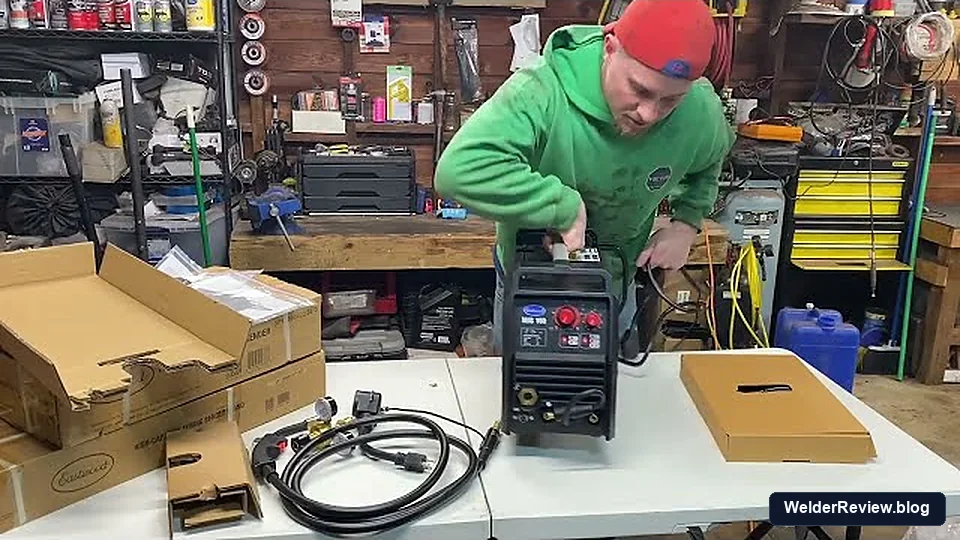
Unboxing reveals a complete kit containing regulator, gas hose, and starter consumables. Review our complete technical comparison to see if wire feed systems or stick welding fits your shop.
Loading wire spools requires standard tension adjustments on the drive roller tensioner. Following manual guidelines ensures proper alignment with the reversible drive roll grooves.
Initial setup requires securing the gas regulator and connecting the ground clamp directly to clean bare metal. Proper tensioning of the drive roll tensioner prevents wire birdnesting during feeding.
Calibrating wire feed speed involves testing scrap material of identical thickness. Ensuring correct polarity for either gasless flux-cored or gas-shielded solid wire guarantees optimal weld bead tie-in.
- Comprehensive user manual with clear setup diagrams
- Standard Tweco-style consumables simplify replacement sourcing
- Included gas regulator features clear dual pressure gauges
Maintenance Protocols and Long-Term Durability
Routine maintenance requires periodic compressed air cleaning to remove accumulated metallic dust. Inspecting drive rolls and contact tips prevents erratic wire feeding during critical projects.
Liner replacement is straightforward by simply unscrewing the retaining nut at the brass block. Regular contact tip inspection ensures consistent electrical transfer and clean weld beads.
Routine maintenance demands regular cleaning of accumulated metal dust using compressed air. Inspecting the contact tip and nozzle daily prevents erratic wire feeding and excessive spatter buildup.
Drive rolls require periodic inspection for groove wear matching specific wire diameters. Lubricating internal mechanical hinges and checking cable insulation integrity extends the service lifespan of the equipment significantly.
- Easy access drive compartment for quick cleaning
- Replaceable copper contact tips reduce consumable costs
- Durable brass gun block withstands high thermal loads
Comprehensive Buyer Assessment and Final Verdict
This machine suits DIY fabricators, hobbyists, and mobile mechanics needing dual-voltage flexibility. Its balanced multi-process performance handles everyday automotive and farm repair tasks exceptionally well.
Professional structural shops might require higher continuous duty cycles for production work. Before deciding on a process, examine our comprehensive welding showdown to understand heat input limitations.
This unit serves hobbyists and professional fabricators seeking reliable mid-range welding performance. Its robust construction and dependable arc stability make it a worthwhile investment for automotive repair shops.
Balancing input power requirements with versatile output capabilities, the machine delivers solid value. Users prioritizing serviceable internal components will find ongoing maintenance straightforward and cost-effective over years of use.
- Ideal for home garages, restoration shops, and farms
- Strong value proposition for multi-process capability
- Backed by reliable customer support and parts availability
Frequently Asked Questions
Can the Eastwood Mig 180 weld aluminum straight out of the box?
No, you must purchase an optional spool gun separately. A spool gun is required to feed soft aluminum wire reliably without birdnesting inside the main whip.
What thickness of steel can this welder penetrate effectively?
It handles up to three-eighths inch steel when operating on 230V input power. Multi-pass welding techniques are necessary for achieving full structural penetration on thicker metal plates.
Does this machine require special electrical circuit upgrades?
When running on 120V input, it plugs into standard household circuits. However, operating at maximum output on 230V requires a dedicated thirty-amp breaker and proper wall receptacle.
Can I use flux-core wire without shielding gas tanks?
Yes, you can run gasless flux-core wire by reversing the polarity inside the cabinet. This setup is ideal for windy outdoor repair work where gas shielding dissipates.
What type of replacement contact tips fit this welding gun?
It utilizes standard Tweco-style consumables widely available at local welding supply stores. This compatibility makes finding affordable replacement tips and nozzles extremely convenient for users.