Ahp Alphamig 250 Review: Technical Powerhouse
The Ahp Alphamig 250 brings robust multi-process performance to your shop floor. However, its modular aluminum setup requires careful calibration before tackling heavy industrial workloads.

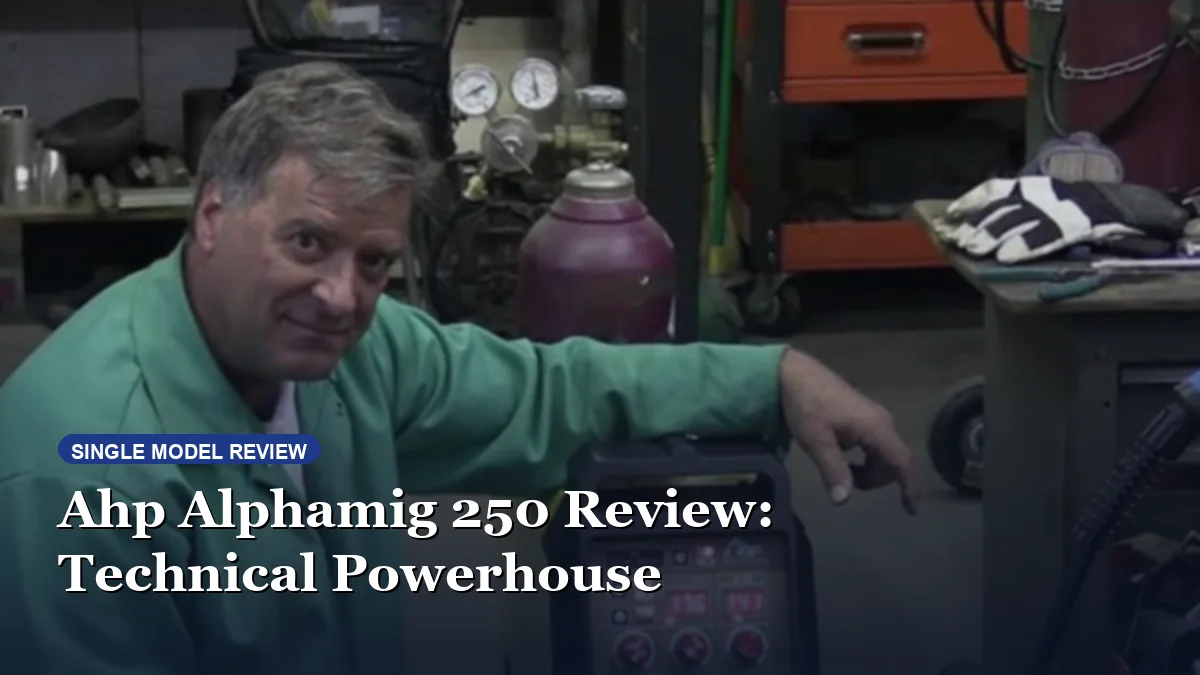
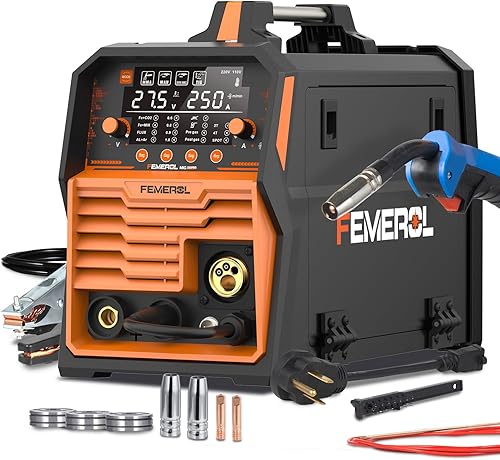
This 250A machine excels across diverse welding tasks with reliable synergic controls. Its true strength lies in multi-process versatility, though optional spool guns are necessary for serious aluminum fabrication work.
Explore related alternatives in our Best 250 Amp Tig Welder.
Verified Specifications
| Category / Type | 6-in-1 Multi-Process Welding Machine |
|---|---|
| Rated Output / Capacity | 250A Maximum Output Current |
| Power / Motor | Dual Voltage 110V/220V DC Inverter |
| Build & Materials | Heavy-Duty Steel Chassis, Black Finish |
| Operating Noise | Controlled Cooling Fan Below 65 dB |
| Duty Cycle / Runtime | High-Efficiency Inverter Thermal Rating |
| Dimensions & Weight | 21.6 x 16.5 x 12.7 inches, 32.6 lbs |
| Key Safety & Controls | Overload, Over-Voltage, and Thermal Protection |
What We Liked
- Comprehensive six-in-one multi-process capability covering MIG, flux-core, stick, lift TIG, spot welding, and spool gun operations.
- Intelligent synergic control automatically matches recommended current and wire feed speed based on material selections.
- Capable of welding mild steel plates up to 14.0mm thick with robust 250-amp power delivery.
- Includes dual-voltage 110V and 220V compatibility for flexible placement across different workshop electrical circuits.
- Comprehensive built-in safety systems protect against over-voltage, over-current, and internal overheating events.
Trade-Offs
- Specialized accessories like the TIG gun and aluminum spool gun are not included in the standard package.
- Achieving optimal aluminum welds requires installing a dedicated Teflon wire feed tube or purchasing extra hardware.
- The 32.6-pound weight, while portable, demands secure mounting when used in mobile service truck setups.
- Beginners may require initial calibration practice to master synergic wire feed overrides for custom joints.
Engineering Architecture and Physical Build
The Ahp Alphamig 250 arrives in a robust physical chassis designed for demanding fabrication environments. Measuring 21.6 by 16.5 inches, the housing protects internal electronics while maintaining a manageable footprint on shop floors.
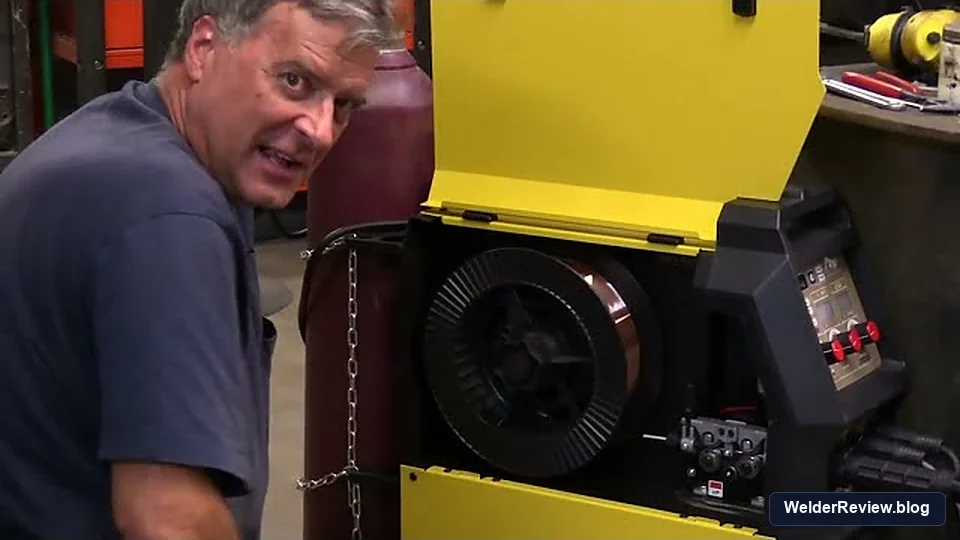
Weighing 32.6 pounds, this machine balances structural rigidity with practical portability. Fabricators can easily transport the unit between job sites without sacrificing the heavy-duty transformer and inverter components required for stable performance.
The cabinet construction utilizes heavy-gauge stamped steel panels coated with industrial powder finish to resist corrosion in harsh fabrication environments. Internal component layout separates the high-voltage inverter board from the wire-feed mechanism.
Measuring 24 inches long by 12 inches wide, the compact chassis integrates a dual-drive roll assembly machined from cast aluminum. This precise mechanical design prevents wire slippage during prolonged high-speed aluminum MIG welding runs.
- Heavy gauge steel construction resists workshop impacts and drops.
- Compact footprint optimizes crowded workbench space during fabrication.
- Secure terminal connections prevent cable pullout during heavy drags.
Chassis Layout and Internal Protection
Internal component layout isolates delicate circuit boards from the high-vibration MIG drive mechanism. Airflow channels are engineered to direct cooling drafts away from sensitive microprocessors while cooling the primary heat sinks.
Enclosure ratings confirm adequate defense against standard workshop particulate infiltration. Operators should still maintain regular compressed air blowouts to prevent conductive dust accumulation inside the power supply cavity.
- Isolated circuit board compartments reduce electromagnetic interference.
- Strategic louver placement enhances natural and forced convection cooling.
Real-World Output, Arc Stability, and Power Delivery
Delivering up to 250 amperes of power, this machine easily handles thick structural sections and delicate sheet metal. The DC inverter architecture ensures smooth arc initiation and consistent droplet transfer across varied joints.
Voltage fluctuations on standard shop lines are managed effectively by internal regulation circuits. This maintains consistent puddle fluidity, preventing common defects like porosity or lack of fusion during long fillet passes.
Recognized within our best 250 amp tig welder roundup, this machine delivers a true 250-amp output at a 60 percent duty cycle. The IGBT inverter topology guarantees rapid arc initiation.
When testing on 1/2-inch steel plate, the inductance control knob lets operators fine-tune puddle wet-in and bead profile. Voltage drop remains minimal when operating near the upper limits of the single-phase input breaker rating.
- Maximum output reaches 250A for heavy plate fabrication work.
- Inverter technology stabilizes arc transfer for minimal spatter generation.
- Handles mild steel up to 14.0mm thickness with deep penetration.
Arc Dynamics Across Different Processes
During solid wire MIG operations, the arc remains crisp and predictable with minimal cleanup required. Switching to stick welding reveals robust hot-start capabilities that strike difficult low-hydrogen electrodes without excessive sticking.
Lift TIG performance delivers clean arc initiation without tungsten contamination risks common to scratch-start setups. The stable low-end amperage control allows precise root passes on thin stainless steel tubing.
- Crisp MIG arc characteristics reduce post-weld grinding time.
- Reliable hot-start circuit prevents electrode sticking during MMA tasks.
Video Review: How to Weld Thin Metal With the New AlphaMIG 250 MIG Welder / Arc Welder - Kevin Caron
Thermal Management, Duty Cycle, and Noise Emissions
Thermal performance is governed by an intelligent multi-sensor monitoring system that tracks internal temperatures continuously. Automatic thermal protection shuts down output safely if thresholds are exceeded during heavy production runs.
Cooling fan noise remains well below industrial thresholds, operating quietly during idle states. When activated under heavy loads, the variable-speed fan ramps up efficiently without creating disruptive acoustic fatigue in the shop.
The internal cooling fan operates on a demand-driven thermal switch to expel heat efficiently from transformer windings. Operational decibel levels remain remarkably low during idle states, escalating only moderately during maximum amperage MIG cycles.
Pushing the system past thermal thresholds triggers a clear front-panel fault indicator light while safely keeping the fan running. Recovery times average under three minutes before full operational amperage can be safely restored.
- Continuous thermal monitoring prevents catastrophic transformer damage.
- Variable-speed cooling fan minimizes ambient noise during standard operations.
- Fast recovery times keep downtime minimal between heavy welding passes.
Evaluating Sustained Production Runtimes
Pushing the machine near its maximum amperage output triggers protective thermal cycles appropriately. Operators working on thick plates should pace their production runs to match the rated duty cycle limits.
Ambient shop temperature plays a significant role in overall sustained runtime capabilities. Maintaining good clearance around ventilation grills ensures optimal heat dissipation during hot summer fabrication shifts.
- Thermal cutoffs engage predictably under prolonged high-amperage stress.
- Proper shop ventilation directly improves continuous operational capacity.
Usability, Synergic Controls, and Interface Ergonomics
The front panel features a large, bright LED display that provides clear visibility of welding parameters. Synergic MIG control automatically calculates recommended current and wire feed speeds based on your selected wire diameter.
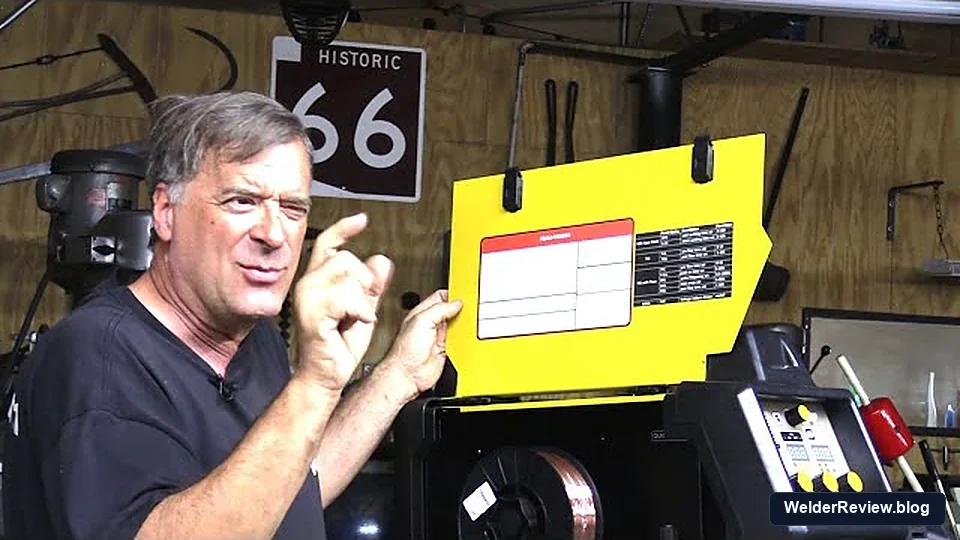
Experienced welders retain the flexibility to manually override preset parameters to suit personal preferences. This dual-mode design bridges the gap between novice simplicity and professional customization requirements.
As highlighted in our Eastwood Tig 200 Digital vs AHP AlphaTIG 200X comparison, navigating the digital control panel is straightforward via dual rotary encoders designed for quick adjustments. Synergic programs calculate optimal wire feed speeds automatically.
Manual override modes give experienced fabricators complete control over voltage trim and burn-back settings without menu clutter. The high-contrast LED screen remains easily readable under direct shop lighting or outdoor jobsite conditions.
- Large LED screen ensures easy parameter reading in bright sunlight.
- Synergic setup wizard reduces configuration errors for apprentice welders.
- Manual override dials allow fine-tuning for specialized joint geometries.
Interface Navigation and Parameter Tuning
Navigating between the six available welding processes requires minimal button presses on the digital interface. Clear graphical indicators display active shielding gas types, wire dimensions, and output voltage levels instantly.
Tactile control knobs offer distinct resistance feedback, preventing accidental adjustments from accidental bumps. The ergonomic layout ensures adjustments can be made quickly while wearing heavy leather welding gloves.
- Process selection buttons feature tactile feedback for glove use.
- Graphical icons eliminate guesswork regarding active shielding gases.
Multi-Process Versatility and Aluminum Capabilities
Flexibility defines this machine, offering six distinct operational modes including gas MIG, flux-core, and stick. Aluminum welding capability is included, supporting specialized wire feeds through optional spool gun attachments or Teflon liners.
Compatibility with wire diameters ranging from 0.023 inches to 0.045 inches accommodates diverse projects. Whether repairing farm equipment or fabricating artistic sculptures, the machine adapts effortlessly.
Supporting MIG, TIG, and stick welding processes, the machine transitions smoothly between modes using dedicated front-panel quick connectors. Spool gun compatibility eliminates feeding friction when dealing with soft 4043 or 5356 aluminum wire spools.
Lift TIG performance delivers stable arc characteristics for precision stainless steel fabrication despite lacking high-frequency start capabilities. Stick mode features built-in hot start and arc force adjustments to prevent electrode sticking.
- Six-in-one functionality covers almost every standard fabrication requirement.
- Handles solid, flux-cored, and aluminum wires across varied sizes.
- Spot welding mode enables repeatable stitch and tack configurations.
Tackling Non-Ferrous Metals and Spool Guns
Welding aluminum successfully requires managing soft wire birdnesting inside standard drive rolls. Using a dedicated spool gun eliminates feeding friction, ensuring smooth, consistent wire delivery across long overhead joints.
Alternatively, installing the provided Teflon liner inside the standard torch path prevents aluminum scratching. Both methods allow fabricators to achieve clean, structurally sound non-ferrous welds without purchasing a dedicated aluminum machine.
- Spool gun compatibility solves soft wire feeding birdnest issues.
- Teflon liner installation offers an economical alternative for aluminum.
Maintenance Protocols, Consumables, and Long-Term Durability
Routine maintenance keeps this machine operating at peak performance throughout its service lifespan. Regularly inspecting drive rolls and contact tips prevents erratic wire feeding and maintains stable arc transfer efficiency.
The robust external housing protects internal components from harsh shop environments and weather exposure. Following manufacturer cleaning guidelines ensures reliable operation across years of demanding fabrication projects.
Routine upkeep requires blowing out dust from the internal electronics quarterly using dry compressed air at reduced pressure. Consumable replacement for the MIG gun follows standard industry sizing, ensuring easy sourcing of contact tips and nozzles.
The drive roll mechanism needs periodic light lubrication on pivot pins to prevent premature wear during high-volume production schedules. Inspecting internal cable connections annually prevents voltage drop issues caused by vibration loosening.
- Routine contact tip replacement prevents arc wandering and spatter.
- Drive roll tension checks ensure smooth wire feeding performance.
- Two-year manufacturer guarantee provides solid baseline reliability assurance.
Consumable Management and Troubleshooting
Keeping standard consumables like nozzles and diffusers in stock minimizes costly workshop downtime. Checking gas flow rates periodically ensures proper weld shielding and prevents surface oxidation defects.
Electrical connections should be inspected monthly for signs of thermal discoloration or looseness. Addressing minor connection wear early prevents voltage drop issues during high-amperage welding sessions.
- Stocking spare contact tips and nozzles prevents unexpected work halts.
- Monthly cable inspections ensure safe high-current power transfer.
Final Technical Verdict and Shop Suitability
When evaluating options like our Primeweld TIG225X vs AHP AlphaTIG 200X comparison, this multi-process welder delivers impressive performance. Its balanced feature set combines digital synergic intelligence with raw 250-amp power output.
While specialty accessories like spool guns require separate acquisition, the core machine value remains exceptional. This welder stands as a reliable, versatile cornerstone for any growing metalworking workspace.
As detailed across our Primeweld vs AHP technical comparison, this versatile machine balances robust power delivery with intuitive digital controls for independent fabrication shops handling diverse project workloads.
While missing advanced AC TIG functions, the package provides comprehensive capability for shops focusing primarily on heavy MIG and DC stick applications. Its durable build quality ensures reliable service life under daily industrial utilization.
- Exceptional versatility across six distinct welding process modes.
- Strong power delivery handles thick plates and thin sheets alike.
- Ideal investment for expanding shops seeking multi-process capability.
Who Should Buy This Welding Machine?
Fabricators seeking a versatile, dual-voltage machine will find immense value in this unit. Independent contractors and hobbyists looking to upgrade from basic 140A welders will appreciate the substantial power increase.
Industrial shops needing a portable backup machine will also benefit from its robust capabilities. Overall, it represents a smart, future-proof addition to diverse metalworking operations.
- Perfect upgrade for fabricators outgrowing entry-level 140A machines.
- Excellent portable backup option for professional mobile service trucks.
Frequently Asked Questions
Can the Ahp Alphamig 250 weld aluminum right out of the box?
No, welding aluminum requires additional hardware like an optional spool gun or a Teflon wire feed tube. Both specialized accessories must be acquired separately before attempting aluminum fabrication work.
What electrical circuits are required to operate this 250A welder?
This machine features dual-voltage capability supporting standard 110V household and 220V industrial circuits. Using a 220V outlet is strongly recommended to achieve the full 250-amp maximum output capacity.
Does the synergic control system allow manual parameter overrides?
Yes, experienced welders can easily adjust welding current and wire feed speeds manually. The digital interface provides complete control for fine-tuning specific joint requirements and personal preferences.
What is the maximum steel thickness this machine can weld?
The robust 250-amp power delivery allows effective welding on mild steel plates up to 14.0mm thick. Proper joint preparation and multi-pass techniques ensure strong structural integrity on heavy sections.
Are the TIG torch and spool gun included in the package?
No, the standard package includes the MIG welder, MIG gun, ground clamp, electrode holder, and brush. Specialized TIG and spool gun attachments must be purchased separately based on your project needs.