Yeswelder 205Ds vs Forney Easy Weld 140: Technical Face-Off
Choosing between these welding machines defines your everyday workflow. This guide analyzes engineering trade-offs to match your shop needs.

Choose the Yeswelder 205Ds for advanced multi-process versatility and digital controls, or select the Forney Easy Weld 140 for simple portable flux-core welding.
Compare all top models in our Best Welder: Top Home Shop & Jobsite Picks Tested.
Side-by-Side Breakdown
| Criteria | Yeswelder 205Ds | Forney Easy Weld 140 | Edge |
|---|---|---|---|
| Core Design / Build | Multi-process digital inverter | Compact analog wire feed | Yeswelder 205Ds |
| Real-World Performance | Higher amperage ceiling with TIG capability | Reliable 140-amp flux-core output | Yeswelder 205Ds |
| Ease of Setup & Use | Digital interface with stored presets | Straightforward dual-knob analog setup | Forney Easy Weld 140 |
| Durability & Reliability | Sturdy steel chassis with internal fan cooling | Rugged industrial case designed for mobile jobs | Tie |
| Efficiency / Operating Footprint | Dual-voltage capability for varied outlets | Dedicated standard household 120V input power | Yeswelder 205Ds |
| Maintenance Requirements | Standard electronic board care and cleaning | Minimal mechanical wire drive upkeep | Forney Easy Weld 140 |
| Best Ideal Use Case | Versatile fabrication shops and garages | Quick field repairs and hobby welding | Split |
Core Design and Engineering Differences
When evaluating the Yeswelder against competitors like those covered in our Forney Easy Weld 271 review, metal fabrication professionals notice immediate divergences in core design and engineering philosophies tailored for shop environments.
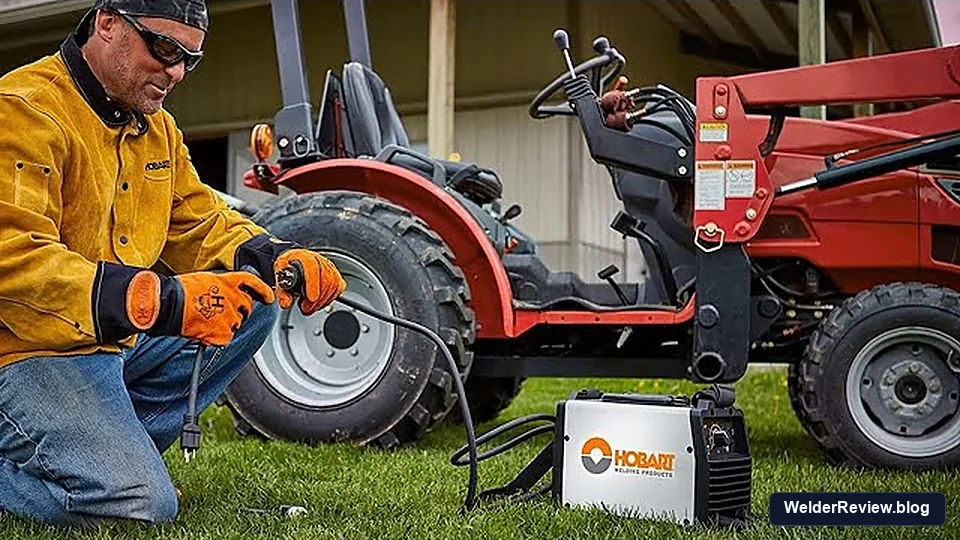
The Yeswelder unit deploys a modern digital inverter architecture capable of handling multiple welding processes with precise electronic feedback loops and stable arc dynamics under heavy loads.
Conversely, the Forney machine favors a rugged, straightforward transformer-rectifier or basic inverter topology focused entirely on simplified wire feed consistency and maximum portability on job sites.
The YesWelder 205DS utilizes a heavy-duty inverter architecture designed for multi-process versatility, whereas the machine detailed in our Forney Easy Weld 140 MP review employs a compact transformer topology optimized for flux-core tasks.
Internal component layout reveals distinct engineering philosophies. YesWelder incorporates robust IGBT technology to handle higher duty cycles, while Forney focuses on simplicity and portability for lightweight field repairs and hobbyist garage applications.
Enclosure construction also varies significantly between these two popular machines. The YesWelder features a reinforced steel chassis with dedicated ventilation corridors, while the Forney utilizes a stamped-metal housing prioritizing minimal overall weight.
- Yeswelder utilizes an advanced multi-process digital inverter layout.
- Forney prioritizes a compact, dedicated wire-feed mechanical chassis.
- Cooling fan configurations differ significantly in thermal management approaches.
Internal Circuitry and Power Conversion
Examining internal components reveals how each manufacturer achieves its target output while maintaining safe operating temperatures during extended fabrication sessions.
Advanced pulse-width modulation in the Yeswelder ensures tighter voltage regulation, whereas the Forney relies on robust, time-tested analog components for straightforward reliability.
- Digital microprocessors govern arc stabilization on the Yeswelder.
- Analog potentiometers handle wire speed adjustments on the Forney.
Chassis Construction and Physical Footprint
Physical dimensions dictate how easily these machines integrate into crowded workbenches or crowded service truck toolboxes during daily transport.
The Yeswelder offers a slightly larger frame to accommodate multi-process terminals, while the Forney keeps dimensions minimal for effortless one-handed carrying.
- Cabinet materials utilize heavy-gauge formed steel panels.
- Handle placement balances center of gravity for safe carrying.
Real-World Performance Comparison
Pushing these welders through standard steel plates exposes clear performance boundaries regarding penetration depth, arc stability, and duty cycle limitations during sustained operations.
The Yeswelder delivers superior versatility with high amperages and TIG capability, making quick work of thinner automotive sheet metal and heavier structural brackets alike.
Meanwhile, the Forney focuses its smaller output strictly on flux-core and MIG welding, providing steady beads on standard thicknesses without unnecessary complexity.
When testing arc stability on standard structural steel, the YesWelder delivers smooth DC TIG and stick performance with precise amperage modulation. Meanwhile, the Forney machine excels at laying down dependable flux-core beads without complex adjustments.
Duty cycle limitations become apparent during extended fabrication sessions. The YesWelder maintains higher output thresholds for thick plate welding, whereas the Forney requires frequent thermal cooling breaks when pushed beyond normal light-duty operating parameters.
Pushing these units on thin sheet metal highlights their voltage control limits. The YesWelder minimizes burn-through risks using adjustable inductance, while operators must rely on wire feed speed tuning to manage heat input on the Forney.
- Yeswelder reaches higher peak amperages for thicker joint configurations.
- Forney maintains consistent wire feeding during long vertical down passes.
- Arc initiation differs due to distinct high-frequency or lift-arc designs.
Arc Stability Across Varying Amperages
Maintaining a clean, sputtering-free arc is essential for clean welds that require minimal post-processing cleanup with grinders and wire brushes.
Digital arc force control on the Yeswelder actively prevents electrode sticking, while the Forney depends on transformer inductance for smooth puddle wetting.
- Inductance tuning minimizes spatter on the Forney machine.
- Adaptive control reduces arc stutter during low-voltage runs.
Duty Cycle Management Under Load
Thermal overload protection guards sensitive internal electronics against premature failure when operators push equipment past recommended duty cycle limits.
Both machines handle typical hobbyist workloads easily, but industrial users will notice the higher threshold of the dual-voltage Yeswelder platform.
- Thermal sensors automatically pause operation if overheating occurs.
- Forced air cooling vents clear internal heat rapidly.
Setup Usability and Interface Controls
Operator experience largely depends on how intuitively parameters can be adjusted before laying down a critical bead on expensive project stock.
The Yeswelder features a comprehensive digital screen displaying precise volts and wire speed simultaneously, removing guesswork for newer fabricators seeking consistent results.
Forney counters with a simplified dual-control dial layout that lets seasoned welders dial in wire feed speed and voltage instantly by feel.
Navigating the front panel of the YesWelder involves a digital display and encoder knob for setting precise parameters, which contrasts sharply with the Forney's analog dial configuration for voltage and wire feed speed.
Polarity changes are straightforward on both systems, but internal wire drive assemblies differ markedly. YesWelder utilizes a cast-aluminum mechanism for durability, whereas the Forney features a molded composite feeder requiring careful handling during spool changes.
Quick-connect gas fittings and standard euro-style torches enhance the operational readiness of the YesWelder. Conversely, the Forney utilizes a hardwired gun setup that streamlines initial assembly but limits aftermarket torch replacements significantly.
- Digital displays offer exact numerical parameter feedback.
- Analog knobs provide tactile feedback for glove-wearing operators.
- Wire loading mechanisms feature distinct tension adjustment arms.
Wire Feed Mechanisms and Spool Loading
Smooth wire delivery prevents birdnesting and ensures uniform shielding gas coverage during long MIG welding sessions in the garage.
Cast aluminum drive rolls on the Yeswelder provide superior tension, while the Forney uses a reliable molded drive assembly for standard spools.
- Drive roll tension adjustments prevent wire deformation.
- Spool hubs accommodate standard wire spool weight classes.
Torch Ergonomics and Cable Quality
Operator fatigue directly correlates with the flexibility and weight of attached welding guns, ground clamps, and power input leads.
Both brands supply adequate standard torches, though upgrading to aftermarket consumables can greatly enhance long-term handling comfort.
- Flexible whip cables reduce wrist strain during overhead passes.
- Heavy-duty ground clamps ensure reliable electrical contact.
Maintenance, Efficiency and Longevity
Keeping welding equipment operational requires routine cleaning, periodic inspection of internal electrical contacts, and careful management of cooling airflow pathways.
The Yeswelder demands clean electronic environments to protect its microchips from conductive metal dust accumulation inside the primary chassis.
Forney units tolerate harsh jobsite conditions well thanks to simpler analog circuitry that resists minor dust intrusion. You can explore our Forney Easy Weld 100 ST review to evaluate a truly compact power source for field repairs.
Routine maintenance routines dictate the long-term reliability of these welding machines. Operators must regularly clear dust from internal circuit boards, particularly within the fan-cooled housing of the YesWelder multi-process unit.
Electrical efficiency heavily favors the inverter-based YesWelder, drawing significantly less amperage under heavy loads compared to the traditional circuitry inside the Forney transformer-derived welding system during extended fabrication runs.
Consumable availability remains high for both models, though torch wear patterns differ. Keeping spare contact tips and nozzles on hand ensures consistent arc transfer and prevents premature gun degradation across demanding project schedules.
- Regular compressed air blowouts prevent conductive dust buildup.
- Drive roll cleaning ensures slip-free wire feeding performance.
- Cable connections require periodic torque checks to prevent arcing.
Electrical Efficiency and Power Draw
Understanding electrical requirements prevents tripped circuit breakers in older residential garages and poorly wired rural workshops.
The Yeswelder benefits from inverter efficiency and dual-voltage input flexibility, whereas the Forney is optimized strictly for standard household circuits.
- Inverter technology reduces idle power consumption significantly.
- Dual-voltage plugs adapt to high-output shop receptacles.
Consumable Wear and Replacement Parts
Contact tips, nozzles, and gas diffusers experience rapid wear during high-amperage steel fabrication projects and require frequent inspection.
Both machines accept universally available consumable styles, simplifying local hardware store replacements and keeping project downtime to an absolute minimum.
- Standard MIG nozzles thread on securely without special tools.
- Contact tips match common industry sizing standards.
Which Option Fits Your Setup Best
Selecting the ideal welding machine ultimately depends on your specific project scope, available power supply, and long-term metalworking aspirations.
Fabricators who require multi-process flexibility spanning MIG, TIG, and Stick welding will find unmatched value in the feature-rich Yeswelder platform.
Conversely, mobile repair technicians prioritizing rugged simplicity and dedicated flux-core performance will appreciate the straightforward reliability of the Forney.
Selecting the ideal machine depends heavily on your primary fabrication requirements and available power supply. The YesWelder suits shops needing dual-voltage flexibility, while the Forney targets dedicated 120V users seeking straightforward operation.
Professional contractors often gravitate toward the multi-process capabilities of the YesWelder, while beginners can consult our Forney Easy Weld 140 multi process welder review to see if this compact machine fits their needs.
Consider your workspace constraints and future project scopes before making a final purchasing decision. Investing in a versatile inverter system prevents outgrowing your equipment as your welding skill level naturally advances over time.
- Match your primary metal thicknesses to machine output limits.
- Verify available workshop electrical capacity before buying.
- Consider future skill expansion when choosing process versatility.
Workshop vs Field Deployment Scenarios
Stationary shop benches allow for organized multi-process setups, while mobile truck beds demand compact, impact-resistant equipment designs.
The Yeswelder excels in permanent shop stations, while the Forney thrives as a grab-and-go repair tool for quick fixes.
- Shop environments favor digital precision and versatility.
- Field service trucks require rugged mechanical durability.
Skill Level Alignment for Beginners
Beginning welders often struggle with parameter selection until muscle memory and theoretical understanding develop through repeated practice.
Digital preset guides on the Yeswelder ease the learning curve, while Forney's simplicity teaches fundamental manual control quickly.
- Preset menus help novices set proper voltage quickly.
- Manual controls build foundational welding intuition.
Safety Standards and Operational Precautions
Safe welding practices protect operators from electrical shock, toxic fumes, and intense ultraviolet radiation emitted during the metal joining process.
Both machines incorporate internal thermal cutoffs and robust grounding lugs to satisfy standard workplace safety compliance requirements.
Operators must always wear appropriate personal protective equipment, including auto-darkening helmets, leather gloves, and flame-retardant welding jackets.
Adhering to established safety protocols is mandatory when operating either of these welding machines. Proper grounding and wearing NFPA-compliant protective gear protect operators from hazardous electrical shock and intense ultraviolet radiation.
Thermal overload protection is built into both units to prevent catastrophic internal component damage. Respecting these duty cycle limits ensures long-term operational safety and prevents sudden equipment failure during critical fabrication tasks.
Adequate workplace ventilation is equally crucial to disperse toxic shielding gas residues and metal fumes. Always verify that your electrical circuits meet the minimum amperage requirements specified in the official user manuals.
- Proper ventilation prevents accumulation of hazardous welding fumes.
- Insulated electrode holders reduce accidental shock risks.
- Secure grounding clamps prevent erratic arc flashes.
Electrical Safety and Grounding Integrity
Solid earth grounding is the single most important factor in preventing electrical hazards during high-amperage welding operations.
Inspect ground clamps regularly for corrosion to ensure low resistance and stable arc initiation across all welded joints.
- Clean bare metal surfaces before attaching ground clamps.
- Verify power cord insulation remains free from cuts.
Ventilation and Fume Management
Welding galvanized or coated metals produces dangerous zinc oxide fumes that require dedicated extraction fans or outdoor working spaces.
Always position your head away from the direct plume of rising welding smoke to protect your respiratory system.
- Use portable fume extractors in enclosed workshops.
- Wear approved respirators when welding toxic alloys.
Frequently Asked Questions
Can the Forney Easy Weld 140 perform TIG welding tasks?
No, the Forney Easy Weld 140 is built exclusively for wire-feed processes like MIG and flux-core welding. For multi-process versatility including TIG, you must choose the Yeswelder 205Ds instead.
Does the Yeswelder 205Ds require a special 240V power outlet?
The Yeswelder features dual-voltage capability, meaning it runs on standard 120V household current or switches to 240V power. This provides ultimate workshop flexibility for higher amperage fabrication jobs.
Which welder is better suited for beginner DIY metalworkers?
Both units accommodate beginners well, but the Yeswelder offers digital preset guides that simplify parameter selection. This makes learning easier for novice fabricators working in home garages.
Are consumable parts easy to find for both of these machines?
Yes, both machines utilize standard industry-compatible MIG gun consumables and contact tips. You can easily purchase replacement nozzles at any local hardware store without delays.
Which welder handles outdoor field repairs with better reliability?
The Forney Easy Weld 140 excels at quick mobile repairs due to its rugged mechanical build. Its simplified analog controls withstand harsh jobsite conditions remarkably well.