Tig vs Mig Difference: Concise Verdict
Understanding core mechanical differences between tungsten inert gas and metal inert gas welding helps fabricators choose the right process. Proper equipment selection depends entirely on your specific material thickness and production goals.

Choose tungsten inert gas setup for absolute precision on thin aluminum alloys, while metal inert gas systems deliver faster deposition rates on thick structural carbon steel components during high-volume industrial fabrication projects.
Compare all top models in our Best Welder: Top Home Shop & Jobsite Picks Tested.
Side-by-Side Breakdown
| Criteria | Tig | Mig Difference | Edge |
|---|---|---|---|
| Core Design / Build | Non-consumable tungsten electrode with external filler rod addition. | Continously fed consumable wire electrode acting as filler. | Depends on Goal |
| Real-World Performance | Exceptional aesthetic control on thin, exotic non-ferrous metals. | High productivity and deep penetration on thick carbon steels. | Depends on Goal |
| Ease of Setup & Use | Steep learning curve requiring synchronized two-handed manipulation. | User-friendly point-and-shoot operation ideal for beginners. | Mig Difference |
| Durability & Reliability | Solid-state circuitry with robust high-frequency arc stabilization. | Motor-driven wire feed mechanisms requiring periodic tension tuning. | Tig |
| Efficiency / Operating Footprint | Slower travel speeds with lower overall deposition rates. | High duty cycles and rapid joint fill capabilities. | Mig Difference |
| Maintenance Requirements | Frequent tungsten grinding and torch consumable cleaning. | Regular contact tip replacement and liner blow-outs. | Tie |
| Best Ideal Use Case | Aerospace, motorsport piping, and fine architectural metal art. | Automotive repair shops, structural frames, and heavy manufacturing. | Depends on Goal |
Fundamental Engineering Principles
Mastering welding technology starts by examining how each process establishes its electrical arc. Tungsten inert gas utilizes a non-consumable electrode to generate heat without melting itself into the joint puddle.
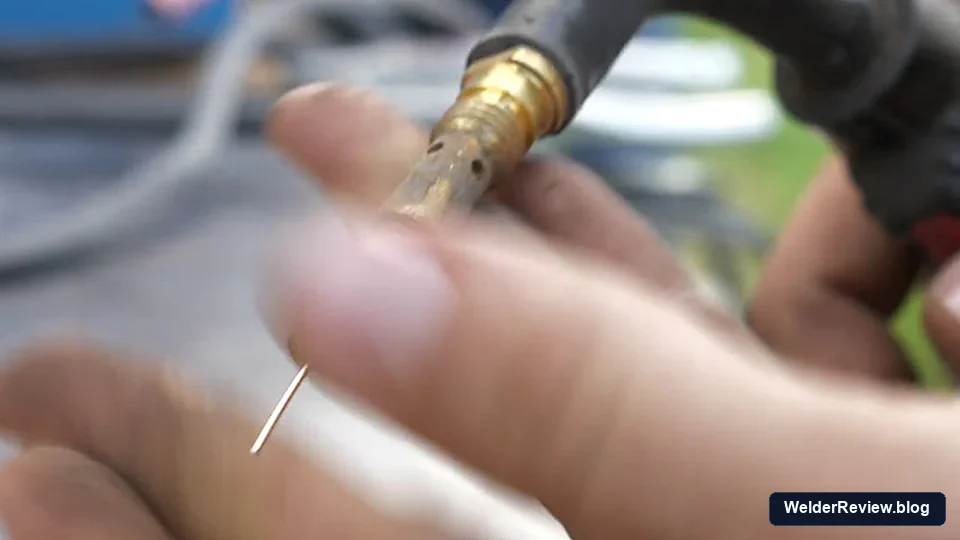
Conversely, wire-feed methods continuously supply a consumable electrode through a specialized gun. Beginners should consult our best beginner mig welders selection to find reliable machines that simplify this continuous-feed process.
Engineers design these systems for completely different operational environments and performance outcomes. Recognizing these underlying physical distinctions allows operators to maximize weld integrity across various structural engineering applications.
- Non-consumable electrode versus continuous wire feed mechanism
- External filler metal addition versus automated electrode deposition
- Targeted thermal concentration versus broad puddle formation
Arc Initiation and Control
Establishing a clean arc requires distinct electrical strategies depending on your chosen equipment setup. High-frequency arc starting prevents tungsten contamination by initiating the electrical circuit without touching the base metal surface.
Wire-fed systems rely on touch-start mechanisms where the electrical circuit completes the exact moment wire contacts steel. This automated initiation simplifies production workflows for fabricators handling repetitive welding tasks daily.
- High-frequency arc ignition for precise tungsten placement
- Touch-start automation for rapid production line deployment
Current Delivery and Power Sources
Modern power sources dictate how electrical current flows through your welding torch assembly. Advanced inverters offer precise amperage adjustments to handle delicate sheet metal fabrication or heavy structural steel projects.
Choosing between alternating current and direct current output determines your ability to clean oxide layers. Aluminum welding specifically demands alternating current output to break up stubborn surface oxides effectively.
Duty cycle ratings separate professional units from entry-level machines. Reviewing our best mig tig plasma combo guide helps fabricators choose versatile multi-process systems for heavy industrial operations.
- Advanced inverter technology for micro-amperage control
- Alternating current output for effective aluminum oxide cleaning
- Thermal overload protection for extended industrial duty cycles
Inverter Technology and Duty Cycles
Inverter-based power sources have completely revolutionized modern welding equipment by drastically reducing overall machine weight. These compact digital units maintain stable arc characteristics even when operating on variable input line voltages.
High duty cycles ensure your machine can run continuously without triggering thermal shutdown protection circuits. Professional fabricators rely on these robust electrical architectures to maintain tight project deadlines.
- Lightweight digital architecture for enhanced shop portability
- Continuous output stability under demanding industrial workloads
Shielding Gas Dynamics and Metallurgy
Atmospheric contamination ruins structural welds by introducing porosity and brittle metallurgical inclusions into the joint. Reviewing our best aluminium tig welder reviews helps fabricators select machines that deliver pure argon gas shielding effectively.
Mixed shielding gases combine argon and carbon dioxide to optimize arc stability and penetration profiles on steel. Maintaining correct flow rates prevents ambient air from swirling into the molten weld puddle.
Gas lens attachments create laminar shielding gas flow, which improves visibility and extends electrode reach. Proper gas management ensures superior mechanical properties across all your finished welded assemblies.
- Pure argon deployment for reactive non-ferrous metals
- Argon-carbon dioxide blends for enhanced carbon steel penetration
- Laminar flow gas lenses for superior atmospheric protection
Atmospheric Contamination and Flow Rates
Controlling ambient drafts in your workshop is vital for maintaining proper shielding gas coverage over welds. Even minor air currents can displace your protective gas shield and cause severe weld porosity.
Flow meters must be accurately calibrated to match your specific nozzle size and joint geometry. Proper regulator adjustments eliminate unnecessary gas waste while protecting your molten puddle from oxidation.
- Draft mitigation strategies for outdoor or drafty workshops
- Precise flow meter calibration for optimal gas utilization
Filler Rod Manipulation and Joint Prep
Joint preparation standards dictate the final structural integrity of any completed metal fabrication project. Clean surfaces free of mill scale, oil, and rust are mandatory for achieving sound fusion results.
Hand-feeding filler rod requires exceptional hand-eye coordination and ambidextrous dexterity from the equipment operator. This manual technique allows precise control over weld reinforcement height and bead profile aesthetics.
Continuous wire feeding eliminates manual rod manipulation, allowing operators to focus entirely on gun angles. This mechanical advantage significantly reduces physical fatigue during long, repetitive production welding shifts.
- Rigorous chemical and mechanical surface cleaning protocols
- Manual filler rod feeding for ultimate bead reinforcement control
- Automated wire delivery systems for reduced operator fatigue
Manual Feeding Versus Continuous Wire
Balancing heat input and filler metal addition requires disciplined timing during manual welding operations. Operators must feed rod smoothly into the leading edge of the puddle without touching the tungsten.
Automated wire drive systems maintain consistent deposition rates to prevent common operator feeding inconsistencies. This mechanical reliability translates directly into uniform weld sizes and reduced post-weld cleanup.
- Synchronized timing for manual filler rod introduction
- Uniform deposition rates from calibrated wire drive motors
Thermal Input and Distortion Control
Managing heat input is critical when fabricating thin-gauge materials prone to warping and thermal distortion. Concentrated arcs minimize the heat-affected zone, preserving the surrounding base metal structural properties effectively.
Water-cooled torches help dissipate excessive thermal buildup during heavy production runs on thick structural plates. Selecting appropriate travel speeds prevents excessive heat accumulation that compromises joint integrity.
Proper clamping fixtures and strategic tack welding sequences counteract thermal expansion forces during cooling cycles. Controlling distortion saves valuable time by eliminating the need for aggressive post-weld straightening.
- Minimized heat-affected zones on thin-gauge materials
- Water-cooled torch systems for high-amperage production endurance
- Strategic tack welding sequences to prevent thermal warping
Heat-Affected Zone Management
The heat-affected zone experiences metallurgical changes that can reduce overall material strength if overheated. Controlling amperage output limits the physical expansion of this vulnerable structural transition area.
Using chill bars and heat sinks helps draw thermal energy away from the weld zone rapidly. These smart fabrication techniques protect base metal temper on specialized high-strength steel alloys.
- Amperage control to limit metallurgical alteration boundaries
- Aluminum chill bars for rapid base metal cooling
Maintenance Protocols and Consumable Lifespan
Routine equipment maintenance ensures reliable arc performance and extends the operational lifespan of your investment. Inspecting power cables, gas hoses, and torch connections prevents unexpected electrical failures mid-project.
Consumable upkeep involves regularly replacing worn contact tips, drive rolls, and gas nozzles on wire-fed systems. Clean components guarantee smooth wire delivery and stable electrical transfer efficiency during operation.
Keeping your machine internals free of grinding dust and metal shavings prevents electrical short circuits. Establishing a weekly maintenance routine saves money on costly replacement parts and emergency repair downtime.
- Routine inspection of power cables and gas delivery hoses
- Regular replacement of worn wire feed contact tips
- Internal chassis cleaning to remove conductive metal dust
Torch Upkeep and Drive Roll Inspection
Torch liners accumulate debris over time, causing erratic wire feeding and frustrating bird-nesting issues. Blowing out liners with compressed air restores smooth wire movement through the entire gun assembly.
Drive roll tension must be adjusted correctly to prevent crushing soft aluminum wires during feeding. Proper groove alignment ensures reliable wire delivery without putting unnecessary strain on drive motors.
- Compressed air purging of dirty torch wire liners
- Accurate drive roll tensioning to prevent wire deformation
Operational Efficiency and Application Matching
Selecting the correct welding process directly impacts your shop profitability and project completion timeframes. High deposition rates make continuous wire systems the undisputed champion for heavy structural fabrication workshops.
Conversely, intricate architectural projects demand the supreme aesthetic control and metallurgical purity of manual systems. Matching machine capabilities to your daily workload ensures maximum productivity and customer satisfaction.
Evaluating total consumable costs helps optimize your operational budget for long-term success. Checking our best budget mig welder rankings empowers fabricators to build efficient, versatile, and profitable workshops.
- High deposition rates for heavy structural fabrication shops
- Supreme aesthetic control for custom architectural metalwork
- Comprehensive cost evaluation for optimal workshop budgeting
Production Speed Versus Absolute Precision
Balancing speed with weld quality requires careful planning before starting any manufacturing operation. High-speed production lines benefit greatly from automated wire feeding capabilities and minimal cleanup requirements.
Custom restoration projects prioritize absolute precision and visual perfection over raw fabrication speed. Knowing when to deploy each specialized technique separates master fabricators from novice hobbyists.
- High-speed production optimization for commercial fabrication
- Visual perfection priorities for custom restoration work
Frequently Asked Questions
Which welding process is easier for an absolute beginner to learn quickly?
Wire-fed systems are generally much easier for beginners to master because the machine automatically feeds the electrode wire. This allows new operators to focus primarily on maintaining consistent gun angles and travel speeds.
Can I weld aluminum effectively using standard gas metal equipment setups?
Yes, you can weld aluminum with a wire-fed machine by installing a specialized spool gun and pure argon shielding gas. However, you must carefully adjust drive tension to prevent soft aluminum wire from deforming inside the liner.
Why is tungsten preparation so critical for achieving clean high-frequency arc starts?
Proper longitudinal grinding concentrates the electrical arc directly at the tip for maximum directional stability and penetration control. Contaminated or improperly ground tungsten electrodes cause erratic arc wander and premature balling during high-frequency ignition.
What shielding gas mixture provides the best results for structural carbon steel?
A blend of seventy-five percent argon and twenty-five percent carbon dioxide delivers optimal arc stability and penetration profiles. This specific gas mixture minimizes spatter while ensuring strong mechanical fusion on standard structural steel components.
How does shielding gas flow rate affect overall weld puddle protection quality?
Accurately calibrated flow rates prevent ambient air from contaminating the molten metal pool and causing structural porosity issues. Insufficient gas flow exposes the hot weld to oxidation, while excessive flow wastes expensive shielding gas supplies unnecessarily.