Push Pull Gun vs Spool Gun: Technical Guide
Choosing the right aluminum wire feeder impacts shop efficiency. This comprehensive technical guide analyzes the distinct mechanical differences between these two systems.

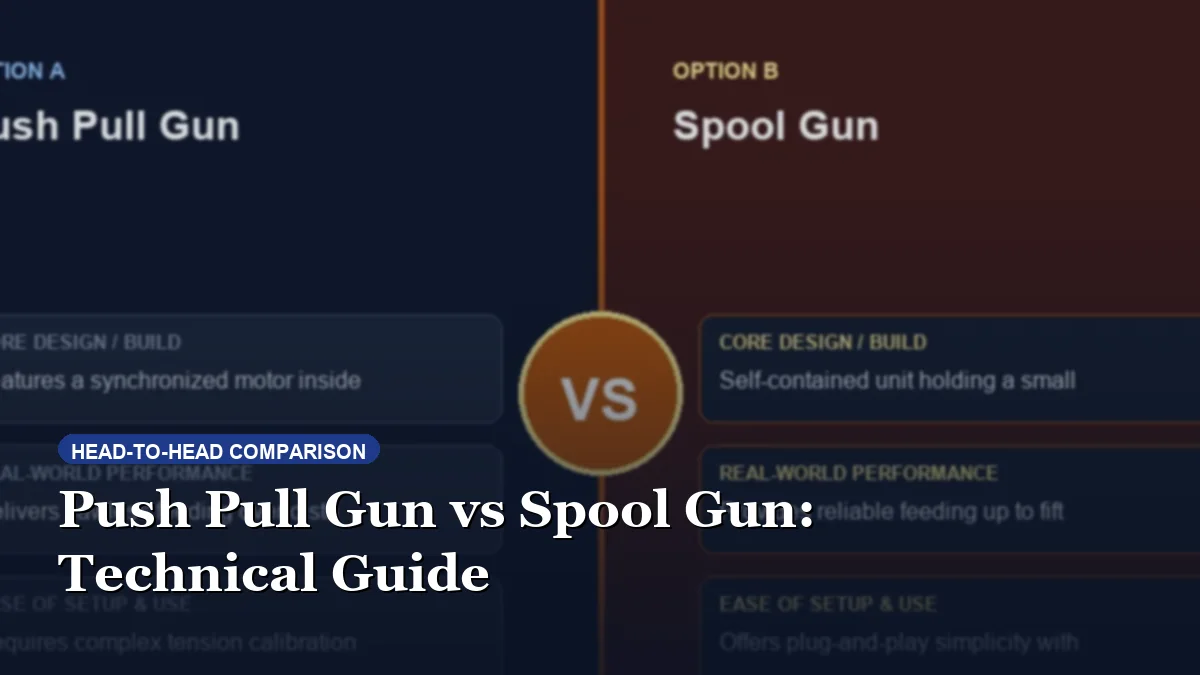
Choose a push-pull gun for extended reach and heavy production. Opt for a spool gun for budget-friendly shop simplicity.
Compare all top models in our Best Welder: Top Home Shop & Jobsite Picks Tested.
Side-by-Side Breakdown
| Criteria | Push Pull Gun | Spool Gun | Edge |
|---|---|---|---|
| Core Design / Build | Features a synchronized motor inside the handle paired with a drive motor in the cabinet. | Self-contained unit holding a small four-inch wire spool directly within the gun housing. | Push Pull Gun |
| Real-World Performance | Delivers flawless feeding over distances exceeding twenty-five feet without wire deformation. | Provides reliable feeding up to fifteen feet before wire friction becomes problematic. | Push Pull Gun |
| Ease of Setup & Use | Requires complex tension calibration between dual motors to prevent birdnesting issues. | Offers plug-and-play simplicity with minimal tension adjustments needed for standard wires. | Spool Gun |
| Durability & Reliability | Engineered with heavy-duty internal components designed for continuous industrial fabrication environments. | Features more plastic components and a bulky handle that increases fatigue over time. | Push Pull Gun |
| Efficiency / Operating Footprint | Reduces consumable downtime by utilizing large twelve-pound wire spools stored remotely. | Requires frequent spool changes due to the limited capacity of small four-inch spools. | Push Pull Gun |
| Maintenance Requirements | Demands regular synchronization checks and cleaning of dual drive roll assemblies. | Requires straightforward cleaning but delicate electrical pins demand careful handling. | Spool Gun |
| Best Ideal Use Case | Large-scale structural aluminum fabrication and shipyard manufacturing operations requiring high duty cycles. | Automotive body repair shops and light maintenance tasks involving intermittent welding. | Tie |
Core Design and Engineering Differences
Aluminum wire feeding requires specialized equipment to prevent birdnesting and erratic arc stability during high-amperage fabrication tasks across heavy industrial applications.
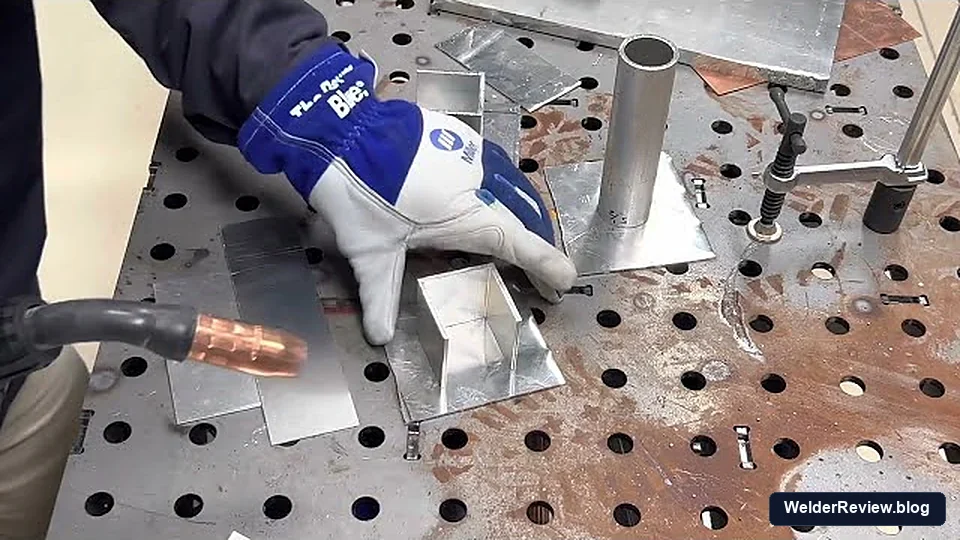
Understanding how these feeding systems operate helps fabricators choose the correct hardware for structural aluminum welding projects requiring flawless weld integrity.
The fundamental mechanical disparity lies in how force is applied to push or pull soft alloy wires through long welding torch cables.
- Dual-motor synchronization separates push-pull systems from traditional single-motor setups.
- Internal spool housings add significant weight to the front end of gun assemblies.
- Remote cabinet control boxes house the primary drive rolls and shielding gas solenoids.
Push-Pull System Mechanics
Push-pull systems utilize a cabinet drive motor working in tandem with a secondary motor inside the gun handle to maintain constant wire tension.
This synchronized approach eliminates the friction and resistance that typically causes soft aluminum wires to tangle inside standard feeder conduits.
- Maintains consistent arc length during long structural welds.
- Prevents wire crushing by distributing driving force evenly.
Spool Gun Engineering Principles
When choosing hardware for your shop, reviewing our best aluminum spool gun welder guide helps identify units that eliminate long push paths entirely by mounting wire on top.
A built-in drive motor assembly pulls the wire straight off the mini spool and pushes it a very short distance through the contact tip.
- Short feed paths drastically reduce aluminum wire feeding friction.
- Self-contained design eliminates the need for specialized remote cabinets.
Real-World Performance and Feeding Mechanics
Evaluating wire feed reliability under demanding shop conditions reveals distinct performance advantages for each system when welding delicate aluminum alloys.
Soft filler metals like ER4043 or ER5356 deform easily if excessive pressure is applied by drive rolls during high-speed production runs.
Operators must weigh operational range against feed consistency to maintain maximum productivity throughout long manufacturing shifts.
- Extended reach allows welders to navigate large assemblies without moving heavy machines.
- Short reach limits mobility but ensures zero conduit friction issues.
- Arc stability directly correlates with proper tension calibration and drive roll selection.
Overcoming Conduit Friction
Traditional push guns struggle with aluminum because the soft wire binds inside long liners due to thermal expansion and sharp bends.
Advanced push-pull systems conquer this obstacle by letting the gun motor pull wire smoothly, matching principles outlined in our complete MIG gun liner replacement guide for stable feeding.
- Eliminates birdnesting at the drive rolls.
- Allows cable lengths to reach up to fifty feet.
Managing Spool Capacity Limitations
While spool guns provide exceptional feed reliability over short distances, their four-inch spools hold only one pound of welding wire.
Frequent spool changes disrupt workflow in high-volume production environments where continuous arc-on time maximizes shop profitability.
- One-pound spools require constant reloading during heavy fabrication.
- Small spools increase consumable material costs over time.
Maintenance, Efficiency, and Equipment Longevity
Proper equipment maintenance ensures consistent performance and extends the operational lifespan of expensive welding torches and drive mechanisms.
Complexity increases maintenance requirements, meaning technicians must regularly inspect electrical connections and mechanical drive components.
Minimizing equipment downtime directly impacts project profitability across small fabrication shops, especially when investing in top machinery featured in our best welder recommendations for every project and heavy-duty industrial plants.
- Regular cleaning of drive rolls prevents slippage and wire shaving.
- Electrical contact pins require periodic inspection for arc damage.
- Liner replacements should use Teflon materials designed for aluminum.
Servicing Complex Push-Pull Torches
Push-pull guns feature intricate internal electronics and miniature motors that demand careful handling during routine shop maintenance procedures.
Technicians must periodically calibrate the synchronization potentiometers to ensure both drive motors operate at matching rotational speeds.
- Internal motor brushes require occasional inspection and replacement.
- Specialized tools are often needed to access internal components.
Maintaining Spool Gun Assemblies
Spool guns feature simpler mechanical layouts, making daily upkeep significantly more straightforward for average fabricators with basic technical training.
Keeping the drive tension thumbwheel properly adjusted prevents premature wear on the small internal gearbox and motor assembly.
- Quick access doors simplify spool replacement procedures.
- Fewer electronic control boards reduce potential failure points.
Ergonomics, Reach, and Operator Fatigue
Operator fatigue remains a critical factor in welding productivity, especially when workers must manipulate heavy torches in awkward overhead positions.
Torch weight distribution affects wrist strain, muscle fatigue, and overall weld quality during extended fabrication shifts.
Choosing the right ergonomic profile prevents repetitive strain injuries and boosts overall craftsmanship across complex structural assemblies.
- Lightweight handles reduce forearm strain during long welding sessions.
- Front-heavy designs increase wrist fatigue in tight vertical joints.
- Balanced cable support systems alleviate strain on the operator's arm.
The Ergonomic Advantage of Push-Pull
Push-pull torches feature slim, streamlined handles because the heavy drive motor remains safely housed inside the remote wire feeder cabinet.
This lightweight design allows welders to maneuver into tight spaces with minimal wrist fatigue during lengthy fabrication projects.
- Slim handle profile mimics standard MIG gun ergonomics.
- Long reach eliminates the need to reposition heavy welding machines.
Addressing Spool Gun Bulkiness
Spool guns inherently carry extra weight at the wrist due to the onboard wire spool and self-contained drive motor housing.
While manageable for short tack welds, this front-heavy balance causes noticeable operator fatigue during prolonged continuous welding applications.
- Bulky housing restricts access into narrow joint configurations.
- Requires two-handed operation for better stability and control.
Setup Complexity and Cable Management
Getting a welding system operational involves configuring gas lines, power cables, and wire feed parameters correctly before striking an arc.
Complex setups require experienced operators who understand how to balance multiple variables for optimal aluminum transfer characteristics.
Streamlined installation procedures save valuable setup time when switching between different metal thicknesses and filler wire alloys.
- Multi-cable bundles require careful routing around the workshop floor.
- Quick-disconnect adapters speed up transitions between different welding processes.
- Control cables transmit vital feedback signals between gun and machine.
Navigating Push-Pull Installation
Setting up a push-pull gun requires connecting control cables, gas hoses, and power leads to a dedicated feeder interface module.
Calibrating the wire feed speeds between the cabinet and gun takes patience to prevent stretching or jamming the soft wire.
- Requires specific machine compatibility and software activation.
- Initial configuration takes longer than standard MIG setups.
Achieving Instant Spool Gun Readiness
Spool guns offer exceptional setup simplicity by plugging directly into compatible welding power sources with minimal external cabling required.
Operators simply follow our spool gun setup guide for aluminum to drop in a four-inch spool, adjust drive tension, and begin welding without complex synchronization.
- Ideal for mobile repair trucks and field service work.
- Reduces troubleshooting time when swapping wire types.
Material Compatibility and Wire Diameter Limits
Different welding projects demand specific wire diameters and alloy compositions to meet strict structural engineering and metallurgical standards.
Understanding how feed systems handle various wire sizes ensures smooth operation without frequent tip burnbacks or arc outages.
Selecting appropriate contact tips and drive rolls prevents common feeding defects associated with soft aluminum filler metals.
- Thinner wires demand precise tension control to avoid deformation.
- Larger diameter wires require robust drive motors and matched contact tips.
- Alloy hardness dictates the specific drive groove profile needed.
Handling Fine Wires with Push-Pull
Push-pull systems excel at feeding extremely thin aluminum wires, such as thirty-thousandths inch diameters, over long distances effortlessly.
The dual-motor synchronization prevents the delicate filler wire from stretching or breaking inside extended cable liners.
- Handles micro-diameters required for thin-gauge sheet metal.
- Maintains steady arc voltage across varying cable curvatures.
Spool Gun Versatility Limits
Spool guns accommodate standard wire diameters easily but struggle when restricted to very tight spaces or specialized micro-wire sizes.
The physical size of the internal drive roll compartment limits how large or specialized a wire spool can be mounted.
- Best suited for standard wire diameters like thirty-five thousandths.
- Limited spool size restricts continuous high-amperage production runs.
Which Option Fits Your Shop Setup
Selecting the ideal aluminum welding gun depends heavily on your budget, production volume, workspace layout, and fabrication requirements.
High-output manufacturing facilities benefit greatly from the extended reach and large spool capacity of advanced push-pull systems.
Smaller maintenance shops achieve excellent results using cost-effective spool guns for occasional aluminum repair and fabrication tasks.
- Analyze your average production run length before purchasing hardware.
- Consider operator comfort and ergonomic strain during long shifts.
- Evaluate machine compatibility to ensure seamless electrical integration.
Investing in Industrial Push-Pull Systems
Choose a push-pull setup if your facility performs continuous aluminum fabrication on large structures like boat hulls or trailers.
The initial equipment investment pays off through reduced consumable downtime and superior ergonomic comfort during demanding shifts.
- Essential for heavy industrial shipyards and trailer manufacturing.
- Maximizes arc-on time through large remote wire spools.
Choosing Practical Spool Gun Solutions
Select a spool gun if you tackle intermittent aluminum repairs, custom fabrication, or mobile field service work infrequently.
This approach delivers cost-effective simplicity without requiring expensive auxiliary control boxes or complex machine modifications.
- Perfect for automotive repair shops and hobbyist fabricators.
- Provides reliable aluminum welding capability on a budget.
Frequently Asked Questions
Can a standard MIG welder use a push-pull gun?
Most standard MIG welders require specialized control boards and pin configurations to power a push-pull gun properly. You should always verify machine compatibility before purchasing auxiliary feeding equipment.
Why do aluminum wires birdnest so easily?
Soft aluminum alloys lack the column strength of steel, causing them to tangle when encountering friction. Utilizing a synchronized drive system prevents this frustrating feeding issue entirely.
How far can a spool gun feed wire?
Spool guns typically rely on short torch cables measuring fifteen feet or less. This restricted reach prevents the soft filler wire from binding inside the conduit.
Are push-pull guns difficult to maintain?
Push-pull guns feature internal electronics and dual motors that require regular calibration checks. Proper maintenance ensures consistent arc stability across long production fabrication runs.
Which option is better for mobile repair work?
Spool guns offer unmatched convenience for field service trucks due to their self-contained design. They eliminate heavy remote cabinets and provide quick setup simplicity on remote jobsites.