Primeweld MTS200 vs YesWelder MP200: Head-to-Head Guide
Comparing two popular multi-process welding machines reveals distinct engineering philosophies. Professionals must weigh raw arc stability against advanced digital automation features.

Choose the Primeweld MTS200 for proven industrial reliability and robust manual controls. Opt for the YesWelder MP200 if you prefer modern digital interfaces and automated synergic setups.
Compare all top models in our Best Welder: Top Home Shop & Jobsite Picks Tested.
Side-by-Side Breakdown
| Criteria | Primeweld Mts200 | Yeswelder Firstess Mp200 | Edge |
|---|---|---|---|
| Core Design / Build | Rugged steel chassis with industrial focus | Sleek polymer-steel hybrid casing | Primeweld Mts200 |
| Real-World Performance | Exceptional manual arc stability and duty cycle | Reliable synergic output for common gauges | Primeweld Mts200 |
| Ease of Setup & Use | Traditional analog knobs and manual dials | Advanced color LCD with smart presets | Yeswelder Firstess Mp200 |
| Durability & Reliability | Proven track record in fabrication shops | Good home-shop endurance and protection | Primeweld Mts200 |
| Efficiency / Operating Footprint | Standard dual-voltage transformer efficiency | Optimized inverter topology for power draw | Yeswelder Firstess Mp200 |
| Maintenance Requirements | Simple component access and standard parts | Proprietary boards requiring careful handling | Primeweld Mts200 |
| Best Ideal Use Case | Professional fabrication and structural repairs | Mobile maintenance and hobbyist projects | Split |
Core Design and Engineering Differences
Evaluating multi-process machines requires analyzing internal architecture and structural build quality. Both units offer dual-voltage capability, yet their internal layout reflects vastly different engineering priorities.
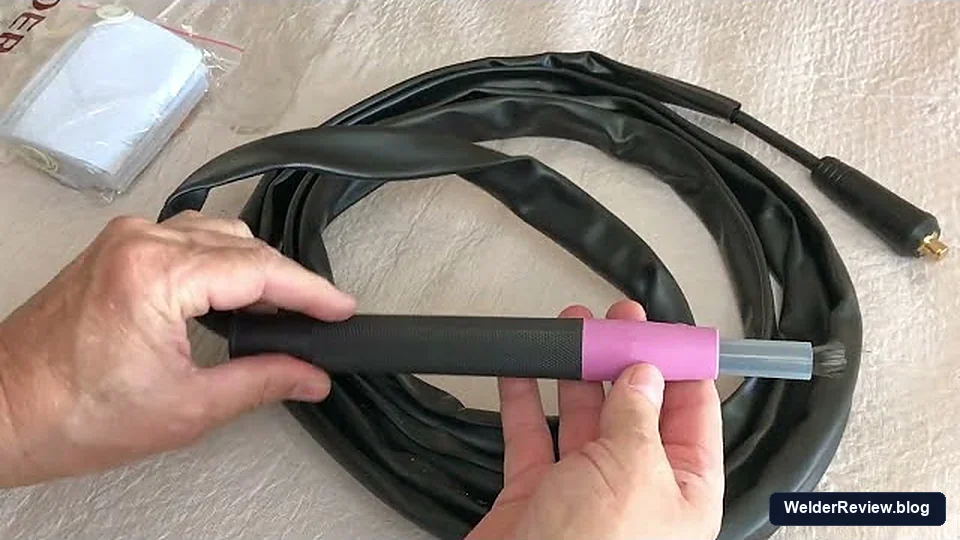
The Primeweld unit prioritizes heavy-duty industrial components designed for harsh environments. Its metal chassis withstands jobsite abuse while maintaining reliable electrical grounding across all three processes.
Conversely, the YesWelder model incorporates a modern polymer frontend with a lightweight frame. This construction reduces overall weight significantly for mobile technicians and weekend fabricators.
The PrimeWeld MTS200 utilizes a heavy-gauge steel chassis built for rugged industrial environments. Its structural integrity supports a dual-drive wire feed mechanism constructed from machined aluminum rather than plastic components.
As detailed in our YesWelder Firstess MP200 review, this machine favors a polymer-composite front bezel paired with a stamped steel housing. This configuration reduces overall unit weight during transport.
Internal cooling architecture differs significantly between both multi-process units. The PrimeWeld employs a variable-speed fan running on a thermal demand cycle, whereas the YesWelder utilizes continuous forced-air ventilation to manage heat dissipation.
- Primeweld utilizes a heavy gauge steel exterior for maximum jobsite durability.
- YesWelder integrates composite materials to reduce transport weight and footprint.
- Both machines support standard dual-voltage inputs for versatile site power.
Chassis Construction and Weight
Workshop mobility often hinges on total equipment weight and handle ergonomics. Heavy steel housings protect sensitive internal inverters from physical impacts during transport.
Lighter polymer housings make garage storage much simpler for occasional fabricators. However, structural rigidity remains crucial when operating in demanding industrial environments.
- Steel housings offer superior impact resistance on rough concrete floors.
- Composite accents streamline carry handles and reduce lifting strain.
MIG Performance and Wire Feed Dynamics
Wire feed consistency dictates the quality of every MIG weld bead. Reliable tensioners prevent birdnesting and ensure smooth wire delivery across extended torch liners.
The Primeweld system features a cast aluminum drive assembly that grips solid and flux-cored wire securely. This robust mechanism minimizes slip during high-speed production welding runs.
The YesWelder competitor relies on an advanced digital wire feed mechanism with automated presets. These synergic controls automatically adjust feed speed based on material thickness inputs.
As noted in our PrimeWeld MTS200 review, feeding solid or flux-cored wire requires precise tension control across the drive rolls. The system features a knurled drive roll setup that prevents slipping.
The YesWelder Firstess MP200 introduces smart synergy profiles that automatically adjust wire speed based on voltage inputs. This digital automation assists novice fabricators in achieving a stable spray transfer without manual adjustments.
Inductance control on the PrimeWeld allows manual tuning of the arc puddle hardness. Fabricators can tighten the arc cone for minimal spatter when working with mild steel sheets under standard shielding gas mixtures.
- Cast aluminum wire drives provide long-term mechanical reliability.
- Synergic digital controls simplify parameter selection for beginner welders.
- Proper tension adjustment prevents frustrating birdnesting issues.
Drive Roll Quality and Tension
Consistent wire delivery depends heavily on matched drive roll grooves and tension arms. Quick-release levers allow operators to swap rolls without losing calibrated pressure settings.
Precision machining on drive gears ensures smooth consumable feeding over long shifts. Poorly aligned rolls lead to erratic arcs and excessive spatter accumulation.
- Dual-groove rollers handle multiple wire diameters with ease.
- Toolless tension adjustments speed up routine wire changes.
TIG Capability and Arc Stability
Precision TIG welding demands clean high-frequency starts and stable low-amp control. Professional fabricators scrutinize these machines for clean aluminum or stainless steel results.
Primeweld builds its reputation on exceptional TIG performance with full pulse controls. Operators get precise amperage tuning for delicate thin-gauge sheet metal applications.
The YesWelder unit offers competent DC TIG welding with lift arc capabilities. While functional, it lacks the fine-tuned high-frequency initiation preferred by dedicated pipe welders.
High-frequency start TIG welding demands robust internal circuitry to prevent high-voltage interference. The PrimeWeld MTS200 delivers a reliable HF arc initiation that safeguards sensitive electronics while starting tungsten electrodes smoothly.
According to our YesWelder MP200 review, lift-TIG mode provides a reliable alternative when high-frequency interference is strictly prohibited. The machine limits short-circuit current to prevent tungsten contamination during contact.
Down-slope timers and post-flow gas controls are essential for crater prevention on structural joints. Both machines integrate these parameters, but the PrimeWeld offers finer increments for gas shielding duration adjustments.
- True pulse TIG capability helps manage heat input effectively.
- High-frequency arc starts eliminate tungsten contamination risks.
- Precise foot pedal responsiveness improves weld puddle control.
High-Frequency Starts and Controls
Reliable arc initiation prevents tungsten pitting and material workpiece damage. Dedicated switches let users toggle between scratch start and high-frequency modes.
Post-flow timers protect cooling tungsten electrodes from premature oxidation in ambient air. Advanced parameters give experienced fabricators total control over the weld cycle.
- Adjustable post-flow gas timers extend tungsten consumable lifespan.
- Clear front panel layouts simplify complex TIG adjustments.
Stick Welding and Heavy Deposition
Shielded metal arc welding tests the raw output power of any multi-process inverter. Operators need reliable hot start and arc force control to prevent electrode sticking.
The Primeweld model excels with cellulose electrodes, maintaining stable arcs at high amperages. Its robust duty cycle handles thick structural steel repairs without thermal shutdown.
YesWelder provides dependable stick performance suitable for general farm repairs and maintenance. Built-in anti-stick circuitry simplifies operation for less experienced technicians.
Shielded metal arc welding tests the duty cycle limits of portable inverter power sources. The PrimeWeld MTS200 maintains a steady output amperage, handling E7018 electrodes with minimal risk of thermal overload cutouts.
Highlighted within our Firstess MP200 review, arc force control dynamically increases voltage during low-voltage arc shorting. This prevents the electrode from sticking when operators manipulate cellulosic rods in joints.
Open-circuit voltage ratings dictate how easily difficult rutile or basic electrodes strike initially. Both units provide adequate OCV specs, ensuring reliable ignition even with older inventory electrodes stored in humid environments.
- Hot start technology eases difficult low-hydrogen electrode ignition.
- Arc force stabilization prevents stubbing during tight joint manipulation.
- High duty cycles support extended structural welding sessions.
Arc Force and Hot Start Features
Modern inverters use software algorithms to boost amperage during initial arc strikes. This prevents stubborn electrodes from freezing to the workpiece surface.
Adjustable arc force lets operators fine-tune puddle fluidity for overhead positions. Such controls ensure deep penetration on thick structural steel plates.
- Anti-stick functions cut current immediately when a rod freezes.
- Optimized open-circuit voltage guarantees reliable electrode striking.
Digital Interfaces and Usability Controls
User interface design dictates how quickly operators can dial in correct parameters. Traditionalists prefer tactile knobs, while modern users appreciate graphical color displays.
Primeweld sticks to tried-and-true analog dials and physical toggle switches. This layout ensures durability and allows glove-friendly adjustments in dusty workshop environments.
YesWelder features a vibrant LCD screen with intuitive menus and digital encoders. The interface guides users step-by-step through joint configurations and gas selections.
Navigating control panels in a busy fabrication shop requires clear typography and responsive tactile feedback. The PrimeWeld relies on traditional analog knobs combined with a digital meter display for precise readings.
The YesWelder Firstess MP200 features an advanced full-color LCD screen displaying graphical icons for process selection. This modern interface simplifies parameter changes for users transitioning between MIG and TIG modes.
Memory storage for custom welding parameters saves valuable setup time during production runs. While the YesWelder excels with its digital preset library, the PrimeWeld emphasizes manual dial precision for experienced operators.
- Analog dials offer immediate tactile feedback with heavy welding gloves.
- Digital LCD screens display precise amperage and voltage readouts.
- Synergic menus reduce calculation errors for novice fabricators.
Interface Durability and Visibility
Workshop lighting and protective helmet lenses impact screen visibility. High-contrast digital displays remain readable from various angles across the room.
Sealed analog potentiometers resist conductive metal dust and moisture infiltration. Simple mechanical switches rarely suffer from firmware glitches or software freezes.
- Anti-glare screen coatings improve visibility under bright shop lights.
- Sealed potentiometer shafts prevent internal debris accumulation.
Maintenance, Build Quality, and Longevity
Long-term equipment ownership depends on accessible service parts and robust cooling. Effective internal airflow prevents premature electronic component degradation during heavy use.
Primeweld incorporates modular internal boards and standard replacement components. This design philosophy simplifies out-of-warranty repairs for local service technicians.
YesWelder relies on integrated circuit boards designed for compact manufacturing efficiency. While reliable, these dense assemblies often require complete module swaps if failures occur.
Routine maintenance ensures long-term operational reliability for multi-process welding equipment. Dust accumulation on internal circuit boards demands periodic compressed air cleaning, especially for units operating in heavy fabrication shops.
Terminal connections and internal bus bars must handle high amperage loads without excessive resistance. The PrimeWeld uses robust copper wiring harnesses designed to withstand thermal expansion cycles over years of service.
Replacement parts availability directly impacts the total cost of ownership for workshop owners. Both brands maintain healthy stocks of consumables, drive rolls, and replacement MIG torch liners through standard distributors.
- Modular internal components simplify out-of-warranty workshop repairs.
- Efficient cooling fans extend semiconductor lifespan under load.
- Standardized internal connectors reduce troubleshooting downtime.
Cooling Systems and Dust Management
Forced air cooling protects vital insulated gate bipolar transistors from overheating. Smart fan designs only activate when internal temperatures exceed specific thresholds.
Internal baffles direct airflow away from sensitive logic boards to minimize dust buildup. Regular compressed air cleaning keeps cooling paths completely unobstructed.
- Temperature-controlled fans reduce idle noise and dust intake.
- Strategic internal baffling protects sensitive logic components.
Verdict and Ideal Workshop Applications
Selecting the right machine ultimately depends on your primary fabrication tasks. Professional fabricators prioritize raw power and traditional controls over digital automation.
Choose the Primeweld MTS200 if you need proven heavy-duty reliability for structural work. Its robust manual controls and superior TIG arc stability satisfy demanding professionals.
Select the YesWelder MP200 if you value modern synergic controls and portability. Its smart digital interface makes multi-process welding accessible for home hobbyists.
Selecting the right multi-process machine depends heavily on your primary welding applications and skill level. The PrimeWeld MTS200 suits professional metalworkers requiring robust construction and dependable arc stability for daily tasks.
Conversely, the YesWelder Firstess MP200 targets mobile repair technicians and hobbyists who benefit from automated synergy controls and lightweight portability. Its modern interface accelerates setup times for diverse projects.
Evaluating your shop electrical supply and duty cycle requirements clarifies the final purchasing decision. Matching machine capabilities to your typical material thicknesses ensures optimal weld quality and long-term equipment durability.
- Primeweld suits professional fabrication shops and structural repair work.
- YesWelder excels in mobile maintenance and garage hobbyist settings.
- Matching machine capabilities to everyday tasks ensures long-term satisfaction.
Making Your Final Purchase Decision
Evaluate your typical material thickness and process frequency before deciding. Investing in robust industrial equipment prevents premature upgrade cycles later.
Consider whether you prefer the simplicity of digital menus or manual dials. Both approaches deliver quality welds when paired with proper technique.
- Assess local electrical supply limits before purchasing dual-voltage units.
- Factor in consumable availability and torch ergonomics for daily comfort.
Frequently Asked Questions
Can both machines operate on standard household power outlets?
Yes, both units include dual-voltage adapters for standard 110V circuits. Operating on 220V input unlocks their maximum rated output for heavier plates.
Which welder performs better for aluminum TIG fabrication?
The Primeweld MTS200 is better suited for dedicated aluminum work due to its advanced controls. Note that both machines require a spool gun for aluminum MIG applications.
Are the included torches and consumables of good quality?
Both brands bundle standard entry-level torches suitable for initial projects. Many professional users eventually upgrade to premium aftermarket torches for better ergonomics.
Do these multi-process welders support spool guns directly?
Yes, both models feature dedicated connections for optional spool gun attachments. This makes feeding soft aluminum wire much more reliable during MIG welding.
How do warranty coverages compare between these two manufacturers?
Both companies offer competitive warranty terms covering internal inverter components. Check specific vendor documentation for exact parts and labor durations.