Primeweld Mig180 vs Hobart Handler 190
Choosing between inverter technology and transformer design defines this shop showdown. We evaluate duty cycles, wire feeds, and arc quality.


Choose the Primeweld Mig180 for digital controls and smooth inverter arc stability. Select the Hobart Handler 190 for rugged transformer durability and traditional heavy industrial framing.
Compare all top models in our Best Welder: Top Home Shop & Jobsite Picks Tested.
Side-by-Side Breakdown
| Criteria | Primeweld Mig180 | Hobart Handler 190 | Edge |
|---|---|---|---|
| Core Design / Build | Compact inverter architecture | Heavy-duty transformer build | Hobart Handler 190 |
| Real-World Performance | Adjustable inductance controls | Tapped voltage steps | Primeweld Mig180 |
| Ease of Setup & Use | Digital readout clarity | Simple mechanical chart | Primeweld Mig180 |
| Durability & Reliability | Modern circuit protection | Legendary rugged casing | Hobart Handler 190 |
| Efficiency / Operating Footprint | High electrical efficiency | Traditional power draw | Primeweld Mig180 |
| Maintenance Requirements | Clean PCB board care | Basic mechanical upkeep | Hobart Handler 190 |
| Best Ideal Use Case | Precision sheet metal fabrication | Farm repairs and heavy steel | Split |
Core Design and Engineering Differences
Evaluating modern welding machines requires understanding internal power sources. The Primeweld Mig180 utilizes advanced inverter technology to reduce overall weight while maximizing electrical efficiency during extended fabrication tasks.
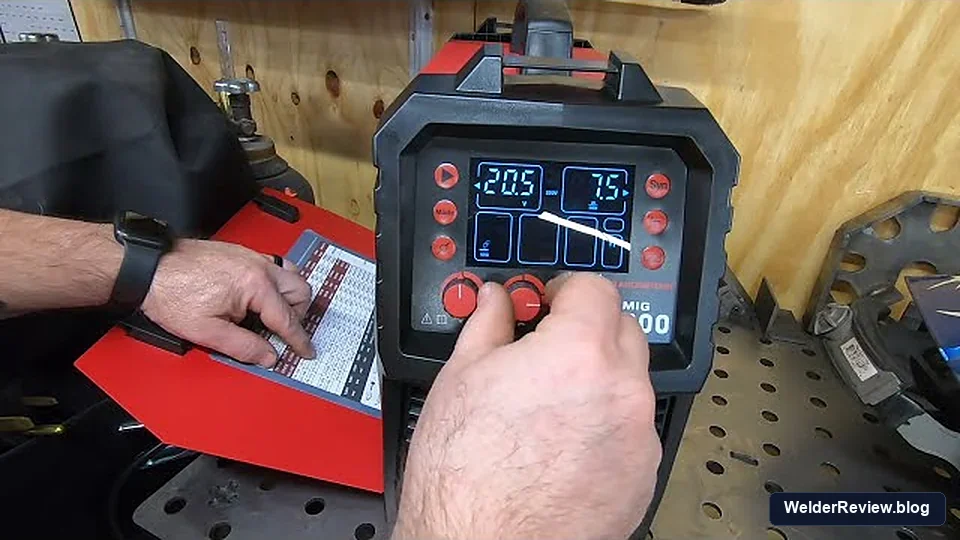
Conversely, the Hobart Handler 190 employs a traditional copper-wound transformer. This older architectural approach trades lightweight portability for extreme mechanical resilience in demanding environments.
Engineering choices directly influence how each unit handles fluctuating input voltages across standard residential or commercial workshop circuits under heavy industrial loads.
Engineering architectures diverge sharply when comparing these multi-process MIG systems. Our comprehensive Hobart Handler 190 review highlights how its traditional tapped transformer topology differs from modern inverter technology.
Chassis construction reflects distinct manufacturing priorities. Hobart builds its cabinet from heavy-gauge stamped steel, protecting internal components against aggressive shop drops, while Primeweld focuses on a compact, lighter frame optimized for easy mobile transportation.
Thermal management systems handle heat dissipation differently across these machines. The Hobart unit features a large internal cooling fan paired with heavy copper windings, whereas the Primeweld uses demand-driven cooling fans to reduce dust intake.
- Inverter architecture reduces total machine weight significantly.
- Transformer winding offers unmatched resistance to harsh shop debris.
- Cooling fan placements dictate internal operating temperatures.
Chassis Construction and Cabinetry
Cabinet gauge thickness protects internal components from accidental impacts on busy job sites. Both manufacturers use stamped steel housings finished with durable industrial powder coatings.
However, the Hobart features a slightly thicker steel door panel compared to the lighter composite latches found on the Primeweld assembly lines.
- Heavy steel door hinges prevent sagging over years.
- Sealed circuit boards protect delicate electronics from metal dust.
Power Delivery and Arc Characteristics
Arc stability remains the primary metric for clean weld pool control. The Primeweld Mig180 delivers infinitely adjustable voltage and wire feed speed for precise arc tuning.
The Hobart unit relies on discrete voltage taps rather than infinite control dials. This means operators select from fixed voltage steps rather than micro-adjusting the arc profile.
Both systems handle standard shielding gases effectively, though the inverter power source adapts quicker to sudden arc length changes during dynamic manipulation.
Voltage regulation offers distinct operational advantages during daily fabrication tasks. As noted in our Hobart Handler 190 Mig wire welder review, this unit uses a multi-step selector switch for preset increments.
Input power requirements demand careful consideration of your workshop electrical service. Both machines operate efficiently on standard 230V circuits, but the transformer-based Hobart generally draws higher input amperage under maximum load conditions than the inverter.
Arc characteristics define the weld puddle behavior on structural carbon steel joints. The Hobart delivers a crisp, slightly aggressive arc profile, while the Primeweld produces a smooth, buttery puddle that significantly reduces post-weld spatter cleanup.
- Infinite voltage control allows fine-tuning on thin automotive sheet metal.
- Tapped voltage settings ensure repeatable parameters for production environments.
- Inductance tuning minimizes spatter on carbon steel weldments.
Duty Cycle and Thermal Limits
Thermal protection circuits prevent internal transformer or inverter board damage during intense welding sessions. Exceeding rated duty cycles triggers automatic shutdowns on both units.
Operators must monitor ambient temperatures and duty cycle percentages to maintain optimal productivity without inducing premature thermal overload faults in the field.
- Forced-air cooling fans run continuously to dissipate internal heat.
- Thermal switches reset automatically after adequate cooling periods elapse.
Wire Feed Mechanisms and Drive Systems
Reliable wire delivery prevents frustrating birdnesting and inconsistent bead profiles. The Primeweld Mig180 incorporates a cast aluminum drive assembly with dual-groove drive rolls.
Further details within our Hobart 190 review show how the machine features a robust gear-driven aluminum casting designed for long-term tension consistency during heavy daily wire spool changes.
Proper tension adjustment remains critical for feeding soft aluminum wires or flux-cored consumables without crushing the internal wire diameter.
Wire drive assemblies determine feeding consistency over extended welding sessions. The Hobart wire feed system utilizes robust cast aluminum casting frames, ensuring precise alignment, while competing models often incorporate hybrid polymer-metal gear combinations.
Spool gun integration varies significantly for aluminum fabrication projects. Connecting a dedicated spool gun to the Hobart is straightforward via direct internal terminals, whereas the Primeweld includes specialized digital drive controls to optimize non-ferrous wire feeding rates.
Tension arm mechanisms prevent bird-nesting when running soft wires or thin mild steel. Proper thumb-screw adjustments on both drive rolls ensure uniform pressure, preventing deformation of hollow wire and maintaining steady arc voltage output.
- Cast aluminum housings resist warping under high spring tension.
- Toolless roll changes speed up routine multi-process material swaps.
- Brass tension screws offer precise pressure adjustment ranges.
Spool Gun Integration and Compatibility
Welding aluminum requires dedicated spool gun setups to prevent feeding friction in standard MIG liners. The Primeweld features built-in direct spool gun connectivity.
Hobart also supports optional spool gun accessories, requiring simple plug-and-play installation inside the wire compartment for seamless non-ferrous fabrication tasks.
- Direct plugin ports eliminate awkward external control adapter boxes.
- Dedicated switches route power safely to the secondary torch.
Maintenance, Efficiency and Longevity
Long-term reliability depends on routine preventative maintenance practices and component quality. Inverter units require clean internal airflow to prevent conductive dust accumulation on circuit boards.
Transformer machines tolerate dirt and metallic debris much better due to sealed copper windings and simpler electromechanical switches lacking complex microprocessors.
Regularly inspecting drive rolls, contact tips, and gas nozzles ensures consistent shielding coverage and prevents premature consumable wear across all projects.
Long-term maintainability depends heavily on internal electronic complexity. Traditional transformer welders offer straightforward component swapping for electrical repairs, whereas inverter units require specialized micro-soldering expertise if circuit boards experience power surges.
Consumable availability remains crucial for minimizing downtime in busy metal shops. Both systems accept standard contact tips and nozzles, but checking gas diffuser compatibility prevents costly gas leaks and premature torch wear during heavy shifts.
Dust ingress protection safeguards delicate circuit boards against conductive metal shavings. Regular compressed air cleaning is mandatory for both units, keeping internal cooling fins clean to prevent overheating during continuous fillet weld passes.
- Compressed air cleaning clears metallic dust from sensitive electronics.
- Copper transformer windings offer exceptional resistance to electrical spikes.
- Replace worn contact tips promptly to maintain steady arc transfer.
Consumable Availability and Torch Design
Standard torch configurations utilize widely available Bernard-style or Tweco-style consumables. Finding replacement nozzles, tips, and liners is straightforward for both brands.
Ergonomic handle designs reduce operator hand fatigue during lengthy fabrication runs, minimizing wrist strain and improving overall bead tracking accuracy.
- Universal consumable compatibility lowers ongoing operational overhead costs.
- Flexible torch leads improve maneuverability around awkward weld joints.
Ergonomics, Portability and Usability
Workshop mobility impacts daily workflow efficiency significantly. The Primeweld Mig180 boasts a remarkably lightweight chassis that travels easily between mobile repair service trucks.
Detailed insights inside our Hobart 190 MIG welder review explain that the machine weighs significantly more due to its heavy copper transformer core, making permanent cart mounting essential.
Control panel layouts prioritize intuitive operation, allowing novice welders to dial in recommended settings using the printed inner-door parameter charts.
Chassis footprint and physical weight dictate ease of movement around the shop floor. The lightweight inverter design reduces overall bulk, whereas the heavy transformer core makes the competing model far less convenient for frequent loading into trucks.
Torch ergonomics and lead flexibility directly influence operator fatigue during long fabrication shifts. Flexible coaxial cables reduce wrist strain, allowing precision control when navigating complex joints and out-of-position structural welding tasks.
Front panel layouts dictate how quickly operators can adjust parameters mid-weld. Clearly labeled dials and digital readouts prevent setup errors, ensuring exact amperage and wire speed settings are maintained throughout industrial fabrication projects.
- Lightweight inverter chassis reduces strain during transport tasks.
- Heavy transformer units require sturdy rolling utility carts.
- Clear parameter charts guide proper voltage and wire feed selections.
Control Panel Layout and Readouts
Digital displays on modern inverters provide exact voltage and amperage readouts for precise repeatability. Analog dials on traditional units rely on visual tick marks.
Operators favoring traditional mechanical feedback often prefer analog knobs, while digital enthusiasts appreciate exact numerical parameters for strict quality control.
- Digital screens show precise voltage metrics under active loads.
- Analog dials offer tactile resistance adjustments with gloves.
Which Option Fits Your Shop Setup
Selecting the right machine ultimately depends on your primary application requirements and workshop environment. Automotive fabricators benefit greatly from the fine micro-adjustments of inverter technology.
Agricultural repair facilities and heavy equipment maintenance yards profit from the indestructible nature of traditional transformer power sources.
Evaluate your input power availability, typical material thicknesses, and budget constraints before finalizing your investment in either machine.
Selecting the correct welding machine depends primarily on your intended shop application. Mobile contractors benefit from the lighter inverter footprint, while stationary agricultural repair shops gain maximum durability from heavy transformer units.
Material thickness ranges in your daily workflow dictate your required power output limits. Autobody restoration shops working with thin sheet metal require fine voltage steps, whereas structural fabricators need sustained high-amperage output.
Electrical efficiency and generator compatibility remain vital factors for remote job sites. Inverter welders draw cleaner power from portable engine drives, whereas traditional transformer systems demand larger generator wattage capacities to prevent voltage drop issues.
- Match machine duty cycle ratings to your typical project duration.
- Verify available breaker amperage on your shop electrical service.
- Consider future fabrication needs like aluminum spool gun usage.
Final Decision Matrix for Fabricators
Both welders represent exceptional value within their respective engineering classes. Your choice comes down to prioritizing lightweight inverter precision versus heavy transformer resilience.
Investing time in proper setup and material preparation guarantees professional structural results regardless of which specific brand you ultimately select.
- Prioritize Primeweld for delicate sheet metal and digital precision.
- Choose Hobart for rugged farm repairs and heavy structural steel.
Frequently Asked Questions
Can both welders run on standard household electrical circuits?
Both units require a dual-voltage input setup to reach maximum output capabilities safely. You will need a dedicated two-hundred-thirty-volt outlet to unlock their full amperage potential.
Which welder is better for thin auto body sheet metal?
The Primeweld Mig180 excels on thin gauge steel because its infinite voltage control allows precise arc tuning. This prevents burn-through and minimizes warping during delicate bodywork.
Are replacement parts and consumables easy to find locally?
Both machines use standard industry-compatible torch consumables like tips and nozzles. Replacement parts are readily available at most local welding supply stores and online distributors.
Do these machines support aluminum welding right out of the box?
Neither unit includes an aluminum spool gun in the base package configuration. You must purchase a compatible spool gun accessory separately to feed soft aluminum wire effectively.
Which welding machine offers better long-term reliability for farm use?
The Hobart Handler 190 offers superior resilience against harsh agricultural debris. Its traditional transformer architecture withstands dust and rough handling better than sensitive circuit boards.