Miller vs Everlast: Engineering and Performance Face-Off
Navigating the technical differences between Miller and Everlast requires assessing heavy industrial build quality against multi-process value. Professional fabrication shops and mobile contractors weigh these metrics daily.

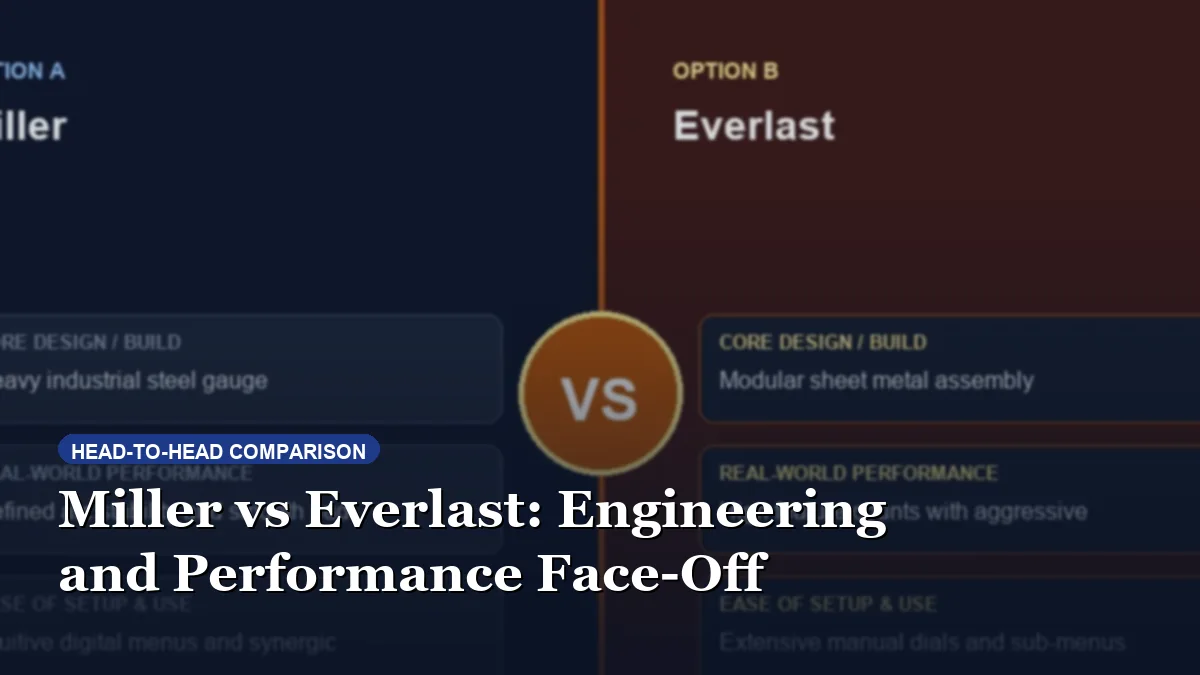
Choose Miller for legacy industrial durability and unmatched local support networks. Select Everlast if you require feature-rich multi-process versatility at a lower initial investment.
Compare all top models in our Best Welder: Top Home Shop & Jobsite Picks Tested.
Side-by-Side Breakdown
| Criteria | Miller | Everlast | Edge |
|---|---|---|---|
| Core Design / Build | Heavy industrial steel gauge | Modular sheet metal assembly | Miller |
| Real-World Performance | Refined arc stability and smooth puddle control | High feature counts with aggressive arc force | Miller |
| Ease of Setup & Use | Intuitive digital menus and synergic modes | Extensive manual dials and sub-menus | Miller |
| Durability & Reliability | Decades of proven field service life | Rapidly improving PCB reliability and components | Miller |
| Efficiency / Operating Footprint | Optimized transformer and inverter synergy | Compact multi-voltage inverter layouts | Everlast |
| Maintenance Requirements | Modular board replacements and simple cleaning | Component-level servicing through direct support | Miller |
| Best Ideal Use Case | Production structural welding and pipeline yards | Advanced hobbyist and budget fabrication shops | Everlast |
Core Design and Engineering Architecture
Industrial welding equipment relies on robust internal architecture to withstand harsh shop environments. Miller constructs chassis using heavy-gauge galvanized steel and isolated circuit boards to prevent dust intrusion.
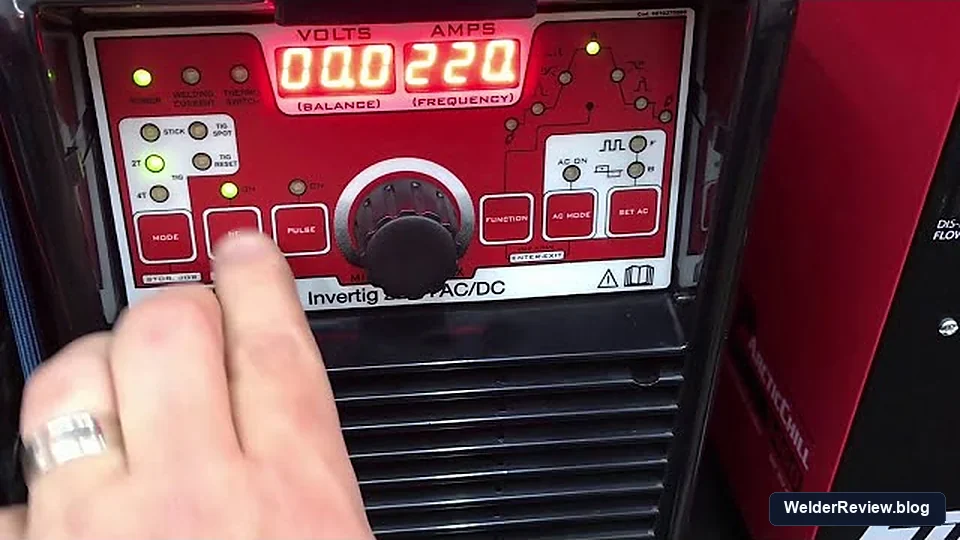
Everlast approaches engineering by packing maximum functionality into compact inverter packages. Their units prioritize multi-process capability using dense circuit designs that reduce overall enclosure footprints significantly.
Thermal management differs notably between these two manufacturers. According to our Miller Diversion 180 review, the unit implements massive aluminum heat sinks and efficient cooling fans to reduce premature contamination.
Miller machines utilize robust internal transformers and premium circuit boards designed for extreme industrial abuse, meeting strict NEMA enclosure ratings for harsh fabrication shop environments across North America.
Everlast units frequently incorporate advanced IGBT modules to achieve lightweight, portable inverter designs that suit mobile contractors needing high-frequency TIG starts without excessive physical bulk.
Internal wiring harnesses from Miller feature heavy copper busbars to minimize electrical resistance, whereas Everlast relies on structured ribbon cables secured with vibration-resistant conformal coatings.
- Miller uses heavy structural steel frames for maximum drop resistance.
- Everlast integrates advanced IGBT inverter modules for high power density.
- Internal layout optimization varies between modular and dense designs.
Chassis Construction and Material Selection
Heavy-duty steel panels on Miller machines resist impact damage during transport on rough jobsites. Powder coat finishes protect against corrosive shop chemicals and UV degradation.
Everlast utilizes lighter gauge sheet metal enclosures reinforced with internal steel frames. This construction keeps shipping weights manageable for mobile contractors and garage fabricators.
- Miller chassis thickness exceeds standard commercial specifications.
- Everlast focuses on weight reduction without sacrificing frame rigidity.
Real-World Arc Performance and Behavior
Arc stability remains the ultimate benchmark for professional welding machines. As noted in our Miller 215 welder review, the brand delivers exceptionally smooth puddle wetting across stainless steel alloys.
Everlast machines provide aggressive arc characteristics with high dig settings that penetrate thick contaminated plate easily. Operators often praise the crisp arc start on TIG configurations.
Fine-tuning parameters requires precise voltage and amperage adjustments during critical joint passes. Both brands offer digital displays, but their underlying software tuning yields different bead profiles.
Miller power sources deliver exceptional arc stability through proprietary waveform control, ensuring minimal spatter when short-circuit MIG welding on dirty structural carbon steel plates during daily operations.
Everlast units provide aggressive penetration dynamics that excel during heavy aluminum AC TIG applications, offering deep puddle fluidity for thick-walled custom marine fabrication and structural metal projects.
Fine-tuning the arc force control on Miller units prevents electrode sticking during manual SMAW, while Everlast offers adjustable hot start time parameters for seamless root passes.
- Miller arc control minimizes spatter during short-circuit MIG welding.
- Everlast pulse TIG frequencies reach high thresholds for tight bead widths.
- Puddle manipulation feels distinctly different due to proprietary waveform software.
MIG, TIG, and Stick Output Dynamics
MIG welding performance on Miller units features adaptive control algorithms that compensate for tip-to-work distance variations. Stick welding yields smooth low-hydrogen deposition rates.
Everlast TIG units excel by offering advanced AC waveform controls like adjustable frequency and balance. These features rival premium industrial brands at a fraction of the cost.
- Adaptive MIG algorithms reduce cleanup time on production runs.
- Advanced TIG controls enhance aluminum oxide cleaning action.
Interface Ergonomics and Parameter Control
Operator fatigue often stems from convoluted menu navigation during rapid production cycles. As highlighted in our Miller Multimatic 215 review, the interface prioritizes simple knobs for fast adjustments.
Everlast machines pack numerous sub-menus into digital displays to accommodate advanced features like pre-flow, post-flow, and pulse parameters. Operators require training to master every available setting.
Ergonomic torch connections and front-panel quick-connect receptacles improve daily workflow efficiency significantly in busy fabrication environments.
Digital interfaces on Miller machines use sealed membrane switches designed to withstand abrasive grinding dust, moisture, and heavy impact from gloved hands in busy industrial environments.
Everlast favors multi-function rotary encoders that allow rapid parameter adjustments, letting fabricators quickly toggle pulse frequencies and AC balance settings without navigating confusing sub-menus.
Clear digital LED readouts display actual amperage and voltage during the weld bead, ensuring compliance with strict welding procedure specifications on critical ASME pressure vessel codes.
- Miller simplifies synergic adjustments for novice and expert welders alike.
- Everlast provides granular control over specialized pulse parameters.
- Front-panel layouts dictate how quickly operators adapt to new jobs.
Digital Displays and Menu Navigation
Clear LED screens on Miller panels remain visible under direct sunlight or dark shop conditions. Parameter feedback is instantaneous and easy to read from a distance.
Everlast utilizes bright digital interfaces that display multiple variables simultaneously. Navigating these menus involves multi-function encoders that require deliberate input.
- Miller displays focus on primary amperage and voltage metrics.
- Everlast screens show complex pulse timing and frequency data.
Duty Cycles and Thermal Management
Heavy industrial output demands high duty cycle ratings to prevent unexpected thermal shutdowns. Miller machines maintain verified duty cycles at maximum rated amperages continuously.
Everlast units offer impressive duty cycles for their price point, though heavy gouging tasks may trigger thermal protection sooner. Adequate ventilation remains critical for sustained output.
Cooling fan efficiency dictates how quickly internal components shed heat during extended structural welding sequences on thick carbon steel weldments.
Heavy-duty aluminum heat sinks paired with temperature-controlled cooling fans allow Miller units to maintain high operating duty cycles during extended structural steel fabrication shifts.
Everlast implements tunnel-air cooling architecture to direct airflow away from sensitive electronic components, protecting internal circuit boards from conductive metal dust accumulation in tight workshops.
Thermal overload protection circuits automatically interrupt power output if internal temperatures exceed safety thresholds, preventing catastrophic transformer insulation failure during intensive production welding operations.
- Miller thermal protection resets rapidly after heavy industrial use.
- Everlast units utilize high-velocity fans to maintain safe operating temperatures.
- Duty cycle ratings reflect real-world ambient temperature testing standards.
Transformer and Inverter Thermal Limits
Inverter technology generates concentrated heat that requires sophisticated thermal sensors and heat sinks. Miller engineers oversized copper windings to minimize resistance heating.
Everlast relies on smart thermal management software to throttle output gracefully before triggering hard fault codes on the main control board.
- Oversized copper components reduce baseline operating temperatures.
- Smart software throttling prevents abrupt stops during critical passes.
Maintenance, Servicing, and Equipment Longevity
Long-term ownership costs depend heavily on component accessibility and local service availability. Miller benefits from an extensive global network of certified repair technicians and readily available replacement parts.
Everlast relies heavily on direct-to-consumer technical support and warranty centers. Replacement boards and components are shipped directly to owners or authorized service shops.
Routine maintenance like blowing out metallic dust with compressed air remains essential for extending the operational lifespan of any electronic welding machine.
Routine maintenance on Miller machines involves clearing dust from modular circuit boards, which feature clear diagnostic indicator lights to expedite electrical troubleshooting for factory technicians.
Everlast equipment design emphasizes accessible internal layouts, allowing independent shop owners to replace worn contactors or gas solenoid valves quickly using standard hand tools.
Sourcing replacement components is straightforward for both brands, though Miller maintains an extensive network of authorized service centers across North America for fast repair turnaround.
- Miller parts availability spans decades for legacy industrial models.
- Everlast offers comprehensive direct support and responsive warranty services.
- Regular preventative cleaning prevents conductive debris shorting PCBs.
Component Repairability and Warranty Support
Modular internal design allows technicians to swap individual circuit boards rather than replacing entire assemblies. This modularity reduces long-term maintenance downtime.
Everlast warranties cover major electrical components, with technical staff guiding users through basic diagnostic troubleshooting over the phone or via email.
- Modular board swaps minimize total equipment downtime.
- Guided troubleshooting helps users resolve minor issues quickly.
Power Efficiency and Grid Demands
Modern fabrication shops must monitor electrical consumption to maintain manageable utility overhead costs. Miller integrates power factor correction technology to draw cleaner current from standard wall receptacles.
Everlast multi-voltage machines adapt seamlessly between single-phase and three-phase power supplies. This flexibility benefits mobile contractors working across diverse residential and industrial sites.
Inverter efficiency ensures that a higher percentage of incoming electrical energy converts directly into useful welding arc power rather than waste heat.
Advanced inverter technology in modern Everlast welders ensures high power factor correction, drawing fewer amps from standard single-phase residential garage wall outlets during operation.
As explored in our Miller Multimatic 220 review, multi-voltage plug systems automatically sense incoming line voltage, safely transitioning between 208V and 460V power without requiring manual internal rewiring by electricians.
Minimizing idle power consumption helps reduce overall utility expenses, making both manufacturer equipment lineups surprisingly economical for small fabrication businesses operating on tight monthly utility budgets.
- Power factor correction reduces total harmonic distortion on local grids.
- Multi-voltage auto-sensing simplifies plugin procedures on remote jobsites.
- Inverter topology maximizes overall electrical conversion efficiency ratings.
Generator Compatibility and Voltage Fluctuations
Running sensitive electronics on portable engine-driven generators requires robust internal surge protection. Miller units tolerate dirty generator power without compromising internal rectifier boards.
Everlast designs their inverter power supplies to handle minor voltage drops gracefully, ensuring stable arc ignition even on long extension cord runs.
- Surge protection safeguards sensitive control boards from generator spikes.
- Voltage drop tolerance maintains stable arcs on long extension lines.
Determining Your Ideal Equipment Fit
Selecting between these two manufacturers ultimately comes down to budget, application demands, and expected duty cycles. Professional operations requiring bulletproof reliability gravitate toward Miller equipment.
Fabricators, motorsports builders, and advanced hobbyists find exceptional value in the extensive feature lists of Everlast machines. Careful assessment of your workflow dictates the correct choice.
Investing in the right equipment ensures years of productive fabrication work without unexpected bottlenecks or premature hardware failures.
Choosing between these brands depends primarily on your operational volume, budget constraints, and whether you require guaranteed industrial reliability for heavy daily production shop environments.
Production facilities valuing minimal downtime will appreciate Miller machines, whereas hobbyists and mobile contractors often prefer Everlast feature sets for achieving maximum overall cost-effectiveness.
Evaluating your specific welding processes ensures you invest in machinery that matches your required amperage output and duty cycle, securing reliable long-term operational success.
- Assess your daily duty cycle requirements before purchasing equipment.
- Weigh initial investment costs against long-term maintenance expectations.
- Match machine capabilities to your primary metal fabrication materials.
Matching Machine Capabilities to Shop Demands
High-volume structural fabrication shops demand the rugged endurance built into every Miller machine. Their proven track record justifies the higher initial acquisition expense.
Independent fabricators seeking advanced AC/DC TIG features on a budget benefit immensely from Everlast units. They deliver professional results without crippling overhead costs.
- Industrial shops require heavy-duty endurance for multi-shift operations.
- Budget-conscious fabricators gain advanced features without overspending.
Frequently Asked Questions
Which brand offers better long-term reliability for heavy industrial fabrication?
Miller provides superior long-term reliability backed by decades of proven industrial durability and extensive service networks. Their robust internal architecture handles continuous multi-shift fabrication environments effortlessly.
Are Everlast welders suitable for professional mobile repair contractors?
Everlast machines serve mobile contractors well due to their compact multi-voltage design and lightweight inverter footprints. They deliver impressive power output across diverse remote power sources.
How do arc characteristics differ between Miller and Everlast TIG units?
Miller offers a refined, ultra-smooth arc puddle with exceptional low-amperage stability. Everlast provides an aggressive arc with advanced pulse controls for precise heat input management.
Is local repair service widely available for both equipment brands?
Miller benefits from a vast network of authorized local service centers and readily available replacement parts. Everlast relies on direct manufacturer support and shipped component replacements.
Which manufacturer delivers better value for advanced hobbyist fabricators?
Everlast delivers exceptional value by packing professional-grade multi-process features into affordable packages. Advanced hobbyists gain access to sophisticated wave controls without breaking their equipment budget.