Miller Millermatic 255 vs Lincoln Power Mig 260
Choosing between these flagship multi-process welders requires balancing digital workflow efficiency with heavy industrial arc stability.

Pick the Miller 255 for intuitive digital menus and lightweight portability, or choose the Lincoln 260 for rugged transformer heritage and superior aluminum arc control.
Compare all top models in our Best Welder: Top Home Shop & Jobsite Picks Tested.
Side-by-Side Breakdown
| Criteria | Miller Millermatic 255 | Lincoln Power Mig 260 | Edge |
|---|---|---|---|
| Core Design / Build | Advanced inverter architecture with composite chassis | Traditional transformer heritage with heavy steel casing | Lincoln |
| Real-World Performance | 230-amp output at 40 percent duty cycle | 260-amp output at 30 percent duty cycle | Lincoln |
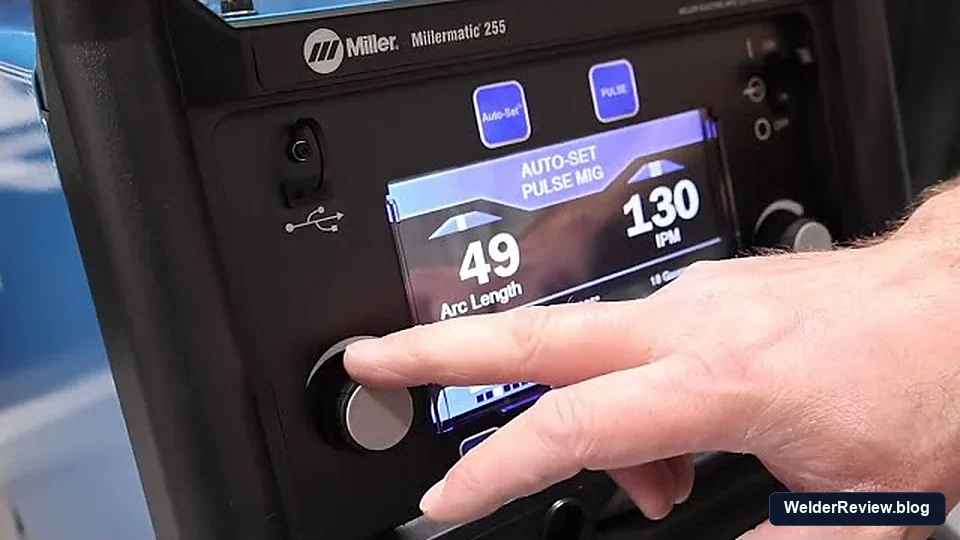
| Ease of Setup & Use | Auto-Set Elite color LCD interface | Traditional digital display with tactile knobs | Miller |
| Durability & Reliability | Robust industrial casing with internal board protection | Legendary heavy-duty industrial contactors and copper windings | Lincoln |
| Efficiency / Operating Footprint | High inverter power factor reducing grid draw | Standard transformer-influenced auxiliary power draw | Miller |
| Maintenance Requirements | Modular board diagnostics and accessible wire drive | Straightforward mechanical servicing and robust drive rolls | Tie |
| Best Ideal Use Case | Fast-paced fabrication shops needing quick parameter changes | Heavy structural steel welding and dedicated production lines | Lincoln |
Power Source Architecture and Core Design
Modern industrial fabrication demands robust power sources capable of handling fluctuating input voltages without dropping arc stability. Both machines deliver exceptional single-phase performance while utilizing fundamentally different internal engineering philosophies.
The Miller unit relies on lightweight inverter technology to maximize electrical conversion efficiency. Conversely, our lincoln power mig 260 k3520 1 review highlights how the competitor incorporates heavy-duty components for brutal environments.
Modern inverter-based power supplies utilize advanced high-frequency transformers to minimize overall cabinet weight while maximizing electrical efficiency. Both systems convert single-phase input power into stable, high-amperage direct current outputs suitable for demanding fabrication environments.
Circuit board isolation and protective conformal coatings safeguard sensitive electronic components against conductive metal dust, moisture, and extreme temperature fluctuations. Robust internal heat sinks dissipate thermal loads effectively during continuous heavy fabrication cycles.
- Single-phase 230V input requirements for both systems
- Inverter weight savings versus traditional transformer mass
- Optimized capacitor banks for transient voltage protection
Internal Cooling and Thermal Management
Thermal management dictates how long your machine runs before hitting internal safety cutoffs during heavy structural fabrication. Both manufacturers employ variable-speed cooling fans that activate only when internal temperatures rise.
Miller integrates Fan-On-Demand technology to reduce dust ingestion inside the sensitive electronics enclosure. Lincoln utilizes aggressive airflow tunnels to protect the heavy transformer windings from premature thermal fatigue.
- Smart fan activation minimizing airborne debris intake
- Dedicated heatsink placement around main power transistors
Arc Performance and Bead Dynamics
Achieving consistent puddle control requires precise voltage regulation and rapid arc recovery speeds during short-circuit transfers. Welders evaluating these flagship models will notice subtle differences in puddle wetting and spatter reduction.
The Miller 255 provides smooth arc starts with minimal spatter when utilizing standard shielding gases. Meanwhile, the Lincoln model excels in heavy spray transfer modes across thick steel plate applications.
Achieving optimal arc stability requires precise voltage stabilization algorithms that react instantaneously to short-circuit transfer variations. Welders manipulating the gun angle will notice distinct wetting action and puddle fluidity across varying plate thicknesses.
Inductance tuning allows operators to tailor arc pinch and spatter levels specifically for carbon steel or stainless steel applications. Managing puddle freeze rates ensures sound weld profiles without excessive reinforcement or undercut defects.
- Optimized waveform control for minimal post-weld cleanup
- Consistent wire feed speed tracking under load fluctuations
- Smooth puddle wetting across carbon steel and aluminum
Aluminum and Stainless Welding Capabilities
Pulsed MIG capabilities on both platforms allow fabricators to handle thin stainless steel and aluminum without excessive burn-through. Setting up these advanced modes requires navigating distinct software architectures on each machine.
Miller simplifies pulsed MIG setup through its pre-programmed material thickness database. Meanwhile, our lincoln electric power mig 210 mp review details how Lincoln counters with adjustable arc control settings.
- Pulsed MIG parameter libraries for exotic alloys
- Precise inductance tuning for flat profile beads
Interface Controls and Digital Setup
Operator ergonomics heavily depend on how quickly a welder can adjust parameters between different joint configurations on the floor. Digital screens have largely replaced analog dials, but software layout varies significantly.
The Miller interface utilizes a large color screen combined with a single rotary push button for navigation. Lincoln retains a more traditional layout featuring dedicated digital meters alongside robust tactile control knobs.
Comprehensive digital menus simplify parameter selection by utilizing intuitive synergic setup screens based on wire diameter and material thickness. Operators simply input baseline joint metrics to generate pre-calibrated voltage and wire feed speed recommendations.
Manual override capabilities remain fully accessible for professional fabricators who prefer dialing in exact parameters for specialized out-of-position welds. Bright LCD screens maintain high visibility under harsh shop lighting and direct sunlight conditions.
- High-resolution color displays readable in direct sunlight
- Memory card slots for software updates and preset storage
- Simplified trigger operation modes for tacking sequences
Auto-Set Technology Versus Manual Control
Preset parameter calculators help junior fabricators achieve acceptable weld profiles without extensive trial-and-error testing on scrap metal. Miller pioneered automated setup features that scale amperage based on wire diameter.
Lincoln provides robust baseline schedules while encouraging experienced operators to fine-tune arc dynamics manually. Both approaches serve distinct workshop environments ranging from production lines to custom job shops.
- Automated thickness selection menus for fast operator onboarding
- Manual override capabilities for specialized joint designs
Build Quality and Thermal Duty Cycles
Industrial fabrication environments punish equipment with dust, moisture, and rough transport across concrete shop floors. Evaluating enclosure durability ensures your investment survives years of demanding daily operation cycles.
Lincoln constructs its chassis using thick-gauge stamped steel designed to absorb severe mechanical impacts without warping. Miller employs a rugged polymer and steel hybrid frame prioritizing weight reduction without sacrificing rigidity.
Heavy-gauge steel cabinetry provides superior structural rigidity capable of withstanding aggressive industrial shop abuse and mobile truck mounting. Internal drive mechanisms utilize cast-aluminum housings to ensure flawless wire alignment over thousands of operating hours.
Generous duty cycle ratings allow uninterrupted welding on structural steel joints without triggering thermal overload protection relays. Efficient cooling fans pull ambient air directly across critical rectifier components to manage internal operating temperatures.
- Heavy-duty running gear compatibility for mobile service trucks
- Impact-resistant front control panel bezels protecting screens
- Sealed internal circuit boards guarding against conductive dust
Duty Cycle Ratings Under Maximum Amperage
Heavy plate fabrication pushes power sources to their thermal limits during extended structural weld passes. The Lincoln system delivers a slightly higher maximum amperage output for demanding industrial applications.
Miller compensates with an optimized inverter duty cycle that maintains efficient power delivery during long-duration shop shifts. Reviewing your typical amperage requirements prevents unexpected thermal shutdowns mid-project.
- Sustained output ratings at ambient workshop temperatures
- Thermal overload protection circuits preventing transformer burnout
Portability and Workshop Ergonomics
Moving heavy welding equipment around crowded fabrication facilities impacts daily productivity and physical worker fatigue. Engineers balance raw electrical capacity against manageable machine weight for service truck operators.
Weighing significantly less than its competitor, the Miller inverter is much easier to load into mobile welding rigs. The Lincoln unit demands a dedicated rolling cart due to its heavier transformer-based construction.
Integrated running gear and cylinder racks transform these bulky power sources into highly mobile workstations suitable for dynamic shop layouts. Balanced lifting handles and secure fastening points simplify hoisting the machine onto service trucks.
Ergonomic gun placement and organized cable management hooks prevent tripping hazards and reduce operator fatigue during long fabrication shifts. Proper torch positioning preserves cable liners and minimizes wire feed friction across long distances.
- Integrated running gear platforms with cylinder racks
- Ergonomic lifting handles positioned for balanced transport
- Compact footprint saving valuable floor space in small shops
Cylinder Rack and Cable Management
Managing heavy welding leads and shielding gas cylinders safely is crucial for maintaining an organized workspace. Both machines feature rear-mounted gas bottle trays secured with heavy-duty chains.
Cable management hooks prevent gun leads and ground clamps from dragging across abrasive concrete shop floors. Proper storage drastically extends the operational lifespan of expensive copper welding cables.
- Low-deck gas cylinder loading preventing lifting injuries
- Integrated strain reliefs on primary power input cords
Maintenance Requirements and Serviceability
Minimizing equipment downtime requires routine cleaning schedules and readily available replacement parts from local distributors. Keeping wire drive mechanisms clean ensures consistent wire feed delivery across long shifts.
As highlighted in our miller millermatic 255 review, this machine utilizes a quick-change drive roll system requiring zero tools for maintenance swaps, while Lincoln provides a heavy-duty cast aluminum assembly.
Routine maintenance involves clearing metallic debris from drive rolls and inspecting contact tips for excessive wear or orifice enlargement. Scheduled internal blowouts using dry compressed air prevent conductive buildup around transformer winding terminals.
Removable side panels grant technicians quick access to modular internal components for efficient diagnostic testing and component replacement. Keeping spare drive rolls and inlet guides on hand ensures minimal downtime during critical project deadlines.
- Toolless drive roll replacement for rapid wire size changes
- Accessible internal fuses protecting control circuit boards
- Readily available consumable kits at industrial supply houses
Troubleshooting and Error Diagnostics
When electronic faults occur, clear diagnostic error codes on digital displays prevent lengthy diagnostic guesswork. Both units feature comprehensive onboard error messaging systems detailing specific fault conditions.
Service technicians appreciate the modular internal layout that simplifies component replacement inside repair facilities. Preventive maintenance routines remain straightforward for internal shop personnel following manuals.
- Digital error code readouts for rapid troubleshooting
- Modular board replacement minimizing repair turnaround times
Verdict and Ideal Application Fit
Selecting between these two industry standards ultimately depends on your specific workshop workflow priorities. Custom fabrication shops requiring frequent parameter changes will appreciate the intuitive digital interface found on the Miller.
Heavy structural fabrication operations needing maximum raw amperage and rugged durability will prefer the Lincoln alternative. Both machines represent the pinnacle of modern single-phase industrial welding equipment engineering.
Selecting the right system depends on workflow and interface style. You can read our lincoln power mig 260 review to analyze shop performance, power availability, and professional deposition rates for your production fabrication environment.
Assess your daily material thicknesses and duty cycle demands carefully before finalizing your investment in industrial-grade GMAW equipment. Matching the correct machine architecture ensures long-term reliability and superior weld quality across diverse projects.
- Match machine architecture to your daily fabrication workload
- Consider portability needs if servicing equipment in the field
- Evaluate operator familiarity with digital versus analog menus
Final Purchasing Recommendation
Evaluate your primary material thickness and duty cycle expectations before finalizing your capital equipment purchase decision. Investing in the correct power source ensures decades of reliable fabrication productivity.
Consult local welding distributors to arrange live demonstrations of both machines before making your final selection. Hands-on testing remains the absolute best way to determine preferred arc characteristics.
- Verify electrical service capacity in your facility
- Weigh long-term consumable and maintenance support access
Frequently Asked Questions
Can both welders operate on standard residential 230V power?
Yes, both machines are engineered to run efficiently on standard single-phase 230V input power supplies. Ensure your shop circuit breaker is properly rated to handle maximum amperage draws during heavy welding operations.
Which machine is better suited for mobile field service trucks?
The Miller Millermatic 255 is generally preferred for mobile service trucks due to its lightweight inverter design. This significant weight reduction makes loading and securing the machine much easier for single operators.
Do these welders support spool guns for aluminum welding?
Both power sources feature direct-connect compatibility for dedicated aluminum spool gun accessories without requiring external adapters. This capability ensures smooth feeding of soft aluminum wire over extended reaches.
How do their duty cycles compare during heavy plate fabrication?
The Lincoln Power Mig 260 offers a slightly higher maximum amperage output suited for heavy structural steel. However, both units provide more than adequate duty cycles for standard fabrication shop demands.
Are software updates user-installable via USB ports?
Yes, both manufacturers incorporate USB connectivity ports allowing operators to install firmware updates directly. This ensures your welding machine benefits from ongoing software refinements and expanded parameter databases.