Miller 220 AC/DC vs ESAB 205: Head-to-Head Welder Comparison
Choosing between these advanced multi-process machines requires understanding their core architectural philosophies. We evaluate their engineering, arc traits, and shop suitability.

Pick the Miller for intuitive multi-process simplicity and robust build quality. Choose the ESAB for advanced AC waveform control and higher raw aluminum output.
Compare all top models in our Best Welder: Top Home Shop & Jobsite Picks Tested.
Side-by-Side Breakdown
| Criteria | Miller 220 Ac Dc | Esab 205 | Edge |
|---|---|---|---|
| Core Design / Build | Dual-cylinder chassis with robust internal framing | Compact industrial housing with rugged roll cage | Split |
| Real-World Performance | Smooth multi-process arc stability on thin stock | Exceptional aluminum TIG penetration and waveform control | ESAB |
| Ease of Setup & Use | Auto-Set Elite technology simplifies parameter selection | sMIG technology adapts quickly to operator technique | Miller |
| Durability & Reliability | Proven circuit board isolation and heavy-duty terminals | Industrial-grade cast aluminum drive mechanism | Miller |
| Efficiency / Operating Footprint | Multi-voltage plug design for flexible garage placement | PFC technology maximizes generator and line efficiency | ESAB |
| Maintenance Requirements | Straightforward modular board replacement and easy cleaning | Requires periodic firmware updates and clean air filtration | Miller |
| Best Ideal Use Case | Mobile fabrication shops and versatile repair garages | Dedicated aluminum fabrication and heavy-duty sheet metal | Split |
Core Design & Engineering Differences
Evaluating modern multi-process welding machines demands a close look at internal architecture. Both manufacturers utilize inverter technology to reduce weight while maximizing electrical output across demanding operational duty cycles.
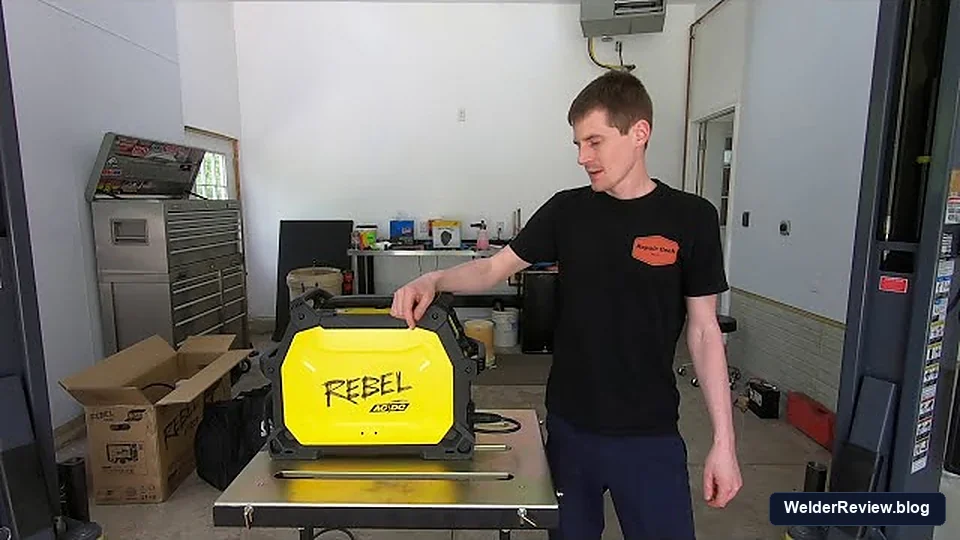
The physical chassis design dictates how these units handle harsh jobsite environments. Heavy-duty composite plastics and powder-coated steel panels protect sensitive internal electronics from metallic dust and moisture ingress.
When evaluating structural footprints, our Miller Multimatic 220 review highlights robust aluminum chassis engineering designed to reduce thermal distortion. Its internal component layout prioritizes heavy-duty inverter efficiency over sheer weight minimization.
Conversely, the rival ESAB thermal architecture utilizes modular board configurations designed for rapid field servicing. Heavy-gauge steel panels protect sensitive internal rectifiers, providing superior impact resistance during transport across demanding construction or pipeline job sites.
- Inverter-based topology reduces total transformer weight significantly.
- Optimized cooling tunnels protect critical power semiconductors from debris.
- Heavy-duty terminals prevent resistive heating during high-amperage draws.
Chassis Construction and Layout
Internal component layout directly influences cooling efficiency and long-term reliability. Engineers isolate high-voltage inverter sections from low-logic control boards to prevent electromagnetic interference during heavy welding tasks.
Cabinet dimensions dictate portability, storage footprint, and cylinder mounting options. Both models incorporate internal gas solenoid routing to streamline external hose connections and minimize potential leak points.
- Isolated circuit boards minimize electrical noise interference.
- Integrated dual-cylinder racks improve mobile shop organization.
Real-World Performance & Arc Quality
Arc stability remains the ultimate test of any premium welding machine. When switching between MIG, TIG, and stick processes, maintaining consistent voltage control prevents spatter and ensures proper root penetration.
Aluminum TIG welding highlights the distinct waveform control capabilities of each machine. Operators need precise frequency and balance adjustments to clean heavy oxide layers while maintaining a stable tungsten puddle.
Arc stability on thin-gauge aluminum demands refined frequency control. The Miller platform delivers adjustable AC frequency up to four hundred hertz, optimizing the cleaning action and narrowing the arc cone for precision fillet welds.
Meanwhile, as detailed in our ESAB Rebel 205 review, the alternative machine counters with advanced waveform shaping that enhances puddle wet-out. Operators benefit from superior arc ignition reliability, minimizing tungsten contamination.
- Consistent short-circuit MIG transfer minimizes post-weld cleanup time.
- High-frequency TIG arc starts eliminate tungsten contamination risks.
- Smooth stick arc dynamics prevent electrode sticking on dirty steel.
MIG and Flux-Cored Operation
Wire feed mechanisms must deliver consistent tension to prevent birdnesting. Precision-machined drive rolls push solid and flux-cored wires smoothly through long gun liners without slipping.
Voltage drop compensation ensures stable arc characteristics even when utilizing long extension cords on remote jobsites. This electrical resilience keeps weld beads uniform across varying input conditions.
- Precision drive rolls ensure reliable wire feeding performance.
- Voltage compensation maintains arc length on long extension cords.
Setup, Interface, and Digital Controls
Modern digital interfaces replace traditional analog dials with high-resolution LCD screens. These displays guide operators through material thickness inputs, shielding gas selections, and consumable choices rapidly.
Reducing setup time directly increases shop productivity for rotating welding crews. Intuitive software logic ensures less experienced fabricators achieve optimal parameters without manual calculation errors.
Navigating digital menus on modern welding systems dictates daily productivity. Miller integrates an intuitive menu structure featuring high-contrast displays, allowing precise adjustments to pre-flow time and post-flow parameters without unnecessary submenu navigation steps.
Examined further in our Esab Rebel 205 review, the competitor deploys a vibrant TFT screen. This interface simplifies job memory storage, letting fabricators recall saved parameter sets instantly during assembly tasks.
- High-contrast digital displays remain readable in direct sunlight.
- Simplified menu navigation cuts down operator training intervals.
- Preset memory slots store favorite parameters for repeatable tasks.
Automated Parameter Selection
Proprietary software assistants automatically configure machine outputs based on user inputs. Operators simply input wire diameter and base metal thickness to establish baseline voltage and feed speeds.
Advanced manual overrides allow experienced welders to fine-tune arc characteristics beyond automated suggestions. This flexibility accommodates unique joint configurations and specialized metallurgical requirements.
- Automated parameter presets speed up routine job changes.
- Manual overrides give master welders total arc control.
Power Delivery and Input Flexibility
Multi-voltage input capability allows these machines to operate on standard household power or heavy industrial circuits. Automatic voltage sensing technology eliminates the need for manual jumper link changes inside the cabinet.
Power factor correction circuitry maximizes electrical efficiency while drawing minimal current from limited breaker panels. This technology prevents nuisance tripping when running at higher output amperages.
As noted in our Miller 220 review, dual-voltage capability is essential for mobile contractors. The machine automatically detects incoming primary voltage, ensuring seamless transitions between single-phase lines without requiring manual rear-panel jumper link changes.
Similarly, the ESAB unit incorporates advanced input power compensation to manage fluctuating generator outputs safely. This robust circuitry maintains steady arc voltage during brownouts, preventing porosity flaws on critical structural pipe welds.
- Automatic input voltage sensing simplifies garage and field transitions.
- Power factor correction reduces total harmonic distortion on lines.
- High duty cycles support continuous production welding applications.
Generator Compatibility
Field repairs often require running welding equipment off engine-driven generators. Robust internal surge suppression protects sensitive inverter boards from dirty, fluctuating generator power outputs.
Clean sine wave output from modern generators prevents erratic arc behavior and premature component failure during remote maintenance operations across rural infrastructure projects.
- Surge suppression safeguards electronics against dirty generator power.
- Stable electrical output prevents erratic arc characteristics.
Maintenance, Efficiency & Longevity
Preventative maintenance ensures maximum equipment lifespan in abrasive shop environments. Routine inspections of internal cooling fans, power terminals, and drive rolls prevent unexpected downtime during critical production runs.
Modular internal component designs simplify diagnostic procedures for certified repair technicians. Quick-disconnect internal harnesses allow fast board swaps when electrical components reach end-of-life cycles.
Long-term reliability depends heavily on thermal management and dust filtration design. Miller utilizes tunnel-driven cooling architecture that channels airflow directly over critical heat sinks while protecting sensitive printed circuit boards from aggressive workshop debris.
ESAB counters with intelligent fan-on-demand technology that reduces noise and limits dust ingestion during idle periods. Routine inspections remain straightforward, requiring minimal tools to access internal power modules for scheduled preventative maintenance.
- Regular compressed air purging keeps internal heat sinks clean.
- Modular electrical boards simplify professional diagnostic and repair work.
- Durable exterior housings withstand accidental impact in busy shops.
Consumable Management and Wear
Welding guns and torch consumables experience continuous thermal and mechanical stress. Using high-grade copper contact tips and ceramic cups extends service intervals significantly between replacements.
Routine cleaning of wire feed liners prevents friction buildup and erratic wire delivery. Proper preventative care directly preserves overall weld quality and equipment efficiency.
- Quality copper contact tips resist thermal degradation effectively.
- Clean wire liners ensure smooth and reliable filler delivery.
Which Option Fits Your Setup
Choosing between these capable systems depends entirely on your primary metal fabrication focus. Shops prioritizing straightforward usability and rugged versatility will lean toward one proven industry architecture.
Conversely, specialized fabricators demanding extreme aluminum control and high-frequency customization will find distinct advantages in the alternative platform. Assess your daily electrical supplies and metal thicknesses carefully.
Choosing the correct machine requires matching equipment strengths to your primary fabrication demands. Production shops handling intricate aerospace components will appreciate the refined high-frequency control and stable low-amperage output typical of the Miller machine.
Conversely, fabricators seeking maximum jobsite versatility and rugged build quality will find the ESAB system exceptionally accommodating. Its comprehensive feature set delivers reliable performance across diverse industrial applications without sacrificing user interface clarity.
- Match machine amperage output to your typical stock thickness.
- Evaluate available electrical infrastructure before making your final purchase.
- Consider portability requirements if moving between shop and field.
Making the Final Investment Decision
Weigh long-term warranty support, local dealer availability, and consumable cost when finalizing your equipment choice. Investing in the correct platform guarantees years of reliable metal fabrication service.
Review your current project demands and future shop expansion goals to ensure your chosen welding machine scales seamlessly alongside your growing fabrication business requirements.
- Verify local dealer support for warranty and service needs.
- Factor in consumable availability for your chosen torch style.
Frequently Asked Questions
Can both machines operate on standard household power outlets?
Yes, both units feature multi-voltage capabilities that allow operation on standard 120V or 240V circuits using appropriate plug adapters. This flexibility makes them ideal for garage-based hobbyists and mobile repair technicians.
Which machine provides better aluminum TIG welding controls?
The ESAB platform typically offers more granular AC waveform adjustments and frequency control. This gives advanced operators superior precision when cleaning thick oxide layers on aluminum weldments.
Do these welders support spool gun attachments for aluminum MIG?
Yes, both systems accommodate dedicated spool gun accessories for feeding soft aluminum wire reliably. This setup provides an alternative workflow for fabricators who prefer MIG over TIG.
How do the digital interfaces compare during rapid job changes?
The Miller interface utilizes intuitive auto-set technology that streamlines parameter selection for less experienced operators. Both systems store preset values to minimize setup downtime between jobs.
Are these machines safe to run on portable engine generators?
Yes, both units incorporate built-in surge protection to handle fluctuating generator voltage safely. Ensure your generator meets the minimum continuous wattage requirements specified by the manufacturer.