Miller 211 Inverter vs Transformer Welders
Modern inverter technology provides unmatched portability and precision. Heavy-duty transformer systems offer raw, enduring durability for static industrial fabrication shops.

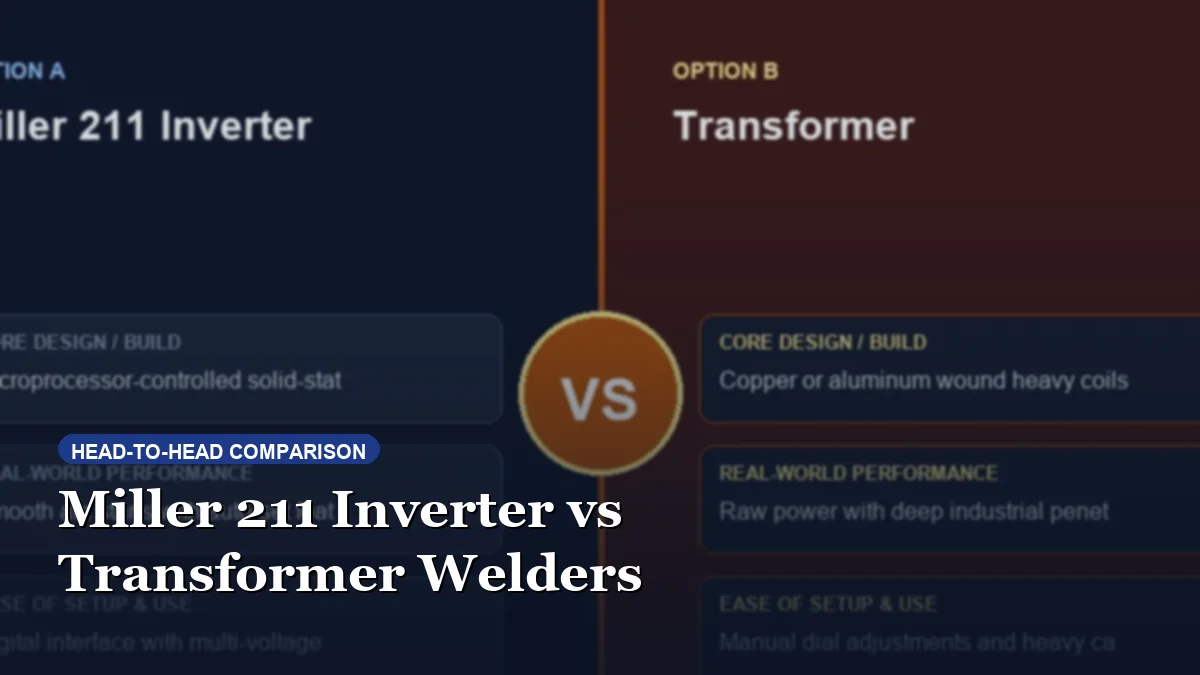
Choose the Miller 211 Inverter for mobile service truck operations and versatile multi-voltage fabrication. Select a heavy transformer if you need constant-duty cycles inside a fixed industrial welding booth.
Compare all top models in our Best Welder: Top Home Shop & Jobsite Picks Tested.
Side-by-Side Breakdown
| Criteria | Miller 211 Inverter | Transformer | Edge |
|---|---|---|---|
| Core Design / Build | Microprocessor-controlled solid-state electronics | Copper or aluminum wound heavy coils | Miller 211 Inverter |
| Real-World Performance | Smooth arc starts with auto-set features | Raw power with deep industrial penetration | Miller 211 Inverter |
| Ease of Setup & Use | Digital interface with multi-voltage plug | Manual dial adjustments and heavy cabling | Miller 211 Inverter |
| Durability & Reliability | Sensitive to moisture and harsh debris | Indestructible against extreme jobsite abuse | Transformer |
| Efficiency / Operating Footprint | High power factor reducing utility costs | High idle draw and lower electrical efficiency | Miller 211 Inverter |
| Maintenance Requirements | Requires periodic board dusting and checks | Simple mechanical cleaning and switch servicing | Transformer |
| Best Ideal Use Case | Field repairs and light fabrication work | Heavy structural steel production facilities | Miller 211 Inverter |
Core Design and Engineering Architecture
Engineering foundations dictate how welding machines process incoming electrical current. Inverter machines utilize advanced solid-state switching components to manipulate high-frequency power efficiently. This modern approach slashes physical size while improving output control.
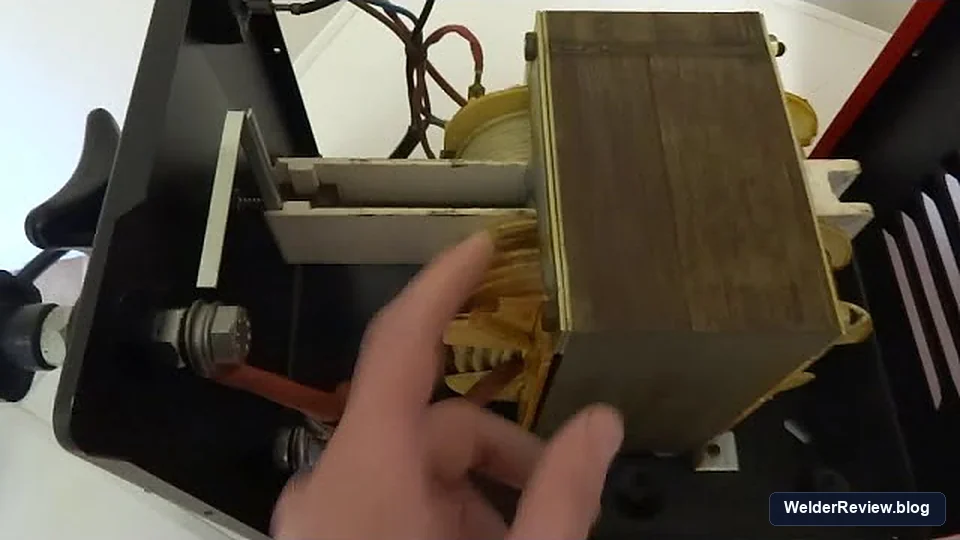
Traditional transformer units rely on heavy copper or aluminum magnetic coils to step down voltage. As discussed in our miller multimatic 215 review, their straightforward mechanical design avoids complex circuit boards entirely.
Modern inverter machines rely on solid-state electronics and high-frequency transformers to step down incoming line voltage. This sophisticated circuit topology significantly reduces physical component size while increasing switching speeds.
Traditional transformer welders utilize heavy copper or aluminum wound coils operating at standard 60Hz line frequency. This brute-force electromagnetic design lacks digital microprocessors, resulting in a simpler but bulkier internal mechanical layout.
- Inverters operate at significantly higher internal frequencies.
- Transformers utilize heavy iron cores for voltage reduction.
- Solid-state switches replace massive mechanical copper windings.
Solid-State Electronics vs Magnetic Coils
Microprocessors inside modern inverters constantly monitor arc conditions in real time. This rapid feedback loop adjusts voltage instantly, ensuring consistent puddle fluidity across varying material thicknesses.
Magnetic coil systems react slower to arc fluctuations due to inherent electrical inductance. However, this natural damping effect creates a forgiving puddle for inexperienced operators learning manual techniques.
- Digital microprocessors adjust parameters thousands of times per second.
- Magnetic inductance provides natural arc stabilization without software.
Real-World Arc Performance and Stability
Arc stability remains paramount for achieving clean, radiographically sound weldments. As highlighted in our miller 215 welder review, advanced waveform control delivers crisp arc starts and minimizes cleanup time significantly across thin metals.
Legacy transformer welders excel when pushing thick structural plates at high amperages. Their heavy-duty output characteristics prevent arc outages during aggressive short-circuit transfer modes on dirty steel.
Inverter power sources feature rapid-response feedback loops that constantly monitor the weld puddle. This microprocessor control allows the machine to adjust arc characteristics instantly, compensating for operator hand movement variations.
Transformer units provide a naturally softer arc column due to their heavy magnetic inductance. While less reactive to micro-changes, seasoned fabricators appreciate the smooth arc wash on thick structural carbon steel plates.
- Inverter systems offer superior control on thin gauge metals.
- Transformers maintain robust arc characteristics under erratic conditions.
- Digital waveform shaping reduces post-weld spatter and grinding.
Voltage Regulation and Arc Characteristics
Consistent voltage delivery prevents common defects like lack of fusion and porosity. Inverter circuitry compensates automatically for fluctuating input power from remote generators or long extension cords.
Older transformer designs suffer notable output drops when input line voltage sags under load. Operators must manually adjust machine settings to compensate for poor jobsite electrical infrastructure.
- Line voltage compensation protects weld quality during power sags.
- Manual adjustment is required for older magnetic welding systems.
Electrical Efficiency and Power Consumption
Rising utility costs make electrical efficiency a major factor for modern fabrication shops. Inverter welders draw significantly less amperage from the primary service panel while delivering equivalent welding output.
Traditional transformer units exhibit high idle power consumption even when no arc is struck. Their massive internal copper coils generate substantial resistive heat losses during prolonged operational cycles.
Inverter welders boast high electrical conversion efficiencies, often exceeding eighty-five percent. They draw significantly less idle current from the primary breaker panel, lowering monthly operational utility costs in busy fabrication environments.
Heavy transformer systems suffer from high core losses and lower power factors. Operating these magnetic units under load demands larger circuit breakers and heavier copper input wiring to handle increased resistive heat.
- Inverters boast power factor correction for maximum electrical draw.
- Transformer idle draw increases monthly facility utility overhead.
- Energy-efficient solid-state designs reduce overall operating expenses.
Power Factor and Generator Compatibility
Running equipment off portable engine-driven generators requires clean electrical harmony. As detailed in our miller millermatic 211 review, inverter technology interfaces safely with small generators without risking damage to sensitive circuit boards.
Heavy transformer units demand massive generator capacity to prevent surging. Their inductive loads often trip standard circuit breakers during sudden arc initiation phases.
- Inverters work seamlessly with portable jobsite engine drives.
- Transformers require oversized generators to handle startup surges.
Portability, Weight, and Physical Footprint
Shop mobility directly impacts daily workflow efficiency for mobile contractors. According to our miller diversion 180 review, weighing under forty pounds allows the unit to lift easily into service truck compartments without physical strain.
Transformer welders often exceed two hundred pounds, requiring dedicated floor space and rolling carts. Transporting them between jobsites demands heavy lifting equipment or dedicated trailers.
Eliminating massive copper windings drops total system weight dramatically. Many modern inverters weigh under thirty-five pounds, allowing technicians to easily carry the unit across sprawling job sites without mechanical assistance.
Traditional transformer machines frequently exceed one hundred pounds, requiring dedicated rolling carts or permanent shop placement. Their bulky steel enclosures demand considerable floor space clearance in cramped mobile repair vehicles.
- Inverter models feature lightweight chassis for one-handed transport.
- Transformer units require permanent shop placement or rolling carts.
- Compact footprints maximize available workspace in small garages.
Ergonomics and Jobsite Maneuverability
Navigating cluttered construction sites demands equipment that travels lightly up ladders and scaffolding. Compact inverter systems allow technicians to position the power source directly beside the weld joint.
Heavy transformer systems remain anchored to one spot, forcing operators to deploy extremely long welding leads. Extended cable runs introduce voltage drop and reduce overall machine efficiency.
- Lightweight chassis allow easy placement near overhead work zones.
- Long secondary leads compensate for immobile transformer bases.
Maintenance, Serviceability, and Long-Term Lifespan
Equipment longevity influences total return on investment for professional fabrication businesses. Transformer machines feature robust mechanical components that survive decades of abuse in dusty environments.
Solid-state inverter units contain delicate printed circuit boards vulnerable to conductive metal dust. Regular internal cleaning with compressed air remains mandatory to prevent electrical short circuits.
Solid-state circuit boards require clean internal cooling environments to prevent conductive dust accumulation. Qualified technicians must occasionally service cooling fans and inspect sensitive electronic components for thermal degradation over time.
Transformer welders feature remarkably rugged mechanical designs with very few sensitive microchips. Their robust copper coils endure harsh shop environments, offering exceptional long-term reliability with basic terminal cleaning.
- Transformers offer exceptional mechanical longevity with minimal upkeep.
- Inverters demand careful dust management in heavy grinding areas.
- Circuit board replacement costs exceed simple coil rewinding.
Component Vulnerability and Repair Protocols
Diagnosing electronic faults in inverters typically requires specialized diagnostic tools and technician training. Swapping modular circuit boards restores functionality quickly but incurs higher replacement parts pricing.
Simple electrical diagnostics on transformer welders involve basic continuity testing with multimeters. Local electrical repair shops can easily service traditional magnetic coils without factory intervention.
- Electronic board replacement requires authorized technician service.
- Basic multimeters easily troubleshoot traditional magnetic coil faults.
Duty Cycle Capacities Under Heavy Loads
Duty cycle ratings determine how long a machine welds continuously before thermal overload occurs. Heavy industrial transformers maintain high duty cycles during relentless multi-shift structural fabrication projects.
Compact inverters manage moderate duty cycles suitable for maintenance and repair tasks. Pushing them past specified thermal limits triggers protective shutdown modes to cool internal components.
Inverter thermal management relies on internal thermistors and forced-air cooling. Pushing these compact units beyond their rated duty cycle triggers automatic thermal shutdown protection to prevent permanent semiconductor burnout.
Heavy industrial transformers absorb tremendous thermal energy through massive metal masses. This natural heat-sinking capability helps sustain high amperage output during prolonged, multi-pass structural welding operations without immediate overheating.
- Industrial transformers support continuous multi-shift production runs.
- Compact inverters feature thermal overload protection for safety.
- Match machine duty cycle ratings to your actual fabrication demands.
Thermal Management and Cooling Systems
Internal cooling fans draw ambient air across sensitive heat sinks inside modern inverters. Intelligent thermal tracking optimizes fan speeds to maintain safe operating temperatures during heavy use.
Traditional units rely on massive physical mass and louvered steel housings to dissipate heat. Their robust thermal inertia handles intense heat loads without relying on fragile computer fans.
- Variable-speed fans cool modern solid-state heat sinks efficiently.
- Natural convection helps dissipate heat in heavy steel housings.
Choosing the Right Technology for Your Shop
Selecting appropriate welding equipment requires honest evaluation of your daily fabrication volume. Hobbyists and mobile repair technicians benefit tremendously from the versatility of modern inverter technology.
Heavy industrial facilities focusing on thick structural plate welding still rely on transformers. Assess your power availability, budget, and portability needs before making a final purchasing decision.
Select an inverter if your daily routine demands multi-process versatility, lightweight portability, and precise digital arc controls. These units excel in mobile service trucks and light fabrication facilities where efficiency matters.
Choose a traditional transformer if you manage a stationary heavy-duty production line requiring bulletproof mechanical durability. Their straightforward electrical architecture delivers uncompromising reliability for heavy industrial steel manufacturing tasks.
- Analyze your primary material thicknesses and shop power supply.
- Consider whether mobility outweighs raw constant-duty cycle capacity.
- Consult manufacturer specification sheets for exact electrical requirements.
Matching Machine Specs to Application Needs
Multi-voltage input capability allows inverters to operate on household or industrial circuits. This flexibility makes them indispensable for contractors working across diverse residential and commercial jobsites.
Dedicated single-voltage transformer units demand specific high-amperage wall receptacles. Ensure your facility electrical panel supports the required primary draw before installing heavy equipment.
- Multi-voltage plugs provide exceptional jobsite adaptability.
- Verify primary electrical service before installing industrial units.
Frequently Asked Questions
Can inverter welders run reliably on portable generators?
Yes, modern units feature built-in voltage compensation that safely handles generator power fluctuations. This protects the internal circuit boards from harmful electrical spikes during operation.
Why do traditional transformers weigh significantly more than inverters?
Heavy copper wire coils and iron magnetic cores account for most of their massive physical weight. These robust components provide indestructible durability for harsh industrial environments.
Do inverter welders require special routine maintenance?
Regularly blowing out accumulated metal dust with compressed air prevents electrical short circuits. Keeping internal circuit boards clean extends the operational lifespan of solid-state electronics.
Which technology offers better energy efficiency in the shop?
Inverter machines consume substantially less electricity by utilizing high-frequency switching technology. Their high power factor reduces monthly utility expenses compared to legacy transformer units.
Are transformer welders completely obsolete for modern fabrication?
Not at all, because they remain unbeatable for continuous high-amperage industrial production. Heavy shops value their unmatched reliability when running thick structural steel all day.