Mig Vs vs Standard Welder: Technical Comparison
Understanding the fundamental architectural differences between specialized wire-feed systems and traditional multi-process welding machines helps fabricators select the ideal equipment for their specific shop requirements.

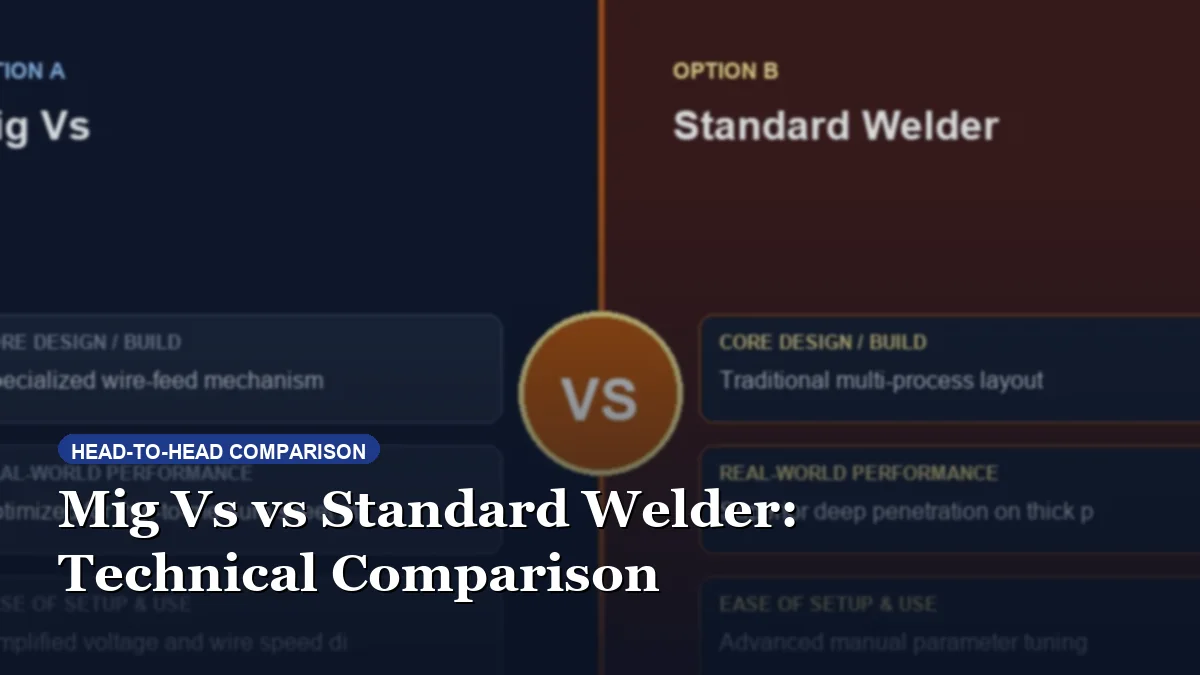
Choose Mig Vs for high-speed production runs requiring wire-feed efficiency. Select the Standard Welder when your shop demands maximum process versatility across diverse base metals and thick plates.
Compare all top models in our Best Welder: Top Home Shop & Jobsite Picks Tested.
Side-by-Side Breakdown
| Criteria | Mig Vs | Standard Welder | Edge |
|---|---|---|---|
| Core Design / Build | Specialized wire-feed mechanism | Traditional multi-process layout | Mig Vs |
| Real-World Performance | Optimized for thin-to-medium sheet metal | Superior deep penetration on thick plates | Standard Welder |
| Ease of Setup & Use | Simplified voltage and wire speed dials | Advanced manual parameter tuning | Mig Vs |
| Durability & Reliability | High-impact polymer and steel housing | Rugged industrial steel chassis | Standard Welder |
| Efficiency / Operating Footprint | Compact footprint with integrated spool | Heavier transformer-based architecture | Mig Vs |
| Maintenance Requirements | Regular drive roll and liner cleaning | Minimalist internal maintenance schedule | Standard Welder |
| Best Ideal Use Case | Automotive bodywork and light fabrication | Heavy structural steel and maintenance shops | Standard Welder |
Introduction to Architecture and Core Concepts
Modern metal fabrication demands precise equipment selection to maintain structural integrity and maximize shop throughput. Evaluating specialized wire-feed systems against traditional setups reveals distinct operational trade-offs for professional welders.
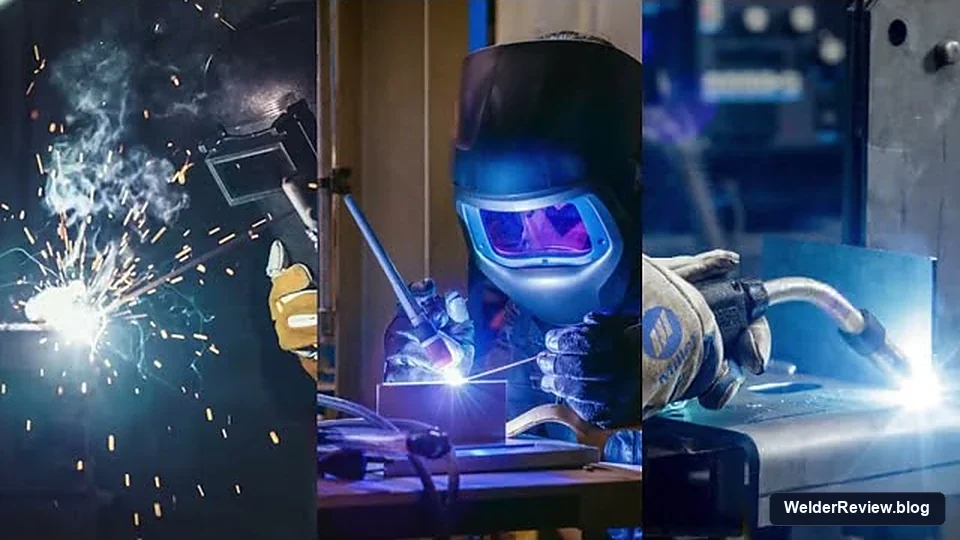
The evolution of welding technology introduces advanced arc controls that directly impact bead profile and penetration depth. Operators must analyze specific power delivery mechanisms before investing in capital shop machinery.
Understanding MIG welding requires analyzing continuous wire feed mechanics alongside shielding gas delivery systems. Many beginners evaluate options from our best beginner mig welders guide to find reliable constant voltage power sources.
Conversely, alternative joining methods prioritize distinct electrical topologies like constant current delivery. Evaluating these foundational differences ensures fabricators select appropriate hardware matching specific joint configurations and base material thicknesses safely.
- Primary reliance on continuous consumable wire electrodes
- Integration of dual-mode power conversion technology
- Thermal management via heavy-duty internal cooling fans
- Continuous wire feed mechanisms improve deposition rates.
- Constant voltage supplies ensure arc length stability.
Power Delivery and Electrical Specifications
Input voltage stability dictates overall arc smoothness during extended fabrication shifts. Modern electronics compensate for minor grid fluctuations to maintain consistent voltage outputs.
Transformer efficiencies vary significantly between compact units and legacy heavy-duty industrial power sources.
- Support for standard single-phase and three-phase supplies
- Precise amperage regulation across varying arc lengths
Hardware Profiles and Engineering Build Quality
Chassis construction dictates how well mobile welding units survive harsh industrial environments and frequent transport. Internal component layout directly influences cooling efficiency and long-term operating reliability.
Weight distribution affects shop mobility when moving equipment across uneven concrete floors or rough outdoor job sites. Selecting units from our best 110v mig welder list ensures optimal portability for garage fabricators.
Industrial wire feeders demand robust internal drive rolls and heavy-duty gearboxes. High-end machines incorporate cast aluminum wire drive assemblies to prevent slippage and ensure consistent wire feeding under demanding shop conditions.
Transformer-based power sources offer legendary durability, whereas modern inverter units reduce overall weight significantly. Selecting proper copper windings improves electrical efficiency and thermal tolerance during prolonged heavy fabrication cycles.
- Reinforced polymer outer shells protect vulnerable internal circuits
- Heavy-gauge steel frames support heavy internal transformer coils
- Ergonomic handle designs reduce operator fatigue during transport
- Cast aluminum housings resist jobsite impacts.
- Copper transformer coils maximize electrical efficiency.
Drive Roll Mechanics and Wire Feeding
Consistent wire delivery prevents frustrating birdnesting and ensures stable arc characteristics. Precision-machined drive rolls maintain uniform tension on aluminum and steel filler wires.
Quick-release tension levers allow rapid spool changes without requiring specialized hand tools.
- Dual-driven gear systems improve heavy spool reliability
- Knurled rollers handle flux-cored wires effectively
Operational Performance and Arc Characteristics
Achieving clean weld pools requires precise synergy between wire feed speed and arc voltage. Evaluating models featured in our best mig welder for home use review minimizes spatter and reduces post-weld cleanup time significantly.
Penetration profiles vary based on shielding gas mixtures and base metal preparation standards.
The physics of spray transfer versus short-circuit transfer dictates bead profile and penetration depth. Operators must balance voltage settings with wire feed speed to eliminate excessive spatter and achieve sound fusion.
Proper shielding gas selection directly impacts arc stability and mechanical properties. Utilizing an argon-carbon dioxide blend minimizes oxidation while enhancing overall weld pool fluidity across various carbon steel plate thicknesses.
- Smooth arc starts eliminate frustrating wire stubbing issues
- Stable puddle control assists positional welding on thin sheets
- Optimized inductance tuning reduces excessive spatter generation
- Spray transfer delivers deep weld penetration.
- Shielding gas blends reduce harmful oxidation.
Penetration Depth on Structural Metals
Heavy plates require substantial thermal input to achieve complete joint fusion and structural soundness. Standard machines excel at driving deep into thick carbon steel sections.
Lighter setups may struggle with thick joints unless multiple passes are executed carefully.
- Complete root penetration on heavy structural channels
- Minimized risk of cold lap defects on thick plates
Workflow Efficiency and Setup Ergonomics
Minimizing downtime between welding passes increases overall shop productivity and lowers labor costs. Intuitive control panels allow novice operators to achieve acceptable results quickly.
Digital readout screens display precise voltage and amperage metrics for repeatable quality control.
Minimizing downtime between weld passes requires intuitive interface layouts and quick-change polarity options. Modern digital microprocessors allow operators to store parameter presets for rapid transition between distinct joint geometries.
Ergonomic torch design reduces operator fatigue during extended production runs in structural steel fabrication shops. Maintaining proper gun angle ensures consistent gas coverage and prevents porosity in critical structural joints.
- Pre-programmed parameter charts simplify everyday metal thickness adjustments
- Quick-disconnect torch leads speed up routine maintenance tasks
- Clear protective covers shield digital displays from welding sparks
- Digital microprocessors simplify parameter recall.
- Ergonomic welding guns minimize operator strain.
Interface Design and Parameter Tuning
Simplified control interfaces reduce operator training time in busy commercial fabrication environments. Advanced synergic modes automatically calculate optimal wire feed speeds based on selected plate thickness.
Manual override capabilities give skilled welders complete creative control over their arc.
- Color-coded dials for rapid visual identification
- Memory slots for storing favorite custom weld recipes
Tactical Deployment and Duty Cycle Ratings
Duty cycle percentages determine how long a machine can operate continuously before requiring a thermal cool-down period. Heavy industrial fabrication demands high duty cycles to prevent unexpected work stoppages.
Exceeding rated duty cycles risks damaging sensitive internal rectifiers and transformer windings.
Evaluating machine capability demands strict adherence to NEMA and IEC duty cycle standards. Operating beyond specified thermal limits risks damaging internal rectifiers and voiding comprehensive equipment manufacturer warranties.
Field deployment requires ruggedized chassis construction capable of withstanding harsh jobsite environmental hazards. Integrated cooling fans and robust thermal overload protection prevent catastrophic failures during continuous high-amperage structural welding operations.
- Tested at ambient room temperatures for realistic performance baselines
- Thermal overload protection automatically trips before catastrophic component failure
- Optimized airflow channels direct heat away from primary electronics
- Adherence to NEMA standards guarantees safety.
- Thermal overload protection prevents rectifier failure.
Thermal Management in High-Production Shops
Continuous high-amperage welding generates intense internal heat that must be dissipated rapidly. Advanced cooling fans cycle intelligently to maintain safe operating temperatures under heavy loads.
Clean louver vents prevent metallic dust accumulation inside the housing.
- Multi-speed fans adjust airflow based on internal temperatures
- Thermal switches reset automatically after adequate cooling
Maintenance Protocols and Long-Term Reliability
Routine upkeep extends equipment lifespan and ensures consistent weld quality across years of service. Neglecting basic cleaning tasks leads to erratic wire feeding and poor electrical conductivity.
Scheduled inspections catch worn contact tips and frayed welding liners early.
Preventative maintenance routines significantly extend the operational lifespan of commercial welding power sources. Technicians must routinely inspect contact tips and drive rolls for accumulated debris or mechanical wear.
Electrical connections demand periodic torque verification to prevent resistance heating and voltage drop issues. Cleaning internal transformer windings with compressed dry air eliminates conductive dust buildup safely.
- Regular compressed air blowouts remove conductive metal dust
- Drive roll cleaning prevents slipping during long production runs
- Contact tip replacement eliminates erratic arc wandering
- Routine contact tip inspection prevents burnbacks.
- Compressed air clears internal conductive dust.
Consumable Longevity and Replacement Cycles
Quality contact tips and nozzles withstand high operational heat without premature deformation. Stocking genuine replacement parts minimizes costly project delays in the workshop.
Proper storage protects welding wire spools from moisture contamination.
- Copper-coated tips resist weld spatter adhesion effectively
- Insulated nozzles protect gun bodies from thermal damage
Technical Community Debates and Verdict Analysis
Fabrication forums frequently debate the merits of specialized wire-feed systems versus traditional multi-process units. Experienced welders emphasize matching equipment capabilities to specific project workloads and metal thicknesses.
Budget constraints and shop space limitations often dictate the final purchasing decision for independent contractors. Reviewing options in our best budget mig welder roundup helps identify reliable machines for smaller workshops.
Professional welders frequently debate the merits of multi-process machines versus dedicated single-purpose units. Analyzing real-world duty cycles reveals whether versatile systems compromise heavy fabrication performance under load.
Final purchasing decisions must prioritize application-specific demands over generalized marketing specifications. Matching machine capabilities with precise material thicknesses ensures optimal productivity and metallurgical integrity across all structural projects.
- Preference for dedicated wire machines in automotive restoration
- Reliance on traditional welders for heavy structural fabrication
- Ongoing discussions regarding inverter reliability versus transformers
- Multi-process units offer exceptional workshop versatility.
- Material thickness dictates strict power requirements.
Choosing the Right Machine for Your Shop
Assessing your typical material thickness and daily duty cycle requirements clarifies the ideal equipment choice. Investing in the correct technology prevents costly secondary tool purchases later.
Consulting professional technicians helps validate your specific shop power supply capabilities.
- Evaluate maximum amperage needs for your thickest plates
- Consider portability requirements for mobile repair service
Frequently Asked Questions
What is the primary difference between these two systems?
The specialized wire-feed system offers rapid production speeds for thin sheet metal, whereas the traditional welder delivers superior deep penetration on heavy structural plates.
Can beginners operate both machines easily?
Yes, both units feature simplified control panels, but specialized wire-feed setups generally provide faster learning curves for novice fabricators through automated synergy.
Which machine is better suited for mobile repair work?
Compact wire-feed units typically offer a lighter footprint and easier transport, making them ideal for field service technicians requiring high mobility.
How often should routine maintenance be performed?
Operators should inspect drive rolls and welding liners monthly to ensure consistent wire feeding and prevent frustrating arc interruptions during critical projects.
Do both systems require shielding gas?
Shielding gas depends on your specific consumable choice, as flux-cored wires allow outdoor welding without external gas cylinders for maximum versatility.