Lincoln Power Mig 210 vs Miller Multimatic 215
Evaluating two premier multi-process machines for your shop. We analyze arc stability, duty cycles, and real engineering differences.

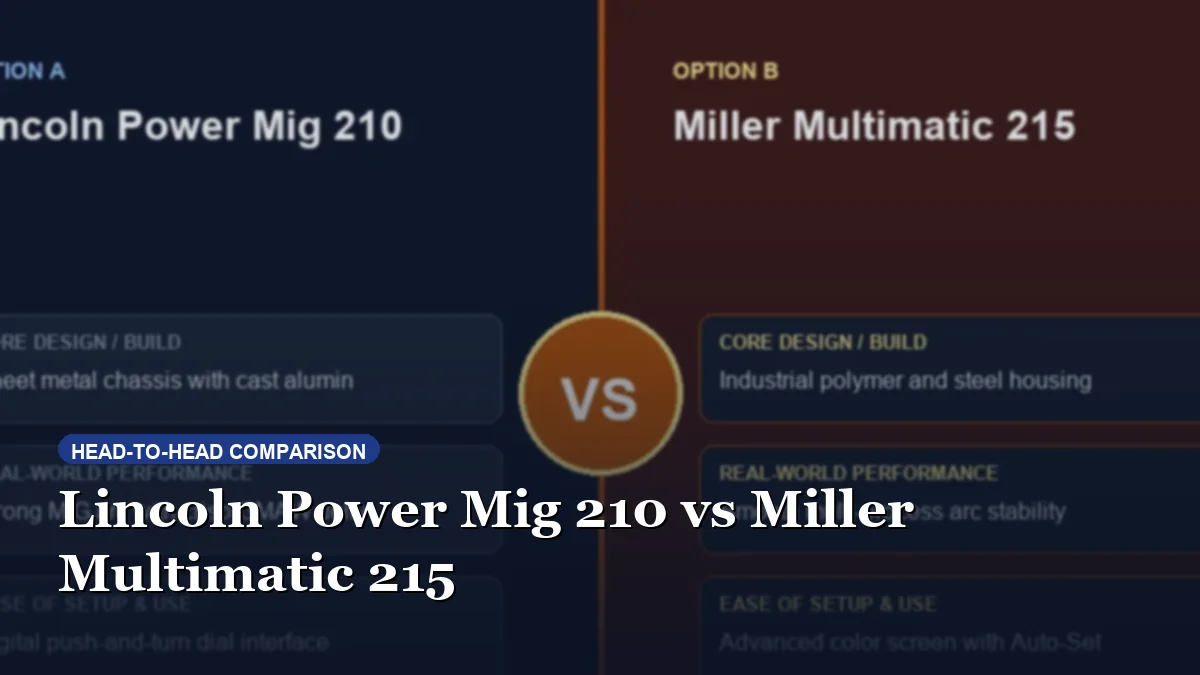
Choose the Lincoln Power Mig 210 for rugged structural steel fabrication and traditional controls. Opt for the Miller Multimatic 215 if you prioritize dual-voltage auto-set features and intuitive color screens.
Compare all top models in our Best Welder: Top Home Shop & Jobsite Picks Tested.
Side-by-Side Breakdown
| Criteria | Lincoln Power Mig 210 | Miller Multimatic 215 | Edge |
|---|---|---|---|
| Core Design / Build | Sheet metal chassis with cast aluminum drive | Industrial polymer and steel housing | Lincoln Power Mig 210 |
| Real-World Performance | Strong MIG arc with crisp GMAW delivery | Smooth multi-process arc stability | Miller Multimatic 215 |
| Ease of Setup & Use | Digital push-and-turn dial interface | Advanced color screen with Auto-Set | Miller Multimatic 215 |
| Durability & Reliability | Heavy-duty internal cooling and housing | Robust inverter architecture and shielding | Tie |
| Efficiency / Operating Footprint | Compact dual-voltage portable architecture | Lightweight inverter with multi-voltage plug | Miller Multimatic 215 |
| Maintenance Requirements | Standard drive roll cleaning and liner checks | Routine wire feed inspection and fan cleaning | Tie |
| Best Ideal Use Case | Automotive bodywork and heavy farm repairs | Light fabrication and mobile maintenance work | Miller Multimatic 215 |
Core Design & Engineering Differences
Engineering multi-process welders requires balancing transformer weight with portable inverter circuitry. Both machines utilize advanced power sources, yet their internal component layouts reflect different manufacturing philosophies.
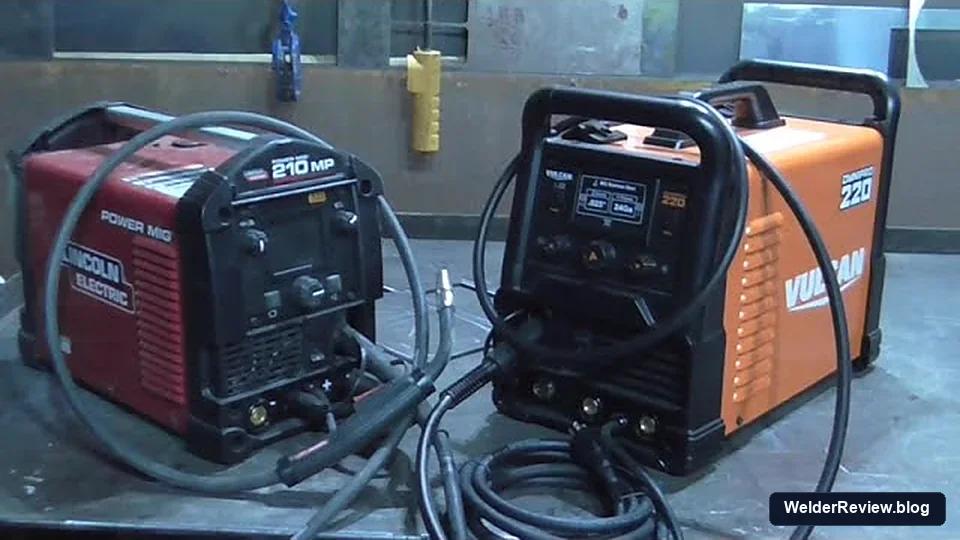
The Lincoln Power Mig 210 relies on a robust chassis built for heavy mobile repair work. Our in-depth Lincoln Power Mig 210 review highlights its cast aluminum wire drive components ensuring long-term alignment.
The Lincoln Power MIG 210 utilizes a rugged cast aluminum drive system designed for heavy daily fabrication work. Its internal chassis layout separates the wire feeder compartment from sensitive digital control boards to reduce dust accumulation.
Conversely, the Miller Multimatic 215 features an angled wire drive mechanism that improves spool alignment and wire feeding consistency. The structural internal frame uses composite materials to keep total machine weight remarkably low for mobile maintenance teams.
- Chassis construction utilizing heavy-gauge galvanized steel panels
- Cast aluminum dual-drive roll assembly for consistent wire feeding
- Optimized internal cooling airflow paths to prevent thermal overload
Chassis Architecture and Materials
Evaluating physical build quality reveals distinct material choices in housing construction. Lincoln leans toward traditional industrial steel panels, whereas Miller incorporates high-impact structural polymers alongside metal.
These material choices directly influence overall unit weight and physical drop resistance during transport on rough job site terrain.
- Impact-resistant exterior panels on the Miller unit
- Reinforced steel corner guards on the Lincoln cabinet
Real-World Performance & Arc Quality
Arc stability dictates bead profile quality across varying material thicknesses and shielding gases. As noted in our Lincoln Power Mig 260 review, the Lincoln Power Mig 210 delivers exceptional GMAW wetting action.
Meanwhile, the competitor excels in fine-tuning arc parameters dynamically through software adjustments during standard short-circuit MIG welding operations.
When running standard 75/25 argon-CO2 shielding gas on mild steel, the Lincoln 210 produces a crisp, direct arc. Welders can easily fine-tune voltage and wire feed speed to match joint geometry without experiencing excessive spatter or undercut issues.
As highlighted in our Miller Multimatic 215 review, the machine excels with its Auto-Set Elite technology, which automatically configures parameters based on material thickness and wire diameter for smooth puddle wetting.
- Amperage output ranging up to 210 amps maximum capacity
- Smooth arc starts that minimize spatter on thin sheet metal
- Consistent voltage compensation during fluctuations in input power
MIG, Stick, and TIG Capabilities
Multi-process versatility allows fabricators to switch between MIG, flux-cored, stick, and DC TIG welding effortlessly. Both machines handle these processes well, but terminal connections differ.
Switching polarity for flux-cored wire requires opening the internal cabinet on both systems to swap heavy copper leads securely.
- Dedicated gas solenoid valves built internally for clean TIG starts
- Smooth stick arc characteristics capable of running 7018 electrodes
Interface Usability & Setup Ergonomics
User interface design impacts daily productivity, especially for operators transitioning frequently between diverse material thicknesses. The Miller Multimatic 215 utilizes a vibrant color LCD screen.
This high-resolution display guides operators through parameter selection using simple graphical prompts rather than cryptic numerical codes.
Navigating the Lincoln 210 interface relies on a central push-and-turn digital dial combined with a large color screen. Users can quickly switch between MIG, TIG, and stick welding modes while viewing clear graphical parameter readouts in real time.
As detailed in our Miller Multimatic 215 kit review, Miller equips the unit with a high-resolution LCD display. This ergonomic menu layout allows precision adjustments with gloved hands during fast fabrication tasks.
- Color-coded digital display menus for rapid process changes
- Auto-Set Elite technology for instant parameter configuration
- Traditional push-and-turn encoder dial for manual overrides
Digital Displays Versus Traditional Dials
Lincoln adopts a more traditional digital screen layout that prioritizes numerical readouts for voltage and wire feed speed. Experienced welders often prefer this straightforward data presentation.
Conversely, beginners find the interactive graphical menu system on the Miller unit significantly reduces the learning curve during initial setup.
- Clear numerical readouts on the Lincoln digital panel
- Visual material thickness selectors on the Miller display
Maintenance, Efficiency & Longevity
Routine upkeep ensures your investment maintains peak operational efficiency over years of shop use. Both units require standard inspection of drive rolls, contact tips, and power cords.
Keeping internal electronics free from conductive metal dust is essential for preventing premature inverter board failures in dusty fabrication environments.
Routine maintenance on the Lincoln 210 involves inspecting the drive rolls and clearing the welding gun liner of metallic debris. Proper upkeep of these consumable components ensures steady wire feeding and prevents premature electrical resistance inside the torch cable.
The Miller 215 incorporates Fan-On-Demand cooling architecture that only operates when internal temperatures require airflow. This smart engineering minimizes dust ingestion into the power source, extending transformer lifespan and lowering overall routine cleaning intervals significantly.
- Removable side panels providing easy access to internal wire drives
- Sealed cooling fans designed to minimize debris accumulation
- Standard consumable compatibility reducing ongoing replacement costs
Preventative Care and Component Longevity
Proper maintenance schedules dictate how long your power source will survive demanding workshop conditions. Inspecting shielding gas hoses prevents porous welds caused by leaks.
Cleaning wire feed drive grooves prevents bird-nesting when pushing soft aluminum wire through standard steel liners.
- Regular blowing out of internal dust with compressed air
- Periodic inspection of ground clamp connection points
Spool Gun Compatibility & Aluminum Welding
Welding thin aluminum requires specialized feeding setups to prevent bird-nesting in the torch cable. Both machines feature direct-connect spool gun ports for seamless operation.
Using a dedicated spool gun eliminates the need for expensive push-pull gun systems when fabricating light aluminum brackets or boat repairs.
Aluminum fabrication requires reliable wire delivery, and the Lincoln 210 supports direct-plug Magnum Pro spool guns without adapters. This direct connection eliminates bird-nesting issues when feeding soft 4043 aluminum wire through extended torch cable assemblies.
Miller designs the Multimatic 215 to seamlessly integrate with Spoolmate 100 direct-connect spool guns. Operators can effortlessly switch from steel MIG processes to aluminum projects by simply plugging in the auxiliary gun and selecting the correct menu settings.
- Direct plug-in receptacles for compatible brand spool guns
- Adjustable drive tension settings for soft 4043 aluminum wire
- Stable arc characteristics when paired with 100 percent argon gas
Managing Aluminum Wire Feed Issues
Aluminum wire deforms easily under excessive drive roll pressure inside standard welding torches. Utilizing a dedicated spool gun keeps the wire spool directly above the drive motor.
This short feeding distance ensures smooth wire delivery and prevents frustrating bird-nesting incidents during critical fabrication tasks.
- U-groove drive rolls designed specifically for aluminum wire
- Quick-change contact tips suited for larger wire diameters
Electrical Requirements & Power Footprint
Modern multi-process welders operate efficiently on flexible dual-voltage input power sources. Both machines include multi-voltage plug adapters for standard household outlets.
Connecting these units to a 240-volt circuit unlocks their maximum rated output for heavy structural steel fabrication and thicker plate welding.
Operating on dual-voltage input, the Lincoln 210 draws approximately 20 amps on a standard 120V circuit and scales efficiently to 230V input. Circuit breaker selection must match these amperage draws to prevent nuisance tripping during high-output welding sessions.
The Miller 215 utilizes MVP plugs for instant switching between 120V and 240V power sources without requiring manual internal rewiring. This flexibility makes it exceptionally convenient for mobile contractors moving between residential outlets and commercial generator supplies.
- Multi-voltage plug system for 120V and 240V receptacles
- Inverter-based power factor correction for energy efficiency
- Generator compatibility for remote field repair operations
Generator Power and Voltage Fluctuations
Job sites frequently rely on portable engine-driven generators that produce inconsistent voltage output. Advanced internal circuitry protects sensitive inverter boards from damaging power surges.
Ensuring your generator meets the minimum wattage requirements prevents unexpected shutdowns during heavy welding tasks.
- Minimum 6000-watt generator recommendation for full output
- Built-in over-voltage protection circuits on primary inputs
Which Option Fits Your Specific Setup
Selecting the right machine depends heavily on your primary welding applications and personal interface preferences. Shop owners prioritizing advanced digital automation lean toward Miller.
Conversely, fabricators seeking rugged traditional durability often choose Lincoln for demanding daily service work.
Choose the Lincoln 210 if your shop demands robust cast aluminum drive mechanics and traditional manual control over every welding parameter. It suits experienced fabricators who prefer fine-tuning their arc characteristics for heavy-gauge structural steel projects.
Select the Miller 215 if you prioritize automated setup features like Auto-Set Elite to maximize productivity across varied metal thicknesses. It remains an ideal investment for maintenance departments tackling diverse repair tasks with minimal setup friction.
- Evaluate your typical material thicknesses before making a final purchase
- Consider whether you prefer graphical color screens or numerical dials
- Assess local dealer support and warranty coverage in your area
Final Decision Matrix for Fabricators
Take time to test drive both user interfaces at a local welding distributor before buying. Comfort with the trigger feel and menu navigation matters immensely during long work shifts.
Investing in the right machine now ensures reliable performance across countless future fabrication projects.
- Hands-on torch ergonomics testing in-store
- Reviewing included accessory kits and starter consumables
Frequently Asked Questions
Can both welders run on standard household 120-volt circuits?
Yes, both machines include convenient plug adapters for standard household outlets. Using 120V input power limits your maximum output amperage for thicker steel plates.
Do these machines require an external gas regulator for TIG welding?
Both units feature internal gas solenoids but require an external regulator attached to your shielding gas cylinder. You must also acquire a dedicated TIG torch separately.
Are spool guns included with the base welder packages?
Spool guns are sold separately as optional accessories for aluminum fabrication. You must purchase a compatible spool gun to weld aluminum effectively without bird-nesting.
Which machine is better suited for beginner welding students?
The Miller Multimatic 215 is generally preferred by beginners due to its color screen. The Auto-Set feature simplifies parameter selection for novice operators.
What is the maximum steel thickness these 210-amp units can weld?
Both machines can handle up to three-eighths inch steel when connected to 240V power. Multi-pass techniques are required for achieving full structural penetration on thicker joints.